From restoration to resilience: how NATIR is rebuilding…
07 September, 2026
From restoration to resilience: how NATIR is rebuilding…
07 September, 2026
Strengthening civil society for climate action in the Comoros
05 August, 2026
Thursday 10 july 2025
Environmental protection in the Caribbean (EPIC) works on improving nesting habitat for two seabird species, the Least Tern and the Caribbean Brown Pelican, on St. Maarten. Both species struggle with a decreasing abundance of suitable nesting places. EPIC receives support from the BESTLIFE2030 programme to realise a nesting platform in the Simpson Bay Lagoon, for the Least Tern, and replace invasive grasses with native vegetation for the Caribbean Brown Pelican. ‘We are trying to get back to a more robust ecosystem,’ says Natalia Collier, co-founder of EPIC and Program Director in the Grenadines and St. Maarten.
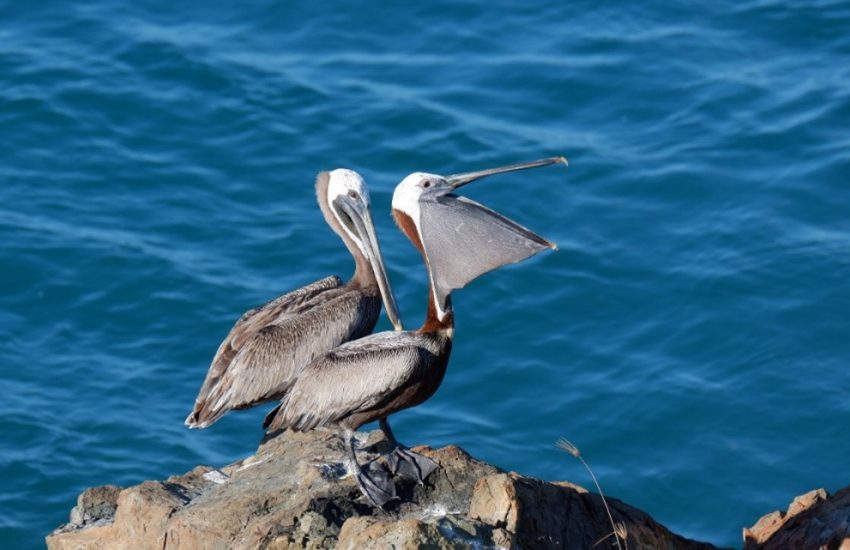
Header photo: Two Caribbean Brown Pelicans at Fort Amsterdam © Filippo Milani / EPIC
Conservation efforts of the organization Environmental Protection in the Caribbean (EPIC) focus on two seabird species: the Least Tern and the Caribbean Brown Pelican. Although neither species are listed as endangered on the IUCN Red List (globally), they are endangered at the regional level. Both species have only one breeding colony on Dutch St. Maarten, and therefore, the disappearance of these seabirds due to unsuccessful breeding would lead to local extinction. EPIC aims to improve the breeding success of the Least Tern by introducing a floating platform, where they can safely nest – away from introduced predators, but also planting mangroves to restore their foraging habitat. The organisation will also remove invasive species from the breeding site of the Caribbean Brown Pelican and plant native vegetation instead, improving nesting habitat.
The Least Tern (Sternula antillarum) is a small seabird (only 21-23 cm) that nests on the ground, in flat and open areas. Their eggs hatch after about three weeks and Least Tern chicks leave the nest after just two days but stay around until they can fly by themselves. However, the species is struggling due to a lack of safe breeding habitat on St. Maarten, as they deal with predation (mainly by introduced predators), pollution and flooding.
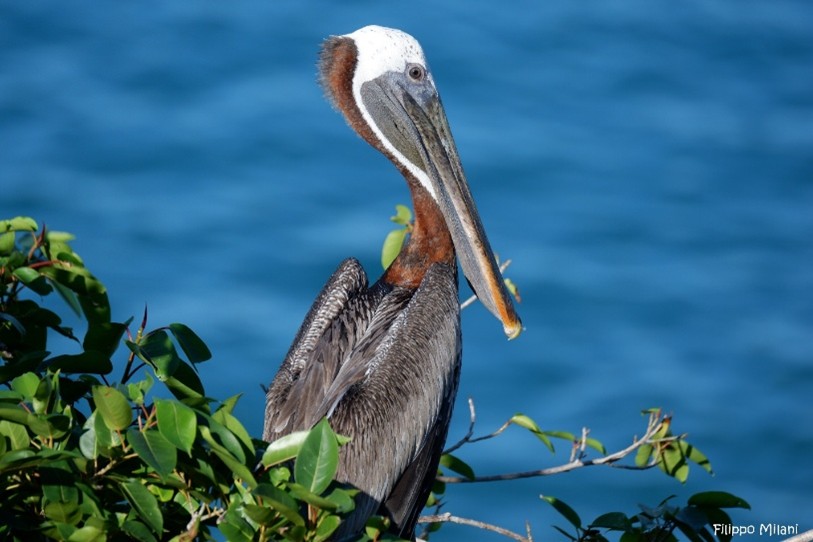
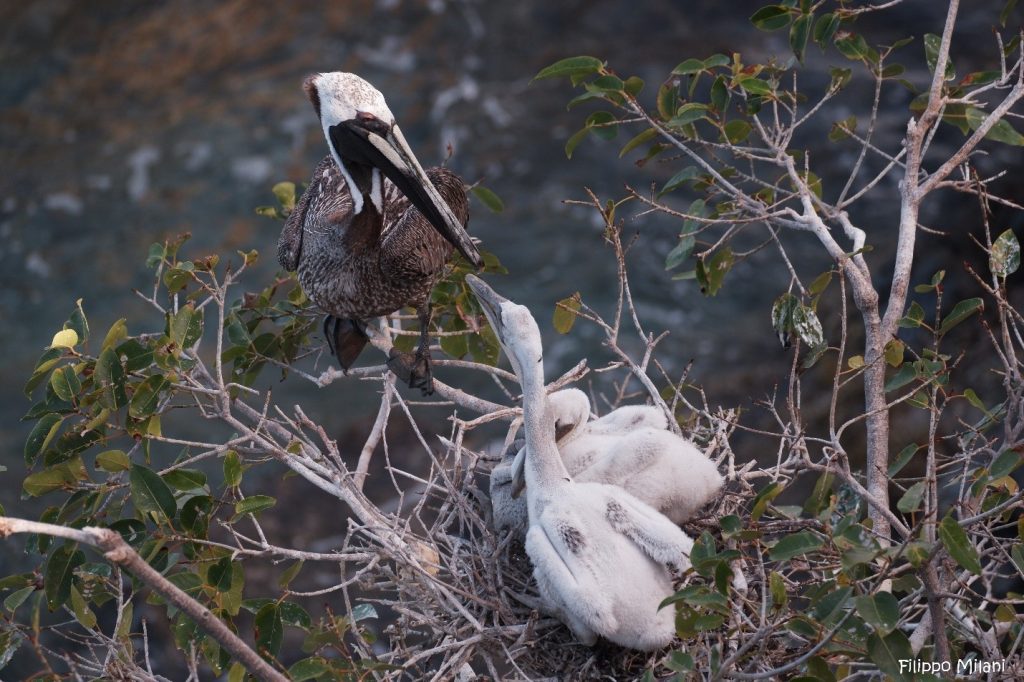
The Caribbean Brown Pelican (Pelecanus occidentalis occidentalis) is a subspecies of the Brown Pelican and the national bird of St. Maarten and therefore an iconic cultural bird. The species owes its name to the brown feathers on the neck and head. Chicks are born with white feathers and juveniles acquire their recognizable brown feathers as they mature. The species is dealing with a decreasing habitat due to development. The only remaining nesting site on the island is at Fort Amsterdam.
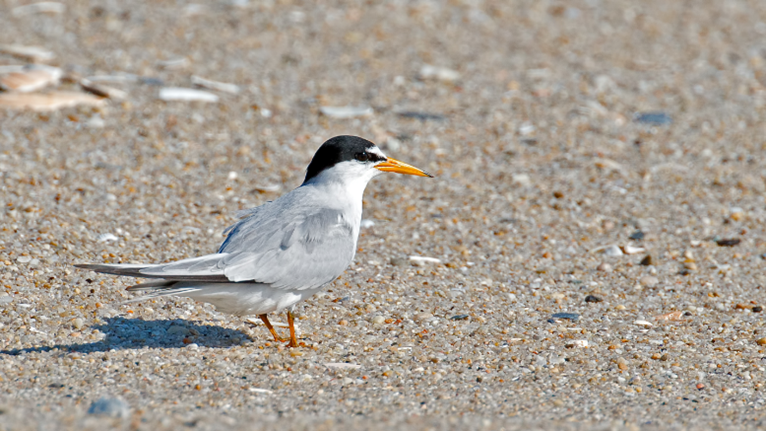
The Least Tern colony breeds next to the airport of St. Maarten, creating the risk of bird strikes. Therefore, the EPIC team had a desire to create a safe alternative where the Least Tern could breed. The species breeds in colonies and often comes back to the same site, but can also adapt quickly to changes in the landscape.
The current status of the Least Tern, like many other birds in the Caribbean, is unknown, due to a lack of systematic monitoring. ‘It is hard to know the real number, but they are declining locally due the all the threats they face. These include natural threats, like flooding or predation, as well as anthropogenic threats,’ says Collier, ‘Fortunately, they are not very picky about their nest site. They even nest on flat-roofed buildings.’
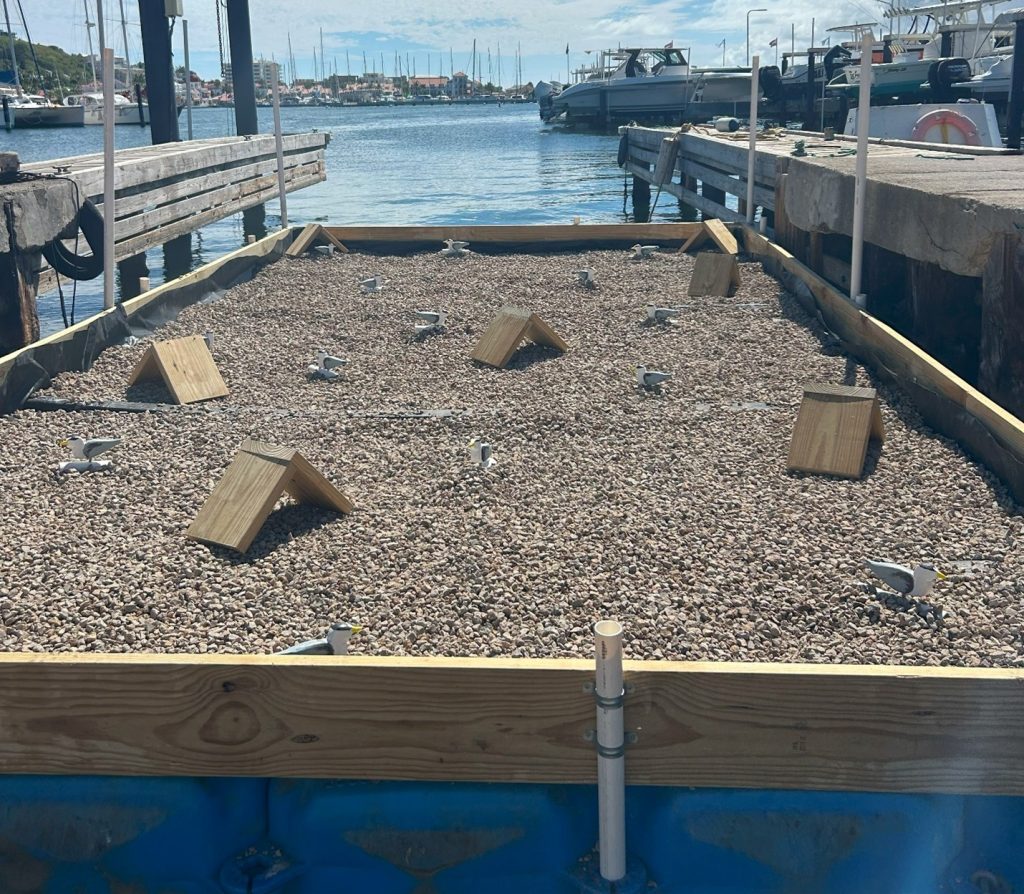
The EPIC team has been working on a floating platform, with gravel on top and fences to keep predators out. Wooden decoy birds placed on the platform should attract the Least Terns. ‘The nesting platform was installed in May 2025 and is located within visual distance from the airport. We did manage to get the platform out before the birds showed up,’ Collier explains. Now the question is whether the birds will actually use the platform, but there are already positive signs. ‘I was just given a report, that the Least Terns were giving fish to each other, which is courtship behaviour. Time will tell if they are going to use the platform,’ Collier concludes about the platform hopefully.
EPIC also works on increasing and conserving the biodiversity of St. Maarten by planting native vegetation. One of their projects focuses on Fort Amsterdam, the only remaining breeding site of the Caribbean Brown Pelican on the island. It is privately owned and legally protected from development due to its historical value. The site is also recognised as an Important Bird Area (IBA), because of the presence of the Caribbean Brown Pelican colony and five restricted-range bird species (Green-throated Carib, Antillean Crested Hummingbird, Caribbean Elaenia, Pearly-eyed Thrasher, and Lesser Antillean Bullfinch) [1]BirdLife International. (2008). https://datazone.birdlife.org/publications/important-bird-areas-in-the-caribbean-key-sites-for-conservation. The Caribbean Brown Pelican has been locally declining in numbers on St. Maarten, likely due to environmental degradation, diseases, pollution and disturbance. ‘Historically, the pelicans have also nested at Pelikan Rock. However, Hurricane Irma (2017) removed all the vegetation of this site, and the pelicans have not been seen there since. There are still pelicans at Fort Amsterdam, which is why it is important to support these individuals,’ Collier says. This incident emphasises the importance of native vegetation cover for the pelicans.
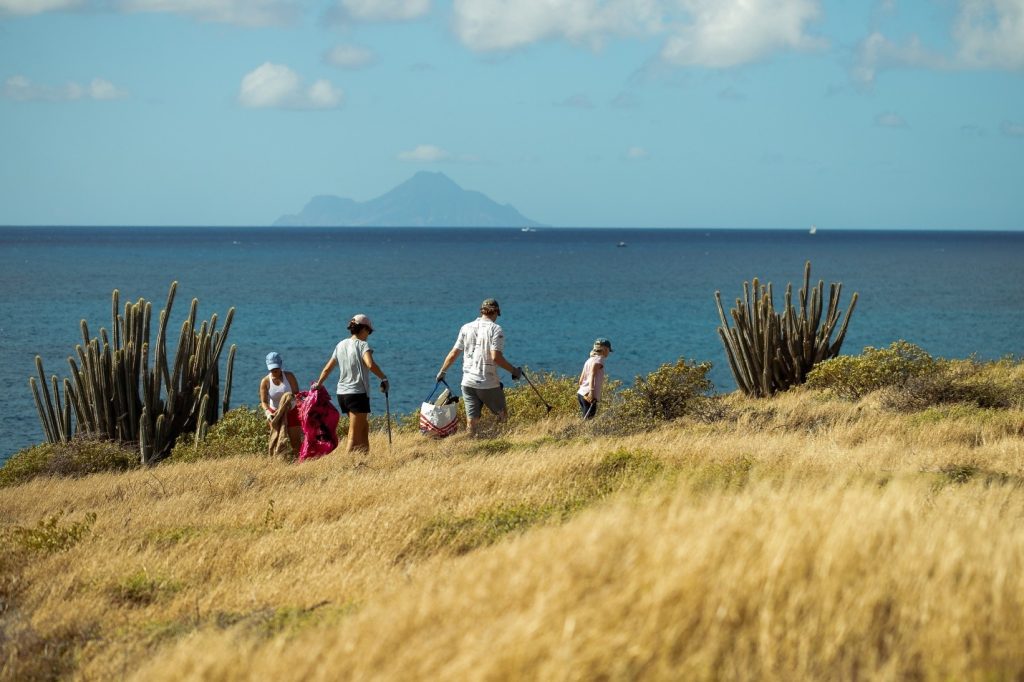
It now seems that the number of pelican nests is also worrisome at Fort Amsterdam. ‘When we first started monitoring the pelican nests, we would count dozens of them and right now there are only two,’ Collier revealed. ‘There are a lot of grasses at Fort Amsterdam that are taking over. Biodiversity is greatly reduced because many animals – from pollinators to birds – are affected,’ she continues. To reverse this trend, EPIC hosts voluntary events to pull the grasses and plant native vegetation in those areas.
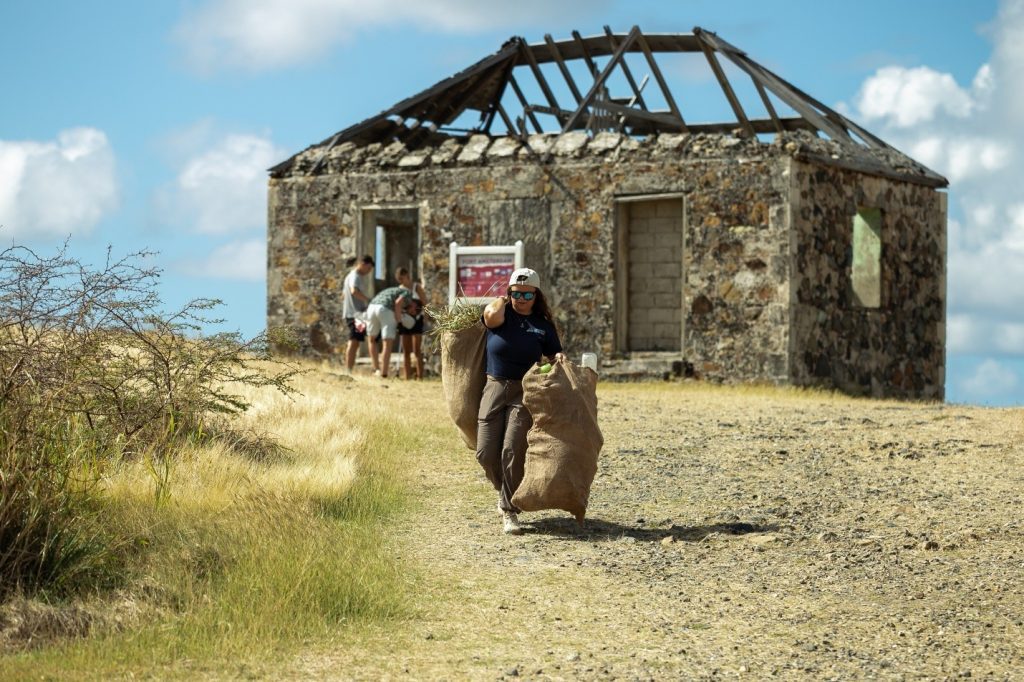
Nest monitoring assessments are done by EPIC to determine whether planting native vegetation helps the pelicans. ‘The BESTLIFE2030 project enables us to conduct weekly nest monitoring to assess the survival rate of the chicks and see whether the population is regenerating,’ says Collier.
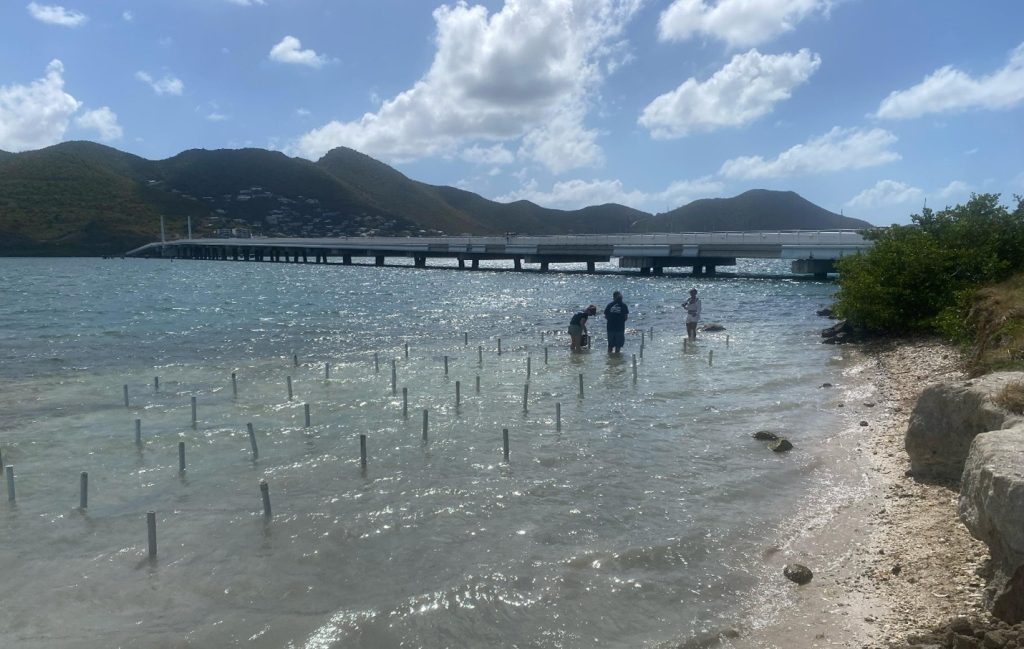
Mangroves provide crucial ecosystem services, acting as a buffer against storms and storing even more carbon per unit than terrestrial forests. They also offer shelter for birds and habitat for fish, increasing food availability for seabirds in the long term. However, only a quarter of the mangrove habitat in the Simpson Bay Lagoon on St. Maarten remains intact. The other three-quarters have been lost to development or were severely damaged by Hurricane Irma in 2017. The conservation of mangrove habitat is crucial in the Simpson Bay Lagoon, and particularly the Mullet Pond, as it is designated as a Ramsar site, recognised as a wetland of international importance.
However, with the coast of the lagoon highly developed and no legally protected areas, options for planting mangroves are limited. ‘There is a small island with some protection simply because it’s too tiny to develop, so we planted seedlings there,’ explains Collier. Using plastic tubing to encase each propagule protects them from waves caused by passing boats until their roots establish. EPIC has planted over 1000 mangrove seedlings using this method, achieving an 85% survival rate. Every additional tree is a vital ecological contribution for St. Maarten.
Besides conservation efforts, EPIC also works on sharing knowledge and increasing awareness. ‘Part of that is to show kids what people can do to restore natural habitat. Some of these kids are not often exposed to nature, so it’s motivating to see them enthusiastic and thinking about the island’s future. The positive feedback is what keeps us going,’ says Collier. Educational signs are being designed and installed, training sessions are hosted for marine and tourism operators, and the general public is engaged through events and communication campaigns.
As the first year of the project comes to an end, Collier reflects on its impact: ‘Our main accomplishments so far are planting the mangrove propagules, hosting grass removal events, and getting the nesting platform out. The BESTLIFE grant enabled us to address the Least Tern issue and restore breeding habitat at Fort Amsterdam, supported by many volunteer hours.’ But their work does not stop here. EPIC will continue seeking funding to monitor pelican nests, support restoration, and keep making a difference – one step at the time.
This project is part of the BESTLIFE2030 programme. It is funded by the EU LIFE-programme, a European environmental and climate action grant programme. BESTLIFE 2030 provides funding for projects that work on nature conservation and restoration in overseas countries and territories of the European Union to stop and reverse global biodiversity loss.
IUCN NL is the focal point for Aruba, Bonaire, Curaçao, Saba, St. Eustatius and St. Maarten. These islands have a high biodiversity, but are among the places that are the most vulnerable to climate change and environmental pressures.



| ↑1 | BirdLife International. (2008). https://datazone.birdlife.org/publications/important-bird-areas-in-the-caribbean-key-sites-for-conservation |
|---|
07 September, 2026
Madagascar and the Indian ocean islands are a biodiversity hotspot - a group of islands with incredible species diversity and…
05 August, 2026
Photo header: Participants during a training session © DAYIMA Madagascar and the Indian ocean islands are a biodiversity hotspot -…