IUCN NL at COP17 in Yerevan: locally led…
12 October, 2026
IUCN NL at COP17 in Yerevan: locally led…
12 October, 2026
BESTLIFE2030 launches its third call for proposals
08 October, 2026
Monday 21 july 2025
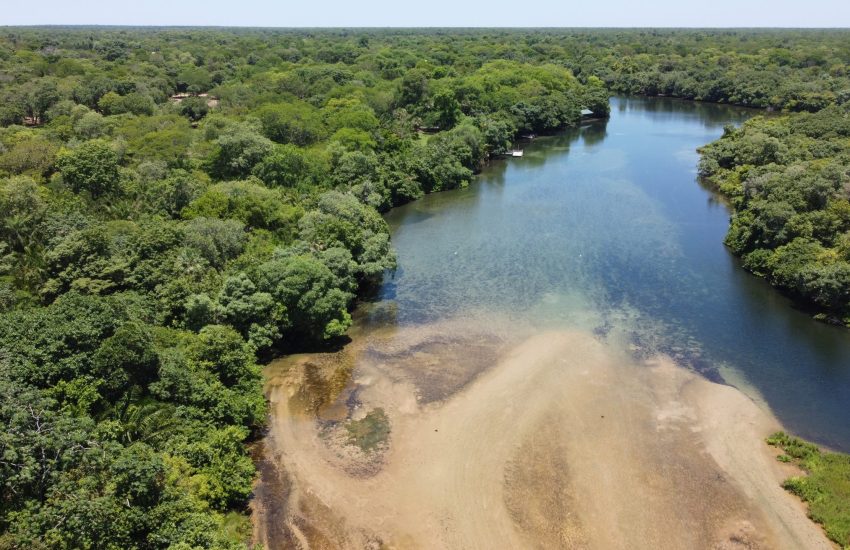
Header photo: Laguna Cáceres in November 2024, Puerto Suárez, Bolivia © Manuel Seoane / IUCN NL
Agriculture is the largest user of freshwater globally, using about 70%[1]https://www.fao.org/one-health/areas-of-work/water/en of all withdrawals and relying on both blue and green water sources. Blue water refers to the freshwater found in rivers, lakes, reservoirs, and aquifers, which can be pumped or diverted for direct human use such as drinking, irrigation, and industry. In contrast, green water is the rainwater stored in the soil and used by plants. It is the source of moisture that drives evapotranspiration, the process through which water returns to the atmosphere via evaporation from soil and transpiration by plants. Forests play a critical role in this cycle: through their roots, they absorb green water and release it back into the air, helping to regulate local rainfall patterns and climate conditions.
Agriculture has an even greater impact in dry areas, where rainfall is often not abundant, and natural bodies of water are limited. Land-use change and forest degradation can disrupt local climatic regulation and alter hydrological cycles, reducing rainfall, evapotranspiration, and groundwater recharge.
Cattle ranching places high demand on water resources, with each cow consuming approximately 30 to 80 liters of water per day[2]https://www.sciencedirect.com/science/article/pii/S2590286521001075?utm. In the Chiquitania, cattle ranchers commonly construct atajados (artificial ponds) to secure water for livestock. This often leads to competition and conflict over water access between cattle ranchers and local communities.
The amount of water that is needed to produce one product is called “virtual water”, also known as the water footprint. Therefore, the export of water-intensive commodities (e.g. beef) to another country is like exporting water in a virtual form[3]https://www.worldwatercouncil.org/fileadmin/wwc/Programs/Virtual_Water/VirtualWater_Proceedings_IHE.pdf#page=13. This trade dynamic can have serious local consequences: it depletes water resources, worsens scarcity, and redirects water use away from local communities to serve global supply chains—particularly in dry, vulnerable ecosystems.
The Chiquitania forest is one of the most unique forests on earth. It is located in the lowlands of Santa Cruz, Bolivia and extends to Mato Grosso, Brazil.
The Chiquitania forest is experiencing record levels of deforestation, primarily driven by the expansion of the agricultural frontier. Forests are being replaced by cattle ranching and large-scale cultivation fields—mainly soy and maize. These crops are mainly produced for international markets, leaving forest degradation, biodiversity loss, and water scarcity across the region in their wake.
In August 2024, a local community in Chiquitania (Buena Vista) filed a lawsuit against an Argentinian cattle rancher, who they consider responsible for the diversion of the San Lorenzo River and the water crisis that followed. The community’s water-related complaints were brought before court (Tribunal Agroambiental) on the basis of environmental responsibility. As a result of the river’s diversion, the community experienced interrupted access to water for over four years, including a complete loss of water supply for four consecutive months, affecting both household use and agricultural activities.
In November 2024, Bolivia’s Agro‑Environmental Court in Roboré issued a landmark decision regarding the San Lorenzo River diversion[4]https://anabolivia.org/por-orden-judicial-se-inicia-la-restitucion-del-cauce-del-rio-san-lorenzo-y-la-remocion-de-presa/. The court ordered the removal of an illegally constructed dam and mandated the restoration of the river’s natural flow within ten business days, based on Bolivia’s constitutional environmental protections, the Precautionary Principle, the Law of Mother Earth (Law 071), Law 300, and the Escazú Agreement. This ruling sets a historic precedent in Bolivia, affirming the judicial system’s ability to defend environmental and Indigenous water rights against extractive land-use activities.
The interconnection between land use change, commodities and water security highlights the urgency to include water use and its footprint when designing deforestation-free policies, especially in forest risk commodity supply chains.
IUCN NL has supported local partners in Bolivia both financially and technically. Our role has been multi-faceted, including providing funding, connecting partners with research organisations, assisting with territorial protection and security, and elevating these issues to the international stage through mechanisms like the Universal Periodic Review and the Convention on the Elimination of All Forms of Discrimination against Women.
Through the Forests for a Just Future programme by the Green Livelihoods Alliance (GLA), IUCN NL contributes to more sustainable and inclusive management of tropical forests that supports climate mitigation and adaptation, human rights, and the livelihoods of Indigenous Peoples and Local Communities. In this programme, our Bolivian partner PROBIOMA supported local communities in the San Lorenzo River case by providing legal and technical assistance. The GLA, a coalition working to preserve forests and strengthen community rights, has been active in the Chiquitania for nearly a decade. Their support was key in helping communities defend their right to water access.

12 October, 2026
From 19 to 30 October 2026, the UN Biodiversity Conference (CBD COP17) takes place in Yerevan, Armenia, under the theme…
08 October, 2026
We are pleased to announce that the third BESTLIFE2030 call for proposals is now open, providing new funding for locally…
