IUCN NL at COP17 in Yerevan: locally led…
12 October, 2026
IUCN NL at COP17 in Yerevan: locally led…
12 October, 2026
BESTLIFE2030 launches its third call for proposals
08 October, 2026
Thursday 31 july 2025
Header photo: Grizelda Mayo-Anda in San Manuel, 2017 © ELAC
When Gerthie was still a child, she experienced the loss of her father who worked as a lawyer and prosecutor in Puerto Princesa and the Province of Palawan. Her father was publicly murdered by an accused that he was prosecuting against. This painful loss left a chilling effect on the whole family. It was Gerthie’s father who had a big influence in her life. She said: ‘He was a prosecutor and was encouraging me to become a lawyer because he said you have to serve the poor. That was his advice: be kind, be helpful and serve the greater good.’
At the beginning of her career, there were only a handful of NGO representatives who could advocate for communities’ rights to safeguard their natural resources. She believed that access to a clean, healthy and sustainable environment should be considered a human right. In 1990 she founded ELAC, an NGO committed to helping communities uphold their constitutional right for a healthy environment. After 35 years of work, the fight for a clean, healthy and sustainable environment has become her declaration and personal belief.
‘We are not many, we are probably not even 100 lawyers doing this public interest environmental lawyering and advocacy work in the Philippines. We are dealing with a planetary crisis of climate change, biodiversity loss and pollution which have intensified. The government’s problems are also aggravating. So I believe that this somehow sealed my journey. This is the path, the direction for me.’
The Philippines holds many endemic species and possesses 70% of the earth’s flora and fauna. The island of Palawan has 26 key biodiversity areas and is home to Critically Endangered species such as the Palawan pangolin (Manis culionensis). But the island contains high amounts of nickel and is therefore a target for corporate mining businesses. Mining poses a severe threat to Palawan’s rich biodiversity as reforestation with the current nickel mining method is extremely difficult. ‘It’s not just removing trees, you remove the wildlife’ Gerthie says.
Through ELAC, she helped launch the Safe Palawan Movement’s NO2MININGINPALAWAN campaign in 2011, as a voice against mining activities on the island. The campaign was a great success, the coalition collected ten million signatures in 2015. The campaign influenced the national government in institutionalising reforms in the mining industry. A moratorium on the processing of new mining applications was imposed by an executive order under the administration of President Benigno S. Aquino III. The executive issuance resulted in a large drop in mining applications and mineral agreements in Palawan: from 429 to just 11. However, the transition away from fossil fuel energy, in which nickel is essential for batteries of electric vehicles and other green technologies, introduced a new challenge. The demand for nickel increased and the moratorium was lifted in 2021.
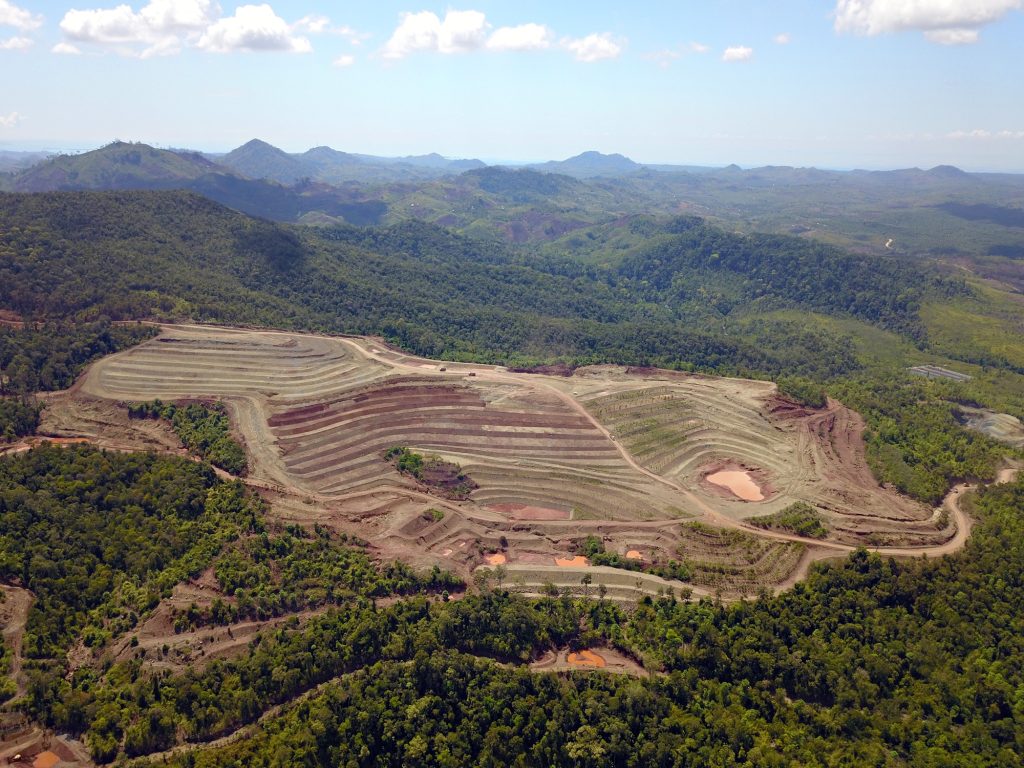
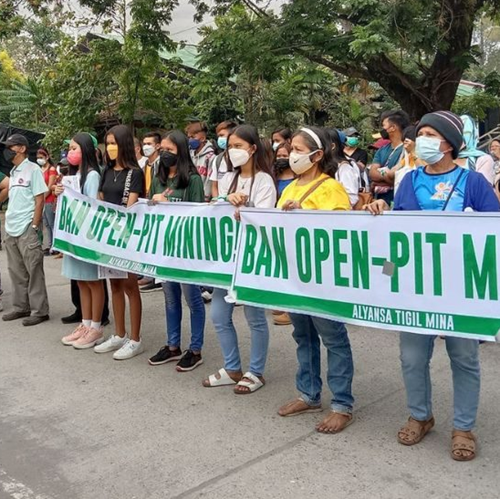
The nickel mines in Palawan caused destructive effects to the people and the forest. Indigenous peoples from Southern Palawan suffered from the effects of mining. In Brooke’s Point, the Indigenous peoples’ livelihoods are tightly connected to the forest for their survival, as they collect valuable non-timber forest products such as resin from the Almaciga tree. But after a mining company established operations on their land, they were denied access to their ancestral domains and the resources essential to their survival.
Other people from Palawan such as farmers and fishers were displaced or lost their jobs. The COVID-19 pandemic caused poverty to rise and given the government’s lack of support to livelihoods, the local communities were easily drawn to offers from the mining industry and other extractive projects. Tensions increased, and community divisions took place. Local leaders were drawn to job and development offers from the mining industry. This was especially difficult for Gerthie: ‘I was drawn to tears together with my fellow NGOs because the local communities we assisted were divided on the issue of mining. It was very painful to see how communities we assisted for several years suddenly allowed extractive projects inside their biodiversity-rich areas. It’s very, very painful because we invested, you know, labour of love and time.’
‘The legal empowerment process is not just simply enhancing community’s knowledge of the law and the remedies. It is also building leadership, building inspiration and creating the appropriate and necessary values.’
- Grizelda Mayo Anda, ELAC
Gerthie says that the pursuit of energy transition is a valid concern. ‘But the word JUST is very, very important.’ The energy transition today is business-oriented and investment-focused, and the importance of the forest and its adaptational properties are not taken into consideration. The communities do not know that mining products such as electric vehicles will not benefit them, but mining companies often present a different narrative. Gerthie tells us that communities should be made fully aware of their rights when they get confronted by the industry. ‘The rights of the people affected and displaced by this transition must be recognised.’ Gerthie’s work was honored in the Individual Category of Gawad Bayani ng Kalikasan (GBK) 2024 for her advocacy and legal empowerment initiatives which hold large-scale development projects accountable for their environmental impacts.
Working as an environmental defender in the Philippines is not without risk. In the Philippines, red-tagging poses a major threat to people working in environmental NGOs. Through red-tagging, people or organisations are labelled as rebels or as communist supporters by security forces, government officials and military personnel, making them targets for military arrest in exchange for prize money. ELAC engaged the military in human rights dialogue sessions and reached out to government agencies to explain their opposition to mining, highlighting its harmful impact on the forest.
These conversations had a positive effect. Over time, government agencies got a better understanding of the situation and red-tagging is not as problematic as it was 15 years ago. However, working at an environmental NGO remains dangerous. The 2024 Global Witness Report identifies the Philippines as one of the top five countries where individuals have been killed for defending land or the environment. Gerthie tells us that many of those harassed and killed are local community members and NGO partners.
Gerthie’s work remains challenged, but she continues with unwavering determination. ‘I would like to believe that one of my roles is really to make sure that the hopefulness will remain.’ Over time, she has learned how to engage with communities. Because of her resilience, she built solidarity with the people of Palawan with different campaigns and initiatives. ‘The legal empowerment process is not just simply enhancing community’s knowledge of the law and the remedies. It is also building leadership, building inspiration and creating the appropriate and necessary values.’ Gerthie’s perseverance remains strong and together with ELAC she keeps on fighting for the people of Palawan and its unique environment.
IUCN NL has been standing in solidarity with civil society organisations in their important work to strive for environmental justice in Palawan. Together with Philippine CSO partners such as ELAC, IUCN NL has been working on empowering Indigenous communities to safeguard their ancestral lands, protect biodiversity and secure sustainable livelihoods.
Furthermore, our ongoing support under the Forests for a Just Future programme by the Green Livelihoods Alliance and Bottom Line! programme continues to provide emergency funds to Indigenous and local communities and environmental human rights defenders, in their efforts against the expansion of destructive mining operations.


12 October, 2026
From 19 to 30 October 2026, the UN Biodiversity Conference (CBD COP17) takes place in Yerevan, Armenia, under the theme…
08 October, 2026
We are pleased to announce that the third BESTLIFE2030 call for proposals is now open, providing new funding for locally…