IUCN NL at COP17 in Yerevan: locally led…
12 October, 2026
IUCN NL at COP17 in Yerevan: locally led…
12 October, 2026
BESTLIFE2030 launches its third call for proposals
08 October, 2026
Tuesday 01 april 2025
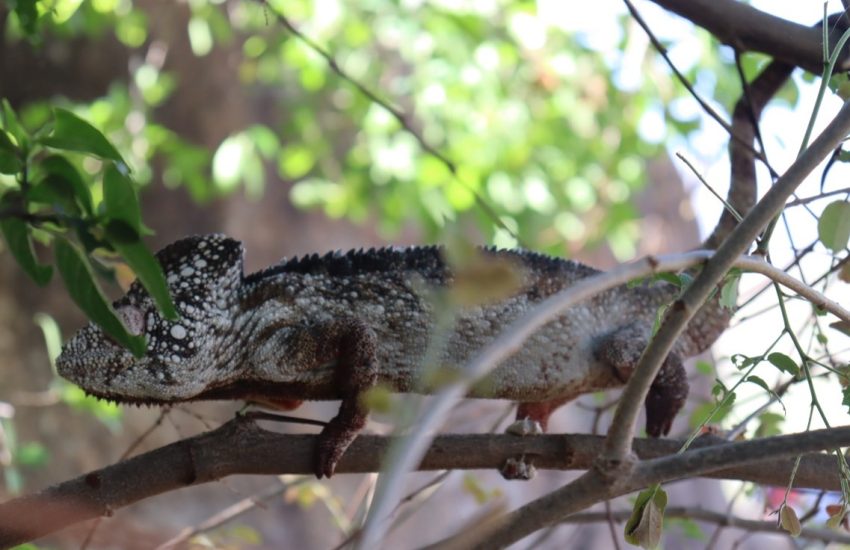
Header photo: Type of chameleon living in Anja Park © SAF FJKM
During CEPF’s current investment phase in the Madagascar and the Indian Ocean Islands (MADIO) Biodiversity Hotspot, multiple exchange visits between grantees have taken place, providing valuable opportunities to learn from one another and share challenges, successes, and lessons learned.
During supervision missions in Mauritius from June 2 to 13, 2024 and the Comoros from October 5 to 13, 2024, exchange visits were organized to facilitate peer learning. Monique Randriatsivery, RIT Leader for the MADIO Biodiversity Hotspot, reflected on the significance of these visits:
“By facilitating hands-on learning and capacity building, these exchanges equip conservationists with innovative ideas and best practices that can be adapted to their local contexts. They also foster strong networks, ensuring that conservation efforts are not isolated but part of a larger, interconnected movement. Through these visits, professionals can avoid repeating past mistakes, enhance adaptive management strategies, and stay motivated by witnessing positive conservation impacts elsewhere.”
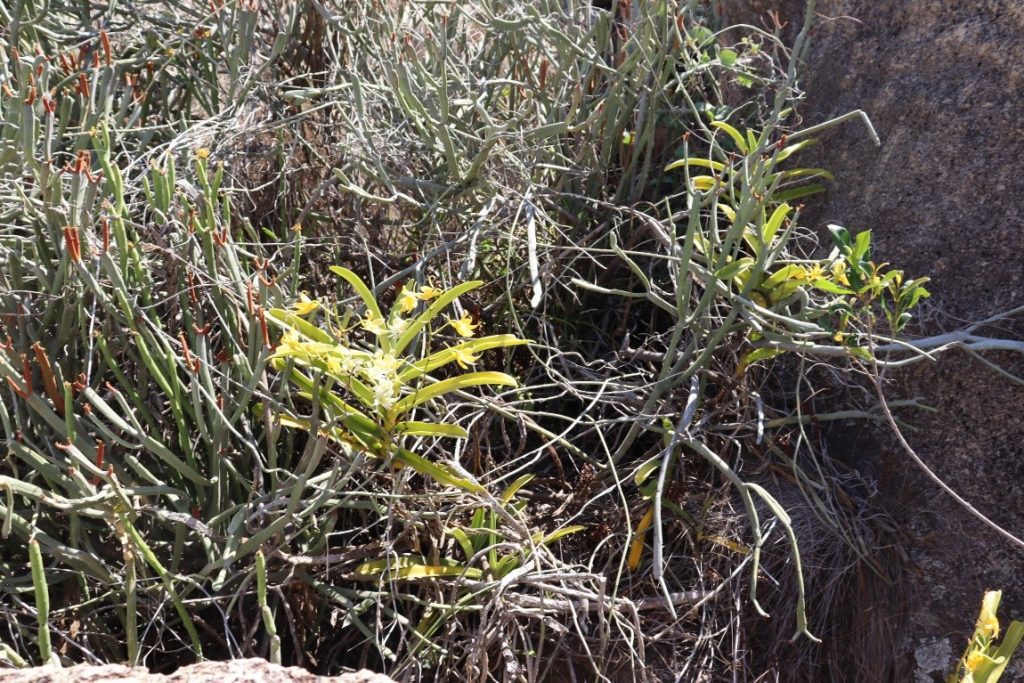
Variety of orchids in the caves © SAF FJKM
From December 16 to 19, 2024, an exchange visit was organized at the Anjà Community Reserve for CEPF grant beneficiaries who actively collaborate with community organizations in their projects. Representatives from various associations and NGOs, including Tahosoa Alandriake Mitambatse Ianantsono Andatabo (TAMIA), Tambazotran’ny Fokonolona Mitantana Harena Voajanahary eto Madagasikara (TAFOMIHAAVO), Ny Tanintsika, Malagasy teknisiana mivondrona ho Aro sy TEzan’iZahamena ary ny Ala Atsinanana (MATEZA), Association PARTicipation A la Gestion de l’Environnement (PARTAGE), MIANTSOROKA, and MAMPITA participated in the event.
The exchange led to several positive outcomes, including an improved understanding of community-based management mechanisms, strengthened skills in ecotourism and conservation, and the sharing of best practices. Participants also gained practical tools to optimize natural resource management, boost community engagement, and create sustainable economic benefits.
In late February, 2025, Maholy Ravaloharimanitra, country director of CEPF grantee The Aspinall Foundation, attended a workshop hosted by another CEPF grantee, Association Vahatra. Ravaloharimanitra shared:
“What made this trip particularly valuable for me was the opportunity to see firsthand the remaining patch of highland forest while learning about the restoration efforts being carried out. I gained insights into how they manage and coordinate the production of seedlings, ensuring that collected species are representative of those present in the forest and available throughout the year. Additionally, I learned how they prepare the field in time for transplantation. I sincerely thank Association Vahatra for this opportunity—it was far more enriching to witness the work in action rather than simply learning about it through a presentation.”
Beyond practical skills, exchange visits play a crucial role in shaping better policies, engaging communities, and strengthening partnerships. They foster cross-cultural understanding and collaboration, making conservation efforts more inclusive and effective.
Recognizing the importance of knowledge exchange, CEPF will take advantage of the mid-term assessment in May 2025 in Antananarivo, Madagascar to invite representatives from all CEPF-funded projects, further reinforcing the commitment to shared learning and collective progress in conservation.
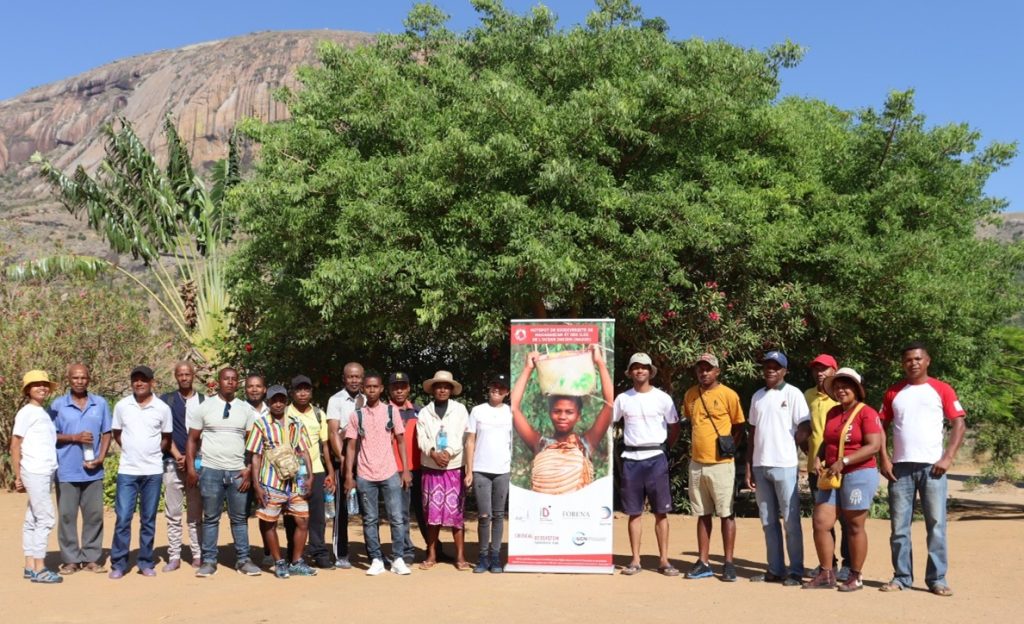
Participants in the exchange visit (c) SAF FJKM
The Ferney region is located in the South-East region of Mauritius, in the immediate periphery of the Key Biodiverstity Area (KBA) MUS 02 – Bambous Mountain Range. Ferney Ltd is a CEPF Large Grant beneficiary promoting a ridge to reef approach on its lands. Two Small Grant beneficiaries, namely Nature Technics and Pat’s Nature Farm develop activities in and around Ferney’s Agri Hub.
The projects of the three CEPF grantees are as follows:
In the wake of the Supervision Mission held in Mauritius, since the 12th of June 2024, the three grantees active in the Ferney region met together to find collaboration synergies.
The first path identified for concrete synergies was vermicompost trials. Two Grantees identified plots, namely Ferney Ltd’s Model Farm run by South-East Ladies Agro. (SELA) cooperative and Pat’s Nature Farm’s site, located approximately 700m North-West of the Ferney Agri-Hub. The third grantee, Nature Technics Ltd, provided vermicompost, and in return, could showcase reports on the impacts of use of vermicompost on food crops. Logistics were then organized, and the trials started in September 2024.
The trials were successfully implemented in both sites following a protocol designed by Dr Seelavarn Ganeshan of Pat’s Nature Farm and Alexandre Hervé of Ferney Ltd. Each grantee followed the same data collection guidelines. At the end of the trials, a report was compiled by Alexandre Hervé.
The Critical Ecosystem Partnership Fund (CEPF) is a joint initiative of l’Agence Française de Développement (AFD), Conservation International, the European Union (EU), Fondation Hans Wilsdorf, the Global Environment Facility, the Government of Canada, the Government of Japan, and the World Bank. Its fundamental objective is to ensure that civil society is engaged in biodiversity conservation.
Thanks to funding from the Green Climate Fund (GCF) through AFD as an accredited entity for the GCF, and from the EU through AFD as a fiduciary agent, CEPF has established and manages a 10-year program of US$50 million to support civil society organizations in promoting ecosystem-based adaptation in Madagascar and the Indian Ocean Islands Biodiversity Hotspot. Under the auspices of the Ministries of Environment in the Comoros, Environment and Sustainable Development in Madagascar, Finance, Economic Planning and Development in Mauritius, and Agriculture, Climate Change and Environment in the Seychelles, the program’s activities are being implemented in the Comoros, Madagascar, Mauritius, and the Seychelles. Madagascar receives additional support from the Franklinia Foundation for the conservation of Madagascar’s endangered trees.
CEPF has enlisted a consortium of nongovernmental organizations to be its regional implementation team (RIT) in the hotspot. Coordinated by IUCN NL, the RIT includes SAF/FJKM for Madagascar, ID-ONG for Comoros, FORENA for Mauritius and SeyCCAT for Seychelles. These organizations are working with CEPF to implement a five-year conservation strategy for the hotspot and build local civil society capacity.

12 October, 2026
From 19 to 30 October 2026, the UN Biodiversity Conference (CBD COP17) takes place in Yerevan, Armenia, under the theme…
08 October, 2026
We are pleased to announce that the third BESTLIFE2030 call for proposals is now open, providing new funding for locally…
