IUCN NL at COP17 in Yerevan: locally led…
12 October, 2026
IUCN NL at COP17 in Yerevan: locally led…
12 October, 2026
BESTLIFE2030 launches its third call for proposals
08 October, 2026
Tuesday 23 september 2025
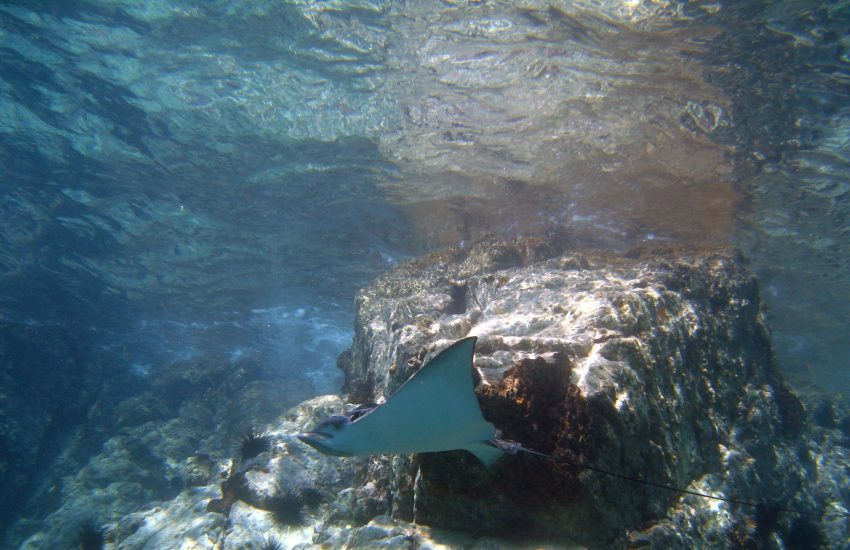
Header photo: Spotted Eagle Ray © Nature Foundation
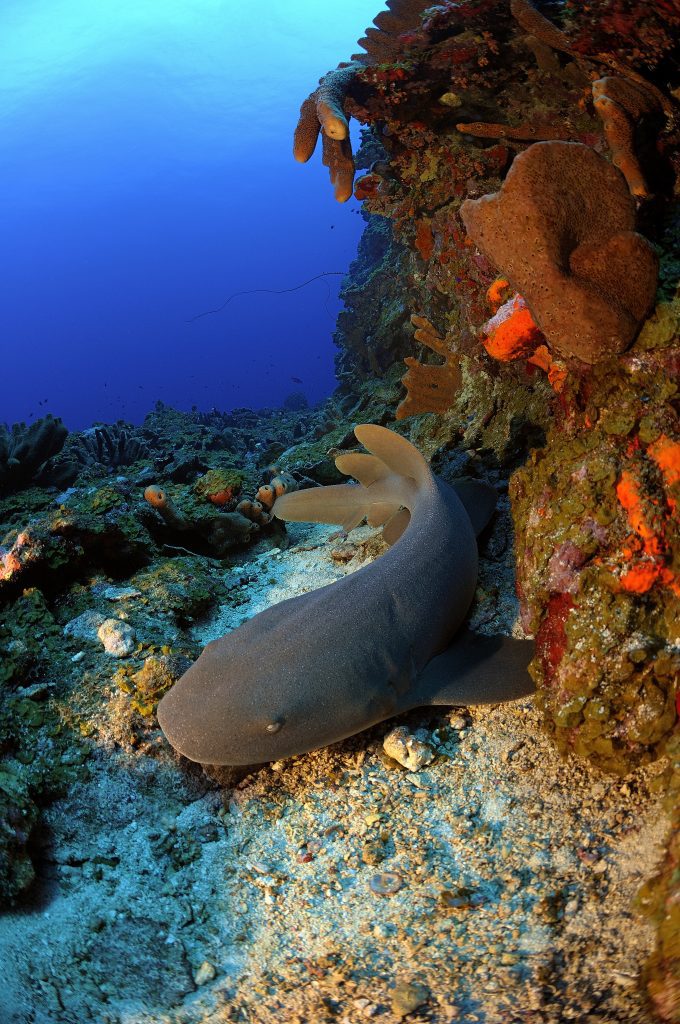
The Nature Foundation was founded in 1997 and is an environmental NGO. In 2014, the Nature Foundation was assigned authority to manage the marine and terrestrial ecosystems of Sint Maarten, including the Man of War Shoal Marine Park, which is the only protected area of Sint Maarten and is home to sharks, sea turtles, rays, thousands of reef fish, lobster, conch, and crabs. It also is a migratory stopover point for many marine mammals, including whales and dolphins.
Six species of sharks and two species of rays can be found in the seas of Sint Maarten, including two IUCN Red-listed species: the Caribbean reef shark and spotted eagle ray. Sharks and rays, also known as elasmobranchii, play a critical role in healthy marine ecosystems as apex predators and important members of the food web. Top predators regulate the population of many species of fish, including mid-level predators, which supports biodiverse coral reef and seagrass ecosystems through reduced predation pressure. Although these species are legally protected on Sint Maarten, this is not always abided by local fisherfolk.
At the same time, fishers on the island struggle. The number of full-time fishers has reduced drastically over the past few decades, and the fishery is very informal compared to neighbouring islands, which are also artisanal fisheries. Local fishers, as in many parts of the world, are generally marginalised and unsupported. Brismeur: ‘The fishing grounds around Sint Maarten are not very good and doesn’t appear to be able to support demand from the population growth the country has seen in recent years. It is a very small area, just a fraction of the neighbouring islands.’ This in turn has caused some frustration with fishers and a loss of fishery culture, as there are less fish and a growing impossibility for fishing to be a real way to make ends meet.
© Dutch Caribbean Nature Alliance
With funding from BESTLIFE2030, the Nature Foundation is now working towards a future where both fish and fishers can thrive. The project has several goals; ultimately it aims to gather and analyse qualitative data on sharks and rays in Sint Maarten, which are the keystone species for the project. Secondly, it’s focused on improving the relationship between conservation and local fishers, by supporting their livelihoods through sustainable manners. The hope is that overtime these efforts amount in the improved conditions for sharks and rays on Sint Maarten.
Brismeur has seen in other places that conflict can arise between conservationists and fishers when the two don’t invest in a real relationship. Misunderstandings can grow and fester easily. Brismeur: ‘It made me ask myself that if, in the future, Sint Maarten expands its protected areas, is this the future of what our relationship with the fishers is going to look like? Because we certainly don’t want it to look like what has occurred in other places, with a lot of resentment, anger, and misunderstandings. Fishers want to be involved, and they need to be involved in marine management decisions for them to be effective and sustainable.’
Because of this, the organisation is aiming for this project to be larger than simply protecting sharks and rays: it’s the foundation of a better relationship, or relationship in general, with fishers. Not only for sharks and rays, but also for other IUCN enlisted species, such as triggerfish and other commercially valuable fish. At present, Sint Maarten faces a myriad of issues, such as coral bleaching and diseases, mass tourism, wastewater pollution and coastal fishing, which impacts the food chain and the coral’s ability to be resilient. Therefore, the project intends to build towards a more resilient marine environment, in a holistic manner.
Brismeur says there are some misconceptions about conservationists. ‘I think sometimes there is this idea that we just love fish inherently and don’t want anyone to bother them, that we’re all vegans, that we are just here to create problems for others through useless rules. But that’s not true at all. I think many of us – certainly myself – love a good fish and we want to support fishing as a sustainable livelihood! So, I tell the fishers, ‘You want more of the bigger fish, I want that for you and for myself too. We definitely can be working on this together.’’
Currently, the Nature Foundation is carrying out interviews to ensure the project’s objectives align with the fishers’ needs. Brismeur: ‘In our interviews we asked them things such as, how has the landscape changed since you’ve started fishing? What do you think about regulations? What is your relationship with sharks and rays? Do you catch them a lot, do you interact with them? What things do you think other fishers need to know that you already know? What things do you feel you could learn more about or are you curious to know more about?’
In order to encourage more sustainable behaviour and make it economically viable for fishers to do so, the project will compensate fishers for such behaviour. The project will offer financial reimbursement for the purchase of certain approved fishing materials in return for participation in the workshops. Organisers are also toying with the idea of offering the fishermen bonuses for efforts to increase the sustainability of their fishing. Fishers may also be able to hand in old gear to be replaced with newer, lower-impact gear, or receive financial compensation for it.
In 2017, Hurricane Irma damaged the (already informal) fish market. At the same time, the market has become more popular with tourists, as more people are coming to seek authentic cultural experiences. The aim is to install signs around the market to raise it’s visibility and help educate the public and the increasing number of tourists on what fish are sold at the market, their scientific name and their IUCN Red List status. It is also to inform them on what fish should not be found at the market because they are protected (sharks, ray, sea turtles, etc.).
For the Nature Foundation, this project is the start of what they hope to be better collaboration between them and local fishers. ‘We want to have a relationship with the fishers where they feel valued and comfortable telling us about how they’re doing, what trends they’re noticing, and that they’re interested in the analysis of the data and seeing what is happening with the fishery so we can proactively make decisions together,’ says Brismeur. ‘Because when it’s coming from them, it’s the most effective and the quickest way to accomplish good, positive change.’
The Nature Foundation also hopes to see the fisheries formalised on Sint Maarten, with eventually all fishers registered and having access to supporting infrastructure and services. Additionally, they aim to have a permit process associated with being able to be a fisher, with all fishers processing their landings through the same fish market so that it can be monitored, as well as gentlemen’s agreements, as they call it, between fishers for sustainable gear use, co-managed closed seasons, or agreed-upon area restrictions for species.
This project is part of the BESTLIFE2030 programme. It is funded by the EU LIFE-programme, a European environmental and climate action grant programme. BESTLIFE 2030 provides funding for projects that work on nature conservation and restoration in overseas countries and territories of the European Union to stop and reverse global biodiversity loss.
IUCN NL is the focal point for Aruba, Bonaire, Curaçao, Saba, St. Eustatius and St. Maarten. These islands have a high biodiversity but are among the places that are the most vulnerable to climate change and environmental pressures.


12 October, 2026
From 19 to 30 October 2026, the UN Biodiversity Conference (CBD COP17) takes place in Yerevan, Armenia, under the theme…
08 October, 2026
We are pleased to announce that the third BESTLIFE2030 call for proposals is now open, providing new funding for locally…