Nature’s Heartbeat expands support for locally led conservation…
23 October, 2026
Nature’s Heartbeat expands support for locally led conservation…
23 October, 2026
Monitte Lantas wins 2026 Irene Dankelman Young Ecofeminist…
22 October, 2026
Tuesday 28 october 2025
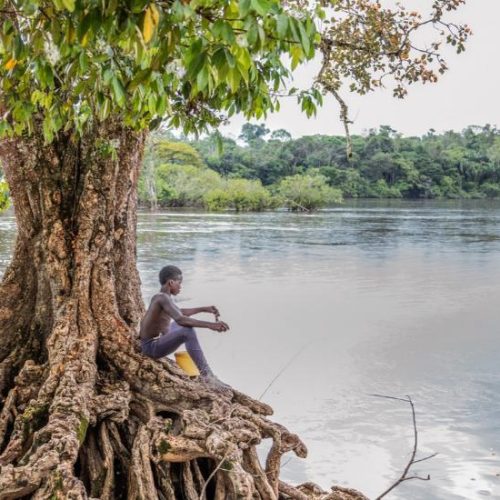
Header photo: © Diego Perez SPDA
At least 25% of the world’s land area is managed, owned, inhabited or used by Indigenous Peoples and local communities (often referred to as IP&LCs)[1]IUCN. https://portals.iucn.org/library/sites/library/files/documents/2023-034-En.pdf . They keep important and unique environmental knowledge, often gathered through centuries of living on their land. The Intergovernmental Science-Policy Platform on Biodiversity and Ecosystem Services (IPBES) defines this knowledge as ‘dynamic bodies of integrated, holistic, social and ecological knowledge, practices and beliefs pertaining to the relationship of living beings, including people, with one another and with their environments. Indigenous and local knowledge is grounded in territory, is highly diverse and is continuously evolving through the interaction of experiences, innovations and various types of knowledge (written, oral, visual, tacit, gendered, practical and scientific).’[2]IPBES. https://files.ipbes.net/ipbes-web-prod-public-files/inline/files/ipbes_ilkapproach_ipbes-5-15.pdf
‘An example of ILK that we encounter in our work at IUCN NL is the understanding of territory as a whole, and not dissecting into land, water resources, forest resources, etcetera,’ says Mariel Cabero, expert environmental justice at IUCN NL. ‘So, the view of territory as a source of life where land, forests, history, spiritual meaning and more are interrelated.’
For many years, Indigenous and Local Knowledge (ILK; also known as Traditional Ecological Knowledge, TEK) was regrettably dismissed by most Western scientists and conservationists as neither analytical nor innovative[3]Root-Bernstein, M., du Plessis, P., Guerrero-Gatica, M., Narayan, T., Roturier, S., & Wheeler, H. C. (2023). What are ilk in relation to science? using the ‘ethic of equivocation’ to … Continue reading. It was often viewed as insular and incompatible with other worldviews – essentially, a relic of the past and inherently inferior to scientific knowledge. Even today, ILK is frequently reduced to folklore, stories, or rituals, with little recognition of the deep knowledge embedded in these practices.
Yet ILK is far from outdated. In fact, it often anticipates insights that are only later validated by Western science. Take agroforestry, for example, many forms of which have been practiced by IP&LCs for centuries[4]Mongabay. https://news.mongabay.com/2019/07/agroforestry-an-ancient-indigenous-technology-with-wide-modern-appeal-commentary/. Today, it is widely adopted as a sustainable alternative to industrial agriculture. Similarly, Indigenous fire management techniques are being reintroduced in parts of Canada, as authorities recognise that Indigenous communities have long understood how to manage fire to prevent large-scale, uncontrolled wildfires[5]Indigenous Leadership Initiative. https://www.ilinationhood.ca/fire-stewardship.
Increasingly, there is also an understanding that Western science is one of many types of knowledge, and that its dominance has prevented us from acknowledging other forms of knowledge. ‘Knowledge systems that are generated in the Global North can be so dominating that they severely restrict our horizon of understanding,’ says Angela Impey, an ethnomusicologist who worked with IUCN NL on the project ‘Actors of Hope’ in Virunga. ‘And this means that we miss out so much on how other people inhabit the world.’
Under conservationists, there is a growing attention to, and awareness of the importance of valuing ILK in the conservation of nature. Moreover, Indigenous peoples and local communities have increasingly mobilised through social movements to address environmental and development challenges. These efforts have advanced calls for more reciprocal understandings of human-nature relationships, while also asserting rights and confronting systemic injustices[6]Brondízio, E. S., Aumeeruddy-Thomas, Y., Bates, P., Carino, J., Fernández-Llamazares, Á., Ferrari, M. F., Galvin, K., Reyes-García, V., McElwee, P., Molnár, Z., Samakov, A., & Shrestha, U. … Continue reading.
It is important to note that Indigenous and local communities have an inherent right to manage their territories according to their own knowledge, norms, values, traditions, and so on. But ILK also holds incredibly detailed and valuable information on nature, gathered through long-term relationships of Indigenous peoples and local communities with their land. The problem is that this knowledge is often dismissed as folklore or non-scientific, especially when it presents itself through song, ritual, or other less easily quantifiable forms.
‘We need to be more attentive to the knowledge that sits within local narratives,’ says Impey. ‘A good example would be the work of anthropologist, Michael Schnegg, who conducted detailed research on the weather forecasting practices of Damara hunter-pastoralists in Namibia. In his study, he monitored their daily predictions of weather, which were explained through the interplay between female and male winds, and compared these with the scientific forecast. The overlap was extraordinary. The difference was simply the way in which their respective knowledge was framed: male and female winds describe wind direction, precipitation, visibility etc., and these are the very phenomena that are used by meteorologists to predict weather. We are so quick to dispel knowledge that is allegorised in this way, and yet, more often than not, they hold extraordinary wisdom.’
ILK has also seen a growing interest due to a growing belief that we need to re-imagine our relationship to nature – a concern addressed by IPBES in their latest report on transformative change to address the biodiversity crisis, centring the role of Indigenous and local knowledge and rights[7]Mongabay. https://news.mongabay.com/2024/12/ipbes-report-highlights-indigenous-local-knowledge-as-key-to-transformative-change/.
The 2024 IPBES Transformative Change Report highlights the importance of transformative change to address the complex and interconnected crises of climate change and biodiversity loss. The underlying causes of these crises identified by the report are the disconnection of people from nature and domination over nature and other people; the inequitable concentration of power and wealth; and the prioritisation of short-term individual and material gains.
To address these underlying causes, the authors emphasise that worldviews must shift, and human-nature interconnectedness must be recognised. This can be done, among other things, by connecting insights from diverse approaches and knowledge systems, including Indigenous and local knowledge. According to the report, ‘Indigenous and local knowledge systems offer philosophies, ethics of care and reciprocity, values, and practices to shape approaches to transformative change. These include the use of ancestral, embodied and experiential knowledge and non-human ways of knowing and making sense of the world in decision making for conservation[8]IPBES. https://www.ipbes.net/transformative-change/media-release. A world deeply harmed by extractive relationships with nature could greatly from these things, they suggest.
But some authors and activists have also expressed concerns with the increased interest in Indigenous and local knowledge. It’s possible that ILK is captured and appropriated without recognition, consent or benefits for Indigenous and local communities, which has happened many times before. ‘Our wisdom has been taken without recognition,’ wrote Cristiane Julião, a Pankararu Indigenous leader from Brazil, earlier this year, referring to urucum, a pigment derived from the seeds of a native plant from the South and Central American territories, which for her community in Brazil also has health properties along with cultural and spiritual significance[9]Context. https://www.context.news/nature/opinion/indigenous-knowledge-is-a-living-science-stop-stealing-it. ‘Researchers and businesses who once came to our communities as friends later turned our shared knowledge into patents, claiming they had ‘‘discovered’’ what we had always known.’
Cabero: ‘A lot of the terms that we use in nature conservation are based on things that have been used in Indigenous communities for years. An example is nature-based solutions. If you look at the first Amazonian cultures it is amazing how they managed floods, they are brilliant engineers. So, we have to recognise that we are interrelated and learning from each other. And we must ask ourselves: how do you do use this knowledge while ensuring it is being properly recognised?’
ILK should only be used with the rights and the Free, Prior and Informed Consent (FPIC) of the group they belong to, respected. Some Indigenous Peoples or local communities are ensuring the proper consent is given by establishing their own frameworks or guidelines. For instance, The First Nations Information Governance Centre has created guidelines on how to use knowledge gathered by First Nations in Canada, asserting that First Nations have control over data collection processes, and that they own and control how this information can be used[10]OCAP® is a registered trademark of the First Nations Information Governance Centre (FNIGC). For more information, see https://fnigc.ca/ocap-training/ .
The original OCA acronym, standing for Ownership, Control, and Access, was created in 1998 by NSC (National Steering Committee) member Cathryn George, who was representing the Association of Iroquois and Allied Indians at the time. The P for Possession was added soon after to acknowledge the importance of First Nations’ people possessing their own data.
According to the First Nations Governance Centre, OCAP® ‘ensures that First Nations own their information and respects the fact that they are stewards of their information, much in the same way that they are stewards over their own lands. It also reflects First Nation commitments to use and share information in a way that maximises the benefit to a community, while minimising harm.'[11]First Nations Governance Centre. https://fnigc.ca/ocap-training/ The principles of OCAP® have been successfully applied in dozens of First Nations communities across Canada. It is important to note that each First Nations community or region may have a unique interpretation of the OCAP® principles, since it is not a doctrine or prescription.
Additionally, OCAP® is an expression of First Nations jurisdiction over information about their communities and its community members, and is therefore meant for First Nations specifically, not Indigenous groups in general. Nevertheless, OCAP® is a powerful example of a framework created by Indigenous Peoples on how to interact with their data and knowledge, setting a standard for everyone who interacts with ILK.
Another issue is the homogenisation or romanticisation of Indigenous and local knowledge. While many Westerners hold certain images of what, for instance, Indigeneity looks like – e.g., certain attire, or living in the jungle – the truth is that the people that hold this knowledge are incredibly diverse, and so are their knowledge and ways of living. Assumptions about Indigenous peoples that are either too narrow or essentialist about their relationship with nature can minimise attention to their rights to only serving an agenda of protecting biodiversity[12]Mongabay. https://news.mongabay.com/2024/12/ipbes-report-highlights-indigenous-local-knowledge-as-key-to-transformative-change/. Similarly, framing ILK as a mere tool to address global environmental challenges risks reducing ILK to something we can capture and use, rather than something that has value on its own. Framing ILK this way also makes its recognition dependent on the absence of other means to achieve those ends, such as technological developments[13]Erik Gómez-Baggethun (2022) Is there a future for indigenous and local knowledge?, The Journal of Peasant Studies, 49:6, 1139-1157, DOI:10.1080/03066150.2021.1926994.
Impey also says that even though in theory, ILK is understood to be important, integrating local knowledge into wider policy and practice is slow. ‘Often acknowledging ILK is something of a tick-box exercise and we have a long way to go to make sense of what it means to live and work simultaneously in multiple worlds of knowledge. For a start, we need to challenge hierarchies of knowledge, and in particular, to challenge the primacy of scientific knowledge at the expense of all others.’
Cabero adds: ‘Indigenous and local knowledge often is perceived as a lower category than scientific knowledge. It’s seen as a romanticisation of knowledge. It’s not seriously considered. For instance, some global reports talk about the importance of Indigenous knowledge, but then there are no Indigenous authors that contribute to those reports.’
Ultimately, there is not one right way to interact with ILK, because of the diversity of these knowledge systems and the contexts in which they present themselves[14]Root-Bernstein, M., du Plessis, P., Guerrero-Gatica, M., Narayan, T., Roturier, S., & Wheeler, H. C. (2023). What are ilk in relation to science? using the ‘ethic of equivocation’ to … Continue reading. But an important step forward is to understand that nature conservation, often enacted from the Global North or Minority World on the Global South, or Majority World, is built from a Western worldview. Engaging effectively with different types of knowledge is not only about listening: it is about unlearning and decolonising conservation and making space for different forms of knowledge to co-exist. It requires a stance of humility, respect and openness, and recognising that, in some instances, poorly designed and undemocratic conservation practices have led to the erasure of Indigenous and local lifeworlds[15]IUCN, 2023. https://portals.iucn.org/library/node/51381 .
Cabero: ‘The idea is not ethnic superiority. Indigenous knowledge is not superior to scientific knowledge, or the other way around. But they can talk to each other, complement each other. There can be complementarity, but they have to truly listen to each other.’
As an ethnomusicologist, listening and connecting different forms of knowledge is crucial to Impey’s work. ‘What is unique about ethnomusicology is our focus on listening, and our intention to listen in culturally appropriate ways. That means also paying attention to silence – when people withdraw their voices, perhaps as a form of protest, or because they are too frightened to come forward to speak their truths. Additionally, we challenge the idea that ‘proper’ knowledge is only that which is spoken or written. In many cultures of the world, people use performance – song, storytelling, ritual – to recount their histories, to express their opinions, and to transmit knowledge about land and natural resources. That knowledge is embedded in poetic language and stylized action, and it is often difficult for scientists to understand, and give value of that kind of knowledge. Our aim is therefore to try to bring these systems into dialogue with each other so that we can learn from each other.’
In the protected area of Ñembi Guasu, Bolivia, the knowledge of Indigenous peoples that live in the area, such as the Guaraní people, is central to the management of the territory. Charagua Iyambae, of which Ñembi Guasu is part, is managed according to the Indigenous cosmovision of the Guaraní nation. This includes values such as ‘Jupigue opaetepe’ (social justice), ‘Tëta’ (community), and ‘Yombori’ (solidarity), and principles such as ‘Mboroaiu’ (love for one’s neighbour) and ‘Mbaeyekou toyeporu yemboetereve’ (that natural resources be used according to need within the framework of respect for Nature), with the ultimate goal of ‘Yaiko Kavi Pave’, meaning ‘To live well’[16]https://nembiguasu.org/download/estatuto-autonomico-gaioc-charagua-iyambae/ . Its participatory and community-based approach, patiently and meticulously worked out, makes it an exemplary model for nature conservation around the world.
Since 2018, IUCN NL has worked with partner organisation NATIVA Bolivia to support the Autonomous Indigenous Charagua government in conserving the Ñembi Guasu Indigenous Conservation Area.
Cabero concludes: ‘We do see progress in the recognition of the importance of ILK, but there is still a long way to go to materialise these good intentions into concrete benefits to IP&LCs. Things such as revindication of their territorial rights, access to decision making processes, political representation in states, and much more.’
Ultimately, Indigenous and local knowledge (ILK) holds immense value for nature conservation—not only because of its deep ecological insights, but also because it reflects long-standing relationships between people and their environments. These knowledge systems offer nuanced understandings of biodiversity, climate, and ecosystem dynamics that are often absent from conventional scientific approaches. Recognising ILK as a legitimate and complementary form of knowledge is essential for developing more inclusive, effective, and just conservation strategies.
This article is part of an ongoing conversation and reflection. As we continue to explore the role of Indigenous and local knowledge in nature conservation, we welcome reflections, corrections, and additions from those who live these realities and work with these knowledge systems. If you are interested in contributing to this reflection, we welcome your input.
| ↑1 | IUCN. https://portals.iucn.org/library/sites/library/files/documents/2023-034-En.pdf |
|---|---|
| ↑2 | IPBES. https://files.ipbes.net/ipbes-web-prod-public-files/inline/files/ipbes_ilkapproach_ipbes-5-15.pdf |
| ↑3, ↑14 | Root-Bernstein, M., du Plessis, P., Guerrero-Gatica, M., Narayan, T., Roturier, S., & Wheeler, H. C. (2023). What are ilk in relation to science? using the ‘ethic of equivocation’ to co-produce new knowledge for conservation. Sustainability, 15(3), 1831. https://doi.org/10.3390/su15031831 |
| ↑4 | Mongabay. https://news.mongabay.com/2019/07/agroforestry-an-ancient-indigenous-technology-with-wide-modern-appeal-commentary/ |
| ↑5 | Indigenous Leadership Initiative. https://www.ilinationhood.ca/fire-stewardship |
| ↑6 | Brondízio, E. S., Aumeeruddy-Thomas, Y., Bates, P., Carino, J., Fernández-Llamazares, Á., Ferrari, M. F., Galvin, K., Reyes-García, V., McElwee, P., Molnár, Z., Samakov, A., & Shrestha, U. B. (2021). Locally based, regionally manifested, and globally relevant: Indigenous and local knowledge, values, and practices for nature. Annual Review of Environment and Resources, 46(1), 481–509. https://doi.org/10.1146/annurev-environ-012220-012127 |
| ↑7, ↑12 | Mongabay. https://news.mongabay.com/2024/12/ipbes-report-highlights-indigenous-local-knowledge-as-key-to-transformative-change/ |
| ↑8 | IPBES. https://www.ipbes.net/transformative-change/media-release |
| ↑9 | Context. https://www.context.news/nature/opinion/indigenous-knowledge-is-a-living-science-stop-stealing-it |
| ↑10 | OCAP® is a registered trademark of the First Nations Information Governance Centre (FNIGC). For more information, see https://fnigc.ca/ocap-training/ |
| ↑11 | First Nations Governance Centre. https://fnigc.ca/ocap-training/ |
| ↑13 | Erik Gómez-Baggethun (2022) Is there a future for indigenous and local knowledge?, The Journal of Peasant Studies, 49:6, 1139-1157, DOI:10.1080/03066150.2021.1926994 |
| ↑15 | IUCN, 2023. https://portals.iucn.org/library/node/51381 |
| ↑16 | https://nembiguasu.org/download/estatuto-autonomico-gaioc-charagua-iyambae/ |
23 October, 2026
Nature’s Heartbeat protects Key Biodiversity Areas through trust-based, locally led nature conservation. Building on a successful first year with numerous…
22 October, 2026
October 21st, COP17 Yerevan - Monitte Lantas, is presented the winner of the 2026 Irene Dankelman Young Ecofeminist Award, recognising…
