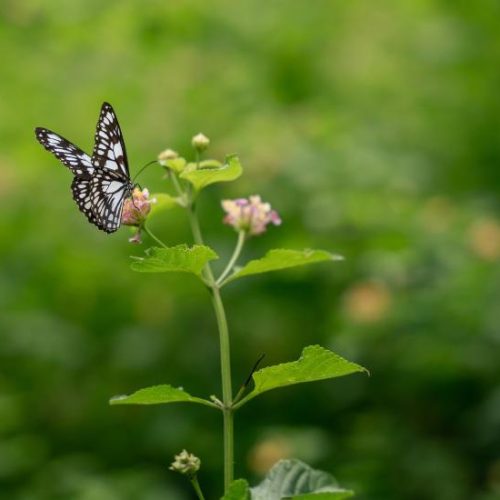
Discover the new Nature’s Heartbeat website
20 October, 2026
Discover the new Nature’s Heartbeat website
20 October, 2026
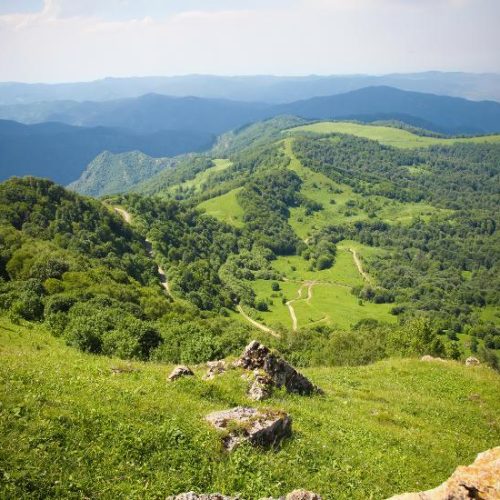
IUCN NL at COP17 in Yerevan: locally led…
12 October, 2026
Wednesday 17 december 2025
Klein Bonaire is a small, uninhabited island off the western coast of Bonaire. With visitor numbers rising rapidly, the fragile ecosystems of beaches, coral reefs, and dry tropical forests are under increasing pressure, making sustainable management more important than ever.
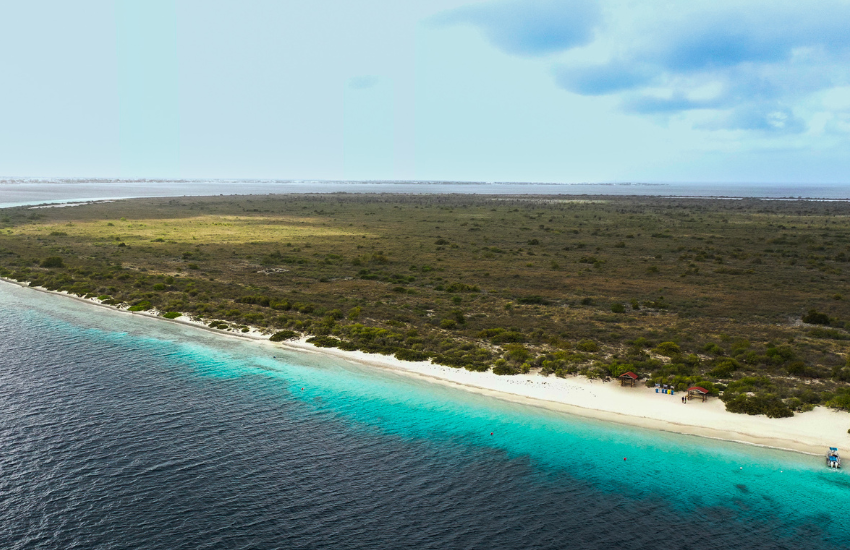
Header photo: Klein Bonaire © STINAPA
Stichting Nationale Parken Bonaire (STINAPA) manages both Klein Bonaire and the surrounding Marine Park. With support from Bestlife2030, STINAPA is restoring vulnerable habitats and improving sustainable use on Klein Bonaire in order to improve the island’s climate resilience. Jessica Johnson, project coordinator at STINAPA, is leading efforts to protect and restore the island’s biodiversity while ensuring that visitors can enjoy Klein Bonaire responsibly.
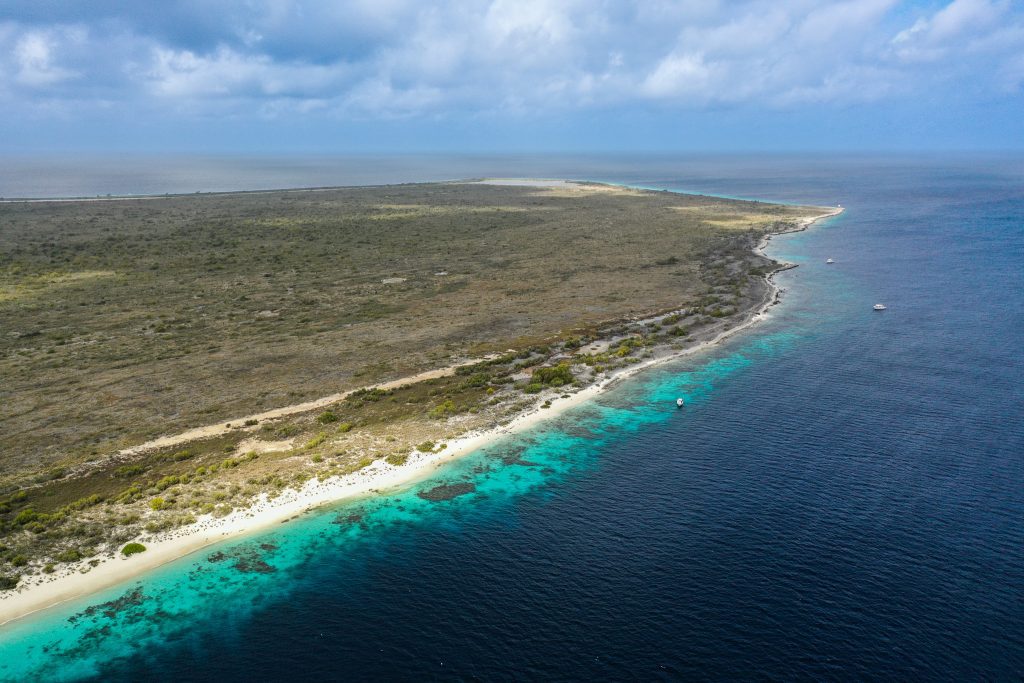
Just off the western coast of Bonaire lies Klein Bonaire, a small, uninhabited island of about six square kilometres. Despite its small size, the island is of great ecological importance. Its relatively flat terrain includes Salinas, beaches, dry tropical forest, and its coast is surrounded by coral reefs.
Historically, Klein Bonaire was privately owned, and exploitation of the island led to degradation of the landscape. Tree cutting, grazing goats, and the impact of a strong hurricane all contributed to deforestation. Today, the island is government-owned and part of the Bonaire National Marine Park, managed by STINAPA. The absence of goats for the last forty years has allowed Klein Bonaire’s flora to recover. The island has become home to a wide variety of local plants and animals, some not even found on Bonaire itself [1]source: https://stinapabonaire.org/bonaire-national-marine-park/klein-bonaire/ .
The ecological value of Klein Bonaire is emphasized by the presence of critically endangered species and habitats. The island hosts three critically endangered ecosystems: tropical dry forest, sandy beaches, and coral reefs. Each area is essential for maintaining biodiversity. The tropical dry forests provide shelter for terrestrial species, sandy beaches offer nesting grounds for sea turtles and other coastal wildlife, and coral reefs support marine life.
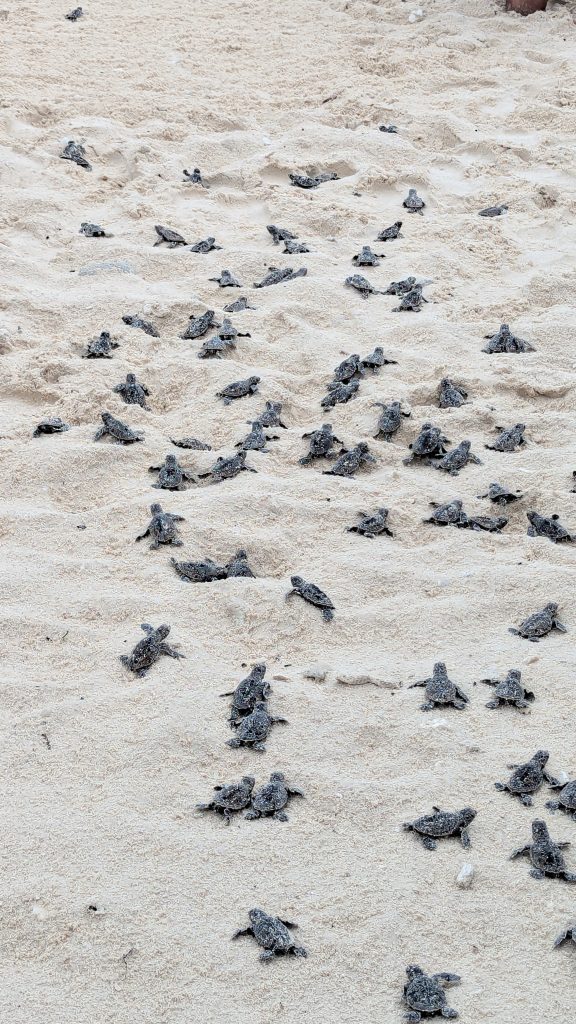
The importance of this island for the flora and fauna is recognized internationally. It is a designated RAMSAR wetland of international importance and an Important Bird Area (IBA). In addition, the most important nesting site for endangered sea turtles – No Name Beach – is also located on Klein Bonaire. Green turtles (Chelonia mydas), hawksbill turtles (Eretmochelys imbricata), and loggerhead turtles (Caretta caretta) all use No Name Beach to lay their eggs.
The island is also home to vulnerable plant species, such as West Indian satinwood (Zanthoxylum flavum) and roughbark lignum-vitae (Guaiacum officinale). Together with its coral reefs, which also harbour threatened species, Klein Bonaire is a critical link in the ecological network of the Caribbean.
Not only do the designations and the natural richness on Klein Bonaire highlight the Island’s environmental value, but its beauty also attracts visitors. Protecting Klein Bonaire therefore means safeguarding biodiversity, while also preserving its cultural and economic value.
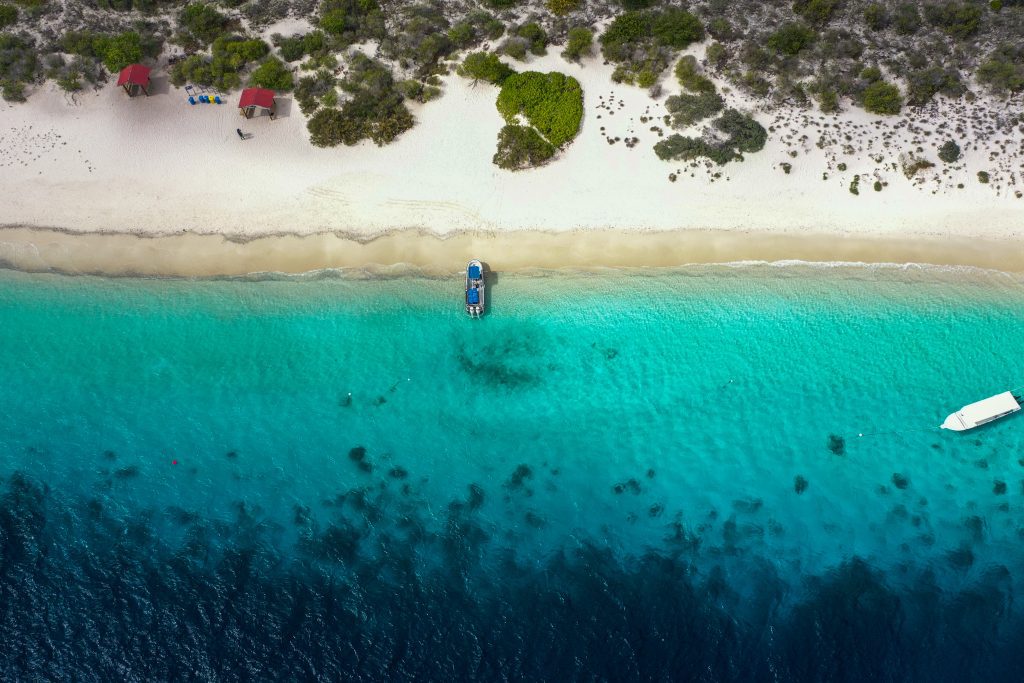
STINAPA has managed the Island since 1999, but until recently, there has been little active management. As visitor numbers rise, so does the negative impact on nature. To address this, STINAPA has been working on improving management through a number of initiatives. Their project focuses on increasing ranger support by increasing ranger presence on busy days and implementing rotation schedules, but also on conducting a study to help understand the Island’s ecological thresholds. At the same time, it aims to enhance the visitor experience by promoting sustainable tourism and improving walking trails, signage and access to popular diving spots, like No Name Beach.
Another key component of the project is ecological restoration. STINAPA hosts re-wilding events to restore natural habitats on Klein Bonaire and enhance the island’s ecological resilience. In addition, they organise stakeholder meetings and workshops with the local community, conservation partners, and volunteers to ensure that they are trained, informed, and able to manage and monitor ecological restoration measures independently. Through these combined efforts, STINAPA hopes to promote the sustainable use of Klein Bonaire while still allowing visitors to enjoy the island.
The current project is a spin-off of another successful initiative on the east coast of Bonaire, Lac Bay. ‘We decided to apply this approach to other parts of the marine park. We know what to do and what to expect, which allows us to be more efficient with our time,’ Johnson explains.
As tourism and its impact on the small island increases, it becomes necessary to carefully manage these developments. STINAPA wants to gain a better understanding of how the landscape of Klein Bonaire functions and how the tourists interact with its environment. To achieve this, the organisation plans on conducting a Limits of Acceptable Change (LAC) study, a tool to help determine the acceptable impact of tourists on Klein Bonaire. The LAC model helps determine which impacts from activities such as tourism are acceptable and guides managers on how to keep these impacts under control.
Through this study, STINAPA aims to define the conditions it wishes to maintain on Klein Bonaire and to establish how much environmental change can be tolerated without compromising the island’s ecological health. ‘Tourism is growing rapidly, and this study would be an important tool to help us understand the island’s ecological thresholds and guide future management decisions,’ says Johnson.
With Klein Bonaire being a tourist attraction, it can sometimes be challenging to focus on nature conservation goals. Johnson agrees, stating, ‘The best thing for nature is to tell people they can’t come to the Island. However, it is a tourist site, so we can’t do that.’ In order to still improve the state of nature on the island, STINAPA has come up with measures that have a positive impact on both nature and the visitor experience. For example, through their rewilding events.
Through volunteer events, STINAPA plants tree species that do well in the harsh climate of Klein Bonaire. But they also work with different watering strategies. ‘If possible, we plant the trees close to freshwater wells, as they are more likely to survive there. If that is not an option, we use a water dripping method and gels that decompose while maintaining moisture in the first few years,’ says Johnson. These trees will ultimately make the island more climate resilient, but also improve the user experience. ‘The more trees there are, the less people will shove their umbrellas in the sand.’
The fact that Klein Bonaire is a small island brings challenges, but also opportunities, according to Johnson: ‘The Island is uninhabited and always will be uninhabited due to its size, presenting a lot of potential for conservation. You can really invest fully in a project, since you are not concerned about building something which will be broken down in 5 years.’ The BESTLIFE2030 grant ensures that STINAPA can seize this opportunity with both hands. “This is huge for STINAPA, because rewilding Klein Bonaire is always on our list of things to do, but always gets cut off the budget. So, to get funding that is also dedicated for this allows us to focus and be successful.”
Looking ahead, the project on Klein Bonaire is not only an investment in the island itself, but also in the broader resilience of Bonaire and the Caribbean Netherlands. By demonstrating how conservation and sustainable use can go hand in hand, STINAPA’s work on Klein Bonaire can serve as an example for other small islands facing similar pressures.
This project is part of the BESTLIFE2030 programme. It is funded by the EU LIFE-programme, a European environmental and climate action grant programme. BESTLIFE 2030 provides funding for projects that work on nature conservation and restoration in overseas countries and territories of the European Union to stop and reverse global biodiversity loss.
IUCN NL is the focal point for Aruba, Bonaire, Curaçao, Saba, St. Eustatius and St. Maarten. These islands have a high biodiversity, but are among the places that are the most vulnerable to climate change and environmental pressures.



| ↑1 | source: https://stinapabonaire.org/bonaire-national-marine-park/klein-bonaire/ |
|---|
20 October, 2026
The new Nature’s Heartbeat website is live. It brings together the stories, people and landscapes behind a growing movement that…
12 October, 2026
From 19 to 30 October 2026, the UN Biodiversity Conference (CBD COP17) takes place in Yerevan, Armenia, under the theme…