Meet the conservationist: Anne-Isabelle Bonifassi
23 July, 2026
Meet the conservationist: Anne-Isabelle Bonifassi
23 July, 2026
Thursday 03 july 2025
The Kaliwa dam project in the southern Sierra Madre has drawn significant attention due to concerns raised by Indigenous communities. Intended to divert water from rural to urban areas, the project threatens one of the country’s most biodiverse regions – its largest remaining rainforest – and the lives it sustains.[1]Save Sierra Madre [2]IUCN NL. (2021) Indigenous communities in the Philippines defend their rights A decade of solidarity with Indigenous river defenders reveals how community rights and livelihoods, forest and water protection, and equitable urban-rural relations are deeply intertwined.
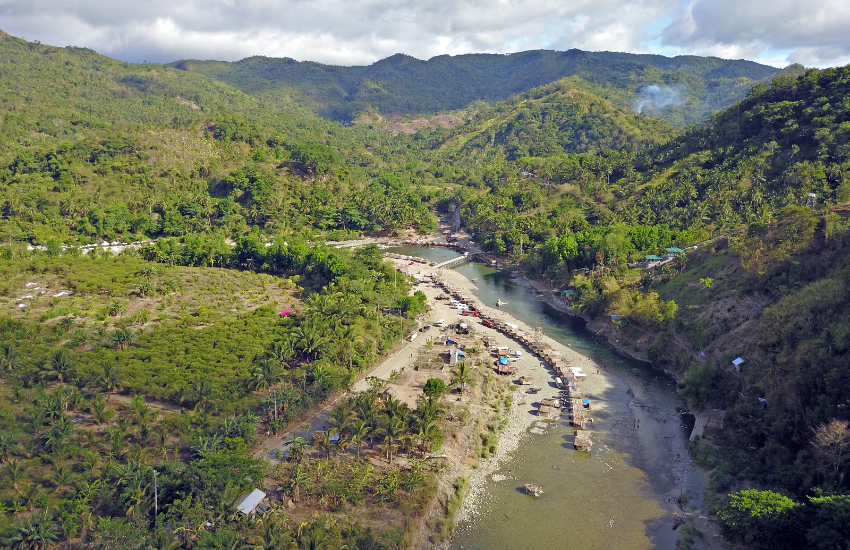
Header photo: Aerial photo of Brgy Daraitan Tanay Rizal © Erwin Mascarinas / NRFP-EP Philippines
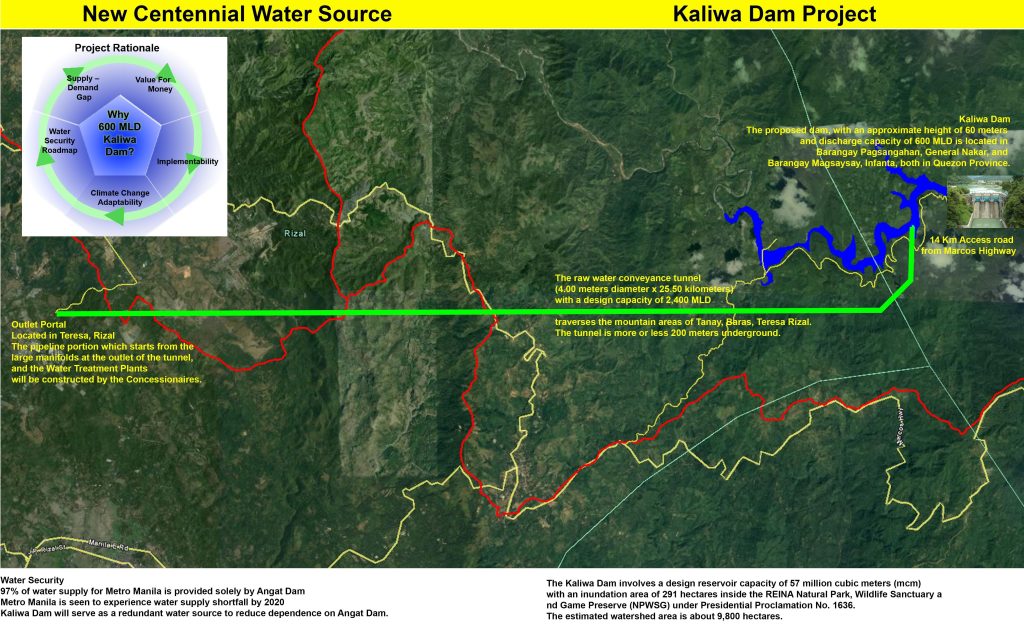
The Kaliwa dam is part of the Government of the Philippines’ (GOVPH) New Centennial Water Source program, launched in 2019 during the administration of former President Rodrigo Duterte. Funded through a $211 million loan from China, the $317 million project involves a 63-meter-high concrete dam that seeks to divert water from the Kaliwa river through a tunnel toward the metropolitan area of Manila, home to over thirteen million residents. According to the government agency Metropolitan Waterworks and Sewerage System (MWSS), the mega dam is expected to supply the capital with an additional six hundred million litres of water per day by 2027, offering a solution to the city’s persistent water shortages.[3]Mongabay. (2023). ‘It gives life’: Philippine tribe fights to save a sacred river from a dam
The dam reflects a state-sponsored development model that favours urban consumption while marginalising rural interests, Indigenous lands, biodiversity, and the ecosystems that underpin long-term water security.
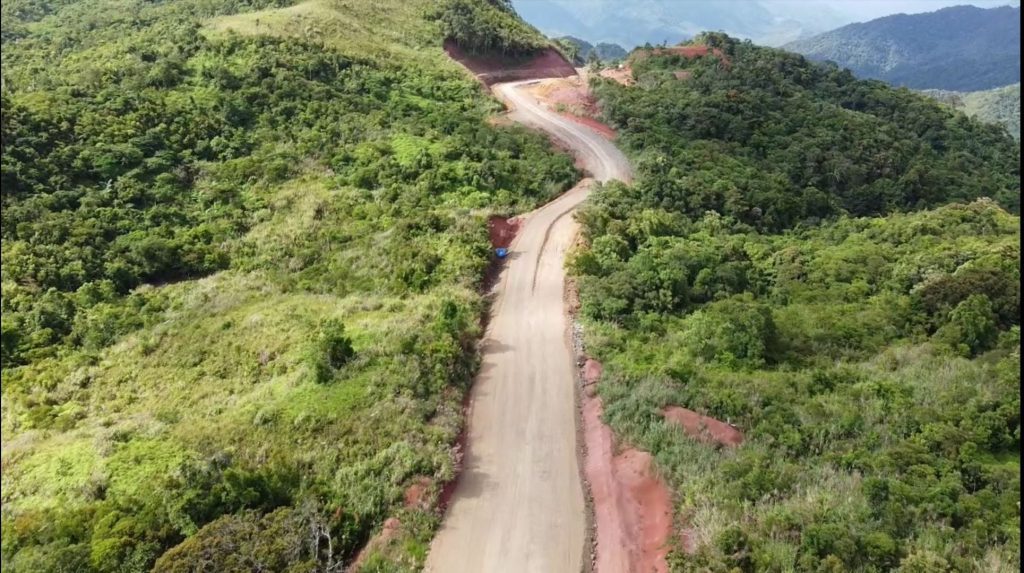
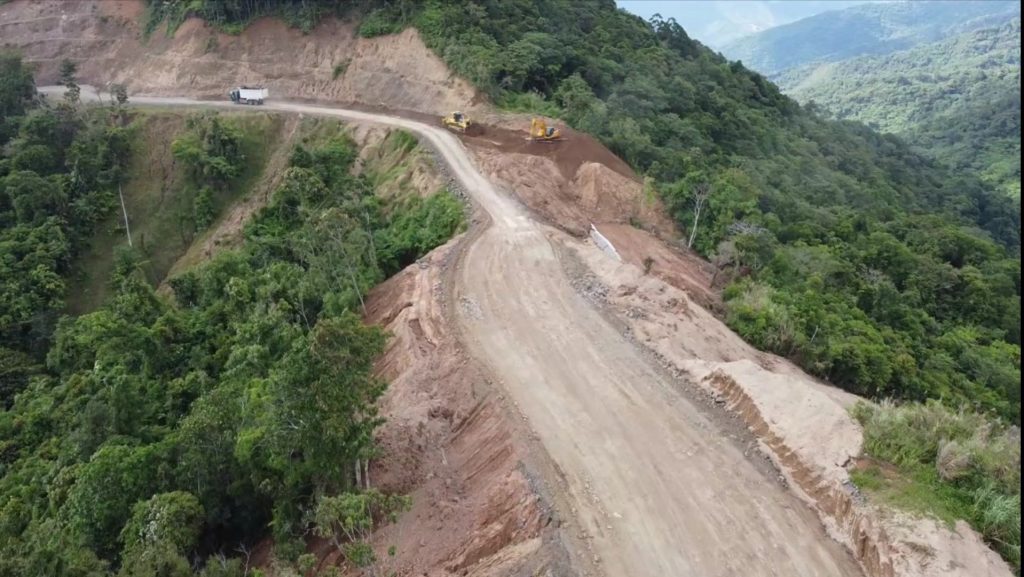
The access road to the Kaliwa dam cuts right through the Sierra Madre forests © STOP Kaliwa Dam Network
The GOVPH justifies the Kaliwa dam plans, stating that it is the only way to prevent yet another water crisis in Manila. Framed as an inevitable solution for the capital’s growing population, this narrative obscures urban inequalities and poor water governance.[4]Talamayan, F. (2021). Mapping Anti-Dam Movements: The Politics of Water Reservoir Construction and Hydropower Development Projects in the Philippines. International Center for Cultural Studies … Continue reading
Water scarcity in Manila is not solely an issue of limited natural supply. Uneven consumption patterns, systemic leakage, weak management, and deforestation and watershed degradation also play a major role. While wealthier households often enjoy round-the-clock water access, the marginalised urban residents face intermittent service. Estimates suggest that 20–30% of treated water is lost through leaking pipes, illegal connections, and inefficient distribution. Management of the city’s water system is fragmented across multiple agencies resulting in poor coordination and enforcement. Meanwhile, catchment areas like the Sierra Madre have been logged or converted, reducing natural water regulation and the reliability of river flows.
Manila’s recurring “water crisis” is therefore not a natural phenomenon, but socially and politically produced. By building a new dam, the Philippine government ignores structural issues and power imbalances that need to be addressed to ensure a more equitable and sustainable water supply.
It is clear that the dam is not a neutral-technical solution, as suggested by its proponents. It profoundly reflects urban-rural inequalities, giving priority to some people and their lifestyles over others. Rural resources are often diverted to serve urban needs. In this context the project symbolises a clash between urban-industrial needs under a modernist state-led development model, and the rights of rural communities who have long protected and depended on the river.[5]Talamayan, F. (2021). Mapping Anti-Dam Movements: The Politics of Water Reservoir Construction and Hydropower Development Projects in the Philippines. International Center for Cultural Studies … Continue reading [6]Maningo, C. A. (2023). The Case of the Kaliwa Dam Project in Quezon Province, Philippines: Curbing Contentions Through Active Deliberation Among Indigenous and Marginalized Communities. Graduate … Continue reading
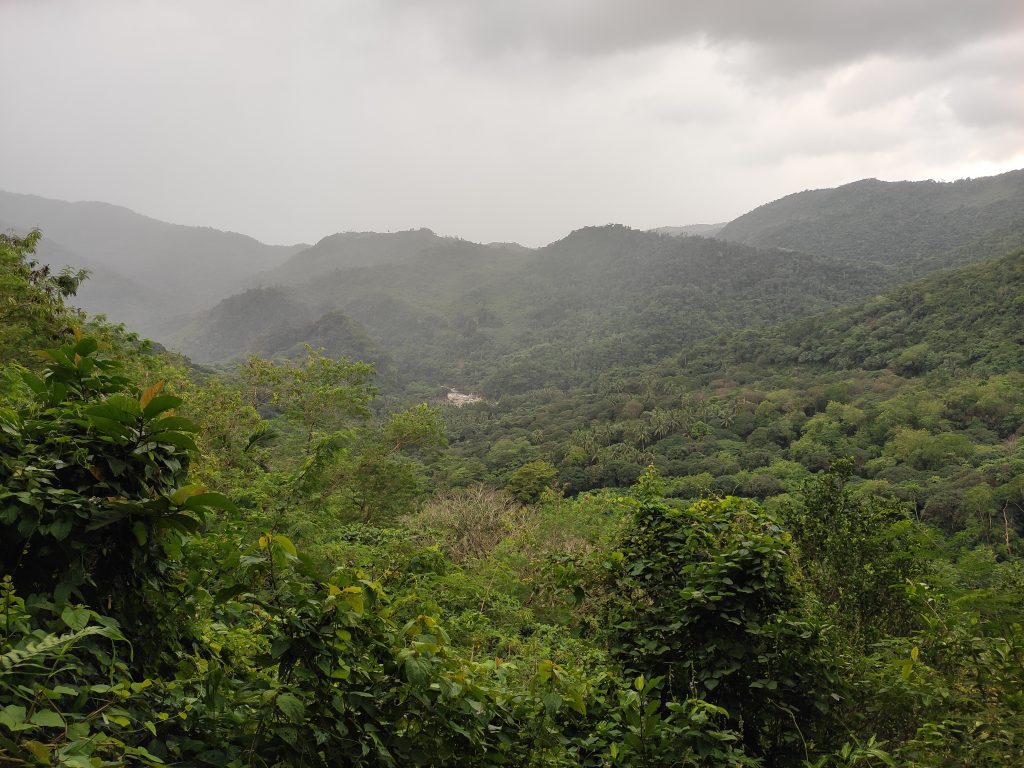
In numbers, the dam would flood approximately 291 hectares of old-growth and secondary forest – including within the Kaliwa Watershed Forest Reserve, which is the Ancestral Domain of the Dumagat-Remontado Indigenous people. Its construction threatens both upstream and downstream populations. Upstream, the dam affects between ~400 and ~1,465 Indigenous Peoples (IP) households – including displacement of 20-30 IP households living in the reservoir areas loss of sacred sites, hunting grounds and forest areas vital to their subsistence, as well as restricted access to ancestral domains once the area becomes a reservoir. Downstream, approximately 100,000 residents face increased risks of landslides and massive flooding.[7]Mongabay. (2023). ‘It gives life’: Philippine tribe fights to save a sacred river from a dam [8]COMMON GOOD VS. EXCLUSIVE PROGRESS: THE CRY OF KALIWA AND ITS IMPENDING DESTRUCTION. (2024). National Conference on Catechesis and Religious Education Conference Proceedings, 11, 44-45. In that sense, the dam threatens the livelihoods of both upstream and downstream communities. This includes smallholder farming, fishing, and ecotourism, all closely attuned to the natural rhythms of the Sierra Madre and the Kaliwa river. These sustainable livelihoods are to be replaced by temporary construction jobs, long-term displacement, food insecurity, and poverty.[9]Ramos, M. S. (2022). ‘We are not invisible’. VICE VERSA GLOBAL.
For the Dumagat-Remontado, the river is sacred, central to their identity, health, and spirituality; diverting its flows and flooding ancestral lands would destroy sacred sites and territorially rooted cultural practice.
Moreover, the flooded forest is highly biodiverse, home to over 170 plant species and countless wildlife that depend on the Sierra Madre’s delicate ecosystem. The dam construction has already caused deforestation and river siltation, undermining the integrity of a watershed.
The stark injustices and feared losses sparks opposition. A coalition of civil society organisations is fighting the project through legal action and a nationwide campaign calling for its cancellation. Activists argue that the dam violates environmental laws and disregards the Free, Prior, and Informed Consent (FPIC) of Indigenous peoples. Some communities have raised concerns about the clarity and completeness of information shared during the consent process, which contributed to divisions within communities. Indigenous groups that agreed to the project received financial compensation. [10]Mongabay. (2023). ‘It gives life’: Philippine tribe fights to save a sacred river from a dam
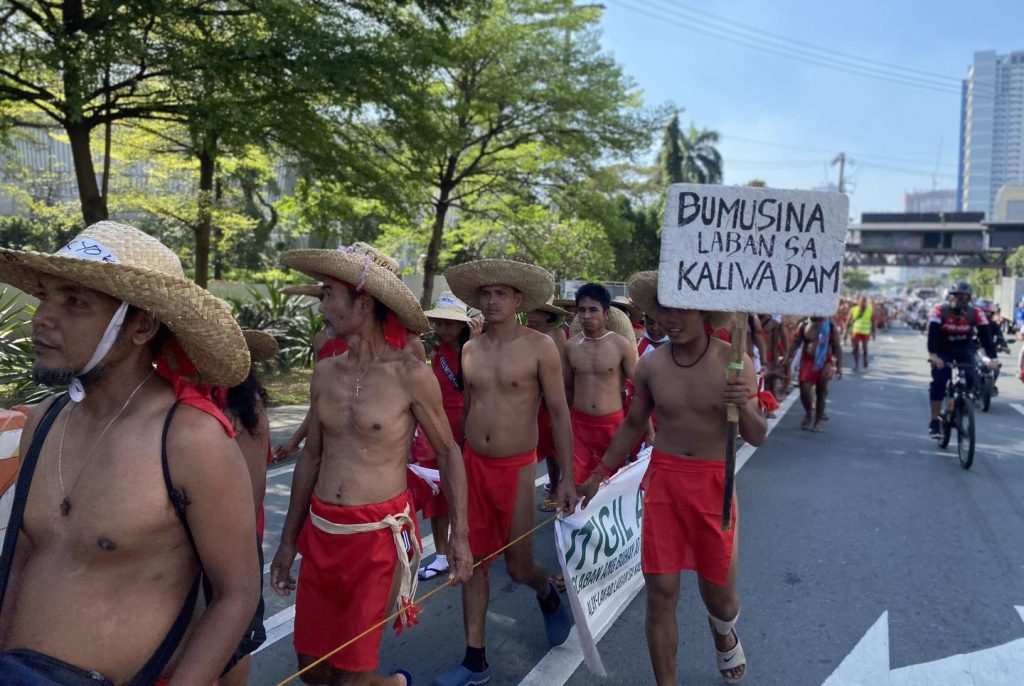
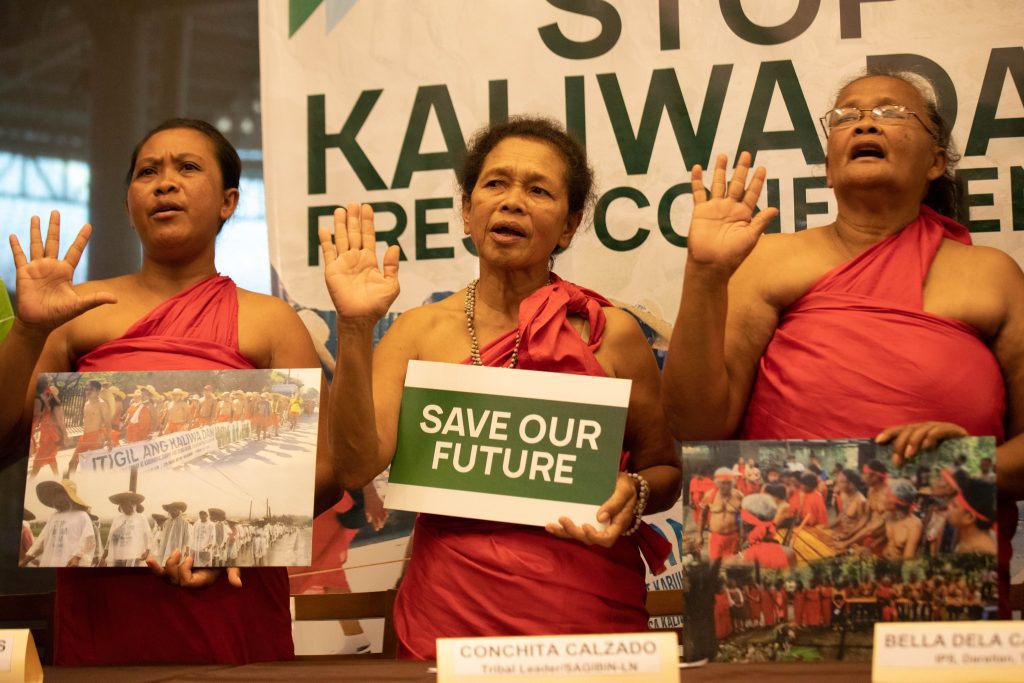
Indigenous communities protest against the construction of the dam © STOP Kaliwa Dam Network
However, opposition to the dam is hard to sustain, as it faces both subtle and overt forms of violence. Dumagat-Remontado communities report being blocked from accessing their territory, undermining their livelihoods and cultural practices. Some of those who speak out against the project have been subjected to “red-tagging”. This is a tactic used by authorities to brand activists, environmental and human rights defenders (EHRDs), and Indigenous leaders as communists or terrorists, which often results in harassment, surveillance, and, in some cases, extrajudicial violence carried out with impunity.[11]Mongabay. (2023). ‘It gives life’: Philippine tribe fights to save a sacred river from a dam [12]Talamayan, F. (2021). Mapping Anti-Dam Movements: The Politics of Water Reservoir Construction and Hydropower Development Projects in the Philippines. International Center for Cultural Studies … Continue reading
The experiences of the Dumagat-Remontado reflect a wider reality: the Philippines is one of the most dangerous places for land and environmental defenders, with Indigenous peoples, women and youth disproportionately at risk.[13]Global Witness. (2025). Roots of resistance: Documenting the global struggles of defenders protecting land and environmental rights.
Under the Green Livelihoods Alliance (GLA)’s Forests for a Just Future programme and its predecessor, IUCN NL and NTFP-EP Philippines collaborated closely to strengthen Indigenous rights and territorial governance. Their efforts aim to help communities recognise and assert their rights, protect ancestral lands and cultural practices, and defend their river and biodiversity in the face of a large-scale development project.[14]NTFP-EP (2023). IN PHOTOS: GLA visits Dumagat-Remontado ancestral domain in Rizal, Philippines
The alliance brings local and international partners together, linking grassroots struggles with broader advocacy to ensure Indigenous voices are heard at both national and international levels. The programme focuses on building solidarity, strengthening community leadership, and promoting the sustainable stewardship of forests and rivers.
NTFP-EP Philippines (NTFP-EP PH)engages in rights-based advocacy and community empowerment, including raising awareness of legal rights (such as FPIC), advancing sustainable livelihoods tied to non-timber forest products, and forest conservation work. Women’s leadership and empowerment feature prominently in these efforts, by strengthening women’s groups and their voice in forest governance and decision making, including through national women’s assemblies and broader rights advocacy.
NTFP-EP PH also amplifies Indigenous youth voices under the GLA programme. Creating supportive networks like the Ugnayin National Indigenous Youth Network Philippines (UGNAYIN PH) and youth-led spaces (like I-YES Camps) enable them to practice speaking up, organising, and showing up for culture and forests. Youth leaders like Lovely Villegas have strengthened their confidence to contribute to their community and defend their ancestral lands.
Both under the Green Livelihoods Alliance and its predecessor, IUCN NL actively supported the struggle for justice and against the Kaliwa dam. This includes backing Indigenous- and women-led advocacy networks to amplify their voices in decision-making processes, locally and internationally, ensuring that the perspectives of the Dumagat-Remontado and other Indigenous groups are recognised in discussions on water security, forest governance, and human rights.
As part of its long-standing commitment, IUCN NL also organised a learning exchange visit to two large dams in another region of the Philippines built over 50 years ago This learning exchange resulted in a better understanding of the risks of large dams on livelihoods and the ecosystem among the Indigenous groups from the Sierra Madre and the communities from Sierra Madre felt strengthened in their efforts to protect their territory and livelihoods.
In the Forests for a Just Future programme of the Green Livelihoods Alliance, IUCN NL contributed to more sustainable and inclusive governance of tropical forests, in a way that promotes climate mitigation, water provisioning, biodiversity and human rights and that safeguards the livelihoods of Indigenous peoples and local communities (IP&LCs).


23 July, 2026
Growing up surrounded by animals, Anne-Isabelle Bonifassi always dreamed of a career in conservation. Today, as Executive Director of Haiti…

23 July, 2026
How the Caribbean Cetacean Society, with the support of BESTLIFE2030, aims to translate scientific knowledge into policy, and why this…