
Building climate resilience in the Nyon River watershed in Mauritius

Critical minerals and the western chimpanzee: how bauxite…
24 March, 2026
Sunday 01 december 2024
Supported by the Critical Ecosystem Partnership Fund (CEPF), IUCN NL and partners in Madagascar, Comoros, Mauritius and the Seychelles are guiding ecosystem-based adaptation and conservation projects in this biodiversity hotspot – a group of islands with incredible species diversity and extremely high rates of endemism. In a series of articles we are highlighting some of these powerful projects.
Header photo: Women empowered with organic agroforestry at Ferney Valley, Mauritius © Peggy Poncelet
Ferney Conservation Trust, in collaboration with Ferney Ltd, has launched an ambitious three-year project to restore the Nyon River watershed in Mauritius, backed by a USD 284,022.73 grant from CEPF.
The Nyon River watershed, a vital ecological and hydrological system, is under severe threat from habitat degradation, invasive alien species, and unsustainable land use. These pressures have diminished biodiversity, reduced water quality, and weakened the ecosystem’s ability to withstand climate change impacts such as droughts and floods. Without urgent restoration, the watershed’s capacity to support downstream ecosystems and communities will continue to decline.
The Ferney initiative employs an integrated, ecosystem-based approach to address these challenges and facilitate the natural regeneration of watershed forests and riparian areas in the Nyon River watershed. Activities include removing invasive alien plants, planting native pioneer and post-pioneer species, and creating fenced-off areas to protect the ecosystem. Additionally, sustainable practices like climate-smart agriculture and agroforestry will enhance land management and improve livelihoods, particularly for local women farmers.

Tree nursery Vallée de Ferney © O. Langrand
The project, initiated in August 2023, has made significant progress. To date, 2,300 saplings have been planted, primarily Harungana madagascariensis, Leea guineensis, Dodonaea viscosa, and Calophyllum tacamahaca, across 11 sections of pastureland, covering a total of 4.2 hectares. Additionally, equipment for electric fencing was purchased to protect the plantations from damage caused by deer and wild pigs.
Further up the valley, efforts to control populations of Invasive Alien Plants have resulted in a notable reduction of species such as Cinnamomum verum, Psidium cattleianum, Ligustrum robustum, and Clidemia hirta. This intervention spanned three different forest gradients, covering an area of 7 hectares. In one of the cleared sections, 320 saplings have been planted, despite the area being accessible to deer and feral pigs.
In the Model Farm segment of the project, ten women are cultivating crops and trees over 0.45 hectares within the Ferney AgriHub. The initial five participants have completed 49 hours of training provided by the Le Vélo Vert association and Forma’Terra, a training institution from Reunion Island.
Do you want to learn more?
Watch the video to see how Ferney and its partners are working towards a resilient Nyon River watershed.
About the Critical Ecosystem Partnership Fund
The Critical Ecosystem Partnership Fund (CEPF) is a joint initiative of l’Agence Française de Développement (AFD), Conservation International, the European Union (EU), Fondation Hans Wilsdorf, the Global Environment Facility, the Government of Canada, the Government of Japan, and the World Bank. Its fundamental objective is to ensure that civil society is engaged in biodiversity conservation.
Thanks to funding from the Green Climate Fund (GCF) through AFD as an accredited entity for the GCF, and from the EU through AFD as a fiduciary agent, CEPF has established and manages a 10-year program of US$50 million to support civil society organizations in promoting ecosystem-based adaptation in Madagascar and the Indian Ocean Islands Biodiversity Hotspot. Under the auspices of the Ministries of Environment in the Comoros, Environment and Sustainable Development in Madagascar, Finance, Economic Planning and Development in Mauritius, and Agriculture, Climate Change and Environment in the Seychelles, the program’s activities are being implemented in the Comoros, Madagascar, Mauritius, and the Seychelles. Madagascar receives additional support from the Franklinia Foundation for the conservation of Madagascar’s endangered trees.
Regional Implementation Team
CEPF has enlisted a consortium of nongovernmental organizations to be its regional implementation team (RIT) in the hotspot. Coordinated by IUCN NL, the RIT includes SAF/FJKM for Madagascar, ID-ONG for Comoros, FORENA for Mauritius and SeyCCAT for Seychelles. These organizations are working with CEPF to implement a five-year conservation strategy for the hotspot and build local civil society capacity.
More information



27 March, 2026
Engaging Stakeholders to Advance Ecosystem-based Adaptation in Mauritius
Madagascar and the Indian ocean islands are a biodiversity hotspot - a group of islands with incredible species diversity and…
24 March, 2026
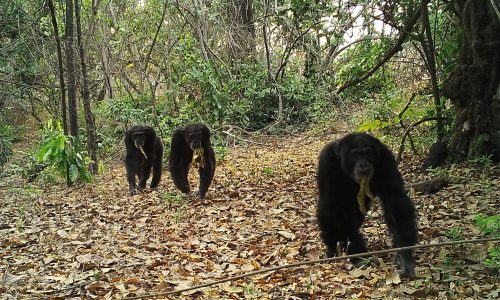
Critical minerals and the western chimpanzee: how bauxite mining threatens one of West Africa’s last strongholds
In West Africa, the global scramble for critical minerals’ is putting immense pressure on unique ecosystems. As the demand for…