Statement: Invest in local leadership for tropical forest…
20 March, 2026
Statement: Invest in local leadership for tropical forest…
20 March, 2026
Meet the conservationist: Dr. Amelaid follows in the…
12 March, 2026
Friday 21 november 2025
Header photo: Field visit @SAF_FJKM
Supported by the Critical Ecosystem Partnership Fund (CEPF), TAFO MIHAAVO Haute Matsiatra leads the project ‘Empowering Local Organizations for Sustainable Forest Governance in Madagascar’, launched in October 2023. This initiative aims to promote sustainable governance practices in the peripheral communities of the Fandriana Vondrozo Forest Corridor.
Madagascar possesses an astounding number of species, many of which are endemic to Madagascar. The island is home to over 11,000 endemic plant species, five families of birds, five families of primates and two families of freshwater fish found nowhere else on the planet. New species are being discovered at a rapid rate in Madagascar: 22 new mammal species and subspecies have been described in the past 15 years. In addition to its incredible species diversity, the hotspot provides millions of people with fresh water and other ecosystem services that are essential to their survival.
Due to agricultural practices, hunting, illegal wildlife trade, tourism and climate change, the islands have a very high level of degraded natural ecosystems. To date, the national and regional governments have been unable to effectively enforce nature and environment legislation. As a result, ecosystem services are at risk of rapidly disappearing, despite the fact that 90 percent of the population of Madagascar are directly dependent on primary resources from agriculture, fishery and forestry. Moreover, healthy ecosystems act as a physical barrier against extreme weather events such as cyclones and storm surges.
Well-informed citizens can play a crucial role in enforcing legislation and regulations designed to protect nature and ecosystems in the long term. Local people not only do understand the local context better than anyone else, but also can be the most effective drivers of change through their actions when they are given the opportunity. This is why CEPF targets the aforementioned issues by mobilising and empowering civil society, ranging from indigenous peoples groups and communities, to universities and nongovernmental organisations. IUCN NL expert on Madagascar Mark van der Wal explains: “In Madagascar, our aim is landscape management that respects the ecological parameters for sustainable development. We are strengthening civil society organisations to help encourage citizens, government and businesses to work towards that aim.”
Supported by CEPF, IUCN NL is leading the consortium for the Regional Implementation Team (RIT) which includes partners from Madagascar (SAF/FJKM), Comoros (ID-ONG), Mauritius (FORENA) and the Seychelles (SeyCCAT). As a RIT, we support the development and oversight of a portfolio of more than 100 grants to non-governmental organisations, community-based organisations, academic institutions, private companies and other organisations on the islands.
The primary goal of the TAFO MIHAAVO project is to prevent people from migrating into the forest, thereby reducing the anthropogenic pressure that even extends to the core area by updating the existing management plan and enforcing internal regulations. It concentrates on capacity-building for ten local natural resource management organisations (VOIs), revitalising the Local Consultation Structure (Structure locale de Concertation – SLC) at the communal level, and establishing a project committee to oversee community activities.
So far, Tafo Mihaavo has managed to set up a network of informants with the independent anti-corruption office (BIANCO) and the ten VOIs. They have also joined the Haute Matsiatra regional bushfire control committee as part of their commitment to enforcing regulations. Besides this, the project integrates income-generating activities such as rice cultivation, beekeeping, and fish farming, benefiting approximately 1,800 individuals. These endeavors not only improve livelihoods but also promote sustainable practices.
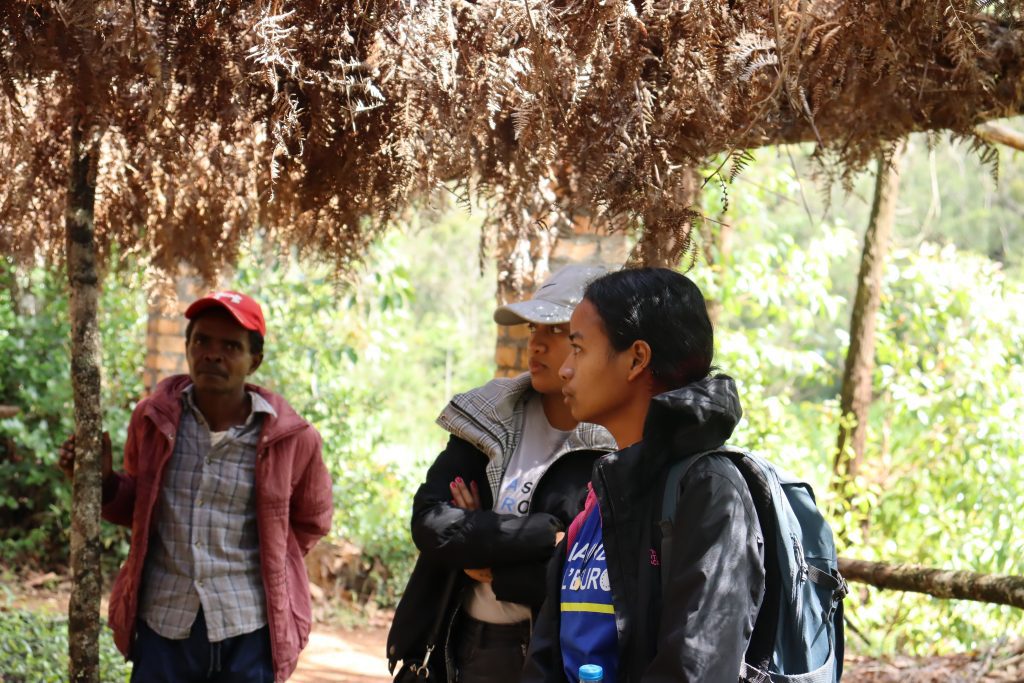
Photo: Field visit @SAF_FJKM
Scheduled to continue until March 2026, the project has already achieved some important milestones in strengthening the capacity of local communities and VOI structures by:
Through its ten VOI members, Tafo Mihaavo has also made tangible contributions to restoration efforts by planting native tree species in the core areas of each VOI-managed controlled occupation zone.
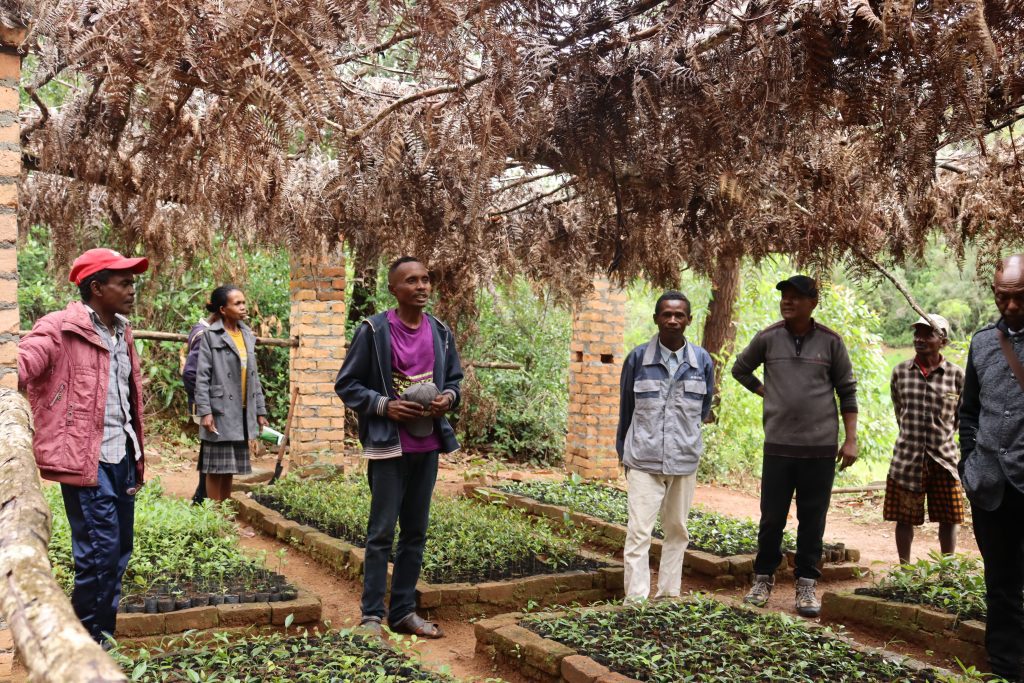
Andriatiana Christophe @SAF_FJKM
Andriatiana Christophe, a 47-year-old father residing in Sahavondronina near Ranomafana National Park, is actively involved with the VOI and has been a staunch advocate for nature conservation for over 15 years through the 3FT association (Fikambanana Fanatsarana sy Fiarovana ny Tontolo iainana). His efforts in combating bush fires and deforestation have been instrumental.
Christophe and his colleagues have made significant strides in reforestation, with the establishment of a community nursery ensuring the production of 30,000 seedlings so far. They have also restored cleared areas and installed four hectares of firebreaks. “We’re proud to contribute to the reforestation of the Haute Matsiatra region independently, using our own seedlings,” Christophe remarks.
Besides protecting the Protected Area, these restoration efforts have notably enhanced Christophe’s family’s living conditions. “My income has increased considerably, enabling me to support my children’s education through high school,” he shares proudly.
20 March, 2026
The undersigned organisations call on the Dutch government to supplement its policies and legislation with investments in inclusive, locally led…
12 March, 2026
Amelaïd Houmadi grew up on an island in the Comoros. At his parental house, nestled at the foot of a…
