
Statement: Invest in local leadership for tropical forest…
20 March, 2026
Statement: Invest in local leadership for tropical forest…
20 March, 2026

Meet the conservationist: Dr. Amelaid follows in the…
12 March, 2026
Thursday 30 october 2025
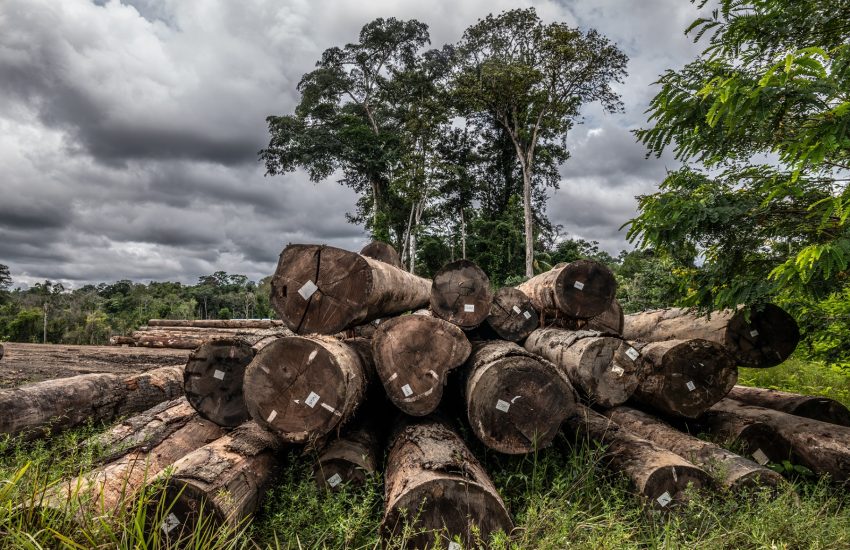
Header photo: Deforestation in the Amazon. (c) Britta Jaschinski IUCN NL
Over the past year, public and private stakeholders – including producer countries, importing authorities, and businesses – have invested substantial resources to align their systems with EUDR requirements. Many of these actors, including smaller enterprises and producers, already had initiated traceability measures, data-sharing protocols, and capacity-building efforts in anticipation of the regulation’s entry into force.
In September 2025, the European Commission announced a one-year delay in implementing the EUDR, due to gaps in the technical readiness of its IT system. Following major reaction from stakeholders, the Commission presented another proposal in October, advocating for implementation to begin as planned on December 30 of this year, but delaying checks and fines for medium and large companies by six months, and postponing implementation for small enterprises by a full year.
Furthermore, small and microenterprises in so-called “low-risk countries” that deliver directly to the market would now be subject to simplified due diligence requirements. Another major change is that downstream operators -those manufacturing and selling products after they have already been put on the EU market – would no longer need to verify that due diligence was carried out or submit due diligence statements in the IT system.
While a delay of fines may help several stakeholders to come up to speed with the requirements, many supply chains have already invested in due diligence systems they may have now to adapt. However, they cannot do so before both EU Council and Parliament agree with the new proposal. Furthermore, lifting responsibility for downstream operators raises high concerns over the robustness of supply chains’ approach, in addition to EU’s ability to deliver on its ambitious commitments to sustainable trade, forest conservation, and climate leadership. Various producing countries also raised concern over a widening gap between duties of low-risk and standard or high-risk countries.
IUCN reiterates that further postponement and simplification may risk slowing down this collective momentum, at a time when policy coherence is expected by on the ground actors, and when implementation of environmental legislations need support. Maintaining a predictable, transparent and robust roadmap for implementation is key to ensuring that ongoing efforts by governments, companies, and communities continue with confidence and clarity.
“Ahead of a Climate COP symbolically organized in the Amazon, with forests at the heart of global discussions on climate mitigation and adaptation, addressing deforestation linked to agricultural systems is critical for long-term food systems resilience. The EU’s Deforestation Regulation is an ambitious and necessary response to this challenge. Continued progress toward its implementation, despite technical hurdles, is essential in a year marking the 10th anniversary of the Paris Agreement,” said Boris Erg, Director of the IUCN European Regional Office.
“Limiting the administrative burden makes sense but downstream operators should maintain a responsibility to make this law work. Their leverage is key to assure proper implementation. Practical examples of EUDR implementation demonstrate both public and private innovation to support implementation. The EU now has an opportunity to consolidate this progress by offering predictability and by setting EUDR implementation in motion in a way as robust as possible,” said Heleen van den Hombergh, Senior Agrocommodities Advisor at IUCN in the Netherlands.
As IUCN, we support actions to halt deforestation and promote sustainable forest management as key pillars of our mission. Through initiatives such as the Forest and Climate Change Programme, and in line with relevant IUCN World Conservation Congress resolutions – including Resolution 108 on Deforestation and Agricultural Commodity Supply Chains (WCC-2020-Res-108-EN) and Resolution 129 on Avoiding the Point of No Return in the Amazon: Protecting 80% by 2025 (WCC-2020-Res-129-EN) – IUCN continues to work with governments, civil society, and the private sector to ensure that global forest conservation efforts are effective, equitable, and grounded in collaboration.
This worldwide engagement towards forest conservation recently received highlights at IUCN World Conservation Congress 2025, carried by high level discussions and with the approval of additional resolutions on primary forests protection.
The EU’s leadership in advancing deforestation-free supply chains remains a cornerstone for global progress on climate and biodiversity. IUCN encourages all stakeholders to maintain a forward-looking, cooperative approach that ensures the EUDR achieves its intended impact: safeguarding forests, supporting sustainable livelihoods, and reinforcing the EU’s credibility as a leader in nature-positive trade.



20 March, 2026
The undersigned organisations call on the Dutch government to supplement its policies and legislation with investments in inclusive, locally led…

12 March, 2026
Amelaïd Houmadi grew up on an island in the Comoros. At his parental house, nestled at the foot of a…