Statement: Invest in local leadership for tropical forest…
20 March, 2026
Statement: Invest in local leadership for tropical forest…
20 March, 2026

Meet the conservationist: Dr. Amelaid follows in the…
12 March, 2026
Thursday 09 october 2025
A rapid shift to renewable energy is vital to mitigate climate change, but it cannot come at the cost of human rights or nature. A recent UN report of special rapporteur Elisa Morgera warns that the energy transition is still linked to human rights violations and the destruction of valuable ecosystems. Things can and must change, and the International RBC (IRBC) Agreement for the Renewable Energy Sector covenant has a key role to play in this.
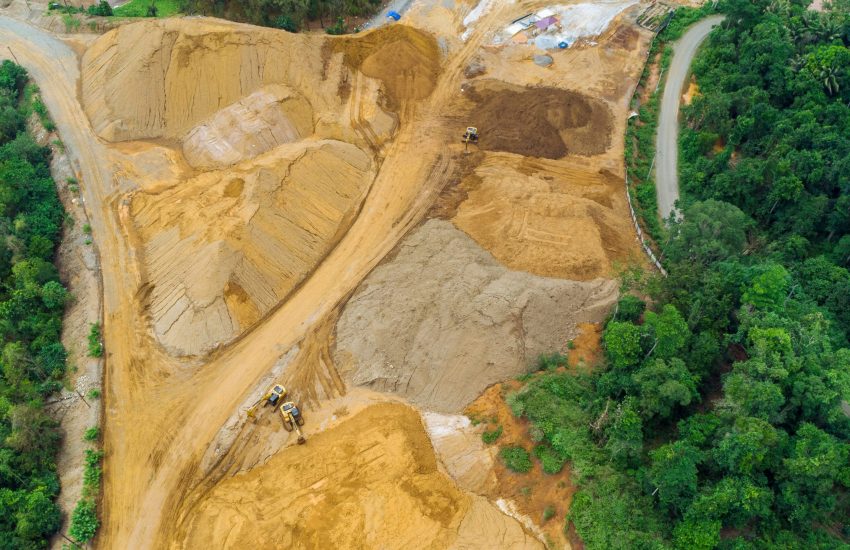
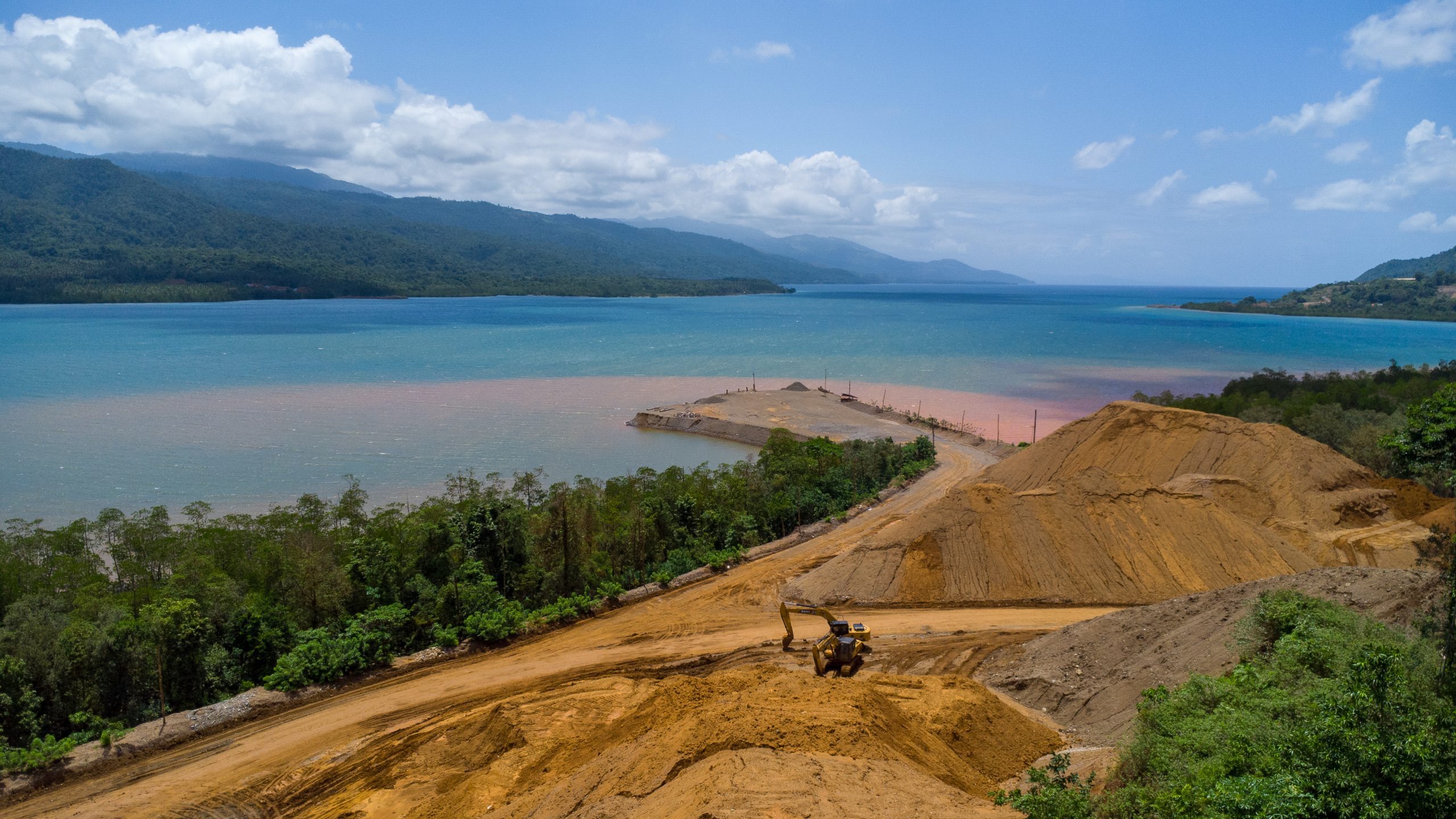
Header photo: Mining site in between patches of forest, Tompotika © Stephanie Broekarts / IUCN NL
The global energy transition requires the rapid phasing out of fossil fuels and large-scale upscaling of renewable technologies. Wind turbines, solar panels and batteries depend on so-called critical materials, including lithium, cobalt, nickel and bauxite. Demand for these materials could increase sixfold by 2040.[1]Source: https://iea.blob.core.windows.net/assets/ffd2a83b-8c30-4e9d-980a-52b6d9a86fdc/TheRoleofCriticalMineralsinCleanEnergyTransitions.pdf
This growing demand entails considerable risks, such as dependence on a limited number of producing countries and serious social and environmental impacts in mining areas. In countries such as the Philippines and Indonesia, nickel mining is already causing serious problems, including loss of livelihoods for indigenous communities, land grabbing, pollution of water sources, and large-scale deforestation in biodiversity-rich areas.[2]Source: The human rights impact of mining transition minerals in the Philippines | IUCN NL [3]Source: https://media.business-humanrights.org/media/documents/2023_EV_supply_chains.pdf Research by the IRBC Agreement for the Renewable Energy Sector also documented the significant environmental impact of mining around the industrial estate in Morowali, Sulawesi.[4]Source: Nickel mining on Sulawesi overlaps with globally important biodiversity areas, new research shows | IUCN NL
More fundamentally, however, the extraction of these critical materials risks replicating the same extractive economic model we know from the fossil fuel sector – a model based on overexploitation and short-term gains, rather than on justice, transparency and sustainability.
“Many of the minerals required for solar and wind energy are extracted from areas with rich biodiversity and vulnerable communities. The energy transition is urgent, but we must shape it in a responsible way.”
- Antoinette Sprenger, senior expert environmental justice at IUCN NL
The energy transition must be more than just a technological shift. It should also contribute to strengthening local economies, improving community well-being and protecting the environment. A recent report by the United Nations Special Rapporteur on the promotion and protection of human rights in the context of climate change, Elisa Morgera, highlights that child labour, unsafe working conditions, water conflicts and land disputes are real risks in the supply chain of renewable energy.[5]Source: https://docs.un.org/en/A/80/188 That is why transparency is essential in the value chains of the renewable energy sector. Legislative initiatives such as the CSDDD are therefore crucial to provide for the transparency required to get better insights into the possible issues in the value chain.
The IRBC Agreement for the Renewable Energy Sector could play a central role in addressing these challenges. It brings together companies, government, knowledge institutions, trade unions and NGOs to make supply chains more responsible, sustainable and transparent.
The International RBC Agreement for the Renewable Energy Sector builds on international guidelines, such as the OECD Guidelines and the UN Guiding Principles for Business, which require companies to conduct due diligence across the entire value chain. This sets up a system that focuses on transparency, accountability and continuous improvement. As Sprenger notes, “We want to help companies make better choices, to extract resources as sustainably and responsibly as possible, with minimal harm to people and nature.”
Cooperation is crucial in this regard: sharing expertise, networks and knowledge strengthens all parties involved and increases the impact.
Within the IRBC Agreement for the Renewable Energy Sector, IUCN NL plays an active role in promoting responsible mining management. An important instrument in this regard is the IRMA standard (Initiative for Responsible Mining Assurance), which guarantees that every voice affected by mining is heard in the process of defining and shaping responsible mining.
The IRMA standard goes a step further than the OECD guidelines by making these guiding principles concrete and providing clear operational steps. It is the only mining standard where Indigenous Peoples and Local Communities (IPLCs) have equal voices like other stakeholders, such as mining companies or the local government. As IRMA states, their most important commitment is ‘serving diverse stakeholders equally’.[6]Source: Labor – IRMA – The Initiative for Responsible Mining Assurance This contrasts with the normal approach, where IPLCs have hardly any say. By promoting the adoption of this standard across the sector, IUCN NL aims to guide companies toward more responsible and inclusive practices and help the renewable energy value chain reduce its social and ecological risks. For a detailed overview, see:
The IRBC Agreement for the Renewable Energy Sector runs until May 2028 and is now halfway. With a growing number of participating companies, the focus is increasingly on strengthening due diligence and achieving a just energy transition. While progress has been made, with companies taking steps toward more responsible practices, there is still work to be done.
IUCN NL actively supports this process by helping companies strengthen their due diligence, sharing knowledge, and organising sessions on topics such as the impact of offshore wind and solar farms. So far, sessions have covered the impact of mining as well as that of wind and solar farms, how to mitigate their environmental effects, and how to restore biodiversity in these types of areas. These efforts are closely linked to IUCN NL’s broader initiatives, such as Bottom Line!, which promotes socially and ecologically responsible mineral governance, the establishment of no-go zones for mining, and meaningful participation of local communities.
The transition to renewable energy is not only a technological challenge but also a test of our commitment to human rights, biodiversity, indigenous peoples and local communities. Achieving a truly just transition requires all actors – companies, governments, and civil society – to work together, share knowledge, and strive for better standards such as IRMA. Only through a joint effort can we ensure that the shift to renewable energy is not just rapid, but also fair, sustainable, and inclusive.


20 March, 2026
The undersigned organisations call on the Dutch government to supplement its policies and legislation with investments in inclusive, locally led…

12 March, 2026
Amelaïd Houmadi grew up on an island in the Comoros. At his parental house, nestled at the foot of a…