The Dutch Roundtable on Tropical Forests (DRTF) facilitates dialogue and exchange on the (Dutch) international forest policy agenda. Globally, tropical forests are declining, yet there is increasing recognition of their importance in the face of the global crises of biodiversity loss, climate change, water and food security. Moreover, international forest policies, both in and outside of the Netherlands, are subject to significant change, including an increasingly important context in the European Union [1]the EU Deforestation Regulation, the EU Corporate Sustainability Due Diligence Directive, the EU Critical Raw Materials Act and an insecure current political climate in the Netherlands.
Therefore, the Dutch efforts and priorities in the international forest policy agenda is increasingly justified and substantiated by the extent to which forests contribute to the realisation of goals in other policy areas such as climate, energy, food security, biodiversity and economic policy. Also, there is increasing recognition of the need for policy coherence and the full integration of other policy areas on forests, biodiversity and land degradation.
The Dutch Roundtable on Tropical Forests was founded to offer a platform for multi-stakeholder dialogue on these topics.
The DRTF originates in the ‘Forest Dialogues’ (bossenoverleg in Dutch) held between 1991 and 2019 and is a collaborative initiative hosted by Tropenbos International and IUCN NL.
DRTF-5: Inclusive forest-based bioeconomies in the tropics
On December 3rd this year’s third DRTF edition took place in Utrecht. The topic was: Inclusive forest-based bioeconomies in the tropics. In addition, there was a reflection on COP30. Our keynote speaker focused on different bioeconomy definitions and Amazonian bioeconomies. Four participant pitches provided further input for the discussion that followed.
Main observations:
Bioeconomy:
- Definitions of bioeconomy vary widely, with social and ecological dimensions not consistently included.
- While the bioeconomy concept has been around for decades, renewed attention risks re-labelling harmful conventional practices.
- More clarity and agreement are needed on the scope and boundaries of an inclusive forest based bioeconomy.
- Moreover, the new EU bioeconomy strategy offers a concrete opportunity for review and strategic positioning, with commitments to avoid environmental and social harm and to strengthen local value chains.
- Longstanding practice and research on non-timber forests products (NTFP’s) provide valuable insights for building an inclusive and ecologically sustainable bioeconomy.
- Certification and projects can support transition towards a bioeconomy, but are insufficient on their own, as there is a need for policy changes combined with long-term locally led action.
- Strong governance and inclusive finance are essential, and there is potential for strategic partnerships between local communities, civil society, business and governments.
COP30:
- COP30 has been mostly disappointing. Whilst there was increased recognition of wildfires, the bioeconomy and a renewed Forest Tenure Pledge, the negotiation outcomes were weak, there was no agreement on Roadmaps for phasing out fossil fuels or ending deforestation and NDC ambition was low.
- The Tropical Forest Forever Facility is seen as both potentially transformative and controversial, especially when it comes to benefitting IP and LCs directly.
- EU update highlighted delays and debate around the EU Deforestation Regulation.
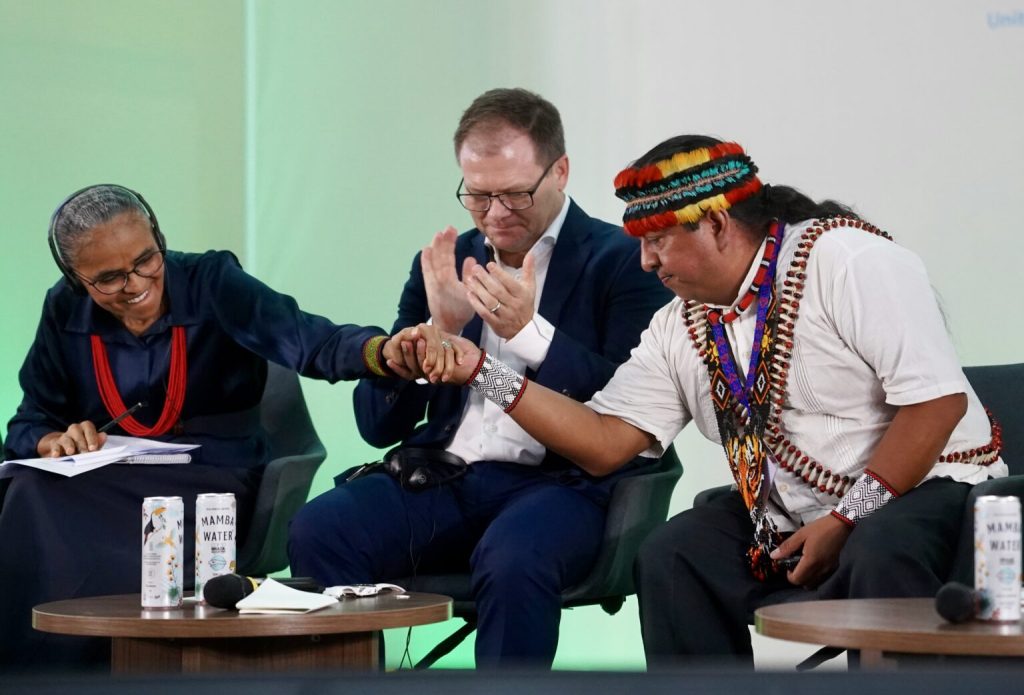
COP30 Bioeconomy challenge event (c) UNFCCC
DRTF-4: Wildfire prevention – local solutions and global agendas
For this edition of the Dutch Roundtable on Tropical Forests we gathered in The Hague. The lively session saw contributions from an independent research organisation, the national wildfire coordinator, ministries and the host organisations, IUCN NL and Tropenbos International. During the marketplace afterward, challenges and solutions from various landscapes were pitched in multiple interactive rounds.
Main observations:
- Fires are an increasing threat to forests, both tropical and nontropical.
- Climate-fire feedback loops make recovery difficult and increase the risk of future fires.
- Wildfires should be higher on the agenda of many governments and companies.
- Different landscapes call for different solutions in dealing with wildfires.
- A landscape management approach is needed to effectively mitigate wildfire risks.
DRTF-3: The critical role of tropical forests in sustaining global water security

In this edition of the Dutch Roundtable on Tropical Forests, we convened in The Hague with 25 participants representing diverse backgrounds in tropical forestry, water security, and water management. The session featured four presentations by experts from a university, an NGO, the government, and an organisation supporting sustainable trade.
Key insights:
- Green water requires greater attention in both research and policy. Some landscapes act as source areas for terrestrially generated rainwater, while others function as recipients or sink areas.
- Forests are crucial to both the blue and green water cycles, contributing significantly to rainfed agriculture and thereby ensuring food security.
- Water distribution is unequal, and while some effects are not immediately visible, they can have significant local consequences.
- Shifts in the global water cycle will affect all regions and could lead to changing power dynamics.
Multi-stakeholder engagement is essential to promote long-term water security by including civil society, governments and the private sector.
DRTF-2: Tropical Forests in Nature and Climate summits
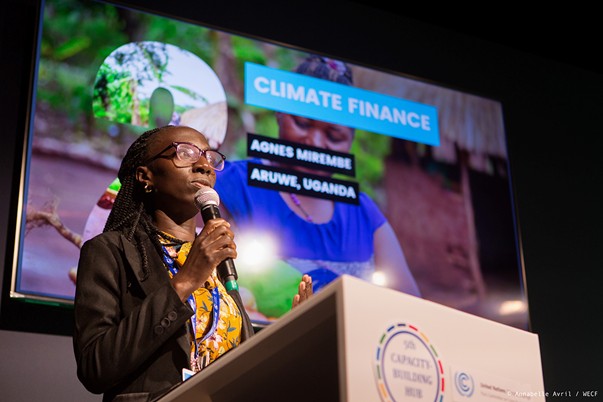
The second DRTF was held on the 13th of December 2024 in Utrecht. The topic was “Tropical Forests in Nature and Climate summits in 2024”. Reflections on CBD COP16 and UNFCCC COP29 were shared and discussed. Key outcomes were that on the one hand, progress was made on the recognition of Indigenous Peoples as biodiversity stewards and climate finance and carbon markets. On the other hand, shortcomings remain on mitigation efforts and financial backing for key goals. Opportunities were identified for COP30.
Additionally, a draft timeline on Forests was presented by the Netherlands International Cooperation Collection (NICC).
DRTF-1: EU Deforestation Regulation
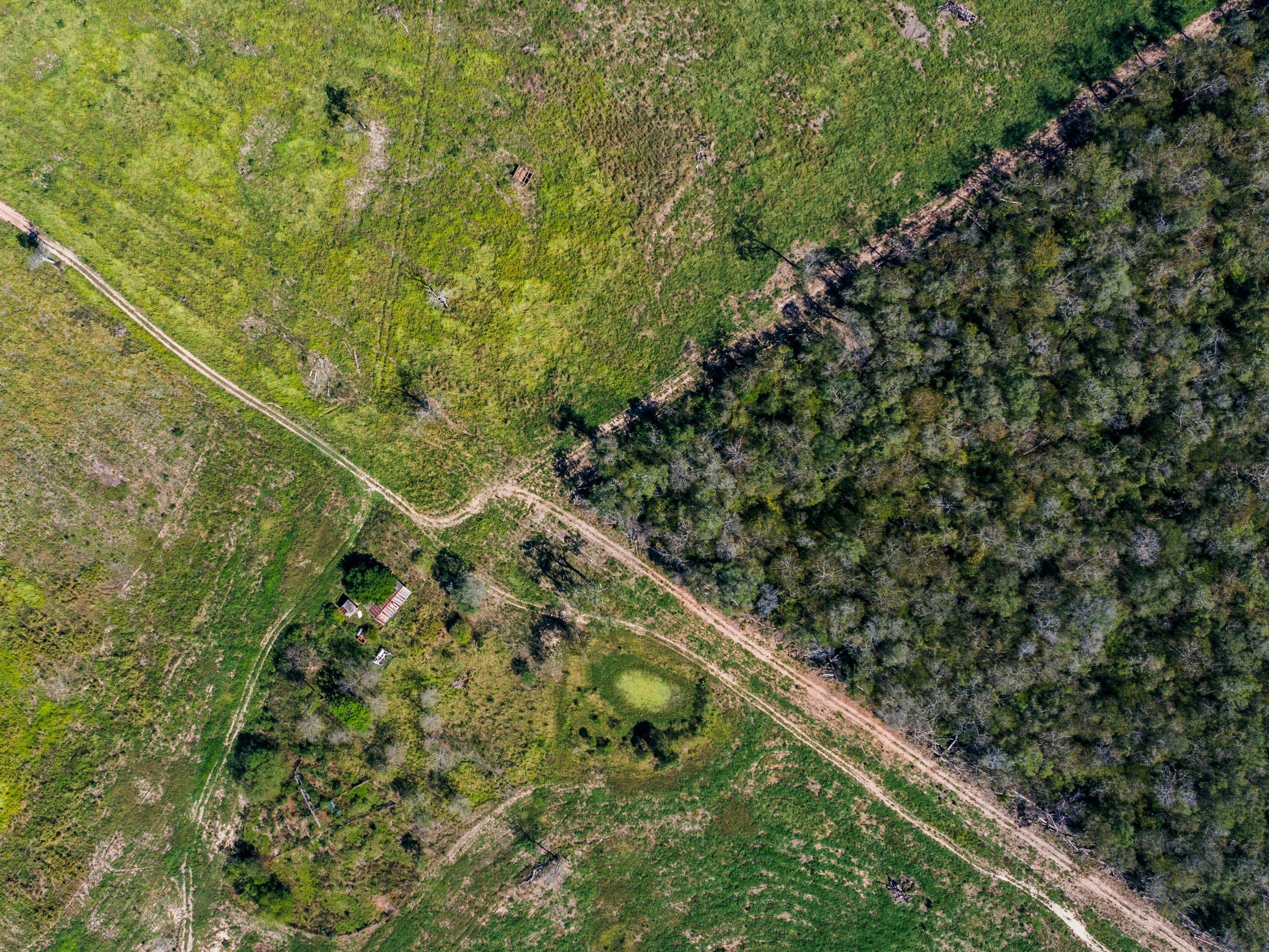
The first DRTF was held on June 28th 2024 in the Hague. The topic of this roundtable was “Complementary measures to the EUDR to halt deforestation and support inclusive and sustainable value chains”.
Key take-aways are that complementary measures as well as collaboration are required to make the EUDR a success, which includes the sharing of data.
Attending the Dutch Roundtable on Tropical Forests
Currently, attending the DRTF is invitation only. There is a limited capacity for in-person attendees, but the DRTF can be followed online as well.
If you wish to be added to the list of attendees you can contact DRTF Secretary Gijs Rotteveel through drtf@iucn.nl.
Forests for a Just Future
Through the Forests for a Just Future programme by the Green Livelihoods Alliance, IUCN NL contributes to more sustainable and inclusive management of tropical forests that supports climate mitigation and adaptation, human rights, and the livelihoods of Indigenous Peoples and Local Communities.
Want to learn more? Contact our experts:



Index
| ↑1 | the EU Deforestation Regulation, the EU Corporate Sustainability Due Diligence Directive, the EU Critical Raw Materials Act |
|---|