Biodiversity integration in the Dutch financial sector: Why it’s critical to be proactive and invest in nature

Critical minerals and the western chimpanzee: how bauxite…
24 March, 2026
Thursday 14 october 2021
VBDO and IUCN NL surveyed five banks and 13 asset owners/asset managers headquartered in the Netherlands. Despite the Dutch Central Bank’s warning that financial institutions can be impacted financially when they fail to take sufficient action on biodiversity loss, only 28% of the surveyed Dutch financial institutions have started to assess the financial risks of biodiversity loss. None of them make use of scenario analysis for biodiversity loss to inform strategic risk management.
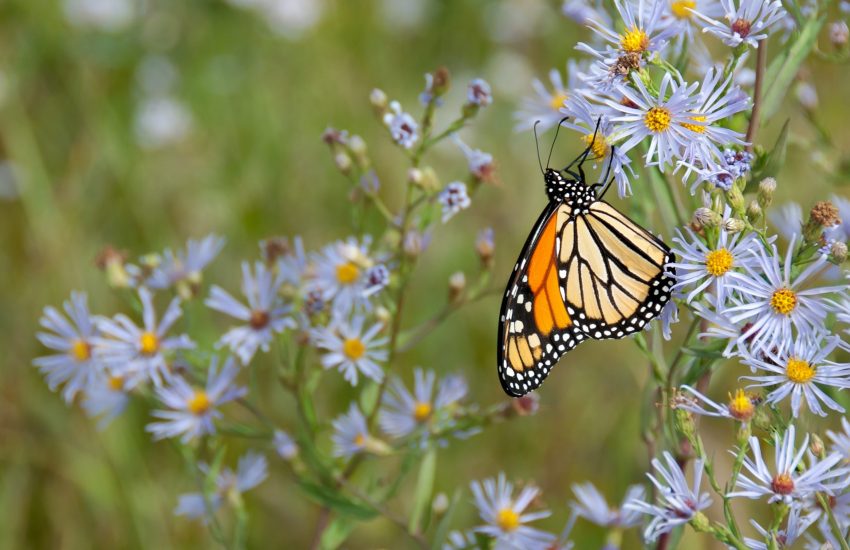
Header photo: monarch butterfly by James Wheeler on Unsplash
These and other findings are presented in the theme study ‘Biodiversity integration in the Dutch financial sector: Why it’s critical to be proactive and invest in nature’.
The study outlines the importance of biodiversity, and sets out why biodiversity loss is a misunderstood risk.
Scale up activities to conserve nature
‘Worldwide biodiversity is decreasing at a rapid pace. Activities to conserve nature must be scaled up if we are to turn the tide,’ says Heleen van den Hombergh, Senior Expert Agro-Commodities at IUCN NL. ‘Companies and financial institutions have a key role to play in this.’
Yet the survey shows that only five financial institutions in the Netherlands have biodiversity policies with specific proactive elements to prevent harmful practices by their investee companies or clients. The banks are leading in this regard, while only two investors follow a dedicated list of standards and conventions for the prevention of biodiversity decline.
Recommendations for financial institutions
‘The time to act is now,’ Van den Hombergh states. ‘Financial institutions should not wait for legislative action or ‘the right data’, but act upon the best practices that are already available in the market’. The report present five recommendations for financial institutions to create a positive biodiversity impact:
- Be proactive instead of reactive;
- Use lessons learned from actions on deforestation for other drivers of biodiversity loss;
- There is a huge potential for nature-based solutions; but keep in mind that reforestation does not always equal tangible positive biodiversity impacts;
- Co-operate to advance on standard setting;
- Advocate for conservation in general.
Learn more?



27 March, 2026
Engaging Stakeholders to Advance Ecosystem-based Adaptation in Mauritius
Madagascar and the Indian ocean islands are a biodiversity hotspot - a group of islands with incredible species diversity and…
24 March, 2026
Critical minerals and the western chimpanzee: how bauxite mining threatens one of West Africa’s last strongholds
In West Africa, the global scramble for critical minerals’ is putting immense pressure on unique ecosystems. As the demand for…