IUCN report: To fulfil its promise, circular economy must take biodiversity into account

Critical minerals and the western chimpanzee: how bauxite…
24 March, 2026
Monday 12 december 2022
A new report issued by IUCN Europe examines links and policy gaps between circular economy concepts and biodiversity. It finds that the circular economy has important potential benefits for nature, but needs to be integrated more closely with biodiversity policies and strategies. This will help ensure unintended negative impacts are avoided while strengthening its positive contribution to nature.
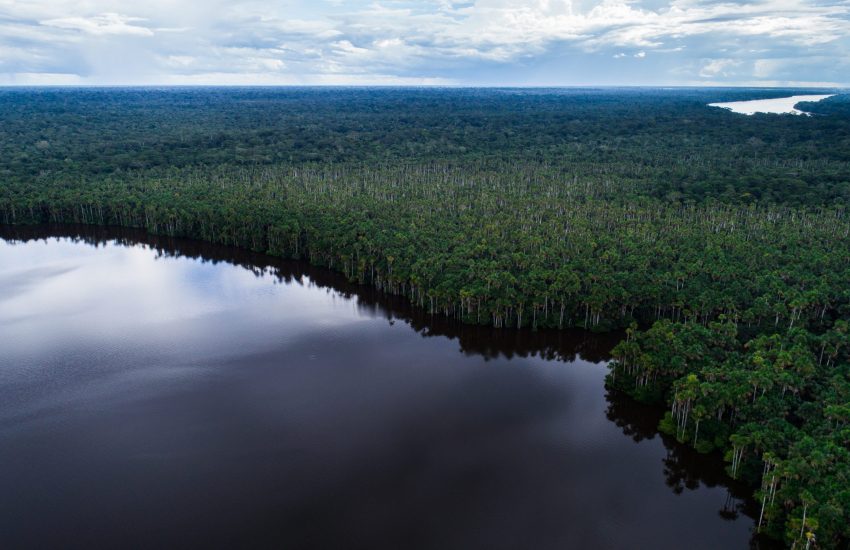
Header photo: ©Tom Laffay, Peru Madre de Dios forest and river
The report, Towards a circular economy that begins and ends in nature, examines links and potential gaps between circular economy and biodiversity policy approaches in the European Union. Specifically, it focuses on policies related to the food, water and nutrients value chain, which is a key driver of land use change and biodiversity loss, and was highlighted in the EU’s Circular Economy Action Plan as a sector with high resource use and potential for circularity.
The report acknowledges the strong potential of the circular economy to achieve our environmental targets. It also points out that some theories or practices associated with the circular economy concept today need to be carefully considered to ensure they do not pose a risk to biodiversity. For instance, a growing demand for bio-based materials to replace plastics can result in increased land use pressures and habitat losses, while a growing demand for timber as a sustainable building material may lead to a loss of primary forests or the plantation of monocultures.
To address these potential issues and ensure that efforts to transition to a circular economy maximises its contribution to reversing biodiversity loss, the authors call for more policy cohesion within the EU as well as internationally.

27 March, 2026
Engaging Stakeholders to Advance Ecosystem-based Adaptation in Mauritius
Madagascar and the Indian ocean islands are a biodiversity hotspot - a group of islands with incredible species diversity and…
24 March, 2026
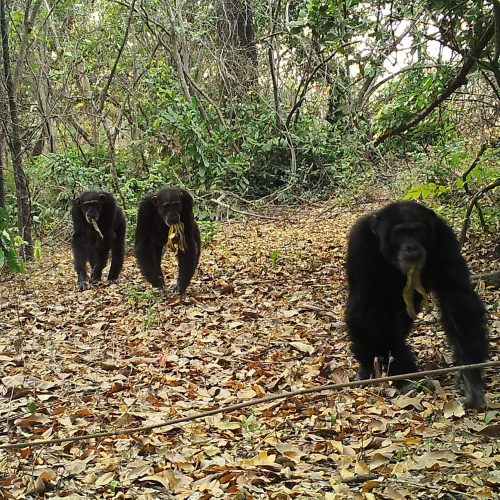
Critical minerals and the western chimpanzee: how bauxite mining threatens one of West Africa’s last strongholds
In West Africa, the global scramble for critical minerals’ is putting immense pressure on unique ecosystems. As the demand for…