Rewetting policy brief for a resilient Europe: aligning defence, nature, and social goals

Critical minerals and the western chimpanzee: how bauxite…
24 March, 2026
Wednesday 18 february 2026
Russia’s large-scale invasion of Ukraine has drastically changed the geopolitical reality in Europe. As the European Union (EU) reconsiders its defence strategy, both conventional military strategies and more unusual measures are being proposed. One such measure is the restoration of drained wetlands, particularly peatlands.
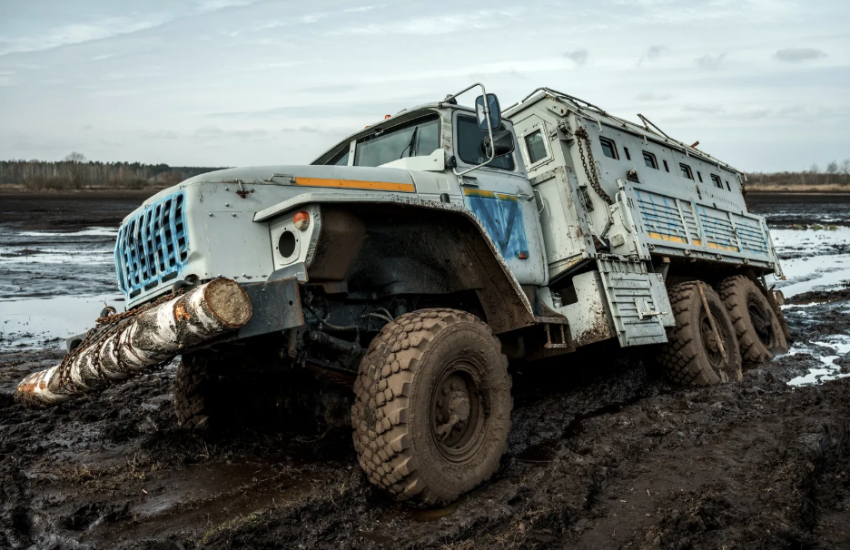
Header photo: A damaged Russian vehicle mired in wetland in Moshchun, Ukraine, April 2022. Serhii Mykhalchuk / Global Images Ukraine, Getty Images
Wetlands can prevent movement of military troops: wetlands and rewetting approaches are increasingly discussed because of their potential defence advantages. Wetlands could function as a natural sponge since their soils retain large amounts of water, making the land surface waterlogged and impassable for heavy military equipment such as tanks and armoured vehicles.
Coincidently, rewetting European wetlands for this purpose could also contribute to climate and nature conservation efforts. However, this is not a quick-fix solution and should be approached responsibly. Which means, rooted in ecological principles and social justice considerations.
This policy brief explores how rewetting can be of value to European defence capabilities as well as nature and biodiversity, while keeping in mind ethical dilemmas and social justice considerations.
REWET: a laboratory on European scale
REWET is a laboratory for the restoration of wetlands at European scale. In the REWET project, funded by the European Union, NGOs, universities, companies and institutions joined forces to study the full potential of wetland areas. With information from seven open laboratories, we are developing a comprehensive understanding of how European wetlands can best contribute to climate mitigation and adaptation.

More information? Contact





27 March, 2026
Engaging Stakeholders to Advance Ecosystem-based Adaptation in Mauritius
Madagascar and the Indian ocean islands are a biodiversity hotspot - a group of islands with incredible species diversity and…
24 March, 2026
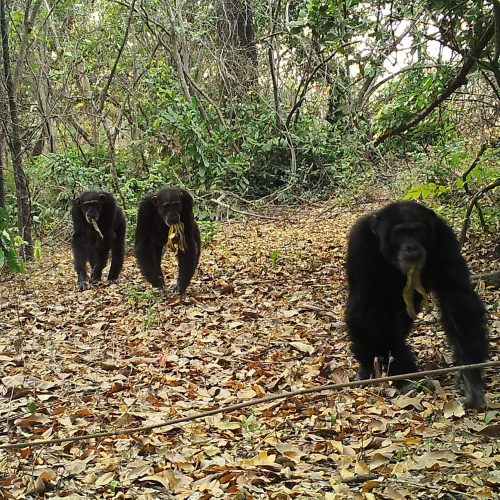
Critical minerals and the western chimpanzee: how bauxite mining threatens one of West Africa’s last strongholds
In West Africa, the global scramble for critical minerals’ is putting immense pressure on unique ecosystems. As the demand for…