15 years of Strategic Partnerships: Indonesian CSOs reflect
Critical minerals and the western chimpanzee: how bauxite…
24 March, 2026
Friday 04 july 2025
For nearly 30 years, IUCN NL has supported civil society organisations (CSOs) through Dutch funding for Development cooperation, fostering long-term partnerships that have strengthened community-led nature conservation and more sustainable and inclusive governance of tropical forests. With Dutch Official Development Assistance (ODA) now facing steep cuts and political uncertainty, Indonesian partners reflect on the value of these alliances, the knowledge they’ve gained through collaboration, and their determination to continue the work, regardless of shifting donor landscapes.
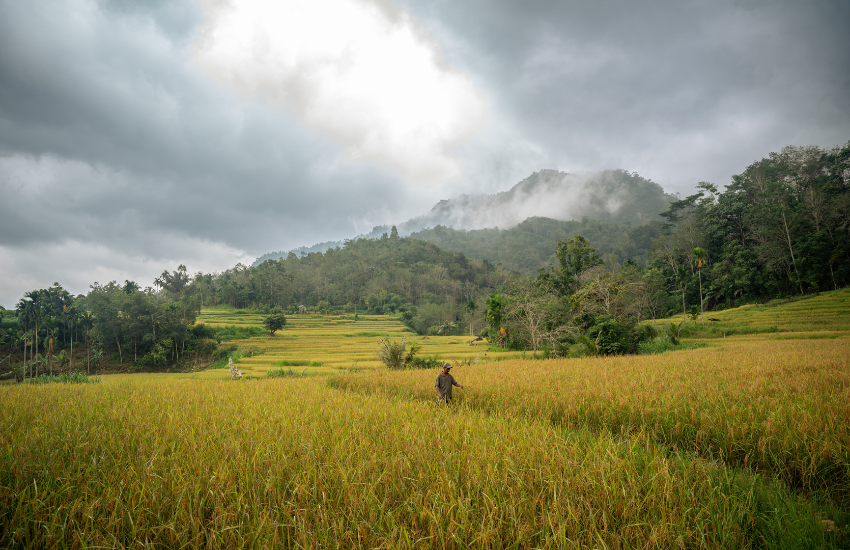
Header photo: Sumpur Kudus, Indonesia, organic rice, Warsi © Stephanie Broekarts/IUCN NL
15 years of Strategic Partnerships
The first Strategic Partnership (SP)-alliance IUCN NL worked with was the Ecosystem Alliance (EA 2011-2015) with Wetlands International and Both Ends.
The next SPs were given their own flavour as expressed in the names given by the ministers at charge: Dialogue and Dissent (2016-2020, Minister Ploumen) and Power of Voices (2021-2025, Minister Kaag). Under these programmes, IUCN NL joined three alliances:
- Shared Resources Joint Solutions (SRJS 2016-2020) with WWF NL.
- The Green Livelihoods Alliance: Forested Landscapes for Equity (GLA1, 2016-2020) with Milieudefensie and Tropenbos International.
- The Green Livelihoods Alliance: Forests for a Just Future (GLA2, 2021-2025), GLA1 complemented with alliance partners from the Global South: NTFP-EP Asia, Gaia Amazonas (Colombia) and SDI (Liberia), and technical partners WECF and FERN.
In 2024, a newly elected right-wing government in the Netherlands announced sharp ODA budget cuts (from €1,47 billion to €390-565 million) and a shift away from supporting these alliances in SPs, regarding them too complex and with too high indirect costs. ‘This is bureaucratic and not always efficient, and we will no longer work this way’, said minister Klever.
However, in June 2025, after 10 months in office, the government fell. In July 2025 the temporary minister for Development Cooperation presented the new ODA framework in line with Klever’s ideas. New elections will be held in October 2025.
We call for an effective and just ODA framework in which the voice of Southern CSOs will be leading. To reflect on the SPs we conducted brief interviews with two Indonesian partners: Yudi Fernandes (KKI Warsi) and Achmad Surambo (Sawit Watch). Both organisations participated in three consequent alliances [1]KKI Warsi participated in the Ecosystem Alliance, GLA and GLA FfJf; Sawit Watch in Ecosystem Alliance, SRJS and GLA2. respectively in West Sumatra and North Kalimantan. Both interviewees shared remarkably similar reflections on their 15 years of experience with Strategic Partnerships.
Learning together
Under the second phase of the Green Livelihoods Alliance in the Forests for a Just Future (FfJF) programme, the Indonesian partners have been working towards more sustainable and inclusive governance of tropical forests in four landscapes: West Kalimantan, North Kalimantan [2]The work of Sawit Watch in North Kalimantan was part of SRJS and when this SP was not extended it was incorporated in GLA2., West Sumatra and Central Sulawesi. The two interviewees both emphasise that working in an alliance creates opportunities for learning. As Achmad states: ‘GLA is a very good alliance for Sawit Watch because we are learning together how to sustainably manage the landscape with the communities’. Yudi, of the conservation organisation KKI Warsi, explains how the diversity of organisations brings a variety of methods: ‘The Indonesian GLA coalition is very interesting. The different organisations and the different landscapes represent a colourful pallet of approaches, challenges and solutions. In our regular reflection meetings and in the collaboration among the GLA partners, we see that we use different methods but together we have the same goal. Especially during field visits in the landscapes, we learn from the observations and discussions’.
In addition, discussions among the alliance partners are inspirational to develop good strategies. Achmad gave an example: ‘In the Bulungan Kayang Watershed (North Kalimantan), Sawit Watch and the communities are developing sustainable agroforestry with cacao. From the discussions in the alliance we learned how agroforestry can contribute to the protection of the forest. With our GLA partners we discussed how to manage, process and market the cacao because this is new for the community, for Sawit Watch and for the local government. Thanks to the GLA activities, Bulungan district has now adopted a formal roadmap for sustainable cacao production’.
Complementarity
Yudi highlighted how the different approaches used by the different CSOs can be complementary. ‘When one organisation is not able to address a particular issue, another CSO can step in with a different method. For instance, in one of WARSI’s target villages, some people were still engaged in illegal logging. Warsi is not in the position to push community members to confront their neighbours and family members and report them to the authorities. Instead, we asked our GLA colleagues of WALHI for support. WALHI engaged with the community, informing them about government laws, law enforcement policies and the ways to report illegal activities. After this capacity training, the Village Forest Management Group asked the head of the village to report the illegal logging to the police. WALHI then used its network to ensure proper follow-up to the report and finally the court proved the loggers guilty’.
Also in advocacy work, the GLA organisations can be complementary. Yudi noted: ‘Regarding advocacy work, a single organisation may face limitations. As an alliance, we have a bigger impact when it comes to policy changes. It is better to lobby and advocate together. It is more strategic and more cost-effective’.
Shared goals
Under a Strategic Partnership, all organisations in the different countries are working towards a shared goal, supported by a programme-wide Theory of Change (ToC). Regarding GLA, Achmad states: ‘Our shared tagline is that the communities have the right and have the skill to manage the forest’.
The ToC of the GLA FfJF programme is structured around three pathways: Indigenous Peoples & Local Communities (IP&LCs), Civic Space and Deforestation Drivers. GLA-partners in eleven countries are working to ensure that IP&LCs sustainably govern increased areas of forest, citizens enjoy human and women’s rights and safely participate in social movements, and governments and private sectors[3] Agro-commodity, extractives, energy and infrastructure no longer drive deforestation and address citizen’s concern to protect forests and human rights.
Yudi: ‘GLA is a quite big global alliance. Usually, such big programmes cannot be shaped in the context of Indonesia. But GLA is really good. We could contextualise the ToC with our needs in Indonesia using the three pathways that are correlated to one another’.
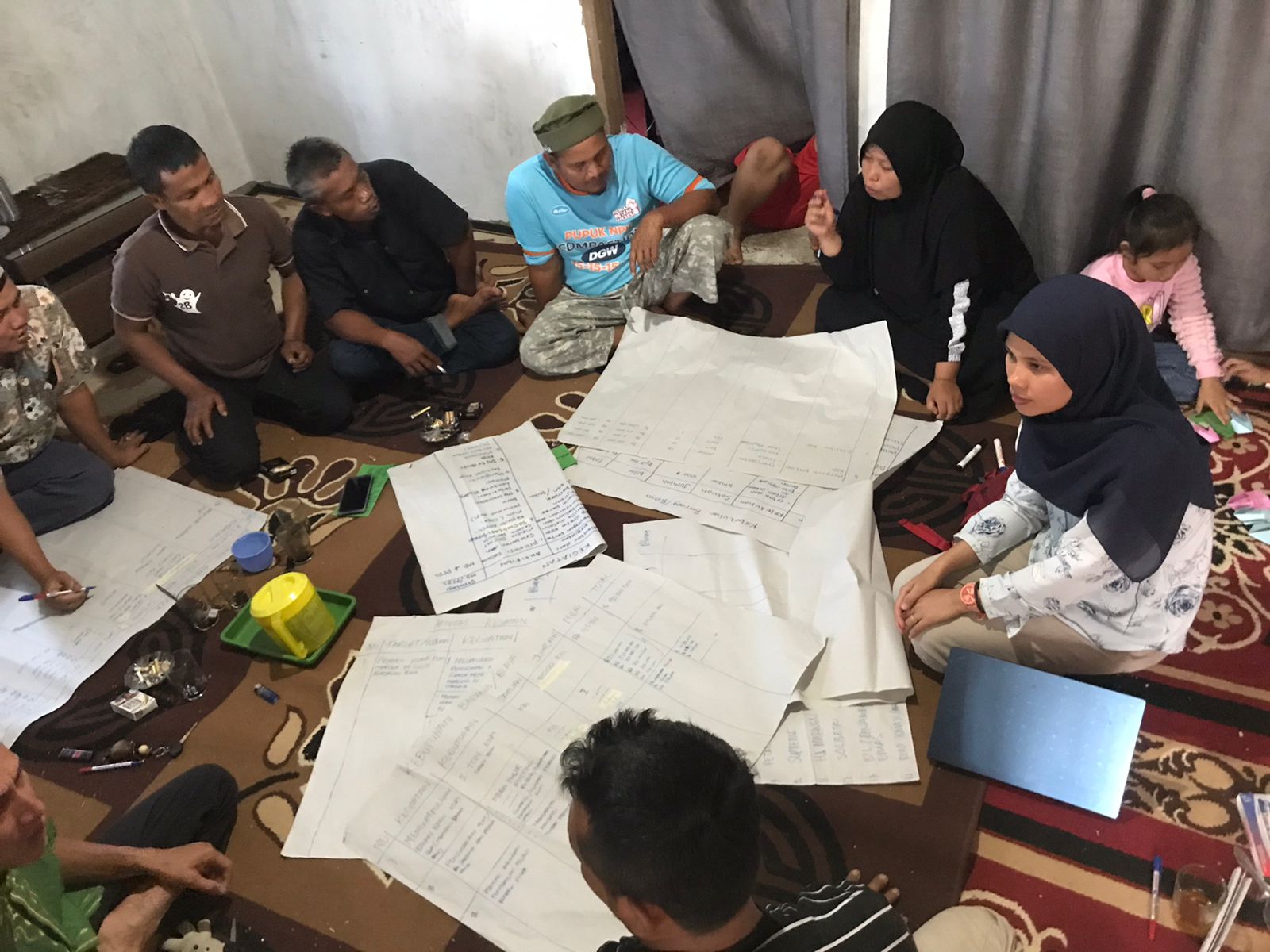
© KKI Warsi
Local to global to local
The alliance not only connects Indonesian organisations with each other, but also with Dutch civil society and CSOs from other countries. This allows for a strengthened global civil society network, and exchanges between countries. Yudi explains: ‘GLA is a big international programme, it has a big impact. In the GLA forums, discussions and reports we learn more about the situation in other GLA countries. We not only take note of the achievements in other countries, we also contextualise it to our needs and challenges in Indonesia. The other way round, our achievements and challenges are supporting and influencing the GLA activities in other countries and on the international level. What we see is that there’s room for us, for our country, Indonesia, to influence globally’.
In the other interview, Achmad too highlighted the importance of international networks: ‘In the GLA, CSOs are connected on the local, the national, and the global level. Connections help each other. North helps South and South helps North. I would like to also connect community to community, not just CSO to CSO. I imagine a community from Indonesia exchanging knowledge and challenges with communities in the Philippines, Malaysia, maybe in Africa. As of now the problem is the language. We can work with interpreters, but they cannot translate the face and the feeling. Yes, the feeling’.
Keeping the alliances alive
As Achmad states: ‘The SPs and the GLA are like a journey. We are in the middle, not in the final. We have the social model and the social capital. As an alliance we have our policies, and we have good connections. I can’t imagine that we will not continue. We want to implement the roadmap for cocoa in Bulungan. So, for us and for the community, the GLA must continue’.
Anticipating the end of the Dutch ODA funding for Strategic Partnerships, the Indonesian organisations are seeking opportunities to keep the valuable relationships alive.
Yudi: ‘In our discussions in GLA Indonesia, we still think that we can continue as GLA3. Because the Dutch funds are uncertain, we are starting to look for other opportunities. With the same alliance, the same landscapes but perhaps with different funds. We have tried IKI, but the difficulty is that some of the organisations in our alliance are not eligible to apply for big funds like IKI’.
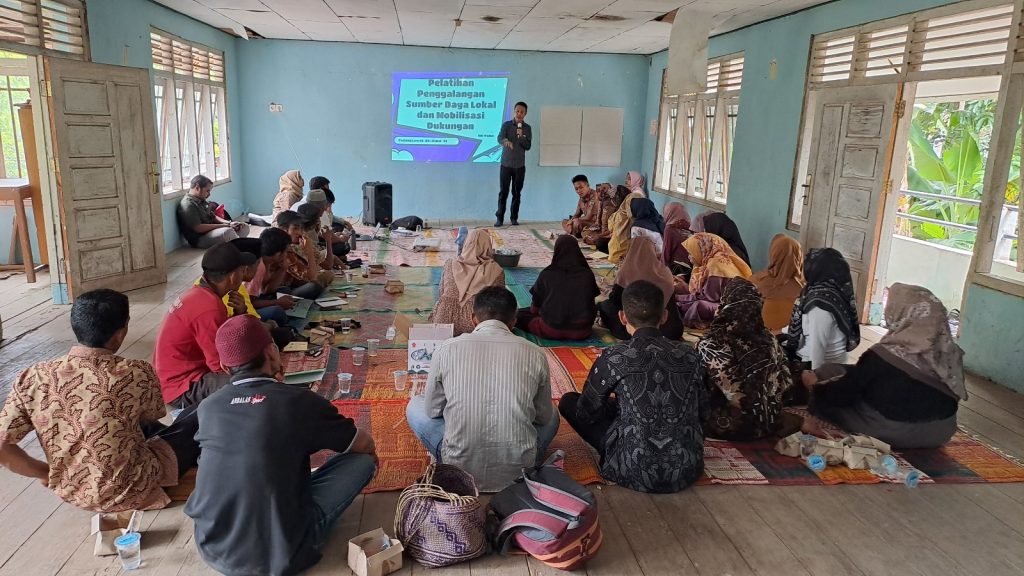
© KKI Warsi
Achmad: ‘In case we have no funds for our project, the discussion must continue. We should keep the connection in email groups, WhatsApp groups, or other media. Maybe we can regularly discuss the progress, challenges and experiences in online meetings. We have a good ToC and a good goal[4]Tropical forests and forest landscapes are sustainably and inclusively governed to mitigate and adapt to climate change, fulfil human rights and safeguard local livelihoods. to work on. Our continued discussions about the situation and the developments may eventually lead to some adaptations. For me the keywords are continuation and reflection’.
Yudi concludes: ‘The fact that we are looking for alternative funds is proof that we all think the GLA has a good approach. The landscapes must continue to learn together. The GLA alliance is good for the CSOs, for the communities and for the forests’.
More information

Index
| ↑1 | KKI Warsi participated in the Ecosystem Alliance, GLA and GLA FfJf; Sawit Watch in Ecosystem Alliance, SRJS and GLA2. |
|---|---|
| ↑2 | The work of Sawit Watch in North Kalimantan was part of SRJS and when this SP was not extended it was incorporated in GLA2. |
| ↑3 | Agro-commodity, extractives, energy and infrastructure |
| ↑4 | Tropical forests and forest landscapes are sustainably and inclusively governed to mitigate and adapt to climate change, fulfil human rights and safeguard local livelihoods. |
27 March, 2026
Engaging Stakeholders to Advance Ecosystem-based Adaptation in Mauritius
Madagascar and the Indian ocean islands are a biodiversity hotspot - a group of islands with incredible species diversity and…
24 March, 2026
Critical minerals and the western chimpanzee: how bauxite mining threatens one of West Africa’s last strongholds
In West Africa, the global scramble for critical minerals’ is putting immense pressure on unique ecosystems. As the demand for…