Statement: Invest in local leadership for tropical forest…
20 March, 2026
Statement: Invest in local leadership for tropical forest…
20 March, 2026
Meet the conservationist: Dr. Amelaid follows in the…
12 March, 2026
Wednesday 04 june 2025
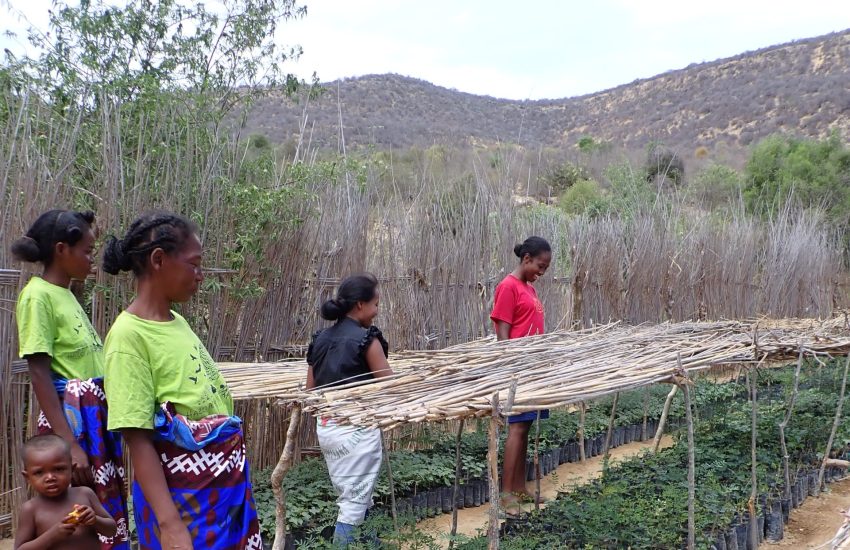
Header photo: Plant nursery Belavenoke © Brillant Vernisson Raoelison, ADES
In Madagascar’s southwest, ADES (Association pour le Développement de l’Energie Solaire Suisse– Madagascar) is working with local communities to restore forests and build resilience to climate change. Supported by a large grant from CEPF, ADES is leading a multi-year project in the lower Onilahy Basin, covering three KBAs: Tsinjoriake-Andatabo, Belalanda, and the Amoron’i Onilahy with the Onilahy River. This initiative tackles two major challenges: reducing the vulnerability of poor, nature-dependent communities, and preserving the region’s unique dry forest ecosystem, which is essential for nature-based climate adaptation.
Results to date are promising. Over 80 local women are producing biodegradable bags as an alternative for plastic bags used in tree nurseries, while 20 community forest rangers monitor threatened species and collect native seeds for replanting. More than 500 seed trees have been identified and are being protected by the rangers. To date, 114,960 seedlings from community nurseries have been planted.
Around 4,500 people, including schoolchildren, have taken part in awareness raising and educational activities exploring the links between forest health, climate change, and local well-being. ADES also supports alternative livelihoods and cleaner cooking through fuel-efficient stoves, helping reduce pressure on forest resources.
Strong collaboration among local actors has built a dynamic network and attracted co-funding to expand the project’s reach. Efforts are also shedding light on fragile biodiversity, including IUCN-listed species. By restoring forests, empowering people, and protecting biodiversity, ADES is creating a hopeful model for nature and community-based climate resilience.
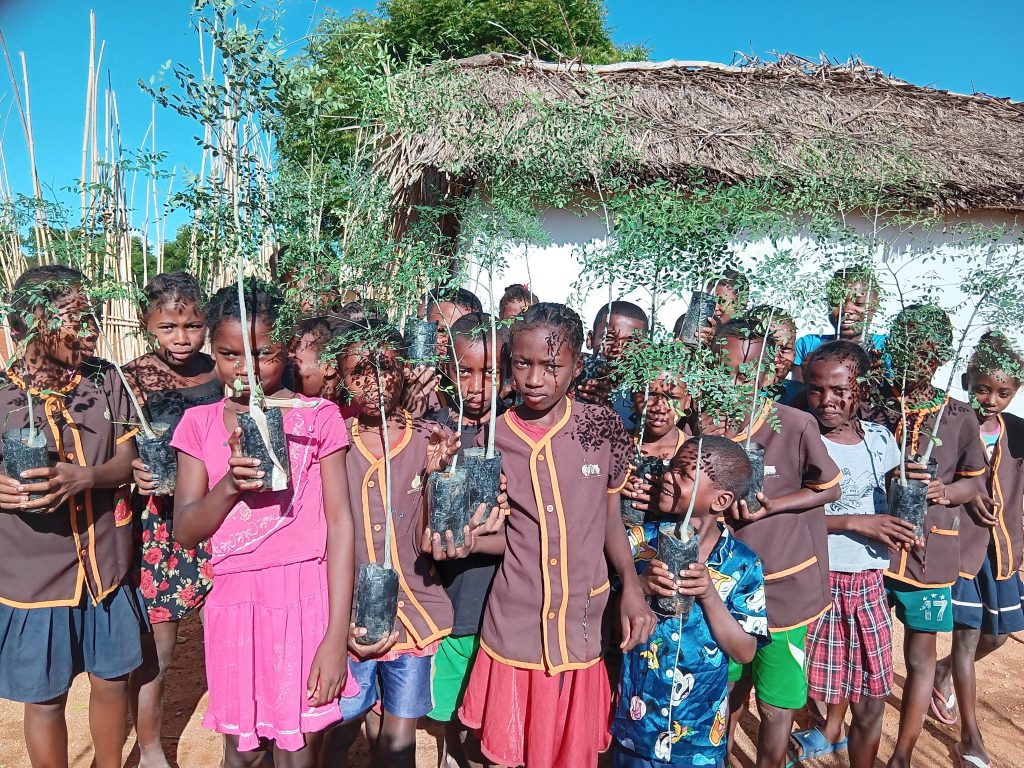
Plant nursery © Brillant Vernisson Raoelison, ADES
The Critical Ecosystem Partnership Fund (CEPF) is a joint initiative of l’Agence Française de Développement (AFD), Conservation International, the European Union (EU), Fondation Hans Wilsdorf, the Global Environment Facility, the Government of Canada, the Government of Japan, and the World Bank. Its fundamental objective is to ensure that civil society is engaged in biodiversity conservation.
Thanks to funding from the Green Climate Fund (GCF) through AFD as an accredited entity for the GCF, and from the EU through AFD as a fiduciary agent, CEPF has established and manages a 10-year program of US$50 million to support civil society organizations in promoting ecosystem-based adaptation in Madagascar and the Indian Ocean Islands Biodiversity Hotspot. Under the auspices of the Ministries of Environment in the Comoros, Environment and Sustainable Development in Madagascar, Finance, Economic Planning and Development in Mauritius, and Agriculture, Climate Change and Environment in the Seychelles, the program’s activities are being implemented in the Comoros, Madagascar, Mauritius, and the Seychelles. Madagascar receives additional support from the Franklinia Foundation for the conservation of Madagascar’s endangered trees.
CEPF has enlisted a consortium of nongovernmental organizations to be its regional implementation team (RIT) in the hotspot. Coordinated by IUCN NL, the RIT includes SAF/FJKM for Madagascar, ID-ONG for Comoros, FORENA for Mauritius and SeyCCAT for Seychelles. These organizations are working with CEPF to implement a five-year conservation strategy for the hotspot and build local civil society capacity.



20 March, 2026
The undersigned organisations call on the Dutch government to supplement its policies and legislation with investments in inclusive, locally led…
12 March, 2026
Amelaïd Houmadi grew up on an island in the Comoros. At his parental house, nestled at the foot of a…
