Statement: Invest in local leadership for tropical forest…
20 March, 2026
Statement: Invest in local leadership for tropical forest…
20 March, 2026
Meet the conservationist: Dr. Amelaid follows in the…
12 March, 2026
Friday 06 march 2026
It has been 115 years since the first International Women’s Day in 1911. After all these years, it seems like this day is needed more than ever in a time when anti-gender, anti-rights, and anti-democratic groups are growing. The anti-gender trend is systematically challenging rights related to gender equality, LGBTQIA+ individuals, and sexual health that were previously considered secure. The consequences of this line of thinking and acting are dramatic and have devastating impacts on women (in all their diversity) and nature, already marginalised by patriarchal exploitation patterns. In light of International Women’s Day, we highlight our project PIDDA Rights, which supports Amazonian women defenders in their struggle for intersectional equality and justice.
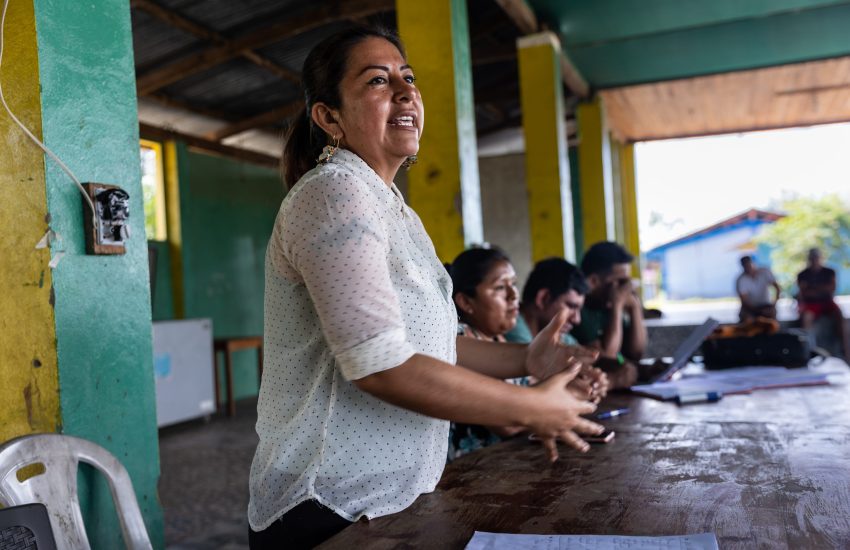
Header photo: Meeting of the Indigenous Kotsimba community in Madre de Dios © Diego Perez / SPDA
International Women’s Day 2026, under the UN theme ‘Rights. Justice. Action. For ALL Women and Girls’, is a call to move beyond the recognition of gender inequity and towards enforcement of gender justice: rights that exist on paper must be fulfilled and protected in practice, through justice systems that are accessible and work for all women and girls. This call is particularly urgent in the Amazon region, where defending territory and biodiversity comes with high personal costs and where the risks for environmental defenders are not evenly distributed. Women, Indigenous women, youth, and local communities often carry the greatest burden of environmental protection and human rights struggles. At the same time, they face intimidation, violence, and shrinking civic space while receiving limited protection. And even when there are legal tools to protect them, they often face limited access to these mechanisms and a cultural of structural impunity.
Text continues below photo.
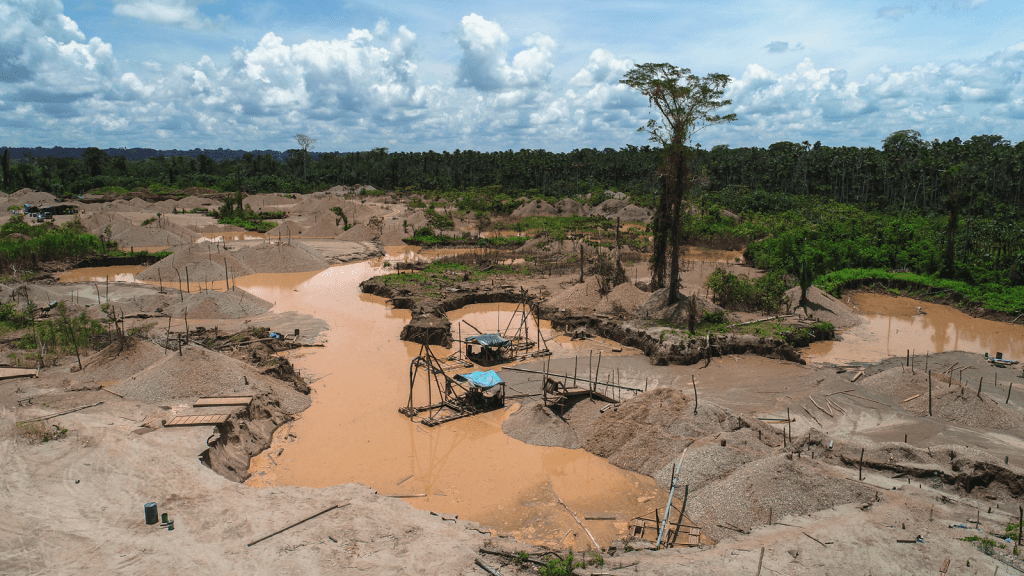
To challenge the reality of limited protection and restricted access to justice systems for women environmental defenders, IUCN NL and its Peruvian partner Sociedad Peruana de Derecho Ambiental (SPDA) have joint forces since 2016 to strengthen the protection of environmental defenders. During the last three years this joint effort culminated in the PIDDA Rights project, allowing IUCN NL and SPDA to specifically focus women environmental defenders, made possible with the financial support of the French Development Agency (AFD).
At its core, PIDDA Rights (Inclusive Protection of Environmental Defenders in the Amazon – PIDDA for its Spanish acronym) aligns with this year’s International Women’s Day theme: access to justice that is practical, inclusive, and enforceable for those women most exposed to risks and harm. The project has combined protection and capacity-strengthening measures such as incident reporting, emergency support, and legal assistance, while placing strong emphasis on tailored training, visibility, and advocacy.
PIDDA Rights applies an explicit intersectionality lens: it recognises that threats and barriers compound differently for different people and that women defenders, particularly Indigenous women, face distinct and heightened risks and levels of violence. That is why our approach promotes intersectional-sensitive, locally-grounded and culturally-appropriate protection strategies and learning formats for women defenders.
As nearly a decade of collaboration comes to an end, IUCN NL has led the capitalisation of lessons and recommendations as a practical model that others can adapt in high-risk territories facing similar challenges. The idea is that women defenders across territories and regions can benefit from the tailored approach and insights developed under the project and its predecessors.
Four interconnected strategies are highlighted to help strengthening the work of women defenders and to pave the way to improve access to justice systems:
This is Rights. Justice. Action in practice: evidence, skills, legal pathways, and public accountability – built with and from women defenders, not for them.
Text continues below photo.
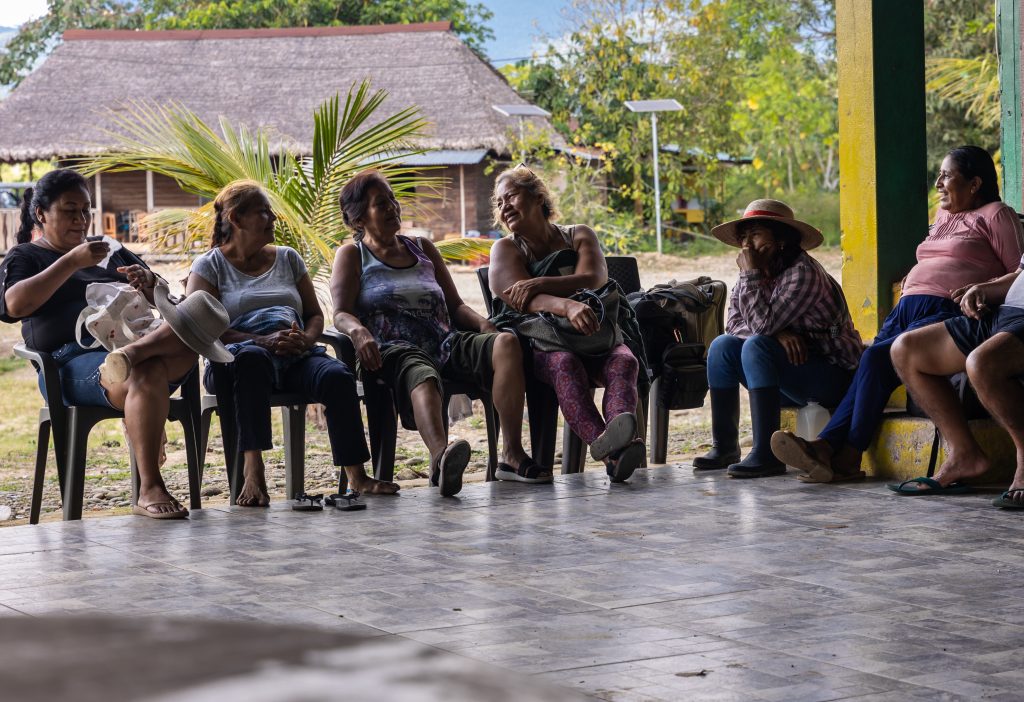
One concrete example of this participatory and intersectional approach is the course delivered by SPDA in Madre de Dios to strengthen defenders’ knowledge of rights and protection mechanisms. The course followed an intersectional and gender-sensitive design process and brought together defenders spanning Indigenous peoples and local communities, as well as professionals working on defender protection. It focused on legal frameworks, state protection mechanisms, and practical tools to respond to threats. It was designed through a participatory process with defenders and Indigenous leaders and is intended for replication in other regions.
The UN theme is highlights: without justice systems that work for women, rights remain an unfulfilled promise. Risks faced by women, including environmental defenders, are rarely driven by gender alone. They are shaped by overlapping power relations – where gender intersects with other categories such as class, culture, race, and ethnicity which jointly determine who is exposed to aggravated risks and threats, whose complaints are heard, and who can access protection and justice.[1]Source: Crenshaw, K. (1991). Mapping the Margins: Intersectionality, Identity Politics, and Violence against Women of Color
Applying an intersectional lens helps identify where barriers sit in practice (who is heard, who is protected, and whose cases move forward), and why ‘one-size-fits-all’ responses to achieving justice often fail. This is why PIDDA Rights calls for an intersectional and gender-sensitive approach, to strengthen effective access to justice and protection, with particular attention to women defenders in extractive regions.
In Peru, this includes the need for broader political change and stronger conditions for an inclusive access to rights and environmental justice, including steps such as advancing ratification of the Escazú Agreement and safeguarding civic space.
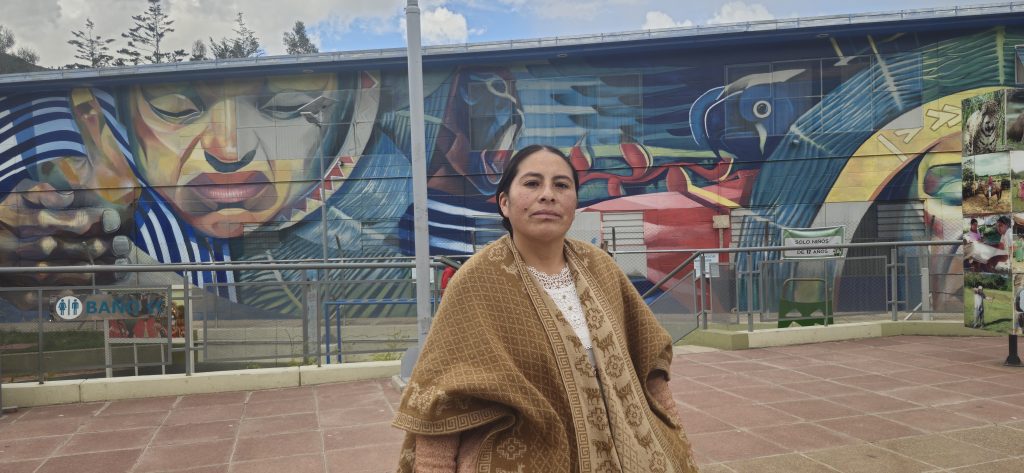
To commemorate International Women’s Day and as part of the closing activities of PIDDA Rights, The Illusion of Abundance was screened in Bolivia. This documentary, of which the production was supported by IUCN NL, shares the struggle of three Latin American women fighting to defend their land and community against increasing extractive activities and violence by companies.
The subsequent debate during this pilot capacity event focused on the journey to access justice for women environmental and human rights defenders. The documentary has proven to be a powerful tool for sparking discussions and increasing awareness on this topic. As IUCN NL, we aim to continue advocating for gender justice in the region and build on the lessons learnt during PIDDA Rights.
This International Women’s Day, we call for renewed commitment to:



| ↑1 | Source: Crenshaw, K. (1991). Mapping the Margins: Intersectionality, Identity Politics, and Violence against Women of Color |
|---|
20 March, 2026
The undersigned organisations call on the Dutch government to supplement its policies and legislation with investments in inclusive, locally led…
12 March, 2026
Amelaïd Houmadi grew up on an island in the Comoros. At his parental house, nestled at the foot of a…
