
Smart cocoa plantations for nature conservation

Critical minerals and the western chimpanzee: how bauxite…
24 March, 2026
Monday 01 april 2019
Planting cocoa trees in the shadow of native trees helps Ghanaian farmers increase their crop yield by 25%. Nature, too, profits from these trees as they form an ecological connection between two nature areas, increasing the survival chances of a unique species of ape.
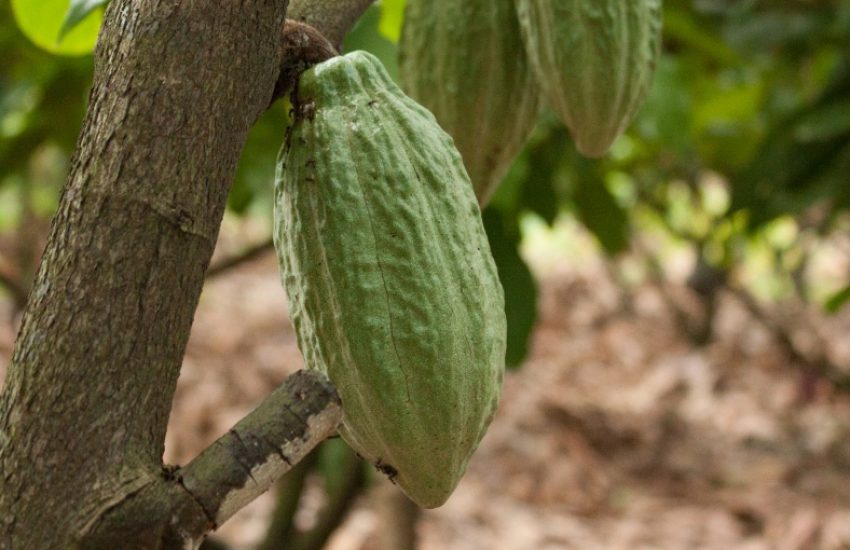
Header photo: Cacao plantation in Indonesia © Marius Austerschulte, CC BY-SA 4.0 https://creativecommons.org/licenses/by-sa/4.0, via Wikimedia Commons
Problem
Ghana is the world’s second largest cocoa producer. Farmers in the Wasa Amenfi district, in the southwest region of Ghana, also earn a living through cocoa. On many plantations cocoa is grown in monoculture plantations using production methods that rapidly exhaust the soil, causing quickly diminishing agricultural returns. As a result, many farmers are cutting down areas of forest in order to start new cocoa plantations. They can do as they please because there is nobody to control or regulate them. Due, in part, to these developments Ghana is losing 2% of its total forest area per year.
Approach
Together with partner organisation Rural Environmental Care Association (RECA), IUCN NL has helped various Ghanaian farmers improve their farming methods. Planting new cocoa tree varieties that grow well in the shade is crucial to this approach. Traditional plantations have cocoa trees that need to be exposed to full sun, which is why the natural forest has been cleared completely. The new varieties allow cocoa production and forest conservation to go hand in hand, because native shadow trees are planted alongside the new cocoa trees. In addition, farmers learn how to keep the soil fertile and are taught skills to better manage the agronomic health of cocoa trees. Last but not least, RECA supports the farmers in drafting formal contracts with land owners from whom they lease the land.
Result
Some 600 district farmers have already switched to the new approach using shadow trees. This investment in sustainable land use is made possible by the security of a long-term lease. In the first year, the training led to a 25% increase in cocoa yield, and thus a better income for the farmers. Nature, too, benefits from the shadow trees as they offer protection to a wide variety of species, such as butterflies and bees, and help increase soil diversity so that the land remains fertile. In Wasa Amenfi, the new forest plantations form a natural, ecological link between two nature areas, the Bowiye Range and Oppong Mansi forest reserves. This corridor helps retain the natural habitat of many different animals, including the black-and-white colobus monkey.
Learn more?


27 March, 2026
Engaging Stakeholders to Advance Ecosystem-based Adaptation in Mauritius
Madagascar and the Indian ocean islands are a biodiversity hotspot - a group of islands with incredible species diversity and…
24 March, 2026
Critical minerals and the western chimpanzee: how bauxite mining threatens one of West Africa’s last strongholds
In West Africa, the global scramble for critical minerals’ is putting immense pressure on unique ecosystems. As the demand for…