Statement: Invest in local leadership for tropical forest…
20 March, 2026
Statement: Invest in local leadership for tropical forest…
20 March, 2026
Meet the conservationist: Dr. Amelaid follows in the…
12 March, 2026
Wednesday 02 july 2025
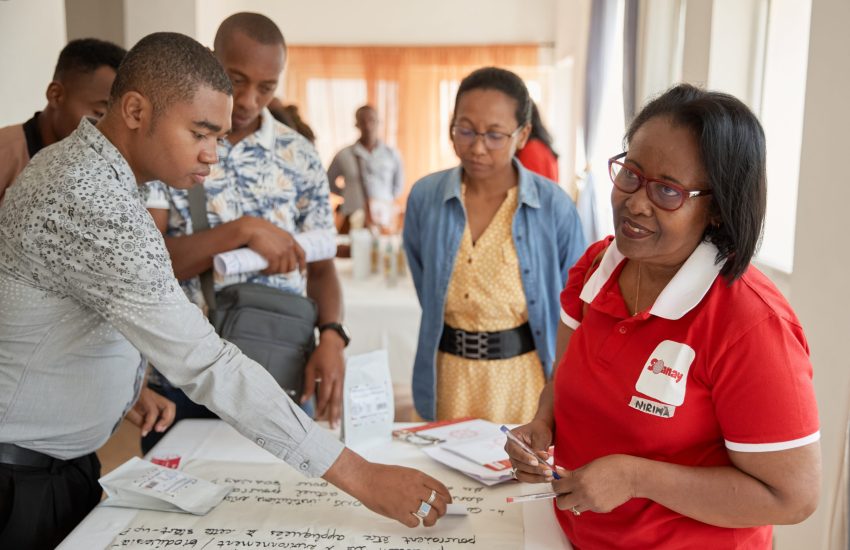
Header photo: Partnership Workshop © CEPF
At the recent mid-term assessment workshop in Antananarivo, Malagasy organizations INDRI and Miarakap, working together with Kinomé under a large grant by CEPF, shared valuable insights on how civil society organizations (CSOs) and the private sector can work together to support inclusive and sustainable development. The speakers highlighted the need for strong, long-term partnerships that go beyond small, isolated projects to bring lasting change in cities, rural areas, and coastal regions.
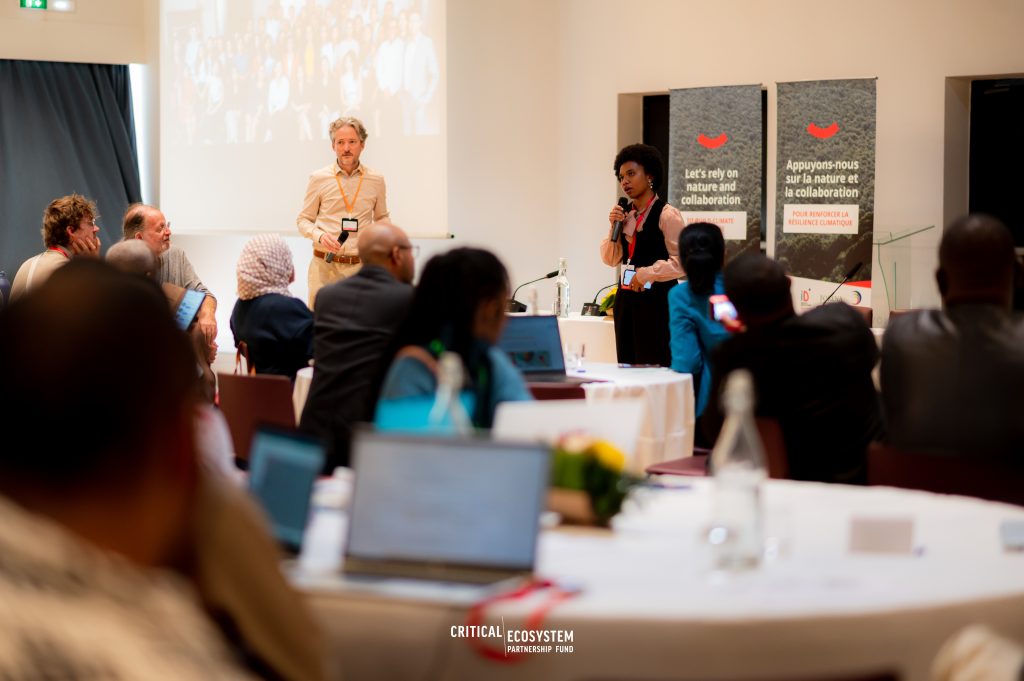
Presentation at the midterm assessment 2025 © CEPF
They identified five key sectors with high potential for collaboration:
To make these partnerships work, five conditions were highlighted:
When CSOs and private companies share values, use their different strengths, and create solutions together, they can make a real and lasting difference for Madagascar’s people and environment.
The Critical Ecosystem Partnership Fund (CEPF) is a joint initiative of l’Agence Française de Développement (AFD), Conservation International, the European Union (EU), Fondation Hans Wilsdorf, the Global Environment Facility, the Government of Canada, the Government of Japan, and the World Bank. Its fundamental objective is to ensure that civil society is engaged in biodiversity conservation.
Thanks to funding from the Green Climate Fund (GCF) through AFD as an accredited entity for the GCF, and from the EU through AFD as a fiduciary agent, CEPF has established and manages a 10-year program of US$50 million to support civil society organizations in promoting ecosystem-based adaptation in Madagascar and the Indian Ocean Islands Biodiversity Hotspot. Under the auspices of the Ministries of Environment in the Comoros, Environment and Sustainable Development in Madagascar, Finance, Economic Planning and Development in Mauritius, and Agriculture, Climate Change and Environment in the Seychelles, the program’s activities are being implemented in the Comoros, Madagascar, Mauritius, and the Seychelles. Madagascar receives additional support from the Franklinia Foundation for the conservation of Madagascar’s endangered trees.
CEPF has enlisted a consortium of nongovernmental organizations to be its regional implementation team (RIT) in the hotspot. Coordinated by IUCN NL, the RIT includes SAF/FJKM for Madagascar, ID-ONG for Comoros, FORENA for Mauritius and SeyCCAT for Seychelles. These organizations are working with CEPF to implement a five-year conservation strategy for the hotspot and build local civil society capacity.

20 March, 2026
The undersigned organisations call on the Dutch government to supplement its policies and legislation with investments in inclusive, locally led…
12 March, 2026
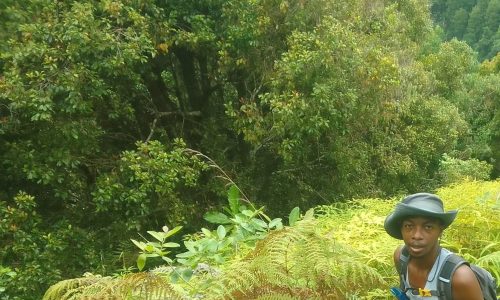
Amelaïd Houmadi grew up on an island in the Comoros. At his parental house, nestled at the foot of a…
