IUCN NL at COP17 in Yerevan: locally led…
12 October, 2026
IUCN NL at COP17 in Yerevan: locally led…
12 October, 2026
BESTLIFE2030 launches its third call for proposals
08 October, 2026
Monday 15 september 2025
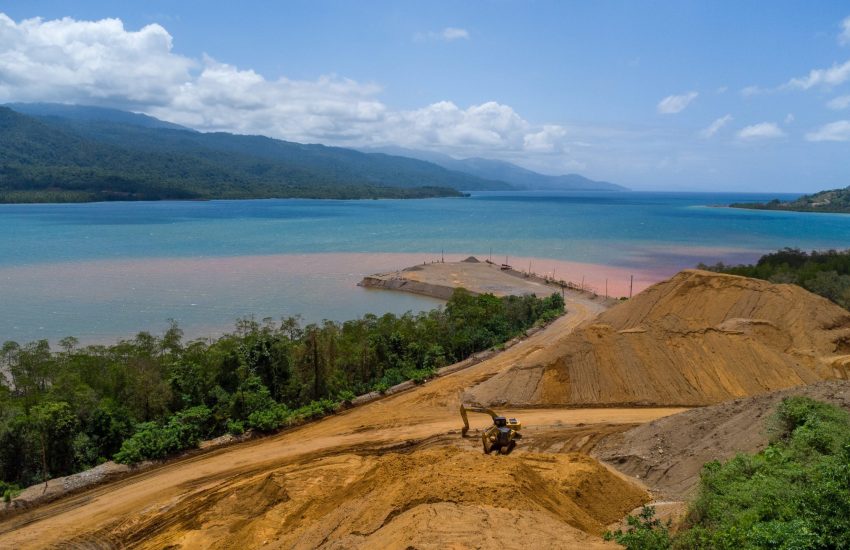
Header photo: Mining on Tompotika. © Stephanie Broekaerts / IUCN NL
In Central Sulawesi’s Tompotika peninsula, home to rare wildlife such as the Critically Endangered Maleo bird and where dozens of villages rely on healthy forests and seas, nickel companies are pressing in. Until recently, many communities viewed mining as an unquestioned path to prosperity. Companies promised jobs, infrastructure and donations for schools and mosques, and investment was framed as progress. But promises on paper are different from realities on the ground. And sometimes, the most powerful way to learn is to see for yourself.
Earlier this year, our partner AlTo (Alliance for Tompotika Conservation) organised a study trip for 21 local leaders from Tompotika to North Morowali, a day’s journey away. Morowali is one of Indonesia’s hotspots of nickel mining, home to vast industrial parks and dozens of active concessions. What Tompotika villagers feared might arrive in their forests and coasts was already visible in Morowali.
The group included village heads, community representatives and members of newly formed youth-led environmental groups. Many had never questioned the expansion of mining before. Guided by AlTo’s mining outreach coordinator, Thusi Bonandito, they spent several days visiting villages affected by mining, speaking with officials, residents and mine workers.
At first, the benefits were on display. In one mining village, the government office gleamed – a two-storey building, a private office for each village official. Corporate Social Responsibility (CSR) funds from the mine amounted to tens of thousands of dollars every few months. The village head proudly showed off his new two-storey house and three cars, all purchased in just two years. For the visiting leaders from Tompotika, the wealth was tempting. Some admitted later that, for a moment, it ‘disturbed their thinking.’
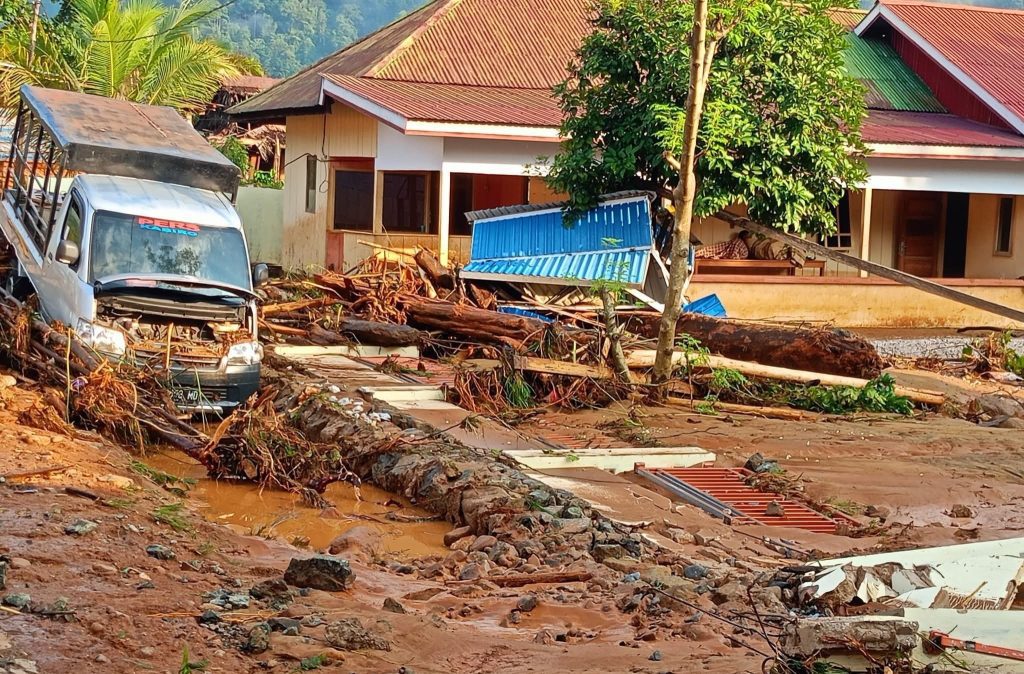
A landslide, caused by erosion by mining. © AlTo
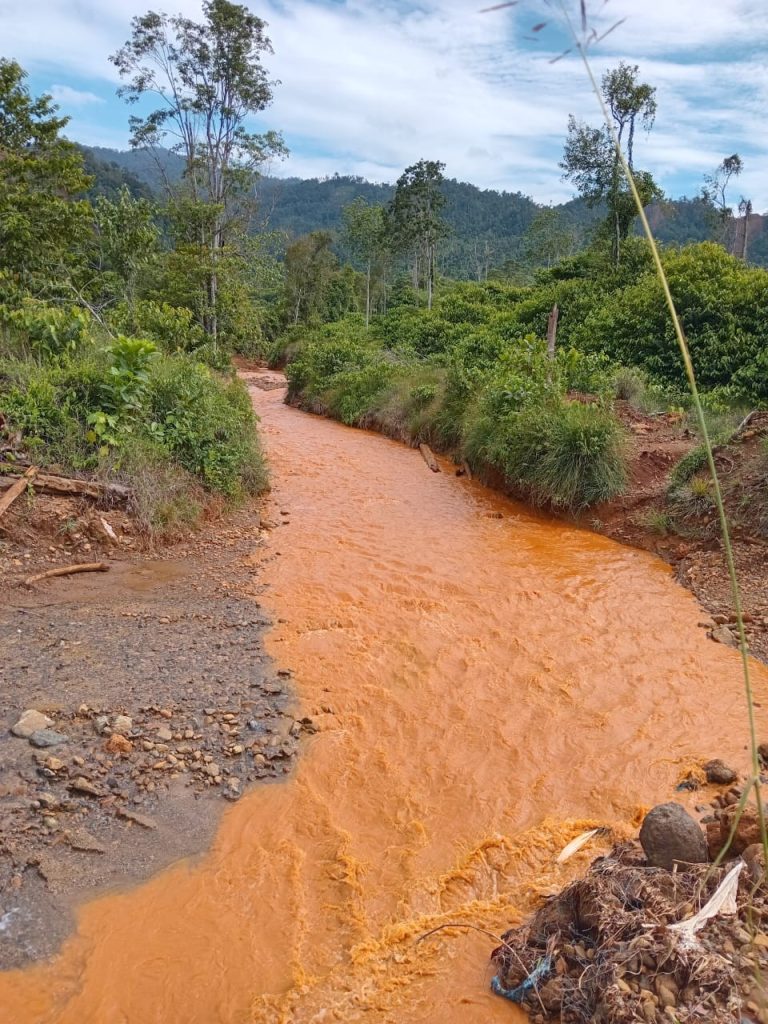
A polluted river. © AlTo
But then came the other side of the story. Teachers explained how polluted rivers forced children to bathe in contaminated water, and residents spoke of dust-filled air and illnesses. Mine workers themselves told the visitors: ‘At first, we were glad. The wages were good. But now the river is polluted, fish and crabs are gone, and we have to buy water. Higher wages mean little if life becomes harder.’
Others warned of legal risks. Legislators described village heads prosecuted for issuing false land titles to mining companies. ‘Be careful,’ one told the group, ‘the bribes may look attractive, but they can destroy your community.’
On the road back to Tompotika, conversations in the bus were animated. Leaders who had been skeptical about conservation began voicing their fears. ‘Everywhere we went,’ one said, ‘the same problems: polluted water, destroyed forests and mangroves, dust.’ Another admitted he had joined the trip only reluctantly, but now was thankful: ‘Without this visit, in our village we would have been blind. Now, we cannot be fooled anymore.’ One village head declared openly that he would refuse mining permits, even if it cost him his position. Others echoed the message: better to defend forests and water now, than regret it later.
For many, the turning point was realising that mining’s benefits were temporary, while the damage to ecosystems and livelihoods was lasting. And amid the discussions, voices reminded them that forests are not only about water and soil. ‘If the forest is destroyed,’ one said, ‘the Maleo and other wildlife will vanish. And their loss will hurt people too.’
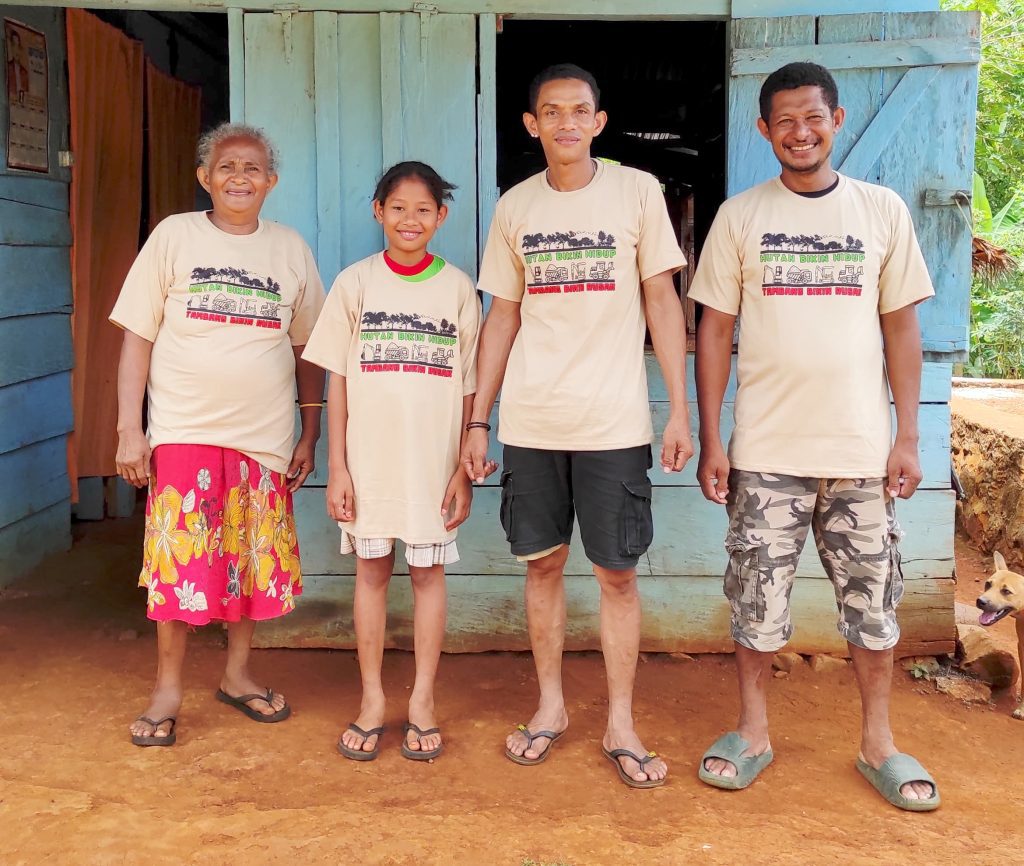
Photo: Community members wearing “Forests Bring Life, Mining Brings Ruin” t-shirts © AlTo
Since that trip, things have changed: community meetings across Tompotika now draw large crowds, youth groups post videos and testimonies online, fueling discussions about the future of their land, and villagers have blocked mining access roads and demanded accountability for polluted rivers.
Local media picked up the story, and for the first time, mining companies are being forced onto the defensive. In July, provincial legislators visited Siuna, one of Tompotika’s first mining areas, and criticised the destruction of roads, mangroves, and waterways. Even the Bupati (regent) of the area, once a supporter of mining, convened officials and scolded them for environmental damage. The governor of Central Sulawesi, himself long a mining advocate, felt compelled to state publicly that he ‘backs up’ these concerns. The giant of public opinion, once silent, is beginning to stir.
The story unfolding in Tompotika and Morowali illustrates the global dilemma around nickel. The mineral is needed for the energy transition, yet extraction often undermines the very climate and biodiversity goals it is meant to serve.
‘For local communities, the question is urgent: short-term profits or long-term survival?’ says Marcy Summers from AlTo. ‘The voices from Morowali show that without safeguards, transparency and respect for local communities’ rights, mining leaves behind pollution, conflict and inequality. So, building awareness and solidarity at the community level is essential. A single field trip can change the minds of leaders who shape decisions for thousands of people. And once public opinion moves, politicians and companies must respond.’
In the months ahead, AlTo and partners will continue to support Tompotika communities with legal advice, advocacy and capacity building. The fight is far from over: permits have already been issued for parts of Tompotika, and national demand for nickel shows no sign of slowing. But there is hope. By ‘awakening the giant’ of informed public opinion, communities are finding the courage to say no when promises of quick wealth arrive at their doorstep. They are choosing to defend forests, water and wildlife over mining destruction and short-term benefits. As one village head put it, after returning from Morowali: ‘Now we understand what mining does to nature and people. We must protect our forests and refuse mining.’
This article is part of IUCN NL’s ongoing work to highlight the voices of frontline communities in Indonesia and beyond, who are defending biodiversity and livelihoods in the face of extractive pressures.
IUCN NL works towards a just energy transition, where the negative impact on people and nature is as small as possible. We do this within our projects Forests for a Just Future and Bottom Line!

12 October, 2026
From 19 to 30 October 2026, the UN Biodiversity Conference (CBD COP17) takes place in Yerevan, Armenia, under the theme…
08 October, 2026
We are pleased to announce that the third BESTLIFE2030 call for proposals is now open, providing new funding for locally…