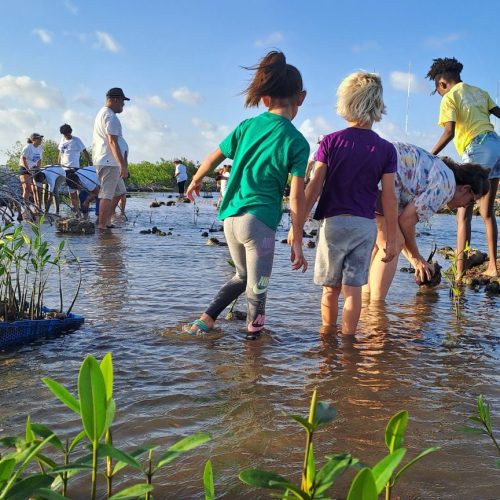
BESTLIFE2030 launches its third call for proposals
08 October, 2026
BESTLIFE2030 launches its third call for proposals
08 October, 2026
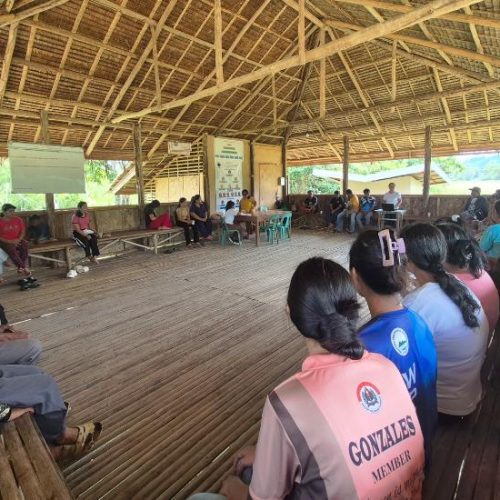
Keeping Indigenous knowledge alive in Palawan
01 October, 2026
Tuesday 24 march 2026
Header photo: Western Chimpanzee in sacred forest. © Chimbo Foundation
Scientific studies show that the threat to great apes from mineral extraction is very real. Mining for critical minerals has fragmented and degraded ape habitats across Africa. Roads, exploration camps and other infrastructure open previously remote areas to hunters, loggers and other pressures. In Guinea-Bissau, this is happening now.
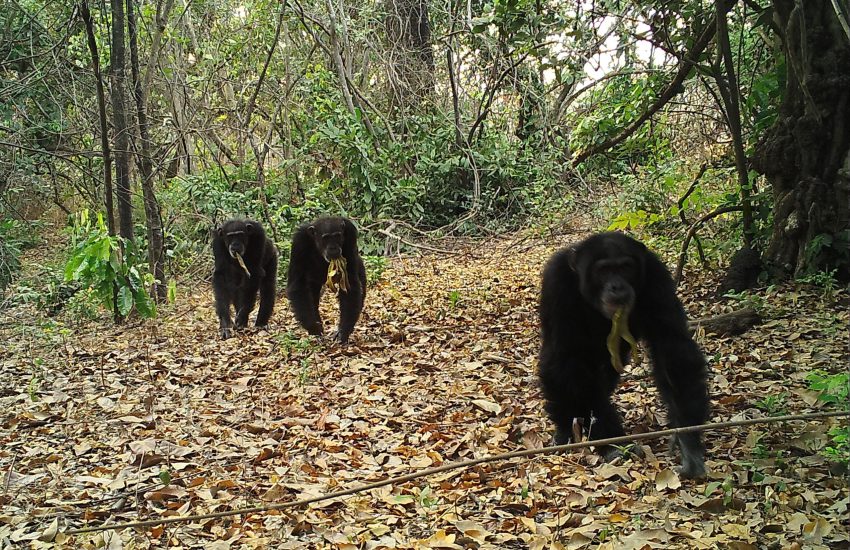
The Boé area is both ecologically and culturally exceptional. It is home to an estimated 1,500 western chimpanzees, one of only a few populations in West Africa that may still be stable or even slowly increasing. Local traditions have helped preserve key forest patches and sacred sites, all of which overlap with chimpanzee habitat and movement routes, contributing to a rare balance of nature and human presence.
Things have started to change since a bauxite exploration concession was granted in Boé in 2024 and preliminary exploration work has started. The company is drilling boreholes, clearing land and putting up temporary infrastructure, often without full consultation or disclosure to local communities, environmental authorities or civil society. On the ground, local voices report considerable damage. They describe chimpanzee nesting and feeding areas being disturbed, sacred groves trespassed, farms and water sources harmed, rivers polluted, drilling noise and waste left behind. These early impacts raise deep concern: if exploration proceeds to full-scale mining, these chimpanzee populations could suffer irreversible losses.
The western chimpanzee (Pan troglodytes verus) is listed as Critically Endangered on the IUCN Red List, the highest risk category for extinction, after being uplisted from Endangered in 2016 due to a severe population decline (over 80% in 25 years) from poaching, habitat loss (agriculture, mining, infrastructure), disease, and human conflict. This makes it the most threatened chimpanzee subspecies, facing immediate extinction risk across its West African range.
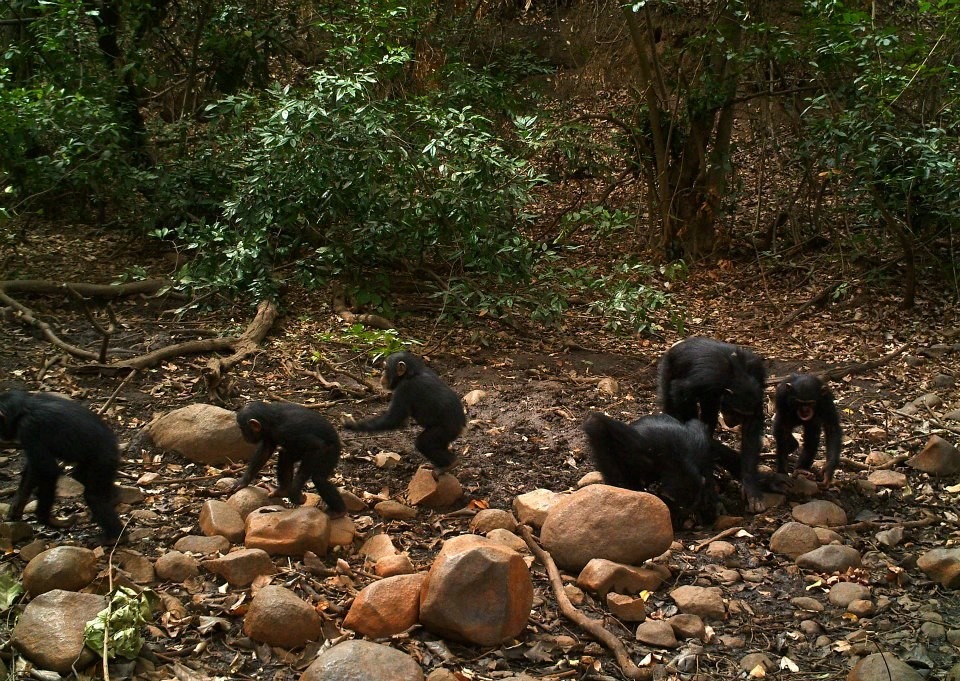
Western Chimpanzees in Guinea-Bissau © Chimbo Foundation
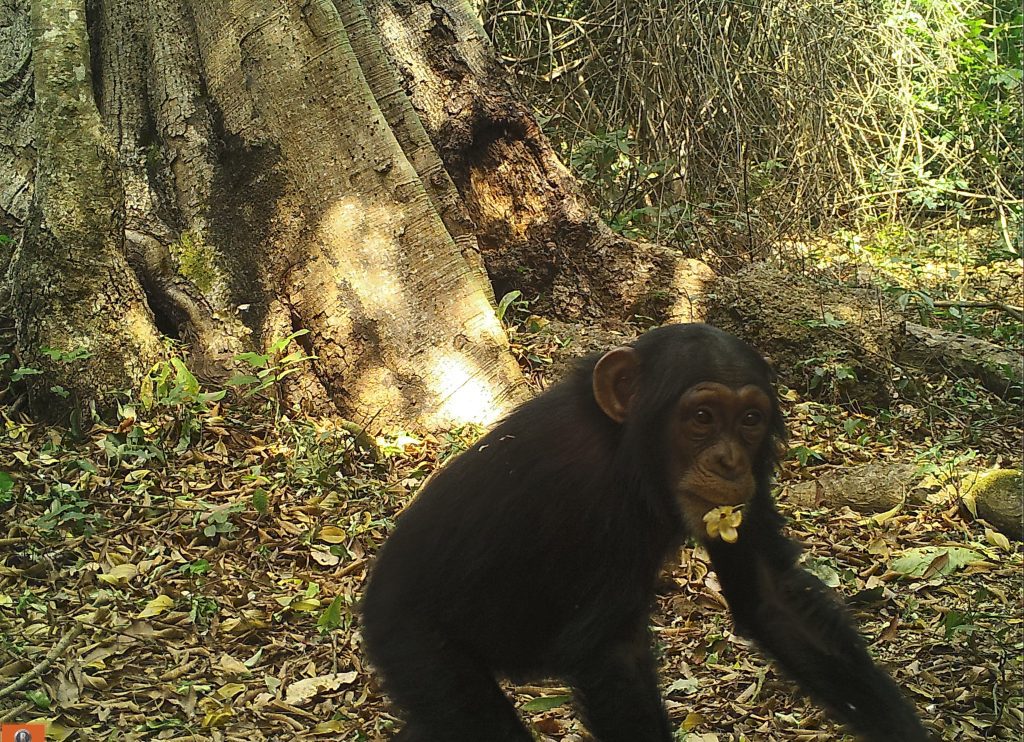
Western Chimpanzees in Guinea-Bissau © Chimbo Foundation
While Boé is a hotspot, it is not alone. Over the past 20 years mining pressures have risen across many African great ape range states. These pressures overlap with key ape habitats, especially in West Africa. As mines expand, roads and settlements follow, bringing long-term transformation even after active mining ceases. The western chimpanzee has already declined by around 80% over the last 25 years, largely due to habitat loss, poaching, disease, and fragmentation. Mining-driven land conversion could worsen these trends dramatically. Governance in many of these countries remains weak, and environmental enforcement is often limited. Without early and robust protections, the Boé region’s chimpanzees and its forests could be severely compromised.
Communities in Boé rely on their forests for water, food, cultural practices and spiritual sites. For many, the forests are not just a resource; they are part of their heritage. Yet, reports suggest that local communities were not fully informed about exploration activities. This lack of meaningful consultation contradicts the principle of FPIC and risks undermining trust. If companies and governments move ahead without genuine engagement, they risk not only ecological damage but also social strife and loss of traditional lifeways.
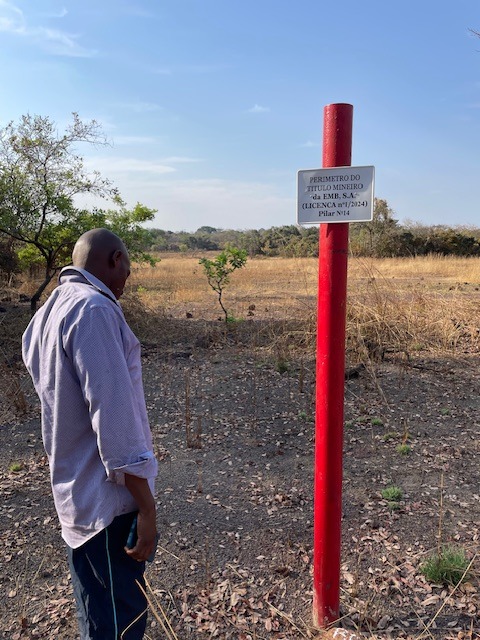
Perimeter of a mining concession in Boé © Chimbo Foundation
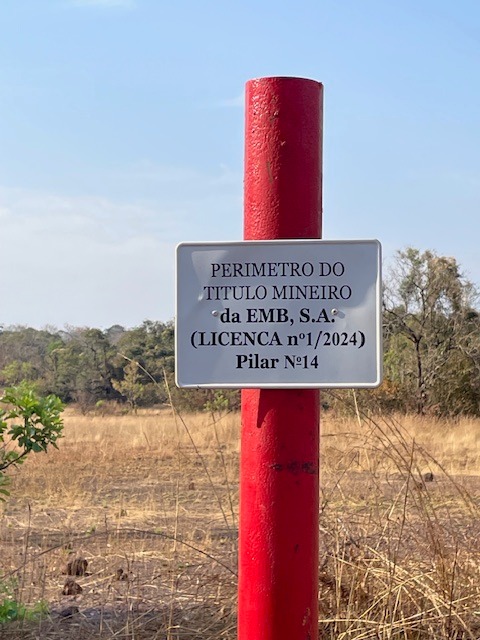
Perimeter of a mining concession in Boé © Chimbo Foundation
In neighbouring Guinea, the newly inaugurated President Mamady Doumbouya is pushing expanded exploitation of the country’s mineral resources to drive economic growth and increase state revenues. Guinea, the world’s top exporter of bauxite, has strengthened partnerships with China, which now accounts for a large share of its bauxite exports and invests in local processing infrastructure. While this could boost development, expanded mining raises concerns about environmental degradation, habitat loss, including that of the Western chimpanzee, and impacts on communities.
The situation in Boé calls for a multi-pronged response rooted in both precaution and partnership. First and foremost, the concession in the Boé region should be held to the highest environmental and social standards from the very start, not just once large-scale production begins. In practice, that means applying credible standards – such as those developed by the Aluminium Stewardship Initiative (ASI) or IRMA – during exploration too, including risk assessments, community consultations, protection of sacred and high-value biodiversity sites, pollution control and clear compensation mechanisms.
Equally critical is establishing independent monitoring and transparency. Data on exploration and environmental impacts must be made publicly available, and local and international civil society organisations should be involved in verifying compliance. This level of oversight is essential in a region where state institutions may lack capacity or where regulation is under-resourced.
Protecting chimpanzee populations also means safeguarding intact forest areas, particularly those used for nesting or feeding, and ensuring that any infrastructure planning takes into account movement corridors. These are not side projects but central to maintaining viable populations. Supporting local communities is very central. Conservation efforts must go hand in hand with social development such as livelihood programmes, co-management mechanisms, environmental education and benefit-sharing.
‘In regions like the Boé, large-scale threats such as bauxite mining poses serious risks to both chimpanzee habitats and local livelihoods. Community-based conservation is essential to ensure that development does not come at the cost of biodiversity and local livelihoods,’ says Annemarie Goedmakers, founder of Chimbo Foundation, which works to protect chimpanzees through community-based conservation and partners closely with local organisation Daridibó.
Finally, the global dimension cannot be ignored. Bauxite from Guinea-Bissau will almost certainly enter international supply networks, used in industries from construction to electric vehicles. Consumers and companies further downstream must reckon with how their demand may drive habitat destruction and rights violations.
‘Governments, consumers and companies now have a window to commit to ethical and responsible sourcing, making sure that development does not come at the expense of biodiversity and community rights. Failure to do so risks jeopardising one of West Africa’s last great apes and undermining the very ecological diversity that makes this region so irreplaceable,’ says Maartje Hilterman, IUCN NL.


08 October, 2026
We are pleased to announce that the third BESTLIFE2030 call for proposals is now open, providing new funding for locally…
01 October, 2026
For Indigenous communities in Palawan - known as the last ecological frontier of the Philippines - knowledge about land, forests…
