Nature’s Heartbeat expands support for locally led conservation…
23 October, 2026
Nature’s Heartbeat expands support for locally led conservation…
23 October, 2026
Monitte Lantas wins 2026 Irene Dankelman Young Ecofeminist…
22 October, 2026
Thursday 12 march 2026
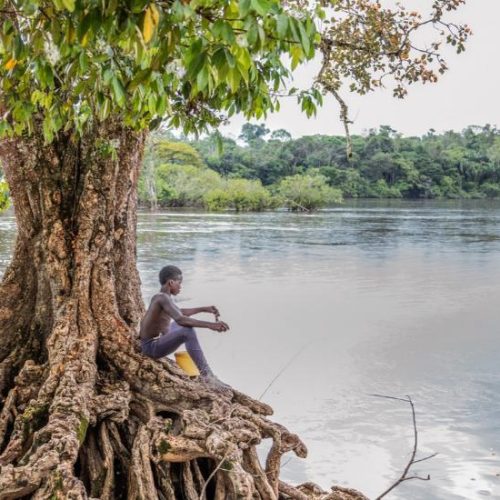
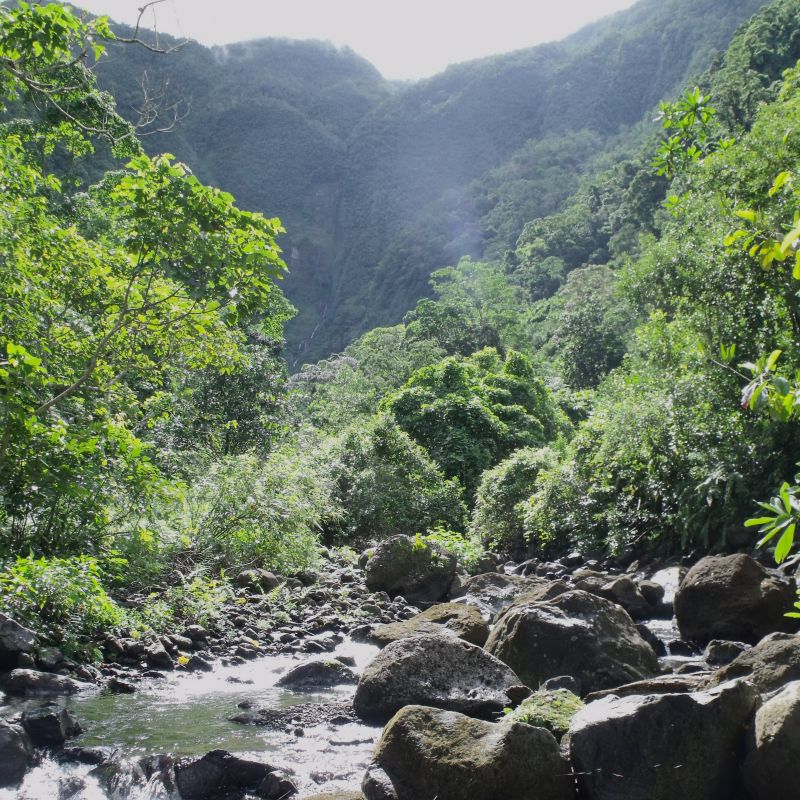
Header photo: Amelaïd Houmadi in the Mount Ntringui National Park in Anjouan, monitoring the spread of Dicranopteris linearis to better target priority restoration areas. All photos in this article © BEE Comores
During his youth in Mirontsy, a coastal town on the island of Anjouan, nature was part of Dr. Amelaïd’s daily life. ‘From the moment I started at the Koranic school, we had to help the teacher in the fields and find pasture for her goats. That is how I learned about useful plants and farming activities. On Thursdays and Fridays, when the school was closed, we went fishing by the coral reefs. In the afternoon we played in the sea: swimming, looking for shells, diving… At low tide, we played ball at the beach.’
He did not spend his free time only playing. The young Houmadi also helped his family tend the fields, where they cultivated peanuts, beans, cassava, and pigeon peas. All these experiences would later influence his career choices, but there was something else that first inspired his future.
In the 1990s, television had just arrived in the Comoros. Dr. Houmadi’s favourite show was C’est pas sorcier (It’s not rocket science) by Jamy Gourmaud and Frédéric Courant. ‘This show touched my heart deeply as I listened to scientific facts that I did not learn at school, since we no longer had laboratories or conducted scientific experiments. I dreamed of one day becoming the Jamy Gourmaud of the Comoros.’ His dream soon became a reality: ‘After my studies, I conducted fieldwork in the Ranomafana Forest in Madagascar, just like Jamy Gourmaud.’
‘After more than 15 years working with various associations and NGOs, I decided to set up an organisation that could continue to exist and serve others after I am gone.’
In the following years, Dr. Amelaïd worked at different NGOs, including at WWF Madagascar and environmental organisations in the Comoros. ‘After more than 15 years of experience working with various associations and NGOs, I decided to set up an organisation that would continue to exist and serve others after I am gone.’ In 2023, BEE Comores was created. The organisation focusses on research, biodiversity conservation, and promoting a green and blue economy for a resilient and sustainable future. Working with the communities on the islands is central to their approach.
Madagascar, the Comoros, Mauritius, and the Seychelles are home to incredible species diversity and extremely high rates of endemism: species that originally only occur here. In addition to its incredible biodiversity, this hotspot provides millions of people with fresh water and other ecosystem services that are essential to their survival.
Supported by the Critical Ecosystem Partnership Fund (CEPF) and together with partners from the islands, IUCN NL forms the Regional Implementation Team (RIT) for this unique region. As the RIT, we support the development and oversight of a portfolio of 80 to 100 grants to non-governmental organisations, community-based organisations, academic institutions, private companies, and other organisations on the islands.
BEE Comores received a CEPF grant to implement the project ‘Improving knowledge of social and ecological impacts to promote sustainable management of coastal and terrestrial ecosystems’ in two priority Key Biodiversity Areas in the Comoros.
The archipelago of the Comoros is a biodiversity hotspot. Unfortunately, as in many biologically-rich regions, its ecosystems are increasingly under threat. ‘In Anjouan, and especially in Shisiwani and Mount Ntringui national parks, the main threats to nature are linked to three major pressures: invasive alien species, deforestation and nature degradation caused by people, and the weakening of native and endemic species, especially trees. It has been shown that at least ten native and endemic tree species are at critical risk of extinction, indicating habitat degradation and biodiversity loss.’ Dr. Amelaïd explains.
‘Participatory management strategies engage local stakeholders at every stage. The project involved a strong collaboration with the park teams, town halls, village chiefs, and the village co-management committees.’
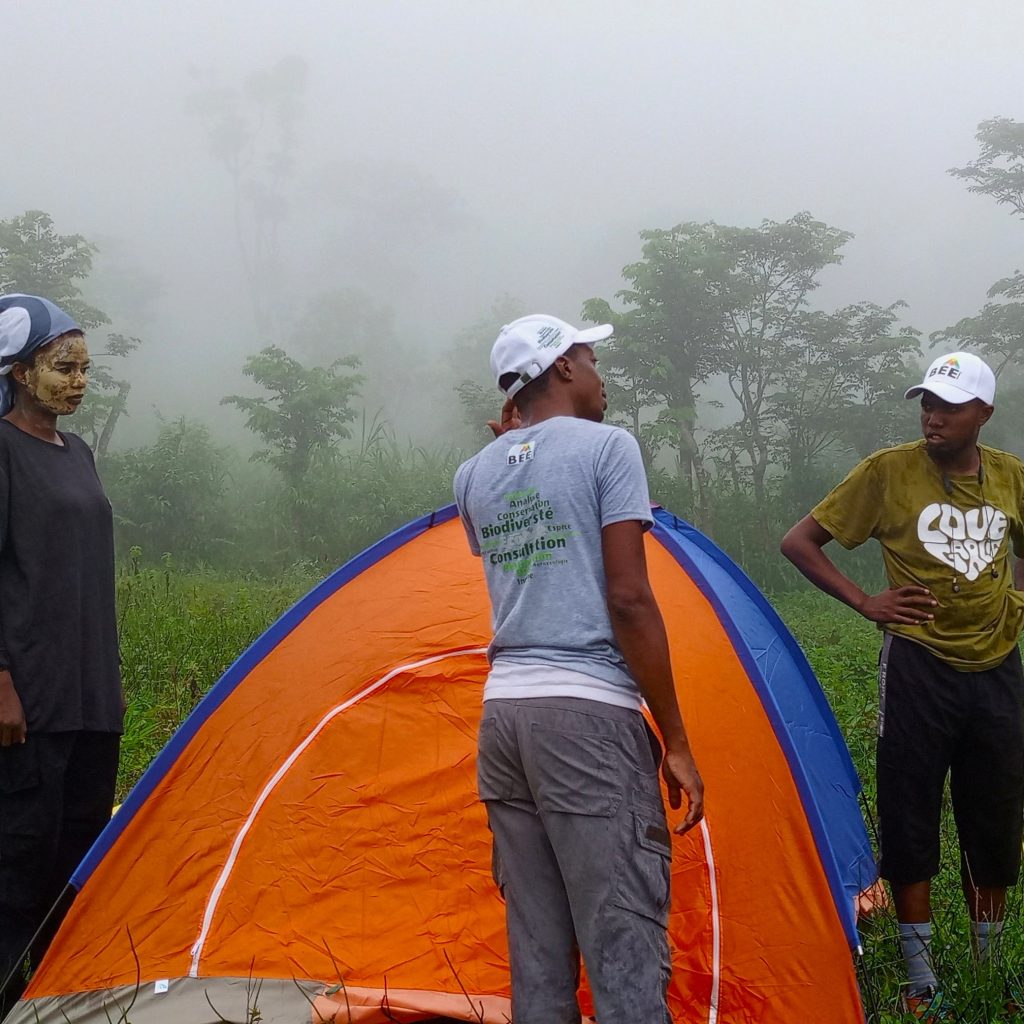
BEE Comores received a CEPF grant to asses the health of natural habitats on Anjouan. The team also proposed participatory management strategies for the protection and conservation of endemic biodiversity and ecosystems. ‘This means engaging local stakeholders at every stage,’ states the conservationist. ‘The project involved a strong collaboration with the park teams, town halls, village chiefs, and the village co-management committees. We focused on information and participation by organising meetings, presenting results, and increasing awareness among villagers and community leaders.’
Some practical challenges came up during the project, such as planning issues due to weather conditions and the fluctuating availability of students. According to Dr. Amelaïd, the main issue is, however, how to ensure follow-up funding. ‘The project supported by the CEPF provided us with concrete tools for conservation action in the Mont Ntringui and Shisiwani National Parks. With the list of priority invasive species, the mapping of degraded areas, and the strategic document, we now have a solid basis for planning restoration and management actions in the parks. The next step is taking action on the ground.’
Throughout the years, Dr. Amelaïd followed in the footsteps of his childhood hero Jamy Gourmaud. But when nature is disappearing at a rapid, scientific facts are no longer enough. ‘My new dream is to evolve the conservation efforts from research to action to better protect nature on these islands,’ he concludes.
23 October, 2026
Nature’s Heartbeat protects Key Biodiversity Areas through trust-based, locally led nature conservation. Building on a successful first year with numerous…
22 October, 2026
October 21st, COP17 Yerevan - Monitte Lantas, is presented the winner of the 2026 Irene Dankelman Young Ecofeminist Award, recognising…
