From restoration to resilience: how NATIR is rebuilding…
07 September, 2026
From restoration to resilience: how NATIR is rebuilding…
07 September, 2026
Strengthening civil society for climate action in the Comoros
05 August, 2026
Friday 20 march 2026
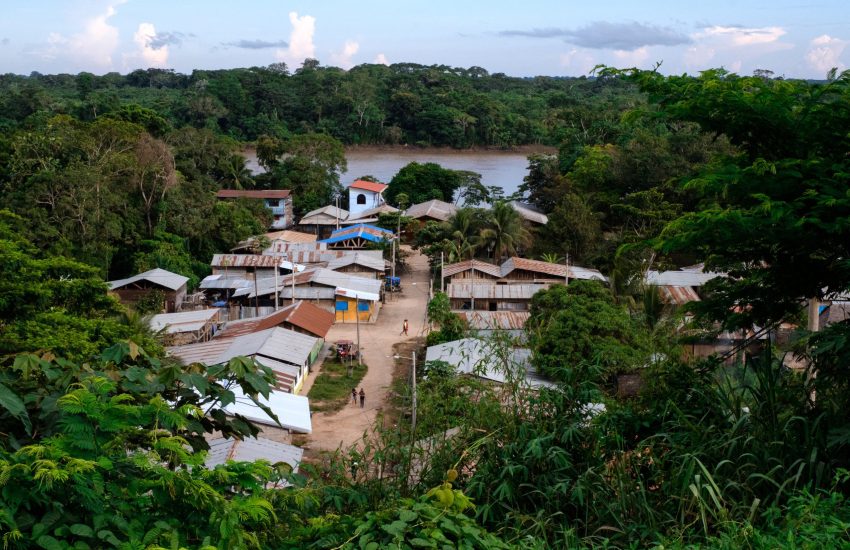
Header photo: A neighborhood on the outskirts of Puerto Maldonado, Madre de Dios, Peru. © Tom Laffay
March 21 marks the International Day of Forests. It is an important moment to recognise tropical forests for what they truly are: rich in biodiversity, but also vital landscapes that provide livelihoods, support local economies, regulate water and climate, and deliver goods and services on which billions of people depend.
Forests are therefore not just a nature or biodiversity issue. They are also an economic, social, and security issue. In tropical forest regions, local communities, Indigenous communities, and small-scale producers depend on forests for food, energy, income, and employment. Well-managed forests can support strong local economies, through sustainable production and the active involvement of Indigenous and local communities, including women, and young people.
This aligns with the Dutch government’s recent communication to the House of Representatives on international climate policy (March 10, 2026). It emphasises that effective climate action requires international cooperation and stronger partnerships with countries and civil society actors in Africa, Latin America, and Asia. The government notes that successful climate policy depends on ‘coalitions and partnerships outside the formal negotiation process’ and on cooperation with governments, research institutions, the private sector, and civil society organisations.
The Netherlands is closely connected to the rest of the world. As one of Europe’s major importers of tropical forest products, the Netherlands has a direct responsibility to ensure that supply chains are both deforestation-free and socially inclusive. European regulations, such as the EU Deforestation Regulation, are an important step in that direction. Implementation has to be accompanied by the necessary supporting measures, as agreed upon in the regulation. If not, the risk exists that local communities and small-scale producers will lose their European markets, simply because they cannot meet the administrative demands.
Implementation and support must also address the needs and capabilities of women. Women play an indispensable role in the supply chains of forest products, but their work often remains invisible and their access to markets is limited. With 2026 designated as the International Year of Women Farmers (FAO), now is the time to strengthen their position, in line with the Dutch feminist foreign policy.
That is why regulation alone is not enough. It must be complemented by investments in locally led, inclusive forest management and forest-based economies. This aligns with the Dutch government’s emphasis on linking climate policy with food security, water management, and economic resilience. The policy letter of March 10 emphasises that climate action must also contribute to ‘economic and social resilience, stability, and security’ in partner countries.
Our experience as signatory organisations of working in tropical forest landscapes teaches us that sustainable solutions emerge when local actors are seen as leaders in decision-making, management and economic development – not merely as implementers at the end of the chain. Local leadership is not an afterthought; it is an essential prerequisite for lasting results.
Furthermore, the government’s climate strategy underscores the need to mobilise both public and private financing and to work through long-term partnerships. Public climate finance alone cannot meet global financing needs. Innovative approaches are needed to attract private investment. Supporting locally led forest-based economies contributes to this by strengthening investable, sustainable value chains and partnerships with local stakeholders.
By strengthening governance, production systems, and local entrepreneurship – for example, in the marketing of non-timber forest products (NTFPs) – sustainable forest landscapes become resilient and attractive to investment. This is only possible under conditions that recognise local and Indigenous land and use rights, the rights of women and minorities, ecological preconditions, and the application of the internationally recognised principle of Free, Prior, and Informed Consent.
We therefore call on the Dutch government to invest more strongly and more explicit in locally led forest management and forest-based economies within the framework of Dutch international cooperation and its associated policy instruments. One way to achieve this is through direct financing that is accessible to local actors who are typically excluded, such as (young) women, Indigenous groups and small-scale farmers. Funding that does not increase the recipient country’s debt burden. This directly contributes to the government’s own priorities: strengthening international partnerships, increasing climate resilience, and mobilising smart financing for sustainable development.
Long-term partnerships between local communities, producer organisations, governments, businesses, financial institutions, research institutions, and civil society organisations are essential in this regard. The aim must be to promote local leadership through practical support, patient capital, and market arrangements that work for these locally led forest economies. This requires ensuring meaningful consultation and participation of these groups and the organisations that represent them. It also means recognising, strengthening, and building upon the traditional knowledge that largely forms the basis for successful sustainable forest management.
By doing so, the Netherlands can contribute to tropical forest landscapes that are more productive, more resilient, and better managed. Landscapes that simultaneously offer a sustainable economic outlook as well as a livable income to the people living in and around these forests. This supports local communities, whilst also serving broader Dutch and European interests: stable supply chains, climate resilience, biodiversity conservation, and security of supply for sustainable raw materials.
This statement is an initiative of IUCN NL and Tropenbos International and is co-signed by:
Both ENDS
Brokering Solidarity
Centrum Hout
Conexión Latin America
Fairtrade Nederland
FSC Nederland
Heifer Nederland
Hogeschool van Hall Larenstein
Instituut Culturele Antropologie en Ontwikkelingssociologie Universiteit Leiden
Non-Timber Forest Products – Exchange Programme (NTFP-EP) Asia
ProTerra
SocioBio Hub
Stichting Probos
SNV Netherlands Development Organisation
Trees for All
Vereniging Tropische Bossen (VTB)
Vereniging van Nederlandse Houtondernemingen (VVNH)
Women Engage for a Just Future (WECF)


07 September, 2026
Madagascar and the Indian ocean islands are a biodiversity hotspot - a group of islands with incredible species diversity and…
05 August, 2026
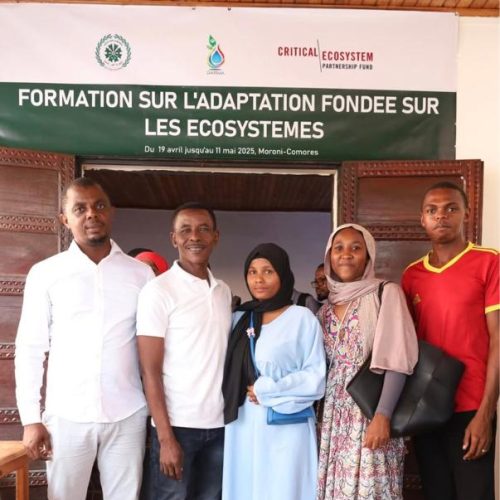
Photo header: Participants during a training session © DAYIMA Madagascar and the Indian ocean islands are a biodiversity hotspot -…
