
Four islands, one team: what the CEPF Regional…
26 October, 2026
Four islands, one team: what the CEPF Regional…
26 October, 2026
Nature’s Heartbeat expands support for locally led conservation…
23 October, 2026
Thursday 29 october 2026
Header photo: Lake Tseny @Madagasikara Voakajy
Around Lake Tseny in western Madagascar, protecting nature is not only about saving endangered species. It is also about securing water, food, livelihoods and a more resilient future for thousands of people.
Since April 2024, Madagasikara Voakajy and its partners have been implementing a 33-month climate resilience project around Lake Tseny with support from the CEPF. The initiative combines ecosystem restoration, such as ecological restoration around the lake and climate-smart livelihoods like testing crop diversification and soil conservation to strengthen the resilience of both people and nature.
Over the past two years, local communities have shown that when conservation and community development go hand in hand, ecosystems can become powerful allies in adapting to climate change.
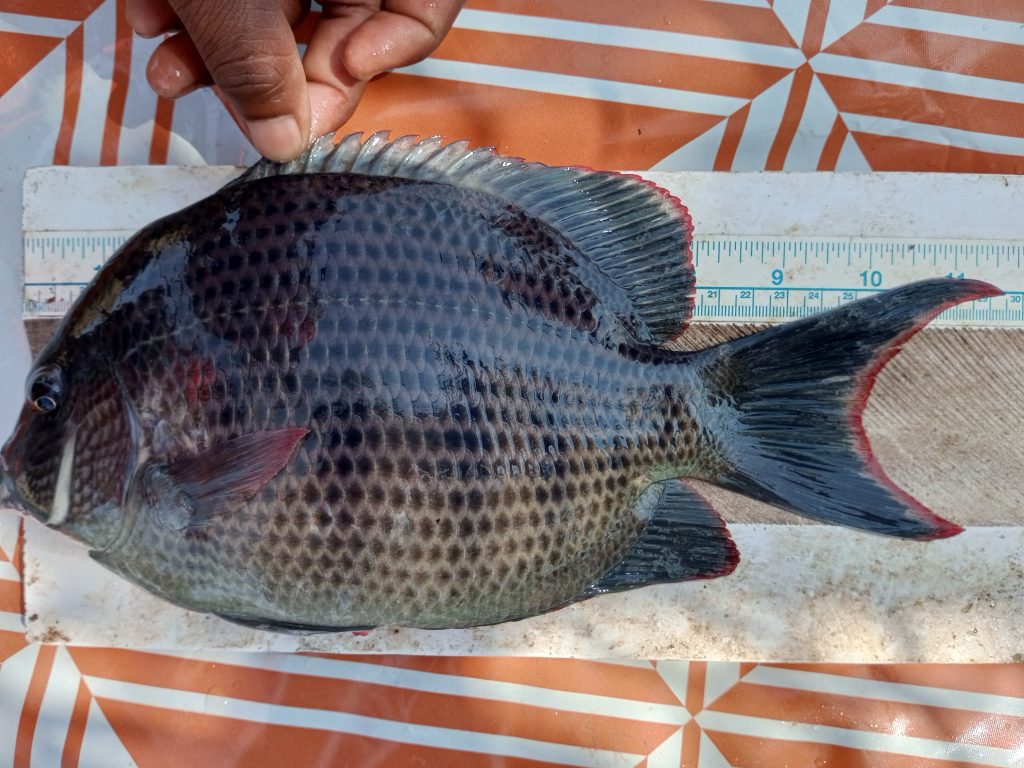
Photo: Damba menarambo @Madagasikara Voakajy
Lake Tseny is one of Madagascar’s most remarkable freshwater ecosystems. It is the only known home of the Damba menarambo (Paretroplus menarambo), an endemic fish species that was once believed extinct in the wild until it was rediscovered by the team of Madagasikara Voakajy in 2008. Today, the species remains Critically Endangered, making the lake a site of exceptional conservation value.
The lake is also recognized as a Key Biodiversity Area and an Alliance for Zero Extinction site because of the rare and threatened species it supports. Alongside the Damba menarambo, the area provides refuge for endangered wildlife including Madagascar’s big-headed turtle, the Madagascar fish eagle, flying foxes and several endemic fish and plant species.
But Lake Tseny is not only important for wildlife. More than 4,000 people depend on its waters for fishing, agriculture and everyday household needs. The health of the lake directly affects the well-being of surrounding communities.
As climate change increases pressure on rural livelihoods, protecting ecosystems has become an essential adaptation strategy. Communities understood that healthy ecosystems would help them to withstand environmental shocks. Forests reduce erosion, improve water quality and regulate water flow. Sustainable fisheries help secure food and income. Well-managed natural resources reduce vulnerability and strengthen resilience over time. At Lake Tseny, these principles guide a community-driven effort to restore landscapes, improve governance and support local livelihoods.
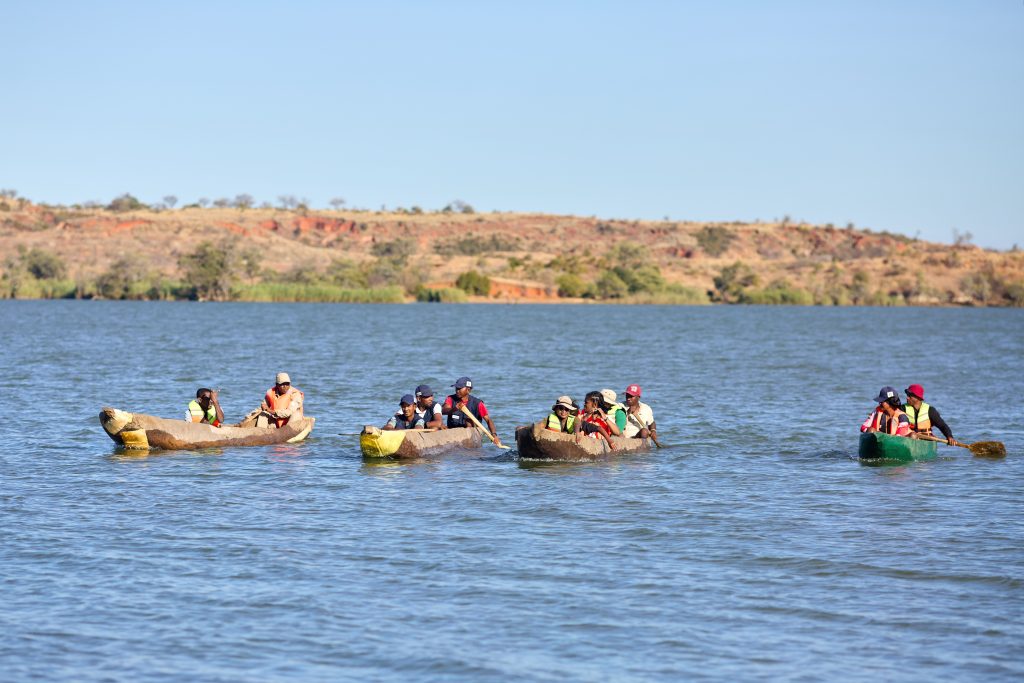
Photo: Group patrol @Madagasikara Voakajy
One of the strengths of the initiative has been its strong local ownership. Community organizations (VOIs), local authorities, traditional leaders, fishers, women’s groups and residents have all participated in planning and implementing activities. Local coordinators were appointed within communities, responsibilities were shared among stakeholders, and local customs and traditions were respected throughout the process. Rather than imposing solutions from outside, the project builds on local knowledge and encourages communities to become active stewards of their natural resources.
Successful conservation depends not only on protecting habitats but also on ensuring that decisions are made fairly, transparently and inclusively. To strengthen local governance, the project uses the Site-level Assessment of Governance and Equity (SAGE) tool. SAGE provides a structured process through which community organizations, local authorities and resource users assess how natural resources are governed and identify practical actions to improve decision-making. It also assesses whether a site’s governance is equitable, inclusive and respects the rights of local people.
Through facilitated discussions, stakeholders examine issues such as participation, transparency, accountability, respect for rights and equitable access to benefits. The results are then used to design capacity-building programmes and governance improvement plans for community-based organizations and others stakeholders managing the Lake Tseny landscape.
By strengthening local institutions and empowering communities to participate meaningfully in resource management, the initiative aims to ensure that conservation outcomes are both effective and socially equitable. One of the project’s targets is to demonstrate measurable improvements in local governance through increased SAGE scores and the successful renewal of community natural resource management agreements.
The SAGE approach is helping communities around Lake Tseny strengthen governance and ensure more equitable conservation outcomes.
One of the project’s most visible achievements has been ecological restoration around the lake and across its watershed.
Working together, communities established more than 1,190 hectares of passive restoration areas and 176 hectares of active restoration areas. Between 2025 and 2026, 110.8 hectares regenerated naturally, while 6.8 hectares were actively replanted. These efforts are not only helping biodiversity recover. They are also strengthening the natural systems that protect soils, maintain water quality and support the long-term health of the lake.
The restoration work has been complemented by the introduction of climate-smart agricultural practices, including agroforestry, crop diversification and soil conservation techniques designed to help farmers adapt to increasingly unpredictable weather conditions. Thirty-three local pioneers have already begun testing these approaches, and twelve of them are being trained as farmer trainers who will help spread these techniques throughout communities surrounding the lake.
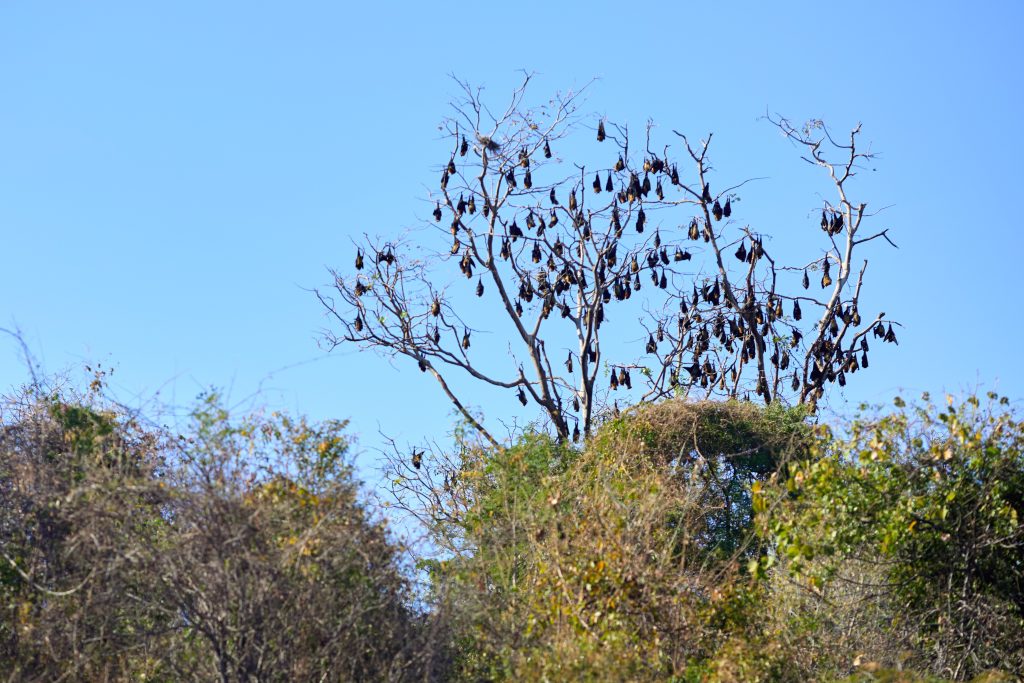
Photo: Bats resting @Madagasikara Voakajy
Effective conservation depends on good information. Between 2024 and 2026, trained community patrol teams travelled more than 2,000 kilometers through forest habitats and 716 kilometers across the lake to monitor ecosystem health and identify threats before they become more serious. These patrols provide valuable information for local decision-making while reinforcing the role of communities as guardians of their environment. Patrol members have also received training and equipment to strengthen restoration monitoring, fire prevention and natural resource management efforts.
Climate resilience is not only about ecosystems. It is also about people’s ability to cope with difficult times. To strengthen household resilience, local Village Savings and Loan Associations (VSLAs) were established around the lake. Between 2025 and 2026, 11 savings groups became operational, bringing together 222 households, representing approximately 26% of households in the area.
Already, seven groups have completed their first savings cycle and distributed funds among participating households. Families are using these resources to invest in agriculture, small businesses and other income-generating activities that help them navigate economic and climate-related challenges. For many households, these savings groups provide an important safety net while strengthening community solidarity and self-reliance.
The story of Lake Tseny shows that conservation and community development do not have to compete with one another. In fact, they can reinforce each other. By restoring forests, promoting climate-smart agriculture, strengthening local governance through the SAGE approach, monitoring biodiversity and expanding VSLAs, local people are helping to secure both a globally important ecosystem and their own future.
As climate change continues to affect vulnerable communities across Madagascar, Lake Tseny offers an inspiring example of Ecosystem-based Adaptation in action. The project demonstrates that resilience is built not only through healthy ecosystems, but also through empowered communities capable of managing natural resources fairly, effectively and collectively.
CEPF fills a unique, strategic role in addressing the biodiversity and climate crises by mobilizing and empowering civil society — nongovernmental organisations, communities, Indigenous peoples groups, universities and more — to protect the world’s biodiversity hotspots. Since 2001, CEPF has catalysed enduring, locally led biodiversity conservation through over US$277 million in grants to more than 2,600 organizations in 109 developing and transitional countries. Results include more than 16 million hectares of formal protected areas established, over 1,025 threatened species supported, and more than 4,900 communities benefiting. Learn more at www.cepf.net, Facebook, Instagram and LinkedIn.
The Critical Ecosystem Partnership Fund (CEPF) is a joint initiative of l’Agence Française de Développement (AFD), Conservation International, the European Union (EU), Fondation Hans Wilsdorf, the Global Environment Facility, the Government of Canada, the Government of Japan, and the World Bank. Its fundamental objective is to ensure that civil society is engaged in biodiversity conservation.
More information on the activities within the RIT MADIO can be found on the IUCN NL website projectpage.


26 October, 2026
Since 2022, five organisations have worked together as a Regional Implementation Team (RIT) to support nature conservation groups in the…
23 October, 2026
Nature’s Heartbeat protects Key Biodiversity Areas through trust-based, locally led nature conservation. Building on a successful first year with numerous…
