
Nature’s Heartbeat expands support for locally led conservation…
23 October, 2026
Nature’s Heartbeat expands support for locally led conservation…
23 October, 2026
Irene Dankelman Young Ecofeminist Award Winners 2026
22 October, 2026
Monday 26 october 2026
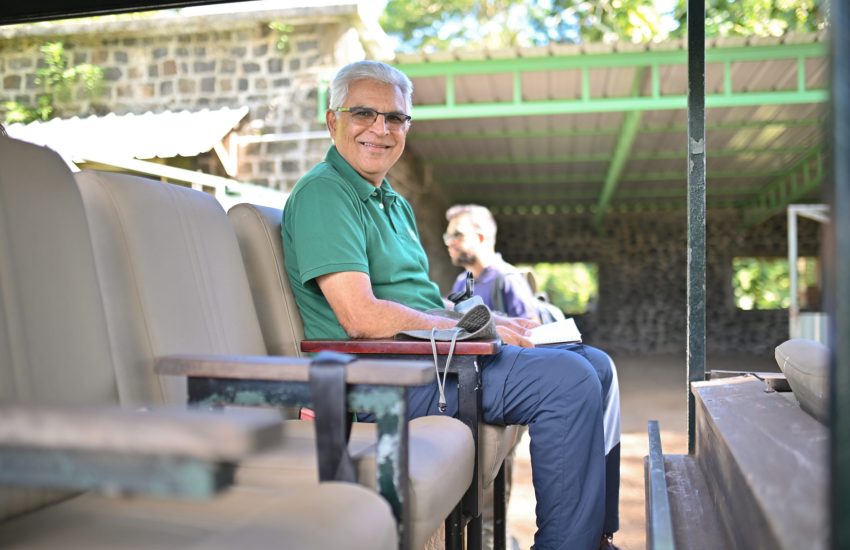
Header photo: Roshan Baguant ©FORENA
Since 2022, five organisations have worked together as a Regional Implementation Team (RIT) to support nature conservation groups in the Critical Ecosystem Partnership Fund’s (CEPF) Madagascar and Indian Ocean Islands’ (MADIO) Biodiversity Hotspot. As the current funding phase heads towards its close in 2027, Roshan Baguant of FORENA, the RIT’s focal point in Mauritius, looks back on what worked, what took longer than expected, and what needs to change.
Roshan Baguant’s path into conservation was anything but conventional. He spent nearly three decades in the airline industry, beginning as an aeronautical engineer in aircraft maintenance before moving into Cabin Operations and procurement. At one point, he was responsible for leading a team of 600 people. After taking early retirement, he redirected his energy towards supporting Fondation Ressources et Nature (FORENA), a Mauritian foundation that develops environmental projects funded through companies’ corporate social responsibility budgets.
In 2022, FORENA became part of the Regional Implementation Team (RIT) for the Critical Ecosystem Partnership Fund (CEPF) investment in the Madagascar and Indian Ocean Islands biodiversity hotspot. The RIT is coordinated by IUCN NL since mid‑2023 and includes one organisation per country: SAF/FJKM in Madagascar, ID in the Comoros, SeyCCAT in Seychelles, and FORENA in Mauritius. Within this framework, the coordination body is known as RITCO, while the national organisations play a management role and are referred to as RITMOs.
Although eligible, FORENA did not apply for CEPF funding directly. The foundation recognised that its most meaningful role was to stand at the supportive end for Mauritian grantees. Roshan explained that “This Board decision allowed FORENA to leverage its expertise in project management and partnership building to accompany local actors, ensuring that initiatives were not only funded but also resilient and impactful.”
In practice, this translated into FORENA managing the full cycle of small grants in Mauritius, up to US$50,000, from call for proposals through contracting, monitoring, and coaching. For larger grants, ranging between US$200,000 and US$300,000, FORENA helped launch the calls, after which CEPF took over direct management.
With the programme now entering its final phase and an independent evaluation underway, it is a timely moment to look back and analyse the experience of working as part of the Regional Implementation Team, reflecting on achievements, challenges, and lessons learned.
When the Regional Implementation Team was first conceived, the idea was to apply one process consistently across all four countries. In reality, the experience revealed a far more complex and diverse landscape. “From a foreign vantage point, local organisations in the Indian Ocean may appear similar, sharing standards and work cultures. Yet, once the team began working together, it became clear that each island operates within its own language, legal framework, and rhythm of collaboration. What works seamlessly in one country may not translate in another, and building common ground required patience and adaptation,” observes Roshan.
This diversity also extended to expectations. The country organisations initially understood their role as managing small grants and supporting larger ones only when requested, while CEPF anticipated equal involvement in both. Reconciling these perspectives took time and negotiation, eventually leading to the agreement that CEPF would manage the larger grants directly.
Roshan often frames this journey through the stages of team development: forming, storming, norming, and performing. He describes: “The team was formed with enthusiasm, but the storming phase was demanding, marked by differences in interpretation and mismatched processes. Performance required investment in dialogue and adjustments. That teething period lasted over a year, yet it was essential to co-construct the foundation, the norming, on which mutual respect and stronger regional collaboration were built.”
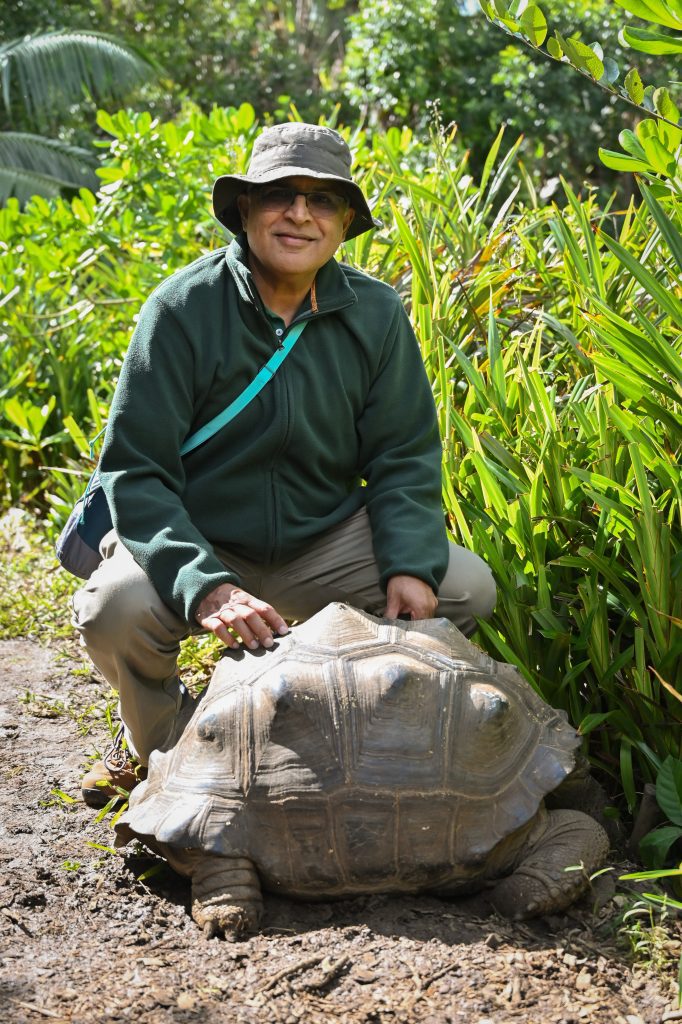
Photo: Roshan in the field ©FORENA
The way forward for the Regional Implementation Team was not through new procedures, but through strengthening mutual understanding and shared practices. Meetings gradually became bilingual, with presentations in both English and French, ensuring inclusivity and clarity. As Roshan noted, “When colleagues express themselves in their own language, you begin to understand their problems, which may be very different from your own.” Over time, participants adjusted their styles of engagement: those more accustomed to leading discussions began to hold back, while others gained confidence to share their perspectives. This shift fostered a stronger appreciation of the diverse realities across the islands and encouraged constructive dialogue.
The team also learned to balance its working rhythms. Some members accelerated their pace, while others moderated theirs, allowing the group to converge on a middle course that supported timely performance. Roshan reflected, “We had to find a middle course. If we had simply adopted one rhythm, it would not have worked for everyone.” A particularly valuable step was the introduction of project visits among focal points. Roshan has been to the Comoros, Madagascar and Seychelles, and his colleagues have come to Mauritius. “That really helped the group,” he says. These exchanges strengthened trust, revealed practical constraints, and helped align expectations across the team.
As Roshan explained, “Reports can look impressive on paper, but when you visit, you see the full context, and sometimes it tells a different story.” This closer engagement enabled the team to better assess organisational capacity, explain national requirements to CEPF, and adapt processes accordingly. In Mauritius, for example, financial reporting had to comply with national legislation, prompting CEPF to adjust its requirements.
Beyond compliance, the country organisations contributed by connecting grant holders with experts, facilitating training opportunities, and drawing on their own blend of financial, communications, and technical expertise. Roshan emphasised, “These exchanges really helped the group. They understand our constraints, and we understand theirs.” Through these practices, the team evolved into a collaborative network where diversity became a strength and shared processes led to more timely and effective performance.
Some hurdles continue to shape the Regional Implementation Team, but they have also strengthened its maturity. The demanding nature of CEPF’s procedures remains a challenge for many organisations. Roshan explained, “It often takes careful guidance to help partners align with these requirements,” noting that FORENA’s executive-level drive has been able to provide structured support, ensuring compliance while reinforcing local capacity.
Decision‑making across multiple layers and time zones has sometimes slowed progress. Yet, Roshan observed, “CEPF now places greater trust in our judgement, recognizing that our solutions are grounded in local realities.” This shift reflects the added maturity of the RIT, where professional insight and proactive management have helped shorten delays and improve responsiveness.
A harder question is what to do with good ideas that arrive in weak proposals. Many small organisations in Mauritius have promising plans but struggle to put them on paper. FORENA draws a firm line: it will not write proposals for applicants. “We cannot be judge and party,” Roshan says. “If we help write the proposal, we cannot then monitor and evaluate it objectively.”
Instead, the team connects these organisations with training – such as webinars, masterclasses and workshops – offered free of charge by current grant holders, many of whose projects focus on capacity-building. The aim is that they can submit a stronger proposal in a future call.
Finally, the separation between small and large grants has limited opportunities for shared learning. Roshan understands why large grants usually go to well-established organisations with, for example, their in-house finance departments. Roshan acknowledges, “Closer involvement of the RIT with Large Grants would have required more manpower and a larger budget. Still, the opportunity to exchange lessons across streams remains important.”
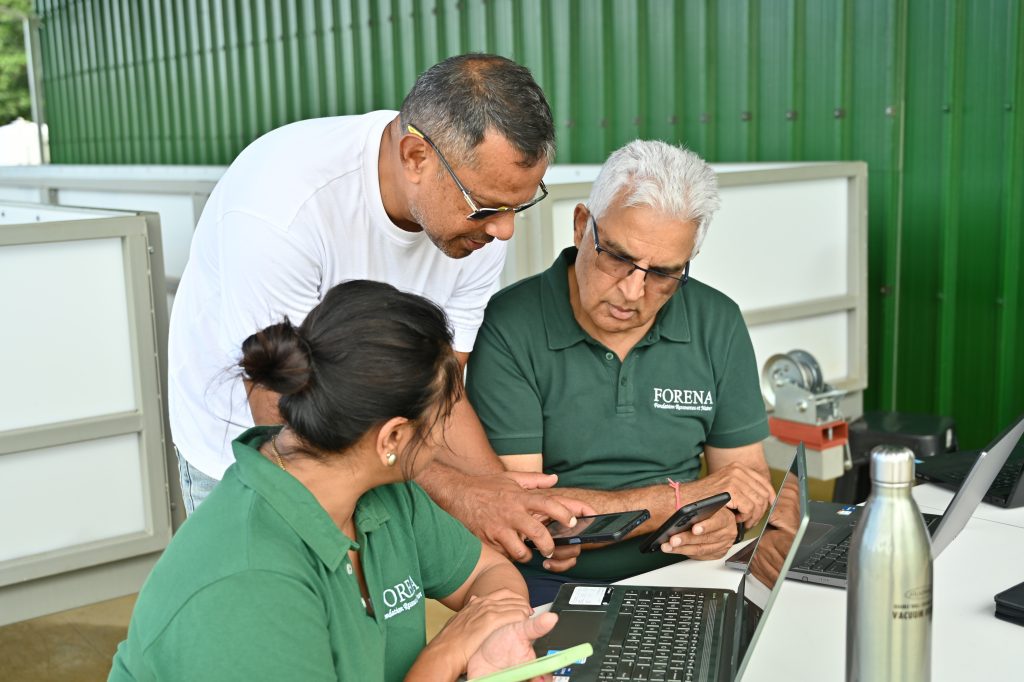
Photo ©FORENA
Since early 2025, Roshan says, the team has been in its performing phase. The clearest sign is in the meetings. “The agendas are there, people participate, everyone brings their part to the table. If there’s a misunderstanding, it gets cleared up. Instead of discussing without reaching a conclusion, the meeting ends with a decision and we move forward as a team.”
In Mauritius, the progress is visible in the reports that smaller organisations submit. FORENA keeps what Roshan calls an open-phone policy: grant holders can call at any time for advice. At first, reports came back with many comments. Each round got better. “Now we often read a report and have very little to review or amend,” he says. “And when we send the report on to the regional coordination, they find it excellent too. That was not the case at the beginning.”
The feedback flows back into the system as well. What goes wrong in one project is taken into account when the next proposals are assessed, a learning curve that Roshan says applies to FORENA, IUCN NL and CEPF alike.
Whether CEPF will extend the mandate of the current Regional Implementation Team beyond 2027 remains unknown. Yet, as Roshan has underlined, the current structure requires a fundamental shift. His central observation is that the RIT has been managed as a project, while in reality it functions as a programme.
Roshan explained, “In a project, you focus on micromanagement. In a programme, you establish a shared strategic framework and objectives, while allowing each country the flexibility to adapt to its own needs, legislation, and culture.” At present, regional meetings often delve into details that are highly relevant in one country but not in another, which he noted is not the most effective use of collective time.
A programme approach would inevitably raise the level of responsibility across the board. Regional coordination would require enhanced skills and a revised structure, while country organisations would assume greater accountability and need additional resources to deliver effectively. Roshan explained, “Our accountability would rise significantly. Instead of focusing on operational instructions, we would be expected to take ownership, anticipate challenges, and ensure delivery within a shared strategic framework.” This reflects the added maturity of the RIT, where professionals are prepared to step into a more executive role.
FORENA has already examined this internally and expressed readiness to embrace such a transition, provided it is applied consistently across all four countries.
CEPF fills a unique, strategic role in addressing the biodiversity and climate crises by mobilizing and empowering civil society — nongovernmental organisations, communities, Indigenous peoples groups, universities and more — to protect the world’s biodiversity hotspots. Since 2001, CEPF has catalysed enduring, locally led biodiversity conservation through over US$277 million in grants to more than 2,600 organizations in 109 developing and transitional countries. Results include more than 16 million hectares of formal protected areas established, over 1,025 threatened species supported, and more than 4,900 communities benefiting. Learn more at www.cepf.net, Facebook, Instagram and LinkedIn.
The Critical Ecosystem Partnership Fund (CEPF) is a joint initiative of l’Agence Française de Développement (AFD), Conservation International, the European Union (EU), Fondation Hans Wilsdorf, the Global Environment Facility, the Government of Canada, the Government of Japan, and the World Bank. Its fundamental objective is to ensure that civil society is engaged in biodiversity conservation.
More information on the activities within the RIT MADIO can be found on the IUCN NL website projectpage.


23 October, 2026
Nature’s Heartbeat protects Key Biodiversity Areas through trust-based, locally led nature conservation. Building on a successful first year with numerous…
22 October, 2026
October 21st, COP17 Yerevan - Monitte Lantas, is presented one of the three winners of the 2026 Irene Dankelman Young…
