Statement: Invest in local leadership for tropical forest…
20 March, 2026
Statement: Invest in local leadership for tropical forest…
20 March, 2026
Meet the conservationist: Dr. Amelaid follows in the…
12 March, 2026
Monday 13 october 2025
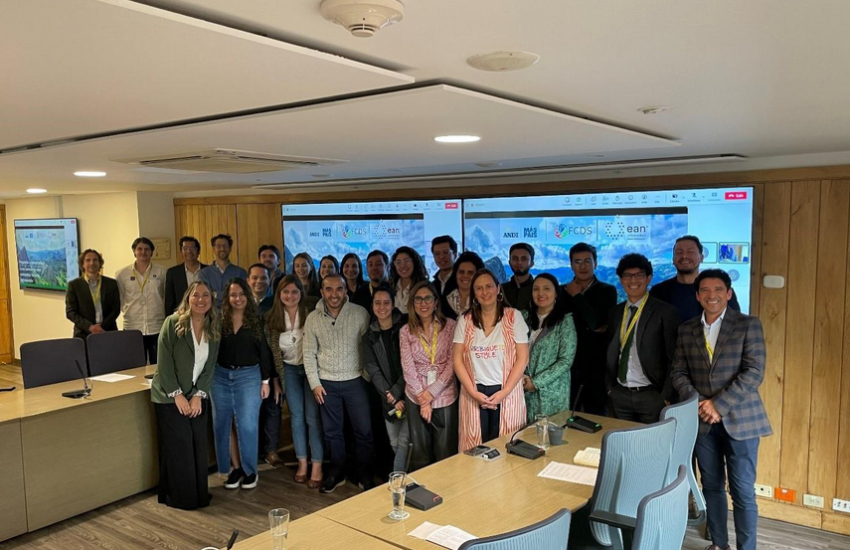
Header photo: ANDI and FCDS © FCDS
Colombia is one of the world’s most biodiverse countries, with extensive tropical forests, including parts of the Amazon. Over the past two decades, these ecosystems have come under growing threat, with the country losing around 6% of its forest cover[2]https://www.forest-trends.org/wp-content/uploads/2022/01/Dashboard_Colombia_August_2024_v2.pdf. This trend is largely driven by the expansion of industrial agriculture in response to rising demand for commodities such as palm oil, beef and coffee[3]https://www.iucn.nl/en/publication/drivers-of-deforestation-in-the-colombian-amazon-industrial-agriculture/#note30266912. Agricultural conversion is now the main driver of deforestation in Colombia[4]https://www.forest-trends.org/wp-content/uploads/2022/01/Dashboard_Colombia_August_2024_v2.pdf[5]https://www.iucn.nl/app/uploads/2024/06/Drivers-of-deforestation-in-the-Colombian-Amazon_IUCN-NL-2024.pdf. While some forest-risk agricultural products, like beef, are consumed domestically, exports such as palm oil and coffee also carry significant deforestation risk. In addition to agricultural expansion, deforestation is increasingly driven by mineral mining, as well as oil and gas extraction[6]https://www.iucn.nl/en/publication/drivers-of-deforestation-in-the-colombian-amazon-minerals-oil-and-gas/ and logging (among others), which further contribute to the degradation of forest ecosystems.
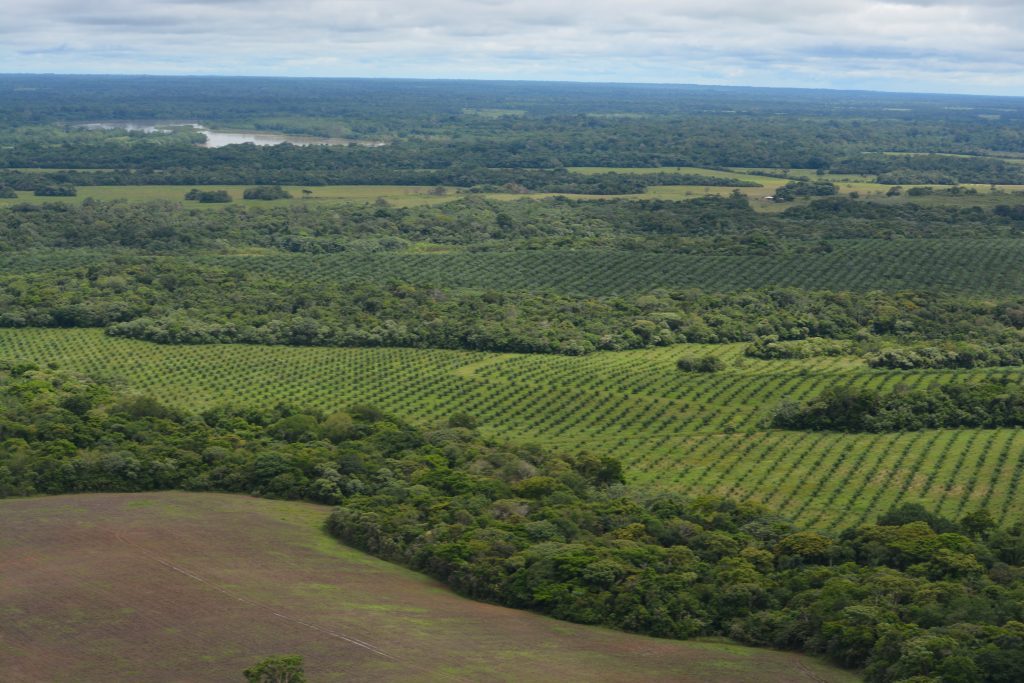
Deforestation for palm oil plantations in Colombia. © FCDS
Large-scale agro-industrial operations often begin by appropriating vast tracts of land. These operations not only clear forests but also degrade water sources, reduce soil quality and contribute to biodiversity loss. Indigenous peoples and local communities bear the brunt of these impacts, facing violence and displacement, exposure to harmful pesticides and the erosion of traditional livelihoods. Alarmingly, 89% of deforestation linked to commercial agriculture is likely illegal[7]https://www.iucn.nl/en/publication/drivers-of-deforestation-in-the-colombian-amazon-industrial-agriculture/#note30266912 – underscoring the urgent need for stronger oversight and enforcement.
Amid these tendencies, public awareness and regulatory pressure on companies regarding forest loss continue to grow. Among the regulations leading this shift is the European Union Deforestation Regulation (EUDR)[8]https://environment.ec.europa.eu/topics/forests/deforestation/regulation-deforestation-free-products_en, which imposes due diligence obligations on businesses trading in products like palm oil, beef, soy, timber and cocoa, aiming to eliminate deforestation from complex international supply chains. Colombian producers – like elsewhere – are now confronted with and increasingly held to this standard. However, many lack the preparation, technical capacity, and traceability systems required to comply with the new requirements.
Recognising the urgent need to address deforestation in Colombia’s supply chains and help companies comply with emerging regulations like the EUDR, the Foundation for Conservation and Sustainable Development (Fundación para la Conservación y el Desarrollo Sostenible, FCDS) and the National Association of Entrepreneurs of Colombia (Asociación Nacional de Empresarios de Colombia, ANDI), supported by IUCN NL, joined forces in 2024 to formalise a collaboration agreement. This partnership brought together knowledge and resources to share information and promote management strategies for zero-deforestation supply chains. It engaged directly with companies and producer associations to address the drivers of deforestation, emphasising the EUDR requirements and corporate responsibility. This was done as part of the Green Livelihoods Alliance’s (GLA) Forests for a Just Future Programme, which aims to protect forests whilst at the same time promoting justice and inclusion.
ANDI is a crucial partner in this initiative due to its established role in Colombia’s business community. ANDI’s involvement is thus vital addressing due diligence issues and bridging multiple business sectors concerned with deforestations dynamics.
‘Building on long-established ties between ANDI and FCDS, the formal collaboration between the organisations reflects the shared goal of addressing environmental challenges constructively rather than through criticism alone. It also acknowledges how environmental concerns are transversal and must be tackled including companies, government ministries, and NGOs.’
- Testimony FCDS
The scope of the collaboration between ANDI and FCDS, supported by IUCN NL, was multi-layered. It included mapping stakeholders’ needs related to zero-deforestation and due diligence, developing a training course, understanding deforestation monitoring tools aligned with the EUDR, creating spaces to raise awareness and promoting sustainable business practices.
Achieving deforestation-free supply chains in Colombia requires more than just voluntary efforts and private sector involvement. For example, it demands strong public sector commitments and binding legal frameworks for zero deforestation, robust enforcement of existing environmental regulations, and clear alignment with international initiatives like the EUDR. These laws and enforcement measures must be designed with sensitivity to environmental justice principles: they should avoid penalising small-scale producers or local communities who rely on the forests for their livelihoods, focusing instead on land-grabbing practices and accountability regarding the harmful activities of large-scale actors (such as mining companies, agribusinesses). Equally crucial is the recognition, protection, and empowerment of Indigenous Peoples and Local Communities (IP&LCs) – ensuring their land rights, participation in decision-making and consultations, and access to technical and financial resources to strengthen their territorial governance.
An outcome of the collaboration between FCDS and ANDI – with support from IUCN NL – was the joint development and implementation of the business training course ‘Sustainable Value Chains: Free of Deforestation.’ The course engaged producer companies and sought to enable their alignment with regulations such as the EUDR as well as with national deforestation reduction goals. The 50-hour course covered five modules, beginning with an overview of deforestation drivers in reverse value chains and the market signals prompting change. It then introduced the EUDR along with tools to support company compliance. The course further examined national environmental legal requirements in relation to the EUDR and presented supporting tools. Participants learned how to integrate deforestation concerns into corporate supply chain risk management systems, and finally, the course addressed effective communication of the value created through deforestation-free supply chains.
This course marked a significant step toward building a more informed private sector in Colombia, taking forest conservation into account.
‘Thanks to our joint work … within the framework of the ANDI-FCDS agreement, we have managed to make this agenda compatible with our Agro + Industry strategy, to strengthen technical capacities in companies, and to provide them with practical traceability and due diligence tools referred to in new regulations such as the European Regulation on deforestation-free products. These types of alliances allow us to consolidate a strategic and collective vision of the sector in the face of global sustainability challenges.‘
- Camilo Montes, Executive Director, Food Industry Chamber, ANDI
The collaboration has highlighted key lessons for addressing deforestation in Colombia.
‘An important insight is the value of articulated actions. Tackling deforestation requires more than isolated efforts – it demands coalitions and collaboration across sectors. FCDS, for example, promotes zero-deforestation legislation in Colombia through roundtables, advocacy, and public campaigns. Amid these efforts, the alignment between the EUDR and Colombia’s national zero-deforestation goals presents a critical opportunity: rather than being treated separately, these frameworks can be mutually reinforcing if addressed through coordinated strategies involving other actors.’
- Testimony FCDS
In that sense, the inclusion of a diverse range of stakeholders including producers and private sector associations is a prerequisite for sustainable progress in the struggle to halt deforestation. Bringing ANDI into the conversation was crucial. Their participation helped bridge the gap between environmental concerns, human rights and the business sector.
Additionally, the EUDR and the advocacy for Colombia’s national zero-deforestation law must be seen as complementary tools in the broader fight against forest loss. Jointly, they underscore the urgency of an institutionalised and legally backed deforestation agenda.
‘Thanks to the agreement with the FCDS, we have managed to integrate the zero deforestation agenda within the Association as a pillar of sustainability and competitiveness, mobilising different productive sectors and sectoral chambers of the ANDI, articulating key institutional actors around this common purpose, and drawing up a roadmap for trade union management in this area. …Today, we are taking this agenda to the regions, seeking to understand and address the challenges and opportunities from a differential and value chain approach.‘
- Dora Moncada, Director of the National Centre for Water and Biodiversity, ANDI
Looking ahead, the partnership between FCDS and ANDI is just one piece of a much larger puzzle. Colombia’s upcoming elections and the formation of a new government present potential stark political changes, going hand-in-hand with both uncertainty and an opportunity to promote the anti-deforestation agenda. It will be crucial to ensure continuity and support for deforestation-free policies in the new legislative year. Further expanding collaboration across actors will be essential to establish this continuity. The collaboration between FCDS and ANDI is one way to ensure that the private sector remains engaged in this process.
IUCN NL has supported partners in Colombia both financially and technically. Our engagement has been multi-faceted – providing funding, offering technical guidance on the EUDR, strengthening research initiatives on deforestation and its intersectional impacts, supporting territorial organisations in the struggle against deforestation, and amplifying these issues in international arenas.
Through the Forests for a Just Future programme by the Green Livelihoods Alliance (GLA), IUCN NL contributes to more sustainable and inclusive management of tropical forests that supports climate mitigation and adaptation, human rights, and the livelihoods of Indigenous Peoples and Local Communities.


20 March, 2026
The undersigned organisations call on the Dutch government to supplement its policies and legislation with investments in inclusive, locally led…
12 March, 2026
Amelaïd Houmadi grew up on an island in the Comoros. At his parental house, nestled at the foot of a…

