Emperor penguin and Antarctic fur seal now Endangered due to climate change according to IUCN Red List

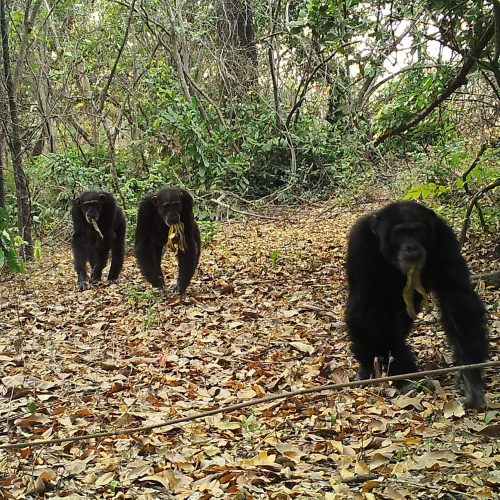
Critical minerals and the western chimpanzee: how bauxite…
24 March, 2026
Wednesday 08 april 2026
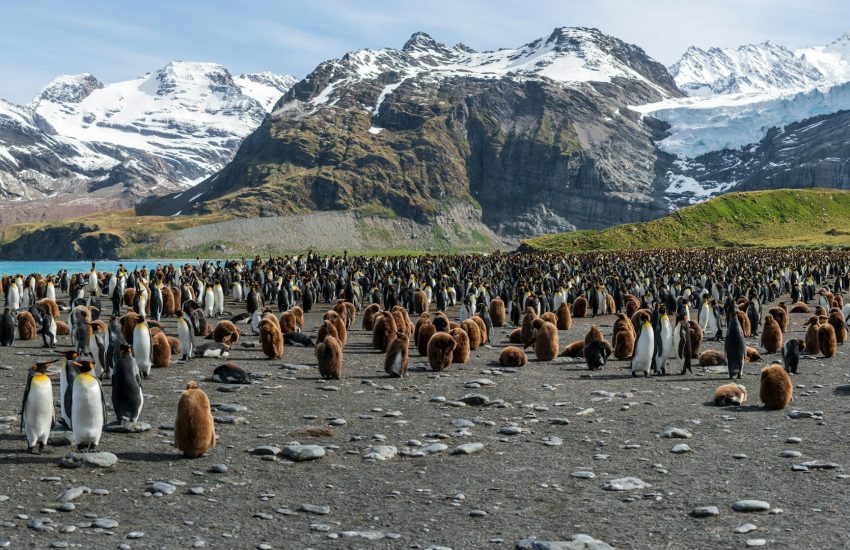
Header photo: Flock of Emperor Pinguins, South Sandwich Islands, credits Paul Carroll
Gland, Switzerland, 9 April 2026 (IUCN) – The emperor penguin and Antarctic fur seal are now both Endangered, according to The IUCN Red List of Threatened Species™. Climate change in Antarctica is leading to changes in sea-ice that are projected to cause the emperor penguin population to halve by the 2080s, while reduced food availability has already driven a 50% reduction in the Antarctic fur seal population since 2000. The southern elephant seal is also now at risk of extinction, due to disease.
“These important findings should spur us into action across all sectors and levels of society to decisively address climate change. The declines of the emperor penguin and Antarctic fur seal on the IUCN Red List are a wake-up call on the realities of climate change. As countries prepare to gather at the Antarctic Treaty Consultative Meeting in May, these assessments provide essential data to inform decisions regarding this majestic continent and its awe-inspiring wildlife. Antarctica’s role as our planet’s “frozen guardian” is irreplaceable – offering untold benefits to humans, stabilising the climate and providing refuge to unique wildlife,” said Dr Grethel Aguilar, IUCN Director General.
The emperor penguin (Aptenodytes forsteri) has moved from Near Threatened to Endangered on the IUCN Red List, based on projections that its population will halve by the 2080s. Satellite images indicate a loss of around 10% of the population between 2009 and 2018 alone, equating to more than 20,000 adult penguins.
The primary driver is the early break-up and loss of sea-ice, which has reached record lows since 2016. Emperor penguins require fast ice – sea-ice that is “fastened” to the coastline, ocean floor or grounded icebergs – as habitat for their chicks and during their moulting season, when they are not waterproof. If the ice breaks up too early, the result can be deadly. While it is challenging to convert observed tragedies – such as the collapse of a breeding colony into the sea before the chicks can swim – into population changes, population modelling considering a wide range of future climate scenarios shows that without abrupt and dramatic reductions in greenhouse gas emissions, emperor penguin populations will rapidly decline during this century.
“After careful consideration of different possible threats, we concluded that human-induced climate change poses the most significant threat to emperor penguins. Early sea-ice break-up in spring is already affecting colonies around the Antarctic, and further changes in sea-ice will continue to affect their breeding, feeding and moulting habitat. Emperor penguins are a sentinel species that tell us about our changing world and how well we are controlling greenhouse gas emissions that lead to climate change,” said Dr Philip Trathan, member of the IUCN SSC Penguin Specialist Group who worked on the emperor penguin Red List assessment.
The Antarctic fur seal (Arctocephalus gazella) has moved from Least Concern to Endangered on the IUCN Red List, as its population has decreased by more than 50 per cent from an estimated 2,187,000 mature seals in 1999 to 944,000 in 2025. The ongoing decline is due to climate change, as rising ocean temperatures and shrinking sea ice are pushing krill to greater ocean depths in search of colder water, reducing the availability of food for seals. Krill shortages at South Georgia have reduced the survival of pups in their first year dramatically, leading to an ageing breeding population. Other threats, such as predation by killer whales and leopard seals and competition with recovering baleen whale populations targeting the same krill, are potentially also impacting this declining population.
The southern elephant seal (Mirounga leonina) has moved from Least Concern to Vulnerable on the IUCN Red List, following declines caused by Highly Pathogenic Avian Influenza (HPAI). There has been a significant increase in the prevalence of avian flu around the world since 2020, and it has spread to mammals. The disease has affected four of the five major subpopulations, killing more than 90 per cent
of newborn pups in some colonies and seriously impacting adult females, which spend more time on the beaches than males. There is growing concern that disease-related mortalities of marine mammals will increase with global warming – particularly in polar regions, where animals have not had much previous exposure to pathogens. Animals that live close together in colonies, such as southern elephant seals, are particularly hard-hit by diseases.
“These assessments sound an alarm for all Antarctic seals, as we are concerned about how environmental changes are affecting all ice-dependent species. Monitoring of the effects of climate change in Antarctica is urgently needed. While logistically challenging and expensive to access this part of the world, the IUCN SSC Pinniped Specialist Group calls for the collection of more data on seals in the region by all of the Parties to the Treaty,” said Dr Kit Kovacs, Co-Chair of the IUCN SSC Pinniped Specialist Group.
“The decline of species such as the emperor penguin and Antarctic fur seal shows that Antarctica is under severe pressure due to climate change, among other factors. This while Antarctica is crucial for the stability of the global climate,” says Sander van Andel, Senior Expert Nature Conservation at IUCN NL.
The new assessments are available on the pre-publication page of the IUCN Red List. The new assessments will be published on the emperor penguin and seals’ species profiles as part of a broader Red List update later this year.
For more information please contact



27 March, 2026
Engaging Stakeholders to Advance Ecosystem-based Adaptation in Mauritius
Madagascar and the Indian ocean islands are a biodiversity hotspot - a group of islands with incredible species diversity and…
24 March, 2026
Critical minerals and the western chimpanzee: how bauxite mining threatens one of West Africa’s last strongholds
In West Africa, the global scramble for critical minerals’ is putting immense pressure on unique ecosystems. As the demand for…