Statement: Invest in local leadership for tropical forest…
20 March, 2026
Statement: Invest in local leadership for tropical forest…
20 March, 2026

Meet the conservationist: Dr. Amelaid follows in the…
12 March, 2026
Tuesday 25 november 2025
At the World Conservation Congress in Abu Dhabi (9–15 October), IUCN members including states, government agencies, civil society groups and Indigenous Peoples’ organisations voted with an overwhelming majority of votes to adopt the resolution “Safeguarding Biodiversity and Human Rights in Energy Transition Mineral Governance.”
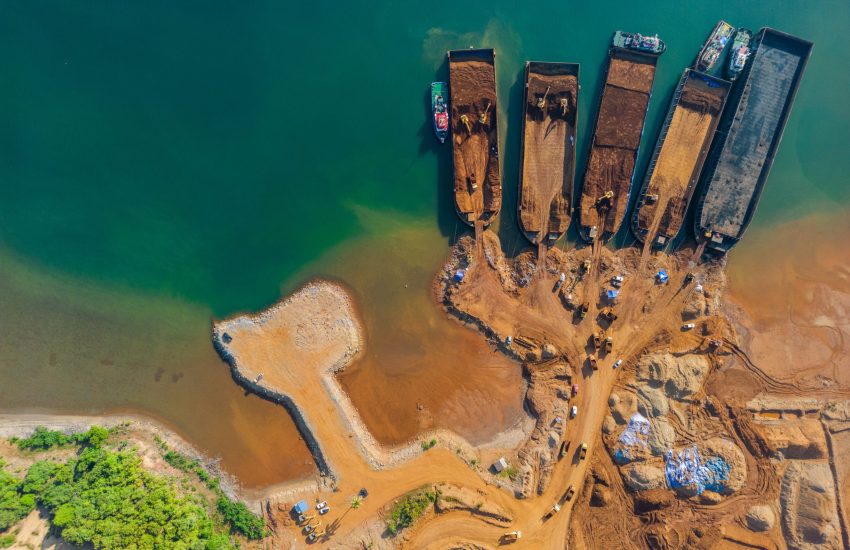
Header photo: Nickel mining on Sulawesi, Indonesia © Gary Lotulung
With 795 members voting ‘yes’ to the adoption of motion 104, it is now an IUCN resolution (number 103) and will become part of IUCN policy. The groundbreaking Resolution, proposed by A Rocha Ghana and supported by IUCN members and conservation allies worldwide, calls on governments, companies and civil society to ensure that the global shift to renewable energy does not come at the expense of planetary health and the rights of Indigenous Peoples and Local Communities (IP&LCs).

The resolution advocates for reduced energy and mineral use through a circular economy and for socially and ecologically sound mineral governance that upholds national protections for ecosystems, water, biodiversity and IP&LCs. It calls for the designation of no-go zones for mining in ecologically or culturally significant areas, the meaningful participation and rights of IP&LCs and for mining and post-mining practices to meet the highest human rights and environmental standards. This resolution complements IUCN resolution 121 (2020) and helps implement the Kunming-Montreal Global Biodiversity Framework (KM-GBF), the Paris Climate Agreement and the 2024 UN Principles to Guide Critical Energy Transition Minerals Towards Equity and Justice.
Additionally, members request the Director General of IUCN to develop guidance on responsible governance of energy transition minerals and to facilitate collaboration among governments, companies, communities, and civil society to advance these objectives.
The global shift to renewable energy and decarbonisation has significantly increased the demand for energy transition minerals such as lithium, nickel, copper and bauxite. Yet, when mining for these minerals is poorly regulated, it often results in severe biodiversity loss, habitat destruction, water insecurity, pollution and violations of Indigenous Peoples’ and local communities’ (IP&LC) rights. Both the Kunming-Montreal Global Biodiversity Framework and the Paris Agreement affirm the essential role that biodiversity, forests and wetlands play in combating climate change, underscoring the need for responsible pathways to secure these minerals. This is especially urgent given that more than half of the world’s energy-transition mineral reserves lie on IP&LC lands, where the participation of Indigenous Peoples and the application of FPIC are fundamental to achieving a just transition. Protecting planetary health and security must therefore be at the heart of the just energy transition.
‘This resolution is an important step towards safer and more just mineral governance,’ says Seth Appiah-Kubi, National Director of A Rocha Ghana. ‘We acknowledge the immense local, and national economic benefits of mining, as well as the need for crucial role transition minerals offer to the energy transition. Unfortunately, mining for the energy transition often comes at high risks to local communities’ wellbeing and biodiversity security. It can lead to large-scale deforestation, loss and degradation of wetlands and other ecosystems and the services these provide and can also affect IP&LCs’ rights and livelihoods. We see this not only close to home, in Ghana, but across the globe. Looking ahead, we need to rally local and global efforts in the implementation of the resolution, which is up to IUCN, the committees and the (state and non-state) members.’
‘We are very pleased to see that there is such broad support within the IUCN Membership for taking action on this important topic for biodiversity and human rights. We will continue to cooperate with organisations like A Rocha Ghana to contribute to positive change.’
- Maartje Hilterman, Senior Expert Environmental Justice at IUCN NL
With motion 104 adopted as a formal IUCN resolution, IUCN now has a clear mandate to safeguard biodiversity and human rights in energy transition mineral governance. The resolution offers an opportunity to further develop and consolidate action at the Union level, including the commissions such as the World Commission on Protected Areas. A Rocha Ghana and the Motion’s co-sponsors will track and report on its progress annually, through IUCN’s resolutions and recommendations platform.
A Rocha Ghana and its partners, including IUCN NL, will continue to raise awareness and build capacity for responsible transition mineral governance, engage governments and industries to implement the resolution’s provisions and support Indigenous and local communities affected by mining activities.
Motion 104 builds on insights from initiatives like the Bottom Line project, which promotes ecologically and socially responsible mineral governance, and the GLA Forests for a Just Future Programme.


20 March, 2026
The undersigned organisations call on the Dutch government to supplement its policies and legislation with investments in inclusive, locally led…
12 March, 2026
Amelaïd Houmadi grew up on an island in the Comoros. At his parental house, nestled at the foot of a…
