Record-breaking number of projects funded by the Land Acquisition Fund

Critical minerals and the western chimpanzee: how bauxite…
24 March, 2026
Tuesday 24 february 2026
Its anniversary year was a unique year for the IUCN NL Land Acquisition Fund. In 2025, with 137 projects submitted by conservation NGOs and CSOs around the world, the Fund received the highest number of proposals since its establishment in 2001. We are pleased to announce that we could select a record number of high-quality proposals. Ten projects in nine countries in Africa, Latin America, and Asia will receive funding to protect, connect, and restore the habitat of threatened species.
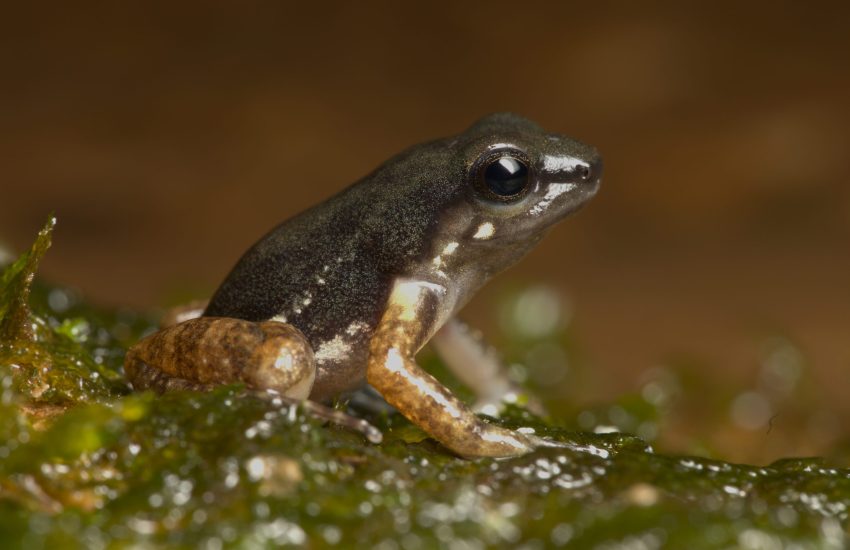
Header photo: Endangered Hyloxalus maculosus in Ecuador © Sam Schenker
‘It is a very good sign that an increasing number of local conservation NGOs and CSO are aware of our grant opportunities,’ says Marc Hoogeslag, coordinator of the IUCN NL Land Acquisition Fund. ‘At the same time, our growing number of donors enables us to support more land purchase, long-term lease of land, and other effective area-based conservation measures (OECMs). In this way, we can amplify our impact.’
Variety of species and ecosystems
The projects selected in 2025 will be implemented in a range of ecosystems, including a mangrove forest, a sea turtle nesting beach, and the Argentinian Cerrado. These are the habitats of vulnerable and (critically) endangered species such as the Hawksbill turtle, West African manatee, Campbell’s alligator lizard, and the hooded vulture.
Threats to ecosystems are often similar across the different project areas. Agricultural expansion, land clearing for cattle pastures, and logging are common pressures that endanger both nature and local livelihoods. In some of the project areas, the existence of species is also threatened by poaching, mining, or the expansion of urban areas. According to Marc Hoogeslag, ‘the initiatives selected by the Land Acquisition Fund allow for an effective response to these threats.’
The projects selected in 2025:
- Restoring forests in Côte d’Ivoire, Conservation des Espèces Marines
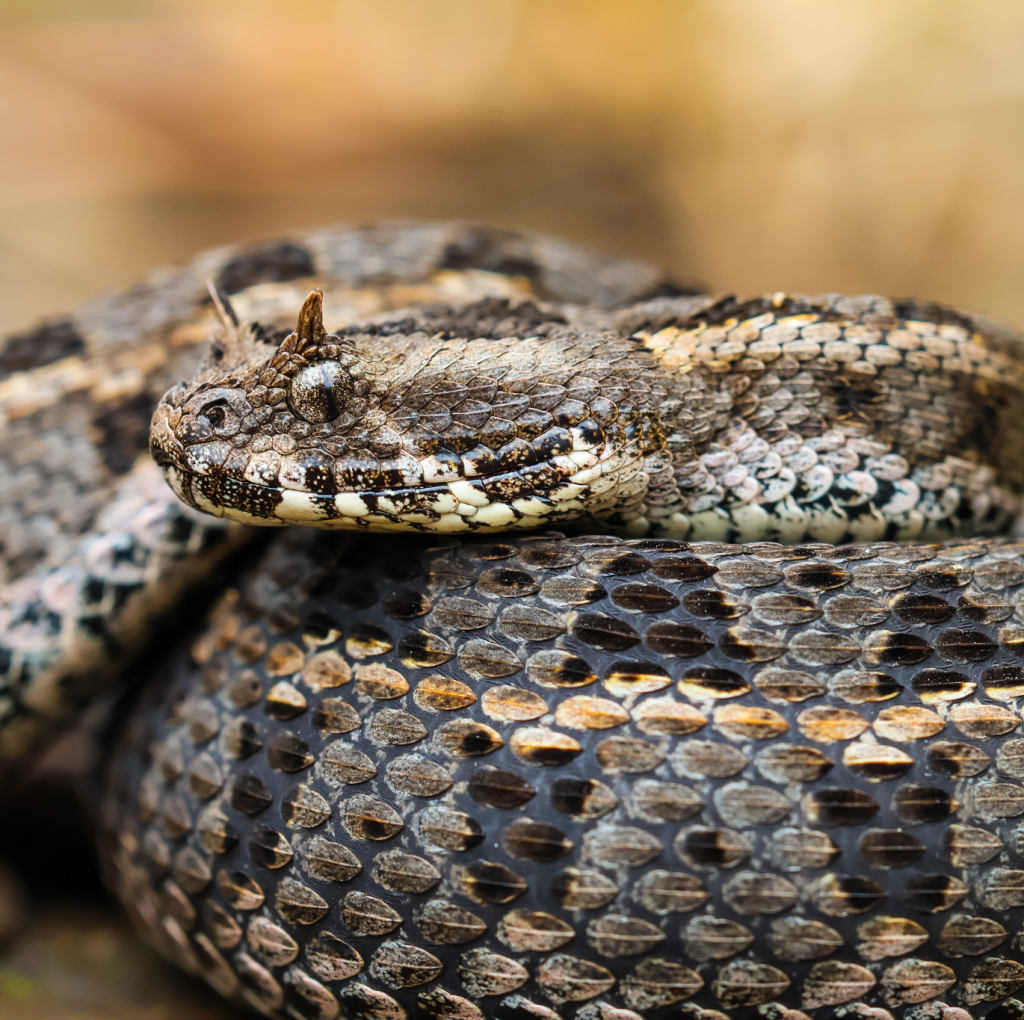
- Protecting snake populations in Kenya, Wild Snake Project
- Reconnecting reserves in Tanzania, Nature Tanzania
- Connecting key forest fragments on tea plantations in Sri Lanka, Preserving Land and Nature
- Safeguarding a vital turtle nesting site in Indonesia, Jaga Alam Mangkai
- Expanding a botanical reserve in the Argentinian Cerrado, Fundación Hábitat y Desarrollo
- Conserving the last habitat of the Campbell’s alligator lizard, FUNDESGUA
- Securing the future of Grand Bois National Park in Haiti, Haiti National Trust
- Expanding Selva Eterna in Ecuador, Amaru Foundation
- Urgent support to expand the Pitalala Reserve, Khamai Foundation
Restoring forests in Côte d’Ivoire
For the first time, the Land Acquisition Fund supports a NGO in Côte d’Ivoire. In the western part of its Atlantic coast, we find the country’s largest remaining mangrove ecosystem. This unique area is an important nesting site for different sea turtle species, including the Hawksbill turtle. It is also home to significant populations of the West African crocodile, the African dwarf crocodile, and the African manatee. Behind the mangrove forest, a relic of tropical rainforest shelters more unique species such as the white-bellied pangolin.
Unfortunately, this unique biodiversity is threatened by the expansion of plantations and the felling of mangroves for firewood. More recently, the development of tourism has also increased pressure on these ecosystems.
With the Land Acquisition Fund grant, the Conservation des Espèces Marines (CEM) will safeguard and protect 969 hectares through land titling and another 35 hectares of plantations and degraded forest through direct land purchase. They will work together with local communities to restore the ecosystems with native vegetation.
Protecting snake populations in Kenya
Kenya’s Great Rift Valley is home to the Kenya horned viper: a rare, endemic snake listed as Vulnerable on the IUCN Red List. Recent monitoring efforts indicate that the population is continuing to decline. The snake’s habitat, preferably forest edges, is increasingly threatened by overgrazing, expanding agriculture, firewood collection, and human-wildlife conflict.
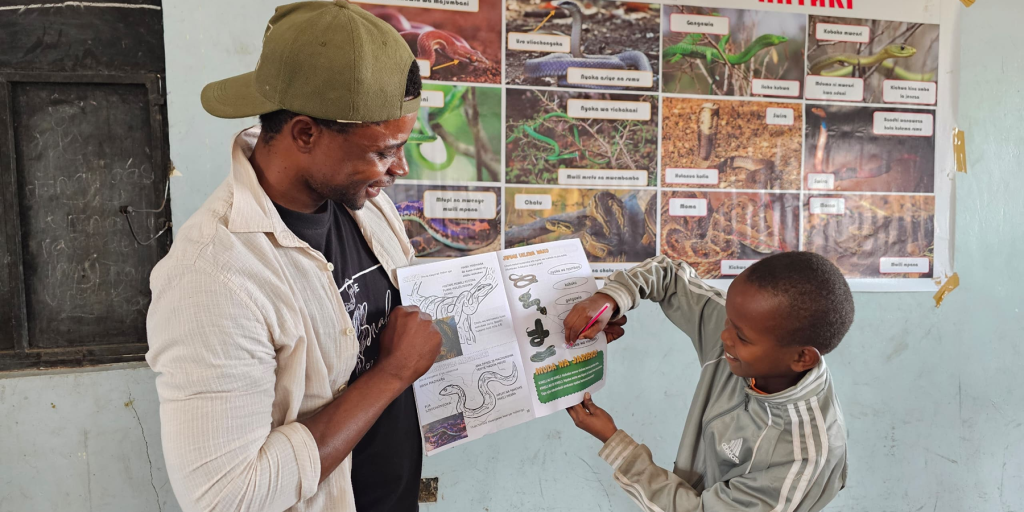
The mission of the Wild Snake Project is to protect snake populations and their habitat, while safeguarding the well-being and safety of people through dedicated education, conservation, and coexistence efforts. Our grant will support the Wild Snake Project in its development, so the young NGO can enhance the long-term viability of the Kenya horned viper by habitat restoration and protection, population monitoring, and community awareness programmes.
Reconnecting reserves in Tanzania
The Makao Wildlife Management Area in northcentral Tanzania links three key protected areas and shelters a wide range of wildlife, including lions, elephants, and threatened vultures. However, agriculture, grazing, poaching, charcoal burning, and land invasion have reduced the habitat significantly, which complicates wildlife movement.
With the support of the Land Acquisition Fund, Nature Tanzania will safeguard 119 hectares of land near Mwangudo village to restore connectivity, protect the land, compensate families, and support the livelihoods of the people living in the area. Land will be acquired from 35 landowners to reconnect Makao Wildlife Management Area with the Maswa Game Reserve, enhancing habitat connectivity and gene flow. The land will be legally protected by the village government.
Connecting key forest fragments on tea plantations in Sri Lanka
Moving on to Asia, the next project is based in the most biodiverse area of Sri Lanka. Sinharaja Rainforest is a Biosphere Reserve and UNESCO World Heritage site situated in the southwestern part of the country.
This rainforest has an estimated endemism rate of at least 30 percent, based on an initial survey conducted by Preserving Land and Nature (PLANT). They have documented endangered birds, frogs, fish, crabs, plants, and mammals, including the Indian pangolin and the Sri Lanka leopard. But their habitat is becoming increasingly fragmented, largely due to agricultural expansion. Given the ecological sensitivity in this region, such land conversions will lead to irreversible species losses.
With the grant, PLANT will be able to purchase a section of organic tea plantations with key forest fragments. Through this strategic purchase, they will not only directly protect 20 acres of land, but indirectly also the area to the north. Central to PLANT’s approach is engaging private landowners and local communities in their conservation activities
Safeguarding a vital turtle nesting site in Indonesia
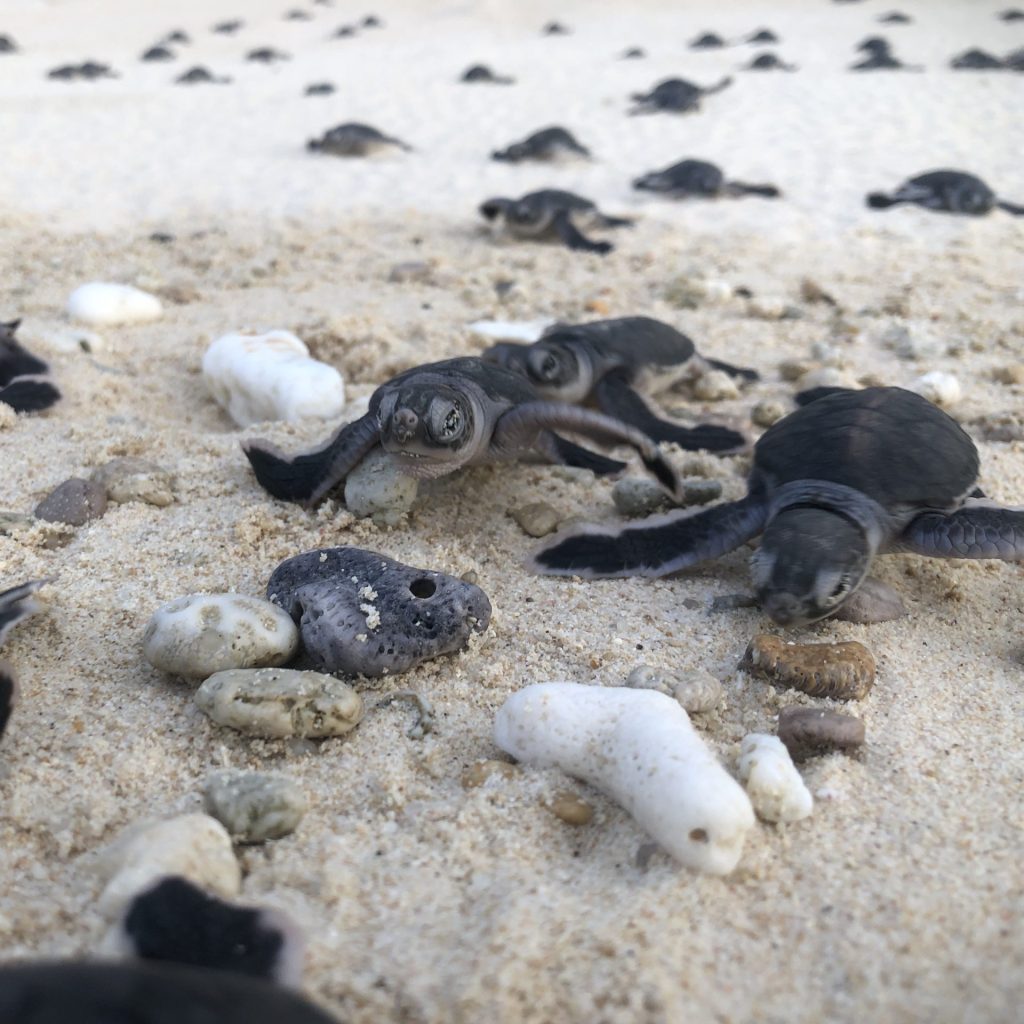
Mangkai is the outermost island of Indonesia, surrounded by the Anambas Islands Marine Protected Area. Remote and uninhabited, Mangkai Island is a critical nesting ground for the endangered green turtle and critically endangered Hawksbill turtle. A longstanding cultural tradition, however, perceives sea turtle eggs as a delicacy and poachers from a nearby village regularly make the half an hour boat trip to Mangkai.
Jaga Alam Mangkai is a young local NGO protecting sea turtle nests. Empung Beach, the project area, is one of the four key sea turtle nesting sites on the island. One hectare of this beach accounts for 50 percent of all sea turtle nests recorded on the island.
The IUCN NL Land Acquisition Fund aims to support Jaga Alam Mangkai in the purchase of 3.8 hectares to safeguard this vital nesting spot. Beyond this hectare of beach, the protected area also includes 2.8 hectares of forest. In addition, we want to provide a small grant to help the young organisation establishing a stronger presence in conversation.
Expanding a botanical reserve in the Argentinian Cerrado
The Cerrado is one of Argentina’s most threatened biomes. It harbours countless endemic plant species, yet only 200 hectares of Cerrado remain. Rapid urbanisation and land sales are placing these unique grasslands and the way of life of the Mbya Guaraní communities at serious risk.
Fundación Hábitat y Desarrollo (FHyD) seeks to conserve this land to ensure that the Mbya Guaraní communities can continue accessing their natural resources while also benefiting from employment opportunities within the reserve. Naturally, collaborating with the community is central to their work, which includes promoting conservation, preserving cultural knowledge, and reducing historical inter-ethnic conflicts.
The new grant enables FHyD to add 25 hectares to the 50-hectare Tenondé Nature Reserve, which was funded by Land Acquisition Fund in 2019. Expanding Tenondé protects more of this fragile ecosystem, supports multiple Mbya Guaraní communities, and strengthens a vital biodiversity corridor.
Conserving the last habitat of the Campbell’s alligator lizard
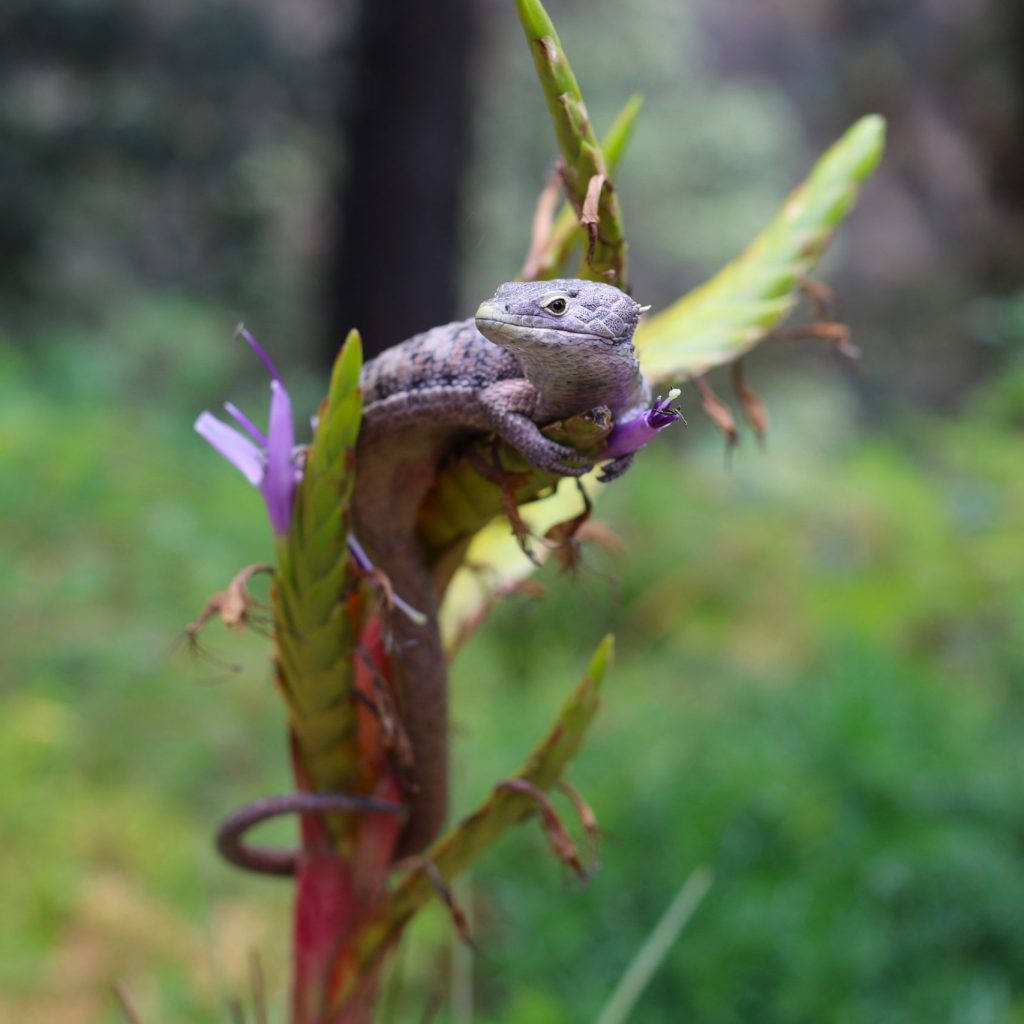
The critically endangered Campbell’s alligator lizard survives on a single Guatemalan mountaintop. Industrial agriculture, logging, and settlements have destroyed 97 percent of this species’ habitat.
Today, 360 hectares of its habitat remains. But threats continue to increase due to grazing, corn farming, and selective oak logging. FUNDESGUA combines over a decade of research, restoration, and community-based conservation to protect the Campbell’s alligator lizard. The NGO was co-founded by passionate nature conservationist and Future For Nature winner Monica Torres, who rediscovered the species after it was thought to be extinct.
With the support of the Land Acquisition Fund, FUNDESGUA is able to protect 26.65 hectares of habitat, including 10.54 hectares of cloud forest. This will secure habitat for more than 13,000 lizards. Since this plot of land would otherwise likely have possibly been sold to coffee producers or industrial farmers, it was an important win for conservation.
Securing the future of Grand Bois National Park in Haiti
Located in the Massif de la Hotte Biodiversity Hotspot, the 357-hectare Grand Bois National Park is a subtropical cloud forest with exceptional endemism and 55 threatened species listed on the IUCN Red List. This includes fourteen species of critically endangered amphibians and four critically endangered plants.
Despite being a national park, Grand Bois National Park remains under pressure from land clearing for agriculture, livestock grazing, and forest extraction. In addition, a trail increases human access to the area, leading to a higher fire risk and possible spread of invasive species.
With the grant, Haiti National Trust (HNT) will purchase 215 hectares from 32 landowners within Grand Bios National Park, who will – of course – voluntarily relocate to better land outside the protected area. Acquiring land in this cloud forest area will enhance habitat connectivity and support long-term community management, thereby contributing to securing one of Haiti’s last remaining primary forests.
Expanding Selva Eterna in Ecuador
The Amazon Rainforest along the Ecuadorian and Peruvian border is one of the most biodiverse regions on the planet. Unfortunately, the Amazon region has been heavily affected by climate change and human-driven biodiversity loss. Mining, livestock, and logging continues to threaten forests, rivers, and wildlife, as well as the way of life of the people living in this border area.
Amaru Foundation therefore aims to expand the Selva Eterna Reserve in the Marañón River basin, with the final objective to establish a corridor connected with Indigenous Shuar and Achuar communities. Selva Eterna (‘Eternal Forest’ in Spanish) consists of 152 hectares strategically placed between the agricultural frontier and the river.
Here, Amaru monitors 33 target species, including the Amazon river dolphin, and endangered primates, amphibians, and birds. Its team also keeps track of human wildlife interactions with jaguars. In their work, the foundation frequently exchanges knowledge with the Indigenous Shuar communities on both sides of the border. With the support of the Land Acquisition Fund, the Selva Eterna Reserve will be expanded by 89 hectares, where a community-based scientific research station and centre for traditional ancestral knowledge will be established.
Urgent support for expanding the Pitalala Reserve
The Pitalala Reserve lies within the ‘World’s Biodiversity Vertex’ in Ecuador. It is the most species-rich 100×100 km area of the Amazon, as identified by a reptile-based model. Located at an altitude between 400 and 900 metres near the foothills of the Andes, this unique area is bordered by Yasuní National Park and three Andean national parks. Since none of these national parks is included in the vertex itself, the Pitalala Reserve is indispensable.
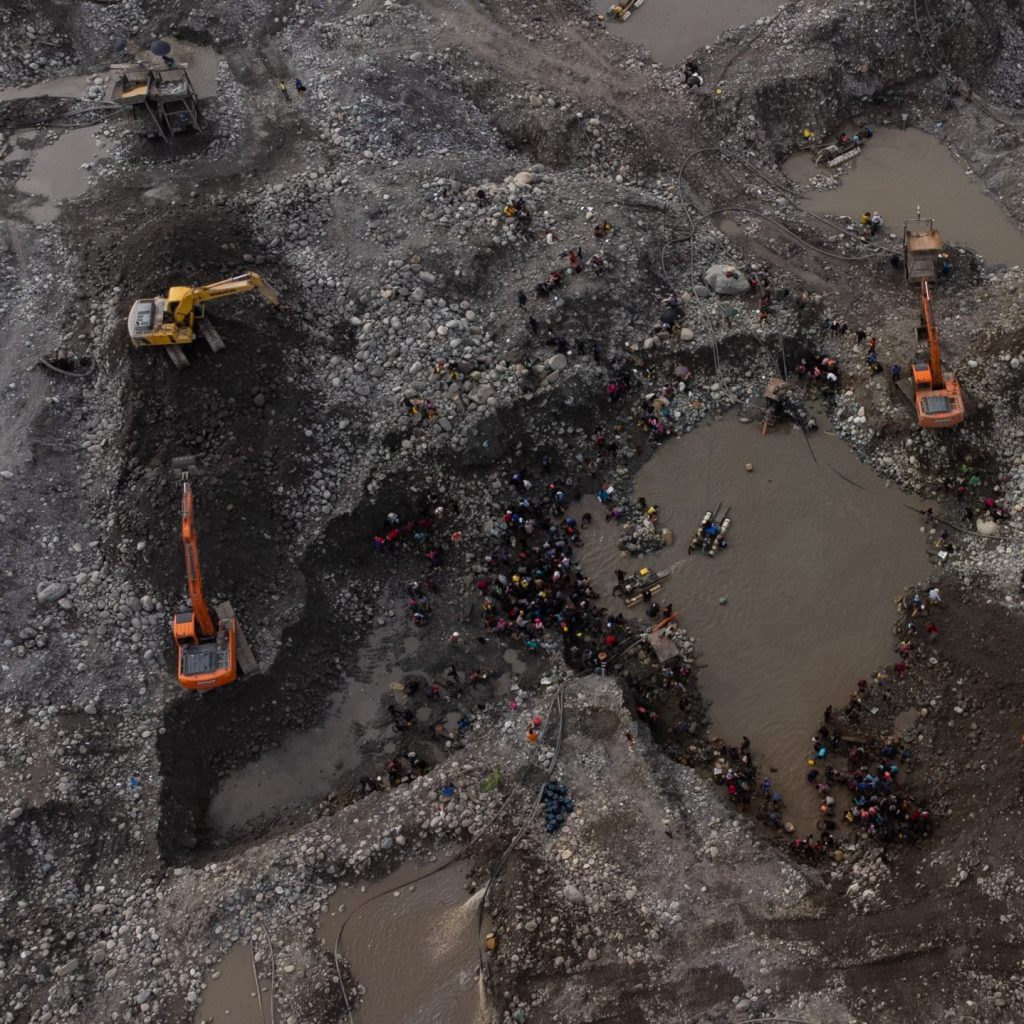
Khamai Foundation is working to protect this unique part of the Ecuadorian Amazon. After successfully establishing the Pitalala Reserve in early 2025, also supported by the Land Acquisition Fund, immediate expansion is now critical to protect a newly discovered population of the endangered spotted rocket frog. Expanding the reserve will prevent a road from being used for illegal open pit gold mining, safeguarding the existing reserve from encroachment and stopping mining from advancing into neighbouring protected areas.
The new grant will enable Khamai to take this crucial step. Expanding the reserve by 78 hectares will double the area currently under protection. It does not only protect the habitat of the spotted rocket frog, but also that of thousands of other species, including the Amazon Basin emerald tree boa, and the fringed leaf frog.
About the Land Acquisition Fund
For 25 years, the IUCN NL Land Acquisition Fund has been enabling the protection of the habitat of endangered and vulnerable species. Because of the work of local heroes, safeguarding important ecosystems creates a win-win for biodiversity, the climate, and human well-being. The Land Acquisition Fund is supported by a growing number of private donors.
More information? Contact



27 March, 2026
Engaging Stakeholders to Advance Ecosystem-based Adaptation in Mauritius
Madagascar and the Indian ocean islands are a biodiversity hotspot - a group of islands with incredible species diversity and…
24 March, 2026
Critical minerals and the western chimpanzee: how bauxite mining threatens one of West Africa’s last strongholds
In West Africa, the global scramble for critical minerals’ is putting immense pressure on unique ecosystems. As the demand for…