
Statement: Invest in local leadership for tropical forest…
20 March, 2026
Statement: Invest in local leadership for tropical forest…
20 March, 2026
Meet the conservationist: Dr. Amelaid follows in the…
12 March, 2026
Thursday 11 september 2025
Header photo: © AECID
Over three days, a packed agenda covered the evaluation of threats and strategies of the network, the use of international support instruments, the formal inclusion of new members, and the creation of thematic working groups on issues such as wildlife trafficking, illegal mining, illegal logging, and waste-related crimes. Among the discussions, police forces acknowledged the importance of working more closely with NGOs to effectively tackle environmental crimes. They emphasised that to combat sophisticated criminal networks, what is needed in return is a strong network of cooperation and organisations acting together.
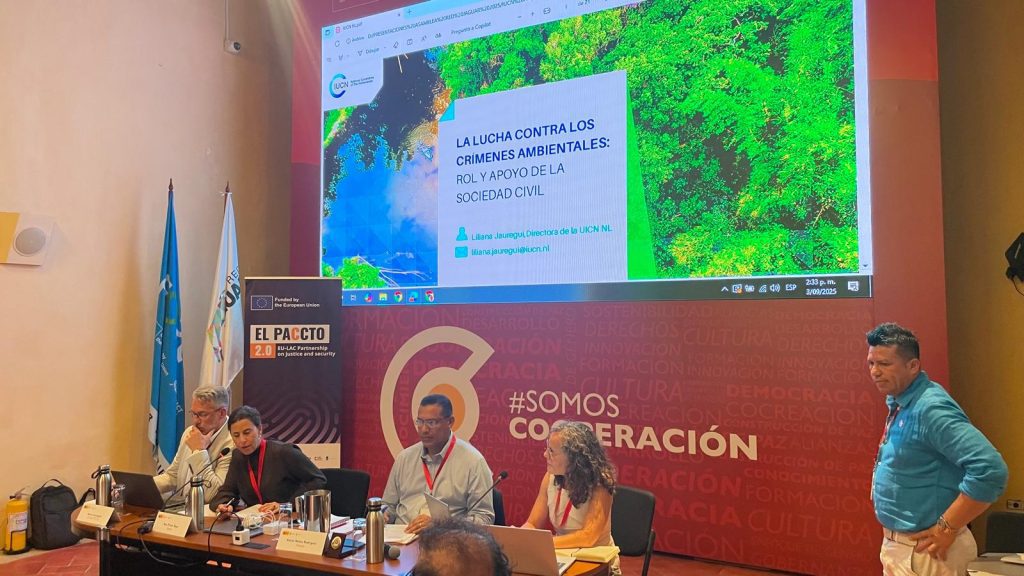
Photo: Liliana Jáuregui presenting at the conference. © Mariel Cabero / IUCN NL
IUCN NL was invited as one of the few NGOs to present its work and share how civil society can contribute to this initiative. Our director, Liliana Jáuregui, highlighted IUCN NL’s experience in addressing environmental crime and how our networks and critical perspective can strengthen Red Jaguar’s efforts.
Environmental crime – including poaching, wildlife trafficking, illegal logging and illegal fishing – is one of the world’s largest criminal enterprises. Often overlooked, environmental crime is enriching transnational criminal organisations, human smugglers, militias and terrorist groups while diminishing the security, survival and health of indigenous communities, and wiping out populations of tigers, elephants, rhinos, sharks, whales and jaguars.
In 2020, IUCN NL together with partner Earth League International (ELI) published a report unveiling the criminal networks behind this illegal wildlife trade in Bolivia. The jaguar is classified by IUCN as ‘near threatened’, and is poached for its meat, fangs, bones, skin, penis and testicles. The investigations showed that the demand for jaguar parts comes from Asia, and the trade is generally run by Chinese residents in Bolivia. In 2021, this led to the arrests of five of South America’s top jaguar traffickers.
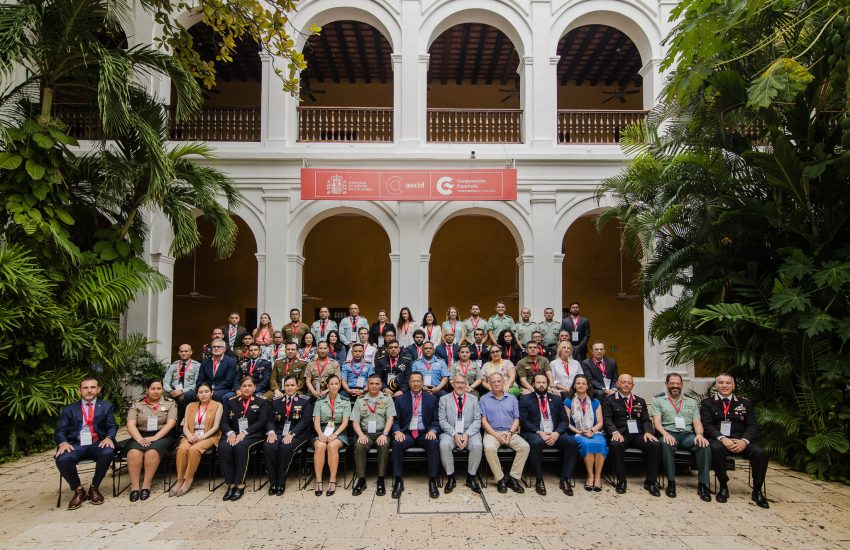
Participants included nature protection units and national focal points from across Latin America and the Caribbean, representing Argentina, Bolivia, Brazil, Chile, Colombia, Costa Rica, Cuba, Ecuador, El Salvador, Guatemala, Honduras, Mexico, Nicaragua, Panama, Paraguay, Peru, the Dominican Republic, Uruguay, and Venezuela.


20 March, 2026
The undersigned organisations call on the Dutch government to supplement its policies and legislation with investments in inclusive, locally led…
12 March, 2026
Amelaïd Houmadi grew up on an island in the Comoros. At his parental house, nestled at the foot of a…

