Statement: Invest in local leadership for tropical forest…
20 March, 2026
Statement: Invest in local leadership for tropical forest…
20 March, 2026

Meet the conservationist: Dr. Amelaid follows in the…
12 March, 2026
Thursday 26 june 2025
From June 9 to 13, 2025, some 15.000 representatives from governments, civil society, Indigenous leaders, scientists, and financial institutions gathered in Nice for the third United Nations Ocean Conference (UNOC3) under the theme “Accelerating action and mobilising all actors to conserve and sustainably use the ocean”.
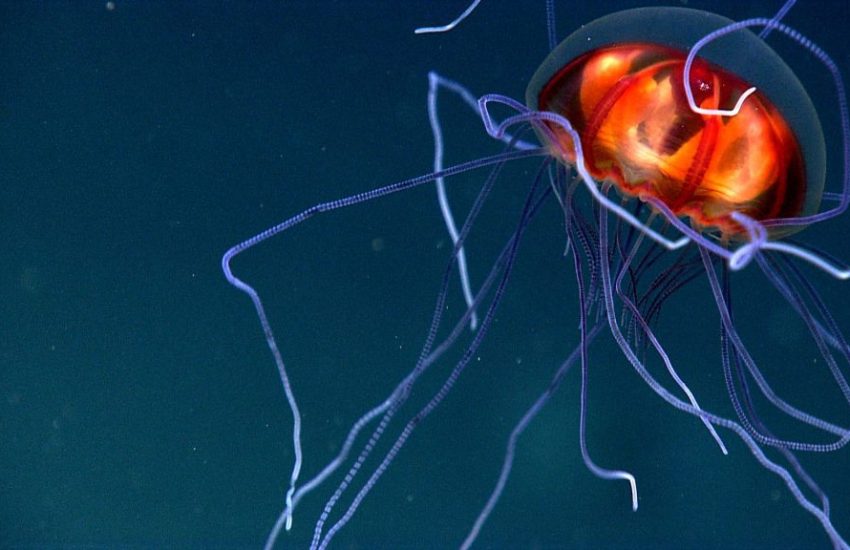
Headerphoto: A hydromedusa, seen at just over 3900 m and just above the seafloor along the west wall of Mona Canyon. © NOAA OKEANOS EXPLORER Program, Oceano Profundo 2015; Exploring Puerto Rico’s Seamounts, Trenches, and Troughs
For the first time, ocean issues were no longer treated as marginal to global environmental policy but framed as a central pillar of climate resilience, biodiversity protection, and economic justice.
A remarkable achievement in Nice was the progress toward ratifying the High Seas Treaty, formally known as the agreement on Biodiversity Beyond National Jurisdiction (BBNJ) (see textbox). The treaty, which was finalised in 2023 after years of negotiation, aims to protect marine life in international waters that have long existed in a legal grey zone.
By the end of the conference, 51 countries had either ratified or committed to ratify the treaty, putting it within reach of the 60 ratifications needed for it to enter into force. The treaty’s advancement symbolises a growing consensus that global commons must be governed with fairness and foresight. It represents an emerging paradigm that values collective responsibility over unchecked exploitation. The Netherlands has not yet ratified the BBNJ.
BBNJ (Biodiversity Beyond National Jurisdiction) refers to the Agreement on Marine Biological Diversity of Areas Beyond National Jurisdiction, also known as the High Seas Treaty. It’s an international agreement under the United Nations Convention on the Law of the Sea (UNCLOS). The treaty aims to conserve and sustainably use marine biodiversity in areas beyond national jurisdiction, which includes the high seas and the deep seabed. It was adopted by UN Member States in 2023 and is open for signature until September 20, 2025. The agreement will enter into force 120 days after the 60th ratification.
While the BBNJ treaty is a groundbreaking tool to protect marine biodiversity in the high seas, it does not instantly turn all unprotected ocean areas into Marine Protected Areas (MPAs). Instead, it establishes a framework to sustainably manage and conserve biodiversity in international waters (which cover about 70% of the ocean) through science-based measures, environmental impact assessments, and the creation of new MPAs where needed.
For the vast majority of the ocean that remains outside designated MPAs, the BBNJ treaty promotes responsible use and stewardship rather than unrestricted exploitation. It introduces mechanisms to regulate activities like fishing, mining, and bioprospecting, requiring states to consider cumulative impacts on ecosystems and biodiversity.
In essence, the treaty aims to safeguard ocean health across all areas, not just those formally protected, by embedding precaution, transparency, and international cooperation. While not every square kilometer will become a no-take zone, BBNJ aims to shift global ocean governance from a “wild west” to a managed commons, balancing conservation with sustainable use to preserve ocean functions and services for future generations.
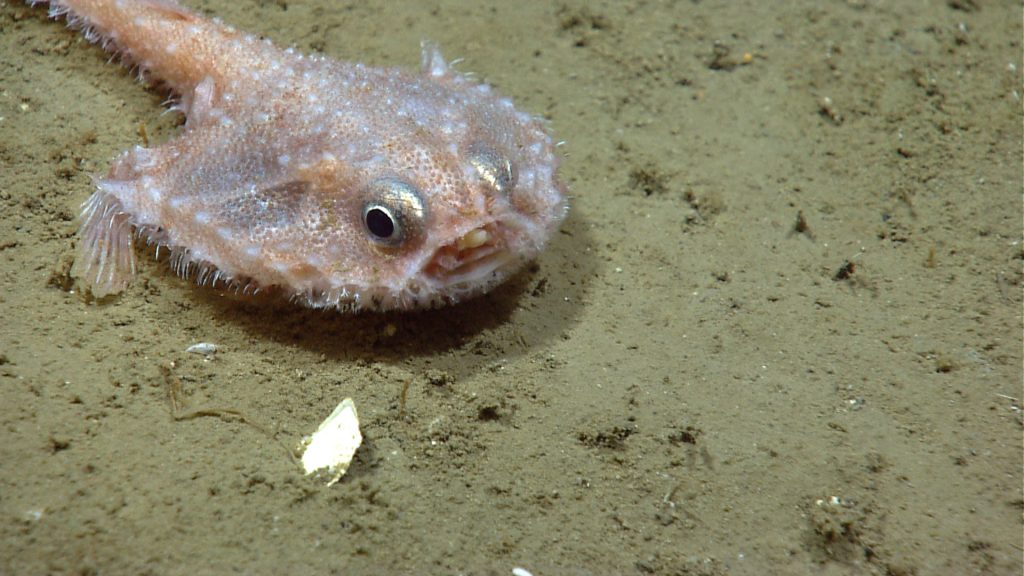
Another urgent topic was the future of deep-sea mining. As companies and some states continue to eye the ocean floor for minerals, resistance has grown. Speaking during the open plenary, French President Emmanuel Macron denounced the practice as “madness” and called for a global moratorium, describing it as an international necessity. Four new countries [1] Slovenia, Latvia, Cyprus and the Marshall Islands pledged the support for a moratorium or precautionary pause on deep-sea mining, bringing the total to 37.
Civil society groups, scientists, and Indigenous representatives highlighted the irreversible risks that mining poses to fragile and poorly understood ecosystems in the deep ocean. Their message was clear: the pursuit of transitions in energy, digital infrastructure and defense systems must not come at the cost of oceanic destruction.
‘It’s disappointing that the conference fell short of delivering concrete commitments to stop deep-sea mining. We need more than just good intentions: countries need to show real leadership, step up for global cooperation, and commit to a moratorium at the upcoming International Seabed Authority meeting in Kingston,’ says Maartje Hilterman, Senior Expert Environmental Justice at IUCN NL.
Financial institutions joined the call for caution towards deep-sea mining, signaling reluctance to invest in ventures that lack transparency or adequate safeguards. The United Nations Secretary-General António Guterres reinforced the position, warning that “the deep sea cannot become the Wild West of extraction.”
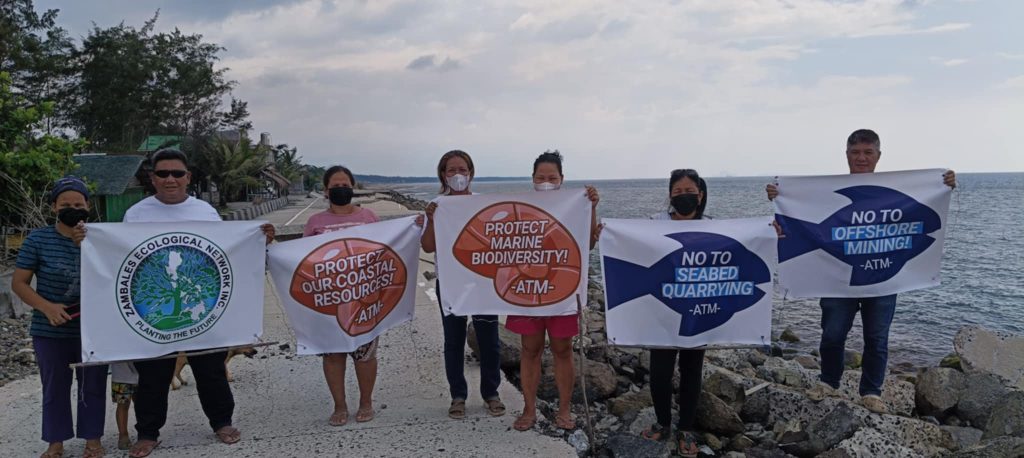
Coastal residents protest against seabed mining © ATM
Deep-sea mining looms not only over international waters but also threatens precious deep-sea ecosystems within countries’ jurisdictions. In the Philippines for example, areas such as the Philippine Rise (previously known as the Benham Rise) have been identified for potential DSM, targeting ferromanganese crusts, and/or hydrothermal sulfide deposits rich in minerals like copper, nickel, cobalt.
Another emerging yet underexposed threat is rampant marine sand and seabed mining, notably for black (magnetite) sand – destroying benthic habitats, smothering coral reefs and seagrasses with sediment plumes and disrupting local fisheries. Altered sediment dynamics accelerate coastal erosion and weaken climate resilience. Recovery takes years, often changing species composition and affecting productivity, food chains, and small-scale fisheries [2] Atlas. (2022). Cagayan black sand mining in shore areas, Luzon, Philippines. https://ejatlas.org/conflict/cagayan-black-sand-mining-in-shore-area [3]Oceana Philippines. (2021). The dire consequences of Manila Bay and Lingayen Gulf seabed quarrying: Experts warn of red tide, coastal erosion, loss of fisherfolk livelihood – Oceana … Continue reading [4]Kabagani, L.J. (2024). https://tribune.net.ph/2024/03/18/tulfo-flags-denr-over-seabed-quarrying-onshore-blacksand-mining-in-zambales [5] MGB Public Portal. (2024). http://databaseportal.mgb.gov.ph/#/public/mining-tenement-control-maps [6] ABS-CBN News. (2021). https://www.abs-cbn.com/business/02/02/21/apollo-global-unit-jdvc-starts-deep-sea-magnetite-mining-this-feb
The Netherlands faces a dilemma as the U.S. moves to allow commercial deep-sea mining in international waters later this year. This is contrary to international agreements under the International Seabed Authority (ISA), of which the Netherlands is a member, but the U.S. is not. The Dutch company Allseas is involved in a U.S. mining permit application through its partnership with The Metals Company, a Canadian firm in which Allseas holds shares. Allseas developed equipment to extract metal-rich nodules from depths of 4,000 meters and is currently the only company with the technical capabilities to do so. In response to a parliamentary motion (NSC, D66, GroenLinks-PvdA), Minister Hermans confirmed the Dutch government will now engage with Allseas. Since commercial deep-sea mining is not yet permitted under ISA rules – pending agreements on environmental safeguards and benefit-sharing – concerns are growing that companies like Allseas may bypass international law through non-member states like the U.S.
The Netherlands’ position towards deep-sea mining remains ambivalent. Although former Minister Hoekstra has stated that deep-sea mining should stay within the capacity of the marine ecosystem and we should proceed with caution, The Netherlands does not formally support a moratorium or precautionary pause on deep-sea mining. A recent parliamentary motion calling for such a precautionary pause failed to reach a majority, though it was a close call.
At UNOC3, ministers and representatives from over 95 countries united in a renewed call for a comprehensive Global Plastic Treaty, reviving momentum after negotiations stalled last December. This call to action comes ahead of a critical negotiation round scheduled for early August in Geneva, Switzerland, where governments will aim to finalise binding commitments. The urgency is clear: over eight million tons of plastic waste enter the oceans annually, with most plastics persisting for centuries, accumulating and threatening marine ecosystems, biodiversity, and human health.
UNOC3 concluded with the adoption of the wide-ranging political declaration “Our Ocean, Our Future: United for Urgent Action.” Endorsed by nearly 170 countries, this declaration outlines commitments to meet global targets, including the much-discussed “30×30” goal of protecting 30% of the ocean by 2030, reducing ocean pollution, decarbonising shipping, and phasing out destructive fishing practices. Some countries backed their words with actions: New Zealand, for example, reaffirmed protection of the Kermadec Ocean Sanctuary. Denmark, Portugal and the UK pledged bottom trawling bans in their MPAswhile France faced criticism for not going that far.
The lack of explicit commitments at UNOC3 to install a global ban on bottom trawling – the destructive fishing practice where large nets are dragged across the seafloor – and to eliminate harmful fisheries subsidies that undermine sustainable fisheries and marine biodiversity (see textbox) is disappointing.
Harmful fisheries subsidies exacerbate injustice and inequity by disproportionately benefiting large industrial fleets, often from wealthy nations, while undermining the livelihoods of small-scale and artisanal fishers, especially in countries in the Global South. These subsidies encourage overfishing, destroying marine ecosystems and biodiversity and depleting fish stocks that coastal communities depend on for food security and income. This deepens economic disparities and threatens cultural traditions tied to fishing.
Additionally, subsidies contribute to environmental degradation, harming ocean ecosystems that support vulnerable populations. Addressing harmful subsidies is therefore crucial to achieving fair, sustainable fisheries management that respects human rights and supports equitable access to ocean resources.
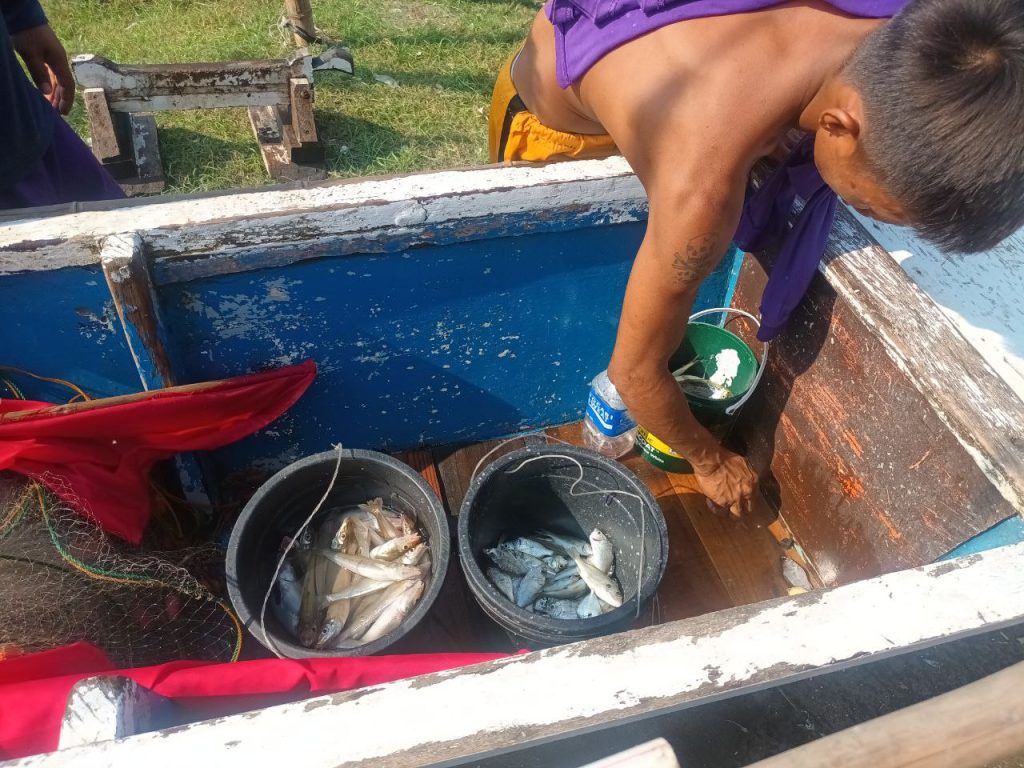
Fisherman Cavite © ATM
UNOC3 made ample space for Indigenous Peoples, small-scale fishers, and local communities to share their insights and leadership. Their message was unified: the ocean cannot be protected without those who have stewarded it for generations.
Equity was, however, less prominent in the concluding political declaration. It mentions the urgency of ensuring that all people, including women and girls, persons with disabilities, youth, people in vulnerable situations, Indigenous Peoples and local communities (IP&LCs), are fully and meaningfully empowered and included in ocean-related decision-making as appropriate. It also stresses that action must be based on the best available science and knowledge, including traditional and Indigenous knowledge, while recognising and respecting the rights of IP&LCs in conserving, restoring and sustainably using the ocean, seas and marine resources. This can, however, not be achieved without tackling fundamental issues like harmful fisheries subsidies and addressing other injustices like privatisation of coastal areas and marine sand and seabed mining that have severe impact on coastal ecosystems, local communities’ livelihoods and climate resilience and local fisheries.
Despite its achievements, UNOC3 left important work unfinished. The High Seas Treaty still requires nine more ratifications before entering into force. The moratorium on deep-sea mining, though widely supported, is not yet codified and may face opposition during the upcoming International Seabed Authority meeting. The global plastics treaty, still under negotiation, must be finalised with the strongest possible provisions if it is to curb marine pollution effectively.
Moreover, while the political declaration is ambitious, it is not legally binding. Its success depends on continued advocacy, transparency, and accountability. With only about 2.7% of the ocean effectively protected today, countries must now back their pledges with implementation.
From Nice onward, ocean action must put justice into practice by listening to and supporting small-scale fishers, Indigenous Peoples, and local communities. That includes challenging the growing grip of corporate interests on ocean resources, ensuring fair access and decision-making for women, youth, people with disabilities, and others in vulnerable situations.


| ↑1 | Slovenia, Latvia, Cyprus and the Marshall Islands |
|---|---|
| ↑2 | Atlas. (2022). Cagayan black sand mining in shore areas, Luzon, Philippines. https://ejatlas.org/conflict/cagayan-black-sand-mining-in-shore-area |
| ↑3 | Oceana Philippines. (2021). The dire consequences of Manila Bay and Lingayen Gulf seabed quarrying: Experts warn of red tide, coastal erosion, loss of fisherfolk livelihood – Oceana Philippines |
| ↑4 | Kabagani, L.J. (2024). https://tribune.net.ph/2024/03/18/tulfo-flags-denr-over-seabed-quarrying-onshore-blacksand-mining-in-zambales |
| ↑5 | MGB Public Portal. (2024). http://databaseportal.mgb.gov.ph/#/public/mining-tenement-control-maps |
| ↑6 | ABS-CBN News. (2021). https://www.abs-cbn.com/business/02/02/21/apollo-global-unit-jdvc-starts-deep-sea-magnetite-mining-this-feb |
20 March, 2026
The undersigned organisations call on the Dutch government to supplement its policies and legislation with investments in inclusive, locally led…
12 March, 2026
Amelaïd Houmadi grew up on an island in the Comoros. At his parental house, nestled at the foot of a…
