A respite for nature and people: the DRC cancels controversial oil block auction

Critical minerals and the western chimpanzee: how bauxite…
24 March, 2026
Tuesday 05 november 2024
The Democratic Republic of Congo (DRC) has recently made the significant decision to cancel a controversial auction of 27 oil blocks[1]Congo cancels licensing round for 27 oil blocks | Reuters. Since the auction’s announcement in 2022, civil society groups, including IUCN NL and its local partners, have raised concerns about its potential impacts on the environment and local communities. While this decision offers a momentary victory, the DRC government has hinted at relaunching the bidding process[2]DRC cancels auction of 27 Oil Blocks – Rainforest Foundation UK. The possibility of further oil development continues to threaten the Congo basin’s unique biodiversity and the lives of Indigenous peoples and local communities.
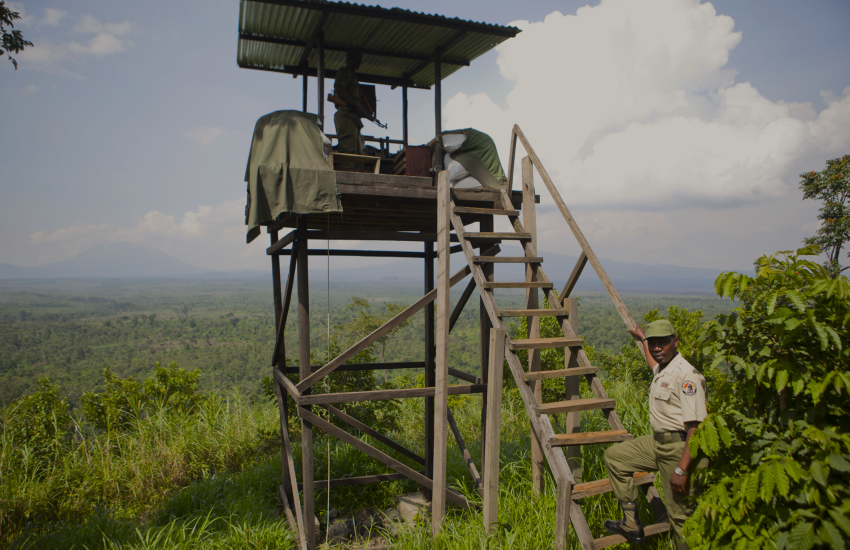
Headerphoto: Rangers in Virunga National Park (c) J.J. Stok – IUCN NL
The role of IUCN NL and our partners
IUCN NL’s local partners, have been pivotal in advocating for the protection of these ecologically significant areas. Through strategies such as direct advocacy, networking and public awareness initiatives, we have highlighted the risks of oil extraction in the Congo basin. By engaging with local communities and Congolese ministries, our partner organisations have amplified opposition to oil exploration, ensuring the voices of affected populations remain central to the conversation.
The cancellation of these oil blocks, directly affects our conservation efforts in the DRC. Current collaborations, like the Green Livelihoods Alliance (GLA) programme and the Virunga Youth project work to protect biodiversity and support sustainable livelihoods in these regions, where oil extraction would undermine conservation gains and destabilise local ecosystems.
A temporary win for people and nature
This cancellation represents a reprieve for both nature and local communities, which allows for a critical pause in potential environmental harm. For now, the DRC’s biodiverse landscapes and wildlife, this victory, is a testament to the strength of combining community advocacy and international pressure.
However, the government’s openness to reissuing licenses unfortunately suggests that the auction’s suspension may be more about administrative delays, rather than a true commitment to preserving nature and respecting communities.
Landscapes affected by planned oil blocks
Oil extraction in the DRC’s biodiverse landscapes would destroy ecosystems and undo years of conservation efforts. These areas are among our key focal points , with long-standing conservation work aimed at protecting biodiversity and mitigating human impact.
The cancelled oil blocks were set within some of the DRC’s most biodiverse regions, including the national parks of Salonga, Upemba and Virunga, overlapping nearly 129,000 km² of protected areas. Oil extraction in these protected areas not only poses significant ecological risks but is also against the law. Similar challenges, such as those seen with the East African Crude Oil Pipeline (EACOP) in Uganda, underscore the ongoing risk of economic interests sidelining environmental protections.
The road ahead
While the cancellation is a positive step for conservation, the possibility of new licences in the future raises questions about the long-term protection of these areas. This promising moment is no guarantee. Together with our partners on the ground, we remain committed to preserving these important natural areas and the communities that depend on them. Working together remains essential: protecting the DRC’s natural heritage requires sustained advocacy, accountability and policies that put conservation above economic gain.
Read more about this topic:
- [IUCN Congress 2020 series] Indigenous communities fight oil and gas activities in Uganda and DRC | IUCN NL
- Stop illegal activities in DR Congo Protected Areas | IUCN NL
- CSOs call on presidents of Uganda and DRC to avoid oil exploration in sensitive ecosystems | IUCN NL
- European Parliament calls to end extractive activities in protected and sensitive areas in Uganda and Tanzania | IUCN NL
More information?



27 March, 2026
Engaging Stakeholders to Advance Ecosystem-based Adaptation in Mauritius
Madagascar and the Indian ocean islands are a biodiversity hotspot - a group of islands with incredible species diversity and…
24 March, 2026
Critical minerals and the western chimpanzee: how bauxite mining threatens one of West Africa’s last strongholds
In West Africa, the global scramble for critical minerals’ is putting immense pressure on unique ecosystems. As the demand for…