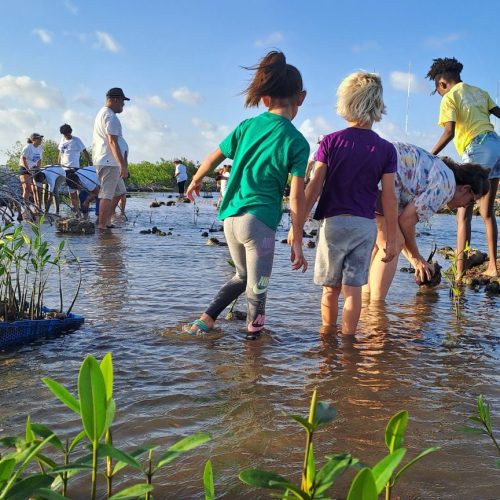
BESTLIFE2030 launches its third call for proposals
08 October, 2026
BESTLIFE2030 launches its third call for proposals
08 October, 2026
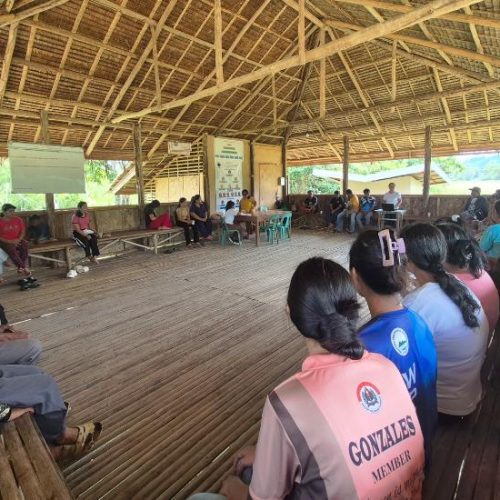
Keeping Indigenous knowledge alive in Palawan
01 October, 2026
Monday 05 january 2026
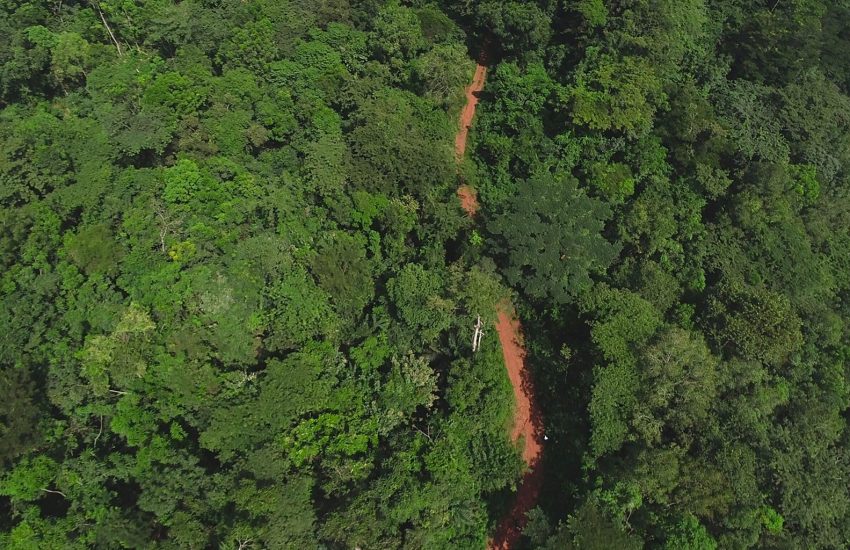
Header photo: Atewa Forest in Ghana © Sander van Andel / IUCN NL
Legislative Instrument (L.I.) 2462 would have opened large areas of forest, including Globally Significant Biodiversity Areas, to mining activities. A Rocha Ghana (ARG) played a leading role in the legal action and public advocacy against L.I. 2462, leading to its eventual repeal that successfully stalled the finalisation of mining licenses for over 25 forest reserves, including twelve Globally Significant Biodiversity Areas. The repeal has prevented imminent and widespread ecological destruction, setting a critical precedent for the protection of Ghana’s remaining forests and the livelihoods of local communities.
In partnership with IUCN NL, as part of Forests for a Just Future and Bottom Line!, ARG strengthened civil society’s ability to combine research, community perspectives, and legal analysis into clear advocacy positions. This helped building a broader coalition that used evidence, media engagement, and sustained dialogue with decision-makers to highlight mining risks in forest reserves and push for stronger legal safeguards. In October 2025, following the mounting public pressure and dialogue with civil society, the Government of Ghana tabled a revocation instrument in Parliament. Its adoption in December 2025 formally repealed L.I. 2462, closing the legal pathway for mining in forest reserves.
The Atewa Forest Reserve in eastern Ghana represents a unique tropical highland rainforest. It is classified as Globally Significant Biodiversity Area (GSBA), Important Bird Area (IBA) and Key Biodiversity Area (KBA), and as such it is internationally recognised as one of the highest priority ecosystems. 53 communities living on the edge of the forest depend on it for their livelihoods, and the forest is a source of water for over five million people.
Despite its biodiversity value, importance for water provisioning and legal status as a forest reserve there were plans for large-scale bauxite mining in the area. In 2025, after a multiple-year legal and advocacy campaign by A Rocha Ghana, together with IUCN NL and other groups and community partners such as the Concerned Citizens of Atewa Landscape, the Atewa Forest was successfully excluded from bauxite mining interests, and the formal process to designate Atewa a National Park finally took off. This is a landmark victory, protecting a globally significant biodiversity hotspot and the water source for millions of Ghanaians.
A Rocha Ghana also successfully helped shaping the extractives agenda of the new administration elected in 2025 through sustained and strategic dialogue with key ministries and government agencies. By engaging early and consistently with decision-makers, ARG created space to raise concerns, share evidence, and build support for stronger environmental governance. Through this ongoing engagement, ARG continues to emphasise the need for robust safeguards to protect forests, water resources, and environmental human rights from the impacts of extractive activities.
This work also contributed directly to the implementation of IUCN Resolution 103 on Safeguarding Biodiversity and Human Rights in Energy Transition Mineral Governance. This groundbreaking resolution, proposed by A Rocha Ghana and supported by IUCN members and conservation allies worldwide, calls on governments, companies, and civil society to ensure that the global shift to renewable energy does not come at the expense of planetary health and the rights of Indigenous Peoples and local communities.
Through the Forests for a Just Future programme of the Green Livelihoods Alliance, IUCN NL has contributed to more sustainable and inclusive governance of tropical forests. With our partners, we have promoted climate mitigation, water provisioning, biodiversity, and human rights and that safeguards the livelihoods of Indigenous peoples and local communities.
Bottom Line! supported a fair, sustainable energy transition with minimal impact on people and nature. Together with a coalition of civil society organisations, we have worked towards a fair energy transition with the lowest possible impact on people and nature, both in the Netherlands and in sourcing countries like Indonesia, Ghana, and the Philippines.

08 October, 2026
We are pleased to announce that the third BESTLIFE2030 call for proposals is now open, providing new funding for locally…
01 October, 2026
For Indigenous communities in Palawan - known as the last ecological frontier of the Philippines - knowledge about land, forests…
