Water is life. Wherever water flows, from untamed jungle rivers to steadily moving wetlands, ecosystems interweave with communities and their livelihoods. However, growing water challenges put these vital flows at risk. Around the globe, water scarcity is increasing, while floods are occurring with greater frequency and severity.[1]OECD. (2025) Global Drought Outlook – Trends, Impacts and Policies to Adapt to a Drier World[2]The Guardian. (2025). Nasa data reveals dramatic rise in intensity of weather events. Safeguarding nature is part of the solution. IUCN NL therefore connects water challenges with opportunities for biodiversity, food, and justice.
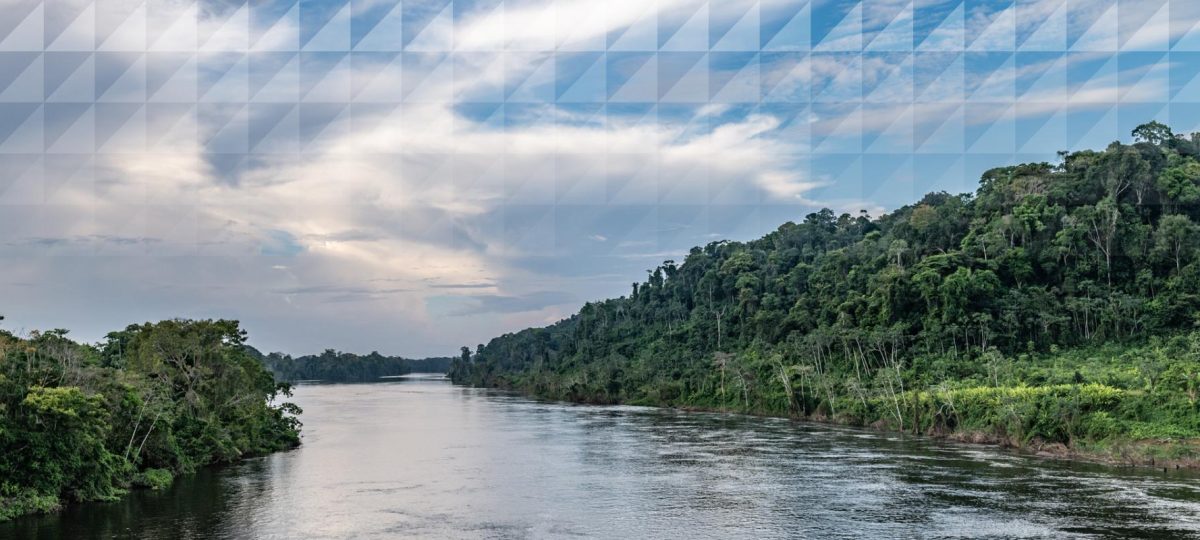
Header photo: River in Surinam © Britta Jaschinksi / IUCN NL
Growing water challenges
Shifting climate patterns, combined with increasingly extreme weather, are leading to more frequent and severe floods, as well as droughts. While climate change worsens water challenges, key drivers are extractive industries, agribusiness, land‑use change, and water diversion. This means that water problems are often consequences of human decisions on land use and related dynamics of deforestation and degradation that are often connected with powerful economic interests. Since drivers of biodiversity loss and environmental degradation relate to water issues, addressing these will naturally help solve water problems as well.
IUCN NL specialises in three water-related areas: water security, water justice, and water governance.
World’s largest union for nature conservation
IUCN NL is a National Committee of the International Union for Conservation of Nature (IUCN), the largest union for nature conservation in the world. IUCN bundles the experience, knowledge and network of over 1400 authorities, social organisations, knowledge institutions and over 15,000 experts. Part of these experts work on sustainable water management through the IUCN Water and Wetlands Team.
Water security
Water is a human right. Every person on Earth should have access to clean water. Yet, billions of people are still living without safely managed water.[3]UN Water. Human Rights to Water and Sanitation. Being at the heart of healthy ecosystems and resilient communities, water security concerns the access to safe, sufficient, and clean water for our health, livelihoods, and ecosystems. Access to water is also at the foundation of food security, since agricultural production depends heavily on clean and sufficient water.
Water security in responsible management of ecosystems
Through the Ecosystem Alliance, we have worked with nature to improve the livelihoods of people with low incomes and to build an inclusive economy through participatory and responsible management of ecosystems. Water security played an important role in enabling communities to better participate in and influence the sustainable management of ecosystems.
‘The capacity of a population to safeguard sustainable access to adequate quantities of acceptable quality water for sustaining livelihoods, human well-being, and socio-economic development, for ensuring protection against water-borne pollution and water-related disasters, and for preserving ecosystems in a climate of peace and political stability.’
- Water security definition of the United Nations[4]Un Water. (2013). What is Water Security? Infographic.
Water footprint
The amount of water that is needed to produce one product is called “virtual water”, also known as the water footprint. The export of water-intensive commodities (e.g. beef) to another country is like exporting water in a virtual form, water is embedded in the commodity supply chain. A large water footprint can have serious local consequences, particularly in dry, vulnerable ecosystems: it depletes water resources, worsens scarcity, and redirects water use away from local communities to serve global supply chains.
Water justice
Water resources are inherently connected to the ecosystems, territories, and people’s livelihoods. Yet across many forest landscapes, water sources are increasingly under pressure from unsustainable land use, extractive industries, and inequitable governance.
A lack of water affects everyone, but when water is polluted or scarce, inequality increases; women, Indigenous peoples, youth, peasant, and fishing communities bear disproportionate burdens of water injustice. Water justice is profoundly intersectional.[5]IUCN NL.(2026). Report: Interweaving waters, forests, and communities – Strategies and lessons for water justice Every problem encountered across landscapes – whether manufactured scarcity, mercury contamination, or river diversion – reflects stark power imbalances driven by extractive industries like mining and industrial agriculture.
Exports of commodities that need large amounts of water, such as beef, create enormous pressure on water resources in producing countries, for example in the Colombian Amazon. This leads to forest degradation, biodiversity loss, and escalating water scarcity. Together with our local partners, we therefore aim to end deforestation and environmental degradation linked to water challenges. In addition, we support the work of environmental defenders. Supporting Indigenous peoples and grassroots organisations is crucial to achieve water justice.
Strengthening local water governance
With the In the Forests for a Just Future programme of the Green Livelihoods Alliance, IUCN NL contributed to more sustainable and inclusive governance of tropical forests, in a way that promoted climate mitigation, water provisioning, biodiversity, and human rights and that safeguarded the livelihoods of Indigenous peoples and local communities. In the Philippines, for example, we have strengthened the work of Indigenous water defenders.
In Bolivia, we contributed to solutions for the water crisis in the Chiquitano Dry Forest as part of the Forests for a Just Future programme. With our new project Roots of Resilience, we continue our efforts to reverse forest loss and degradation to sustain water cycles, biodiversity, and local communities livelihoods.
Water governance
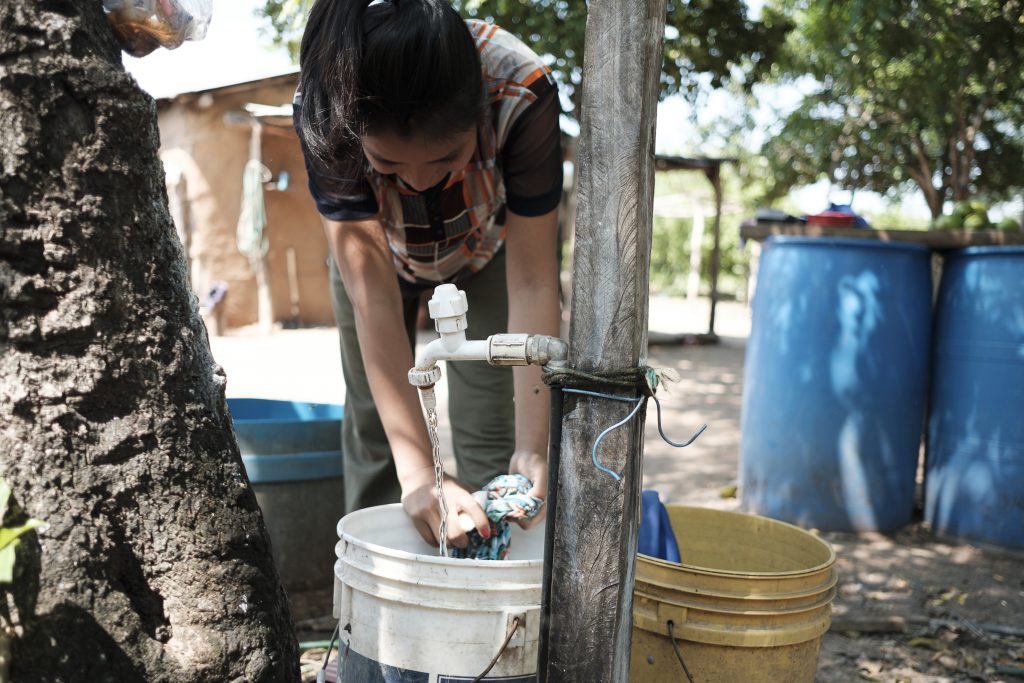
Rivers, lakes, and other wet ecosystems have experienced significant degradation due to pollution and habitat destruction, among other causes, with over half of global wetlands lost since 1900.[6]UNDP. Water governance. Effective, well-coordinated governance is needed for access to water accessibility and proper management of land and ecosystems.
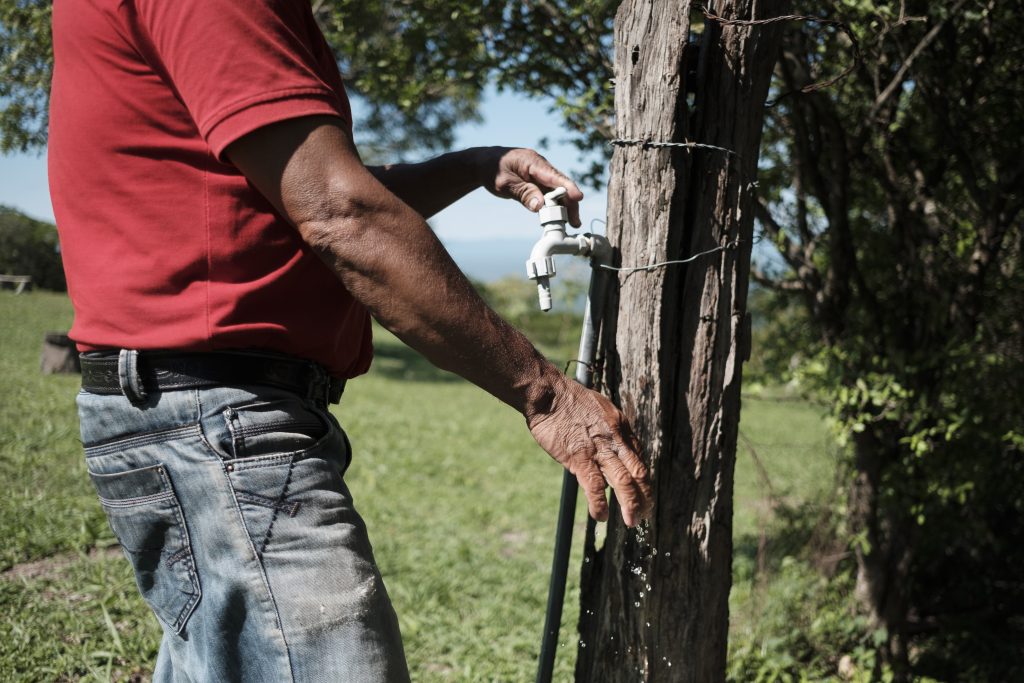
Groundwater is a critical resource for both people and nature. Nevertheless, ground water levels and quality is often unmeasured, underreported, and overlooked. Around the world, overextraction of groundwater is severely impacting communities and ecosystems. This also the case in Bolivia’s Chiquitana, where overextraction by cattle ranchers is affecting the ecosystems water balance.
Fluvial governance refers to the integrated management, administration, and collaborative care of river basins, watersheds, and the ecosystems they are part of. For adequate governance, it is essential to build bridges between governmental institutions, private stakeholders, and local communities applying a transboundary approach.
Nature restoration can strongly contribute to healthy water flows. With half of the wetlands lost globally, restoring peatlands, lakes, and other wetland ecosystems does not only contribute to climate solutions, but also to clean drinking water and resilient communities.
European water governance: restoring our wetlands
With the REWET consortium, we study the full potential of European wetlands to develop a comprehensive understanding of how wetlands can best contribute to climate mitigation and adaptation. Large-scale restoration is essential to revive these ecosystems and restore their natural functions. A key focus area of the programme is the implementation EU policies, including the Nature Restoration Law.
Water and biodiversity nexus expertise for your organisation
IUCN NL, as a leading knowledge partner, offers tailor-made consulting expertise to firmly anchor water and biodiversity in your strategy. No matter if you are a small-medium enterprise, an international organisation, or part of a consortium, our expertise helps you to comply with legislation, to reduce risks and strengthen your sustainability profile.
With our strong track record in working with grassroots organisations and communities around the globe, we can contribute to legitimate water solutions and biodiversity restoration benefiting people and nature.
Our approach to water
In collaboration with a wide range of partners, including local conservation NGOs, public authorities, businesses, and research institutes, IUCN NL applies a holistic approach to meet today’s challenges. We recognise and work on the nexus between water, biodiversity, and people, applying a context-based approach. Integrated Water Resources Management (IWRM) is a systematic, for example, is a cross-sectoral approach that promotes the coordinated development and management.[7]UNEP. Integrated water resources management. Community-based water management is an approach focusing on local control and participation that acknowledges the communities’ responsibility of water systems, often in rural or Indigenous contexts.
To determine the best approach, we work closely with local partners and communities applying the perspectives and knowledge of local people, organisations, and institutions. An inclusive, bottom-up approach is central to all our work. Effective and sustainable responses to water challenges must be locally grounded, context-specific, and rooted in care and reciprocity.
IUCN NL strategy
Our projects align with the three pathways set out in our strategy for 2024–2026. Our work in the field of water aligns with all pathways:
- Biodiversity-rich, climate-resilient landscapes;
- Policies for nature;
- Environmental justice.
Related topics:
- Nature conservation
- Nature restoration
- Forests and climate
- Human rights and nature
- Gender and inclusion
Highlighted resources:
- Report: Interweaving waters, forests, and communities – Strategies and lessons for water justice | IUCN NL
- Modeling water futures: how climate change and deforestation are draining the Chiquitania | IUCN NL
- Water conflict in Chiquitania: the cost of commodity production | IUCN NL
- Supporting Indigenous water defenders in the Philippines: Lessons from the Sierra Madre forest | IUCN NL
- Policy brief: tackling policy dilemmas for wetland restoration | IUCN NL
- Pathways for translating the EU Nature Restoration Regulation into effective wetland restoration | IUCN NL
More information? Contact:





Index
| ↑1 | OECD. (2025) Global Drought Outlook – Trends, Impacts and Policies to Adapt to a Drier World |
|---|---|
| ↑2 | The Guardian. (2025). Nasa data reveals dramatic rise in intensity of weather events. |
| ↑3 | UN Water. Human Rights to Water and Sanitation. |
| ↑4 | Un Water. (2013). What is Water Security? Infographic. |
| ↑5 | IUCN NL.(2026). Report: Interweaving waters, forests, and communities – Strategies and lessons for water justice |
| ↑6 | UNDP. Water governance. |
| ↑7 | UNEP. Integrated water resources management. |