Nature is our foundation. But in the Netherlands and the rest of the world, many animal and plant species are struggling. This is mainly due to the increasing demand for land, food, and raw materials. By actively restoring nature, we create climate-resilient landscapes that are rich in biodiversity, benefitting people and nature. That is why nature restoration is at the heart of our work.
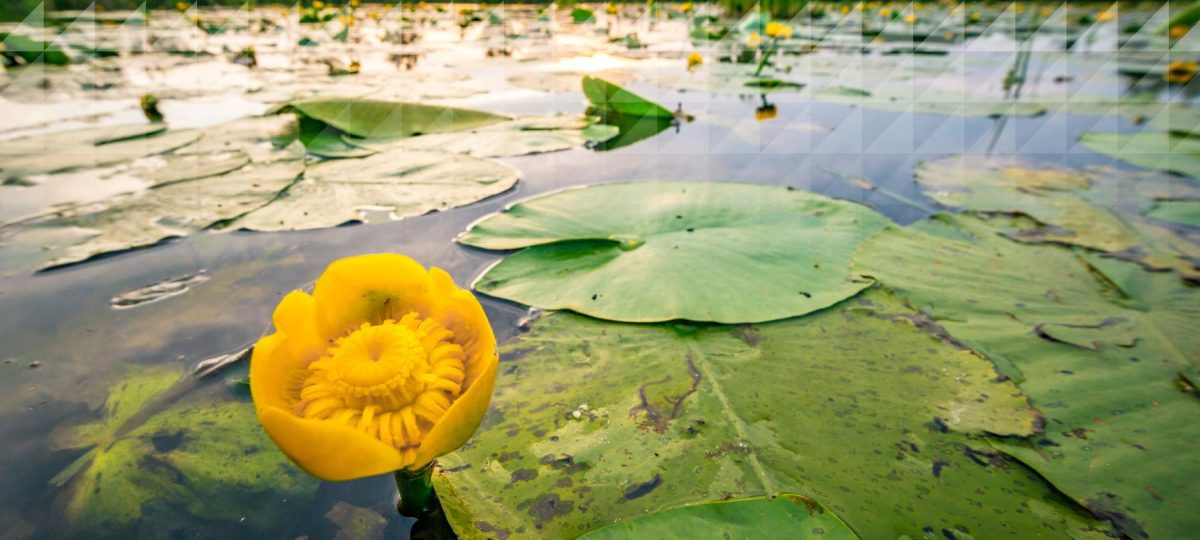
Header photo: Yellow water-lily in the Weerribben-Wieden in the Netherlands © Sjo from Getty Images Signature
Climate-resilient and biodiverse landscapes
Protecting existing nature is the first step: after all, what is preserved does not need to be restored. Yet nature restoration is also urgently needed. Globally, 28 percent of the assessed plant and animal species are listed as Vulnerable, Endangered or Critically Endangered on the IUCN Red List of Threatened Species; in the Netherlands, 45 per cent of species are threatened.[1]IUCN Red List of Threatened Species.[2]Naturalis Biodiversity Center 2025. Statusrapport Nederlandse biodiversiteit 2025. Ecosystems are also under pressure: in 2024, no less than 6.7 million hectares of primeval forest were lost worldwide and European wetlands are still being drained.[3]WRI. (2026). Tropical Rainforest Loss Slowed in 2025, but Fire is a Growing Threat to Forests Worldwide.[4]FAO. (2020). Global Forest Resources Assessment 2020.
Together with our partner organisations in the Netherlands, Europe, and globally, we restore nature for climate-resilient landscapes with rich biodiversity. We do this, for example, by inspiring governments, businesses, and other partners, by mapping the potential of wetlands, and by funding reforestation projects.
Nature restoration in the Netherlands: it is possible
In the summer of 2024, the Nature Restoration Law was passed. The Member States of the European Union have agreed that by 2050, all ecosystems in Europe will be fully restored. To achieve this in the Netherlands, ambitious plans are needed. It is a challenge, but it is possible: it is already happening in many places across our country, from the Waddenzee to Zuid-Limburg. Nature restoration goes hand in hand with food security, water safety, economic growth, and recreation.
Working together for a flourishing Netherlands
Together with ten other nature and environmental organisations, we are working on ‘Samen voor een bloeiend Nederland’ (Working together for a flourishing Netherlands in Dutch). With this project, we show that nature restoration is possible and we inspire local authorities, businesses, and other partners. Together with the other organisations of the Groene11, we are working through this project and other initiatives towards a greener Netherlands.
In addition, we aim to establish a baseline standard for Dutch nature (Basic Quality of Nature) and we advise businesses, governments, and others on nature restoration.
Dutch National Dashboard for Biodiversity
IUCN NL has developed the Dutch National Dashboard for Biodiversity in collaboration with Naturalis, Sovon, and SoortenNL. Using a number of indicators, the Dashboard shows how the Netherlands is progressing towards achieving the nature conservation targets we agreed on at European level. It looks not only at species and habitats, but also at key pressures such as nitrogen surplus and desiccation, as well as the underlying causes of decline.
The Dashboard provides insight, direction, and measures to work together on nature and biodiversity restoration in the Netherlands.
Sustainable restoration of European wetlands
In addition to action in the Netherlands, collaboration at European level is also important. The state of Europe’s wetlands is far from good: as much as 80 percent has been lost over the past 100 years.[5]Verhoeven, J.T.A. (2014). Wetlands in Europe: Perspectives for restoration of a lost paradise. Due to agriculture, forestry, urbanisation, and peat extraction, many former wetland areas have been drained.
This is despite the fact that wetlands provide drinking water, are home to rich biodiversity and play a vital role in mitigating climate change. Peatlands, for example, retain large quantities of water during periods of drought and can sequester significant amounts of CO2. Effective management and restoration of peatlands and other wetlands is therefore a Nature-based Solution in the fight against climate change.
Investigating the potential of wetlands
Through REWET, we are investigating how European wetlands can best contribute to climate mitigation and adaptation. European NGOs, universities, businesses, and institutions have joined forces to investigate the full potential of wetland areas.
Nature restoration worldwide
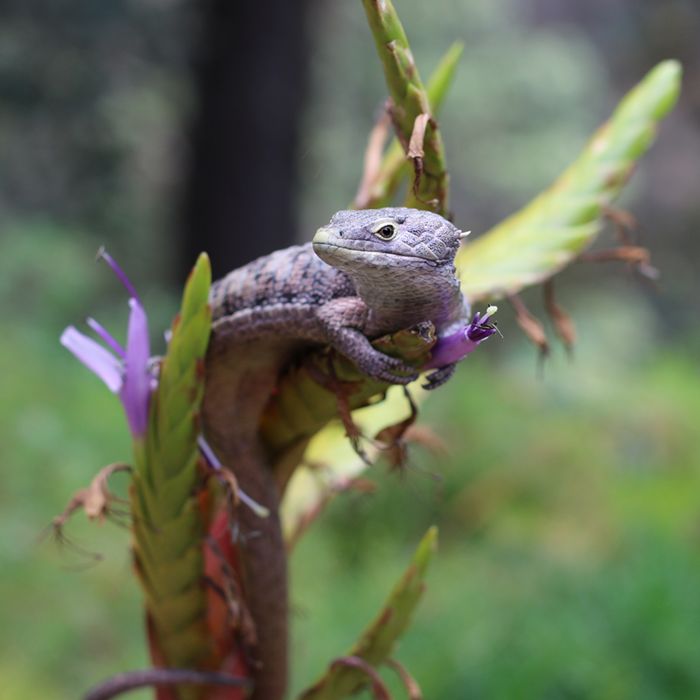
Over the past 50 years, the global population of wild animals has declined by 73 percent.[6]Living Planet Report 2024. This is partly because their habitats have been replaced by urbanisation, the expansion of agricultural land, infrastructure, and industry. In many areas with rich biodiversity, such as the Amazon rainforest, nature is also being damaged by large-scale deforestation and mining activities. These involve, for example, gold or minerals needed for the energy transition.
Together with partner organisations in Africa, Latin America, and Asia, we are committed to protecting areas of high natural value and exceptional biodiversity. In doing so, our partners work alongside Indigenous peoples and local communities.
Fund management for nature restoration
For over 30 years, IUCN NL has been managing funds for local nature conservation organisations that protect and restore areas with rich biodiversity. We do this globally through our Land Acquisition Fund, in Madagascar, the Comoros, Mauritius and the Seychelles with the CEPF Regional Implementation Team, and in the European Union’s overseas territories through BESTLIFE 2030.
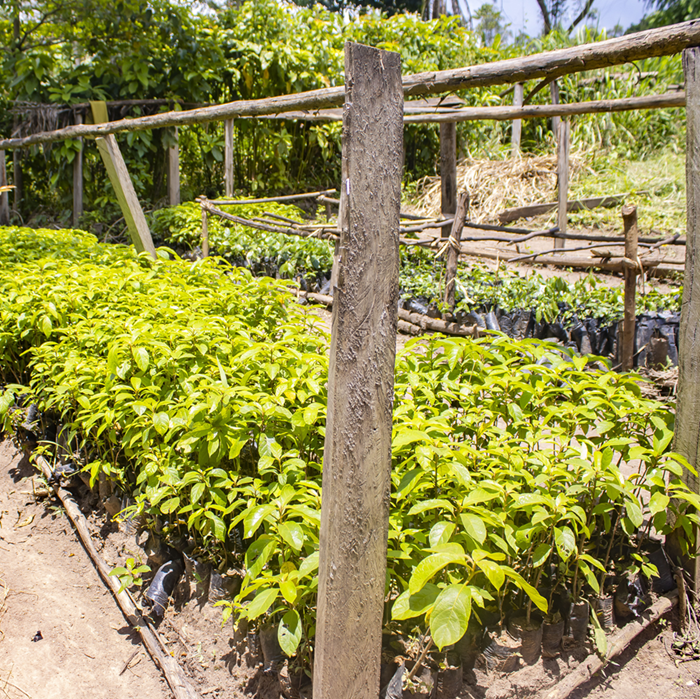
We also contribute to nature restoration through other projects. For example, in Benin we are working to restore mangroves through blue carbon credits, and as part of the Green Livelihoods Alliance we have worked on sustainable and inclusive forest management through the Forest for a Just Future programme.
Our approach to nature restoration
In collaboration with a wide range of partners, including local nature organisations, governments, businesses, and research institutes, we are working on a holistic approach to nature restoration. We:
- work in a multidisciplinary and cross-border manner;
- link knowledge, policy and practice; and
- connect the local with the international.
Governments, businesses, and local communities each have a stake in a landscape. These interests often differ and are sometimes conflicting, particularly given nature’s limited resources. In our projects, we therefore use a landscape approach to bring together the users of an area, with nature conservation and restoration as our starting point.
IUCN NL strategy
Our projects align with the three pathways set out in our strategy for 2024–2026. Our work in the field of nature restoration is primarily linked to the first two pathways: climate-resilient landscapes with rich biodiversity and nature policy.
Related themes:
Relevant publications:
- Rewetting policy brief for a resilient Europe: aligning defence, nature, and social goals | IUCN NL
- Blue carbon credits: an innovative way to finance mangrove restoration | IUCN NL
- Visual guide to boosting biodiversity in palm oil landscapes | IUCN NL
- The art of reforestation: insights for successful ecosystem restoration | IUCN NL
- Pathways for translating the EU Nature Restoration Regulation into effective wetland restoration | IUCN NL
More information? Contact:




Index
| ↑1 | IUCN Red List of Threatened Species. |
|---|---|
| ↑2 | Naturalis Biodiversity Center 2025. Statusrapport Nederlandse biodiversiteit 2025. |
| ↑3 | WRI. (2026). Tropical Rainforest Loss Slowed in 2025, but Fire is a Growing Threat to Forests Worldwide. |
| ↑4 | FAO. (2020). Global Forest Resources Assessment 2020. |
| ↑5 | Verhoeven, J.T.A. (2014). Wetlands in Europe: Perspectives for restoration of a lost paradise. |
| ↑6 | Living Planet Report 2024. |