Keeping Indigenous knowledge alive in Palawan
01 October, 2026
Keeping Indigenous knowledge alive in Palawan
01 October, 2026
Three years of impact in Bottom Line!: putting…
29 September, 2026
Wednesday 05 august 2026
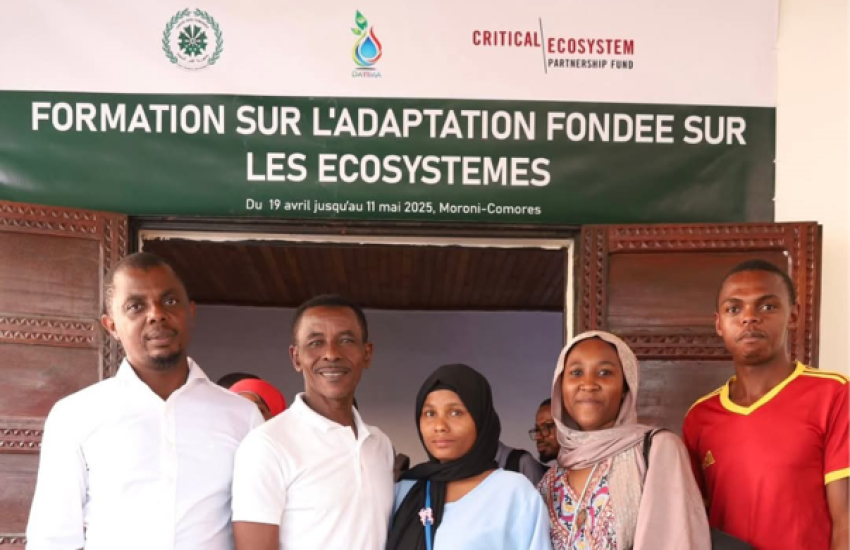
Photo header: Participants during a training session © DAYIMA
Madagascar and the Indian ocean islands are a biodiversity hotspot – a group of islands with incredible species diversity and extremely high rates of endemism.
To protect and preserve these species that exists nowhere else in the world and are threatened by climate change, IUCN NL and its partners in Madagascar, Comoros, Mauritius and the Seychelles are guiding ecosystem-based adaptation (EbA) and conservation projects with funding from CEPF.
In a series of articles, we highlight some of these powerful projects.
DAYIMA is an NGO from the Comores and works to address the environmental, climate, and social challenges. Its capacity-building project for civil society organisations (CSOs) in the Comoros is completed – an important milestone in the strengthening of local leadership in environmental protection and climate resilience. In addition to training, the project has helped to establish sustained knowledge sharing, practical tools, and institutional partnerships.
A core part of the project involved providing hands-on training to enhance the technical expertise of 24 men and 19 women from eight different CSOs.
Experts from the Herbier des Comores played a central role, particularly during the species identification sessions. Prior to the training, many participants were unaware of the importance of distinguishing between native and invasive species. Through interactive sessions led by experienced botanists and involving real plant samples , the participants developed practical identification skills and improved their understanding of local ecosystems. This knowledge is essential for Ecosystem-based Adaptation approaches, where protecting native ecosystems and managing invasive species directly supports climate resilience.
To ensure continuity beyond the project’s duration, DAYIMA and the Herbier des Comores established a formal agreement. This partnership guarantees ongoing access to scientific expertise and specimen collections, which will support future training cycles and reinforce the scientific basis of conservation efforts in the country.
Institutionalising this collaboration means that the project will contribute to a sustainable environment of learning and expertise, moving beyond one-off capacity building.
One of the project’s most significant achievements is its comprehensive training curriculum, which has been tailored to meet the needs of local CSOs. The programme was organised into seven thematic workshop modules and covered organisational governance, project cycle management, budgeting and basic accounting, reporting, communication and advocacy, and technical topics on ecosystems and climate change.
Each module combined presentations with exercises, case studies and simple templates, including templates for project proposals and budgets that CSOs can reuse in their own work.
Not only was this an opportunity to build capacity, it also created networks between participants who started exchanging contacts, collaborating informally and discussing joint initiatives outside the formal training sessions. At the end of the training, the CSOs organised themselves to develop a joint project, depending on funding availability.
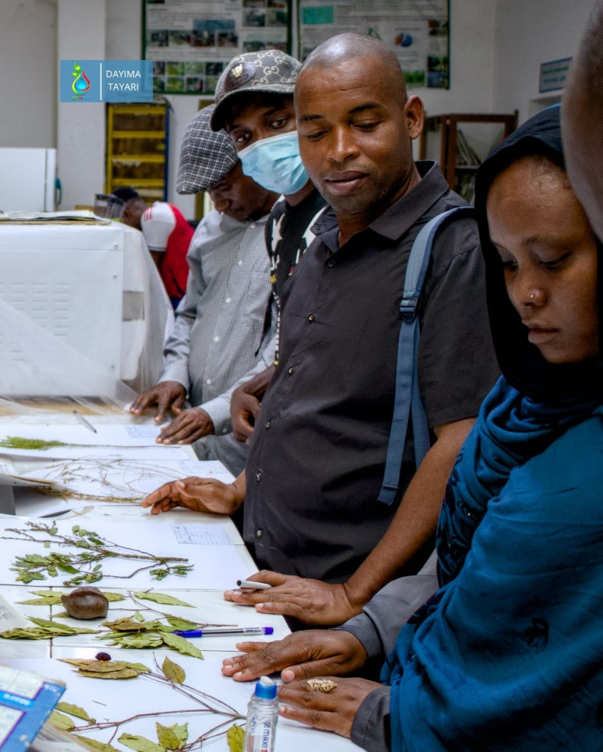
Photo: Participants identifying plant species © DAYIMA
Digital tools and access to knowledge
In order to extend the impact, training materials were designed for use on DAYIMA’s digital platforms, including the RCN-READ platform and the FabLab. This enables CSO members and young people to access the materials for self-learning purposes and reuse them in future activities.
A mobile application had also been developed to serve as a practical field tool (available for free on Android). With this project, species identification and information pertaining to the knowledge of local species were added. The app allows users to identify species, distinguish between native and invasive ones, and record observations with GPS coordinates. The app includes a searchable database of plant and animal species in the Comoros, complete with descriptions, photos, habitat information, and conservation status. The data was compiled and validated with the support of the Herbier des Comores, and is already being used CSOs and community groups during field activities.
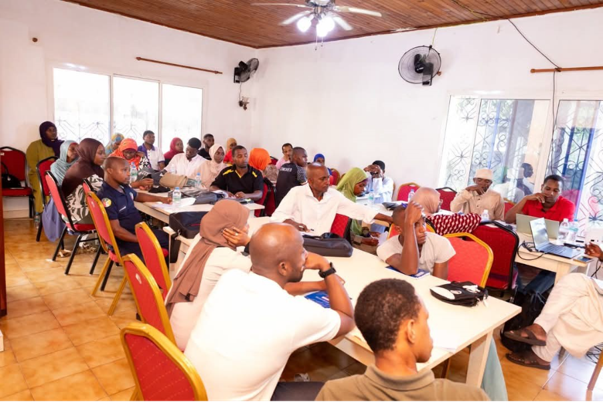
Photo: Training session in the Comoros © DAYIMA
The training, tools, digital platforms and partnerships together provide a basis for continued use beyond the project. They also offer a model that can be replicated with other CSOs and in other contexts.
As local CSOs continue to apply their new skills, they are becoming better equipped to play a leading role in protecting ecosystems and biodiversity, and responding to climate challenges across the archipelago. This will ultimately strengthen resilience.
DAYIMA receives support from the CEPF. Bringing together diverse groups, CEPF-supported projects are creating momentum for long-term, Nature-based Solutions that benefit both people and ecosystems.
If you would like to read more on the IUCN NL guided and CEPF-supported projects, please visit the project page.
01 October, 2026
For Indigenous communities in Palawan - known as the last ecological frontier of the Philippines - knowledge about land, forests…
29 September, 2026
The transition to renewable energy is essential, but how we get there matters. As demand for critical minerals such as…
