
Information Sessions for the 3rd BESTLIFE2030 Call
10 November, 2026
Information Sessions for the 3rd BESTLIFE2030 Call
10 November, 2026
Lake Tseny: How communities are restoring nature and…
29 October, 2026
Thursday 12 november 2026
After two weeks of negotiations, dialogue and exchange in Yerevan, Armenia, CBD COP17 has renewed global commitments for biodiversity, but without the financial breakthrough needed to put the Global Biodiversity Framework back on track. For IUCN NL, COP17 offered inspiration about what is possible, but also reinforced worries that action and finance are not yet enough to drive systemic change.
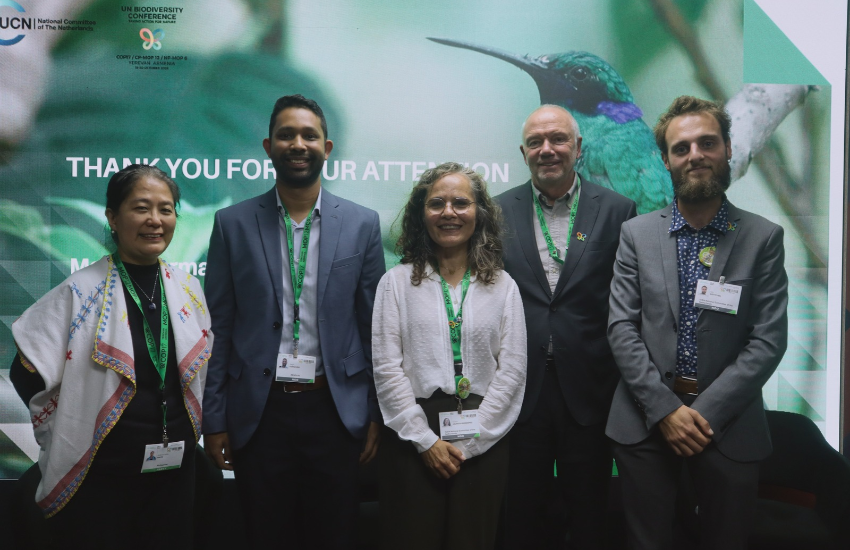
Headerphoto: IUCN NL at the CBD COP17 © IUCN NL
The conference marked the first global review of progress under the Kunming-Montreal Global Biodiversity Framework (KMGBF), and it is widely recognised that progress is not enough. Governments therefore adopted the Yerevan Pathway which aims to accelerate implementation during the years that remain until 2030. COP17 took place at the halfway point between the adoption of the Global Biodiversity Framework in 2022 and its 2030 targets. The global review confirmed what many organisations have already witnessed: there is progress, but not yet at the scale or speed required.
Although the conference’s final text falls well short of what is needed to meet the agreed targets, reaching agreement was significant, particularly after the difficult conclusion of COP16 and at a time of growing geopolitical division. But the outcome contains insufficient quantified finance commitments.
COP17 generated headlines about nearly $2 billion in biodiversity finance announcements. This figure, however, combines genuinely new pledges with earlier commitments, investment targets and money spread over several years.
This included $560 million under the Global Environment Facility’s latest replenishment, $500 million through the Species Recovery Alliance and $330 million for the Value Nature Fund to mobilise private capital for nature. Other initiatives included the Asian Development Bank’s new biodiversity bond and investment incubator, plus new indicators for biodiversity monitoring and accountability. The Netherlands also indicated a $500 million contribution to the Tropical Forest Forever Facility over ten years.
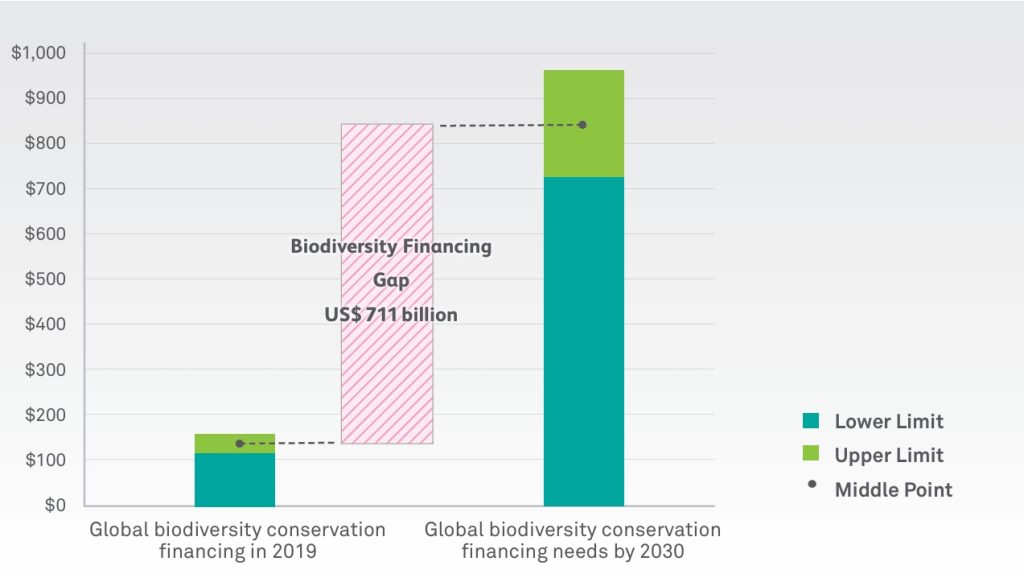
These contributions are very welcome, but they are not enough to close the global biodiversity finance gap, as shown in the graph. Progress was further constrained by the fact that developed countries did not meet their agreed funding commitments, a key element of achieving GBF Target 19. Decisions about the future international biodiversity finance mechanism were postponed until COP18 in 2028, which takes place in Ecuador.
Besides, the Cali Fund, intended to share benefits from the use of digital genetic sequence information, illustrates the gap between institutional progress and available resources. Despite its promise to direct half of future allocations towards the self-identified needs of Indigenous Peoples and local communities, it ended COP17 with pledges of just $10,565.
The biodiversity finance challenge is equally relevant in the Netherlands. As part of the GBF, the Dutch government is developing a National Biodiversity Finance Plan to identify ways of mobilising and directing more funding towards biodiversity goals. At the same time, the latest National Biodiversity Dashboard update shows that the Netherlands still spends more than €11 billion annually on subsidies and fiscal arrangements that harm biodiversity, highlighting the need not only for additional funding, but also for redirecting existing financial flows.
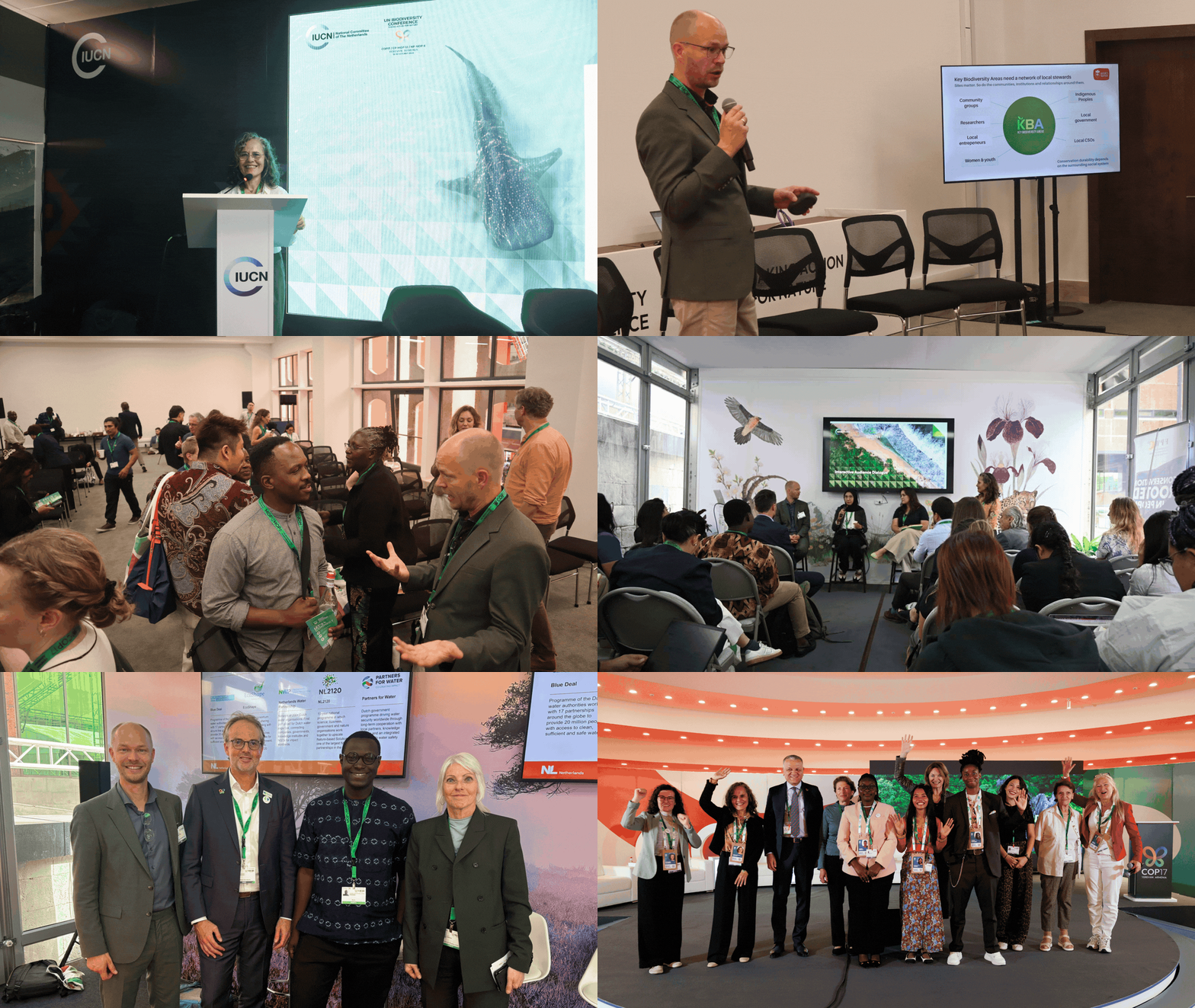
Throughout COP17, IUCN NL and its partners explored locally-led conservation, environmental rights, eco-feminist leadership, Indigenous leadership and trust-based funding. These discussions underscored a persistent reality: global biodiversity targets need to be achieved with the organisations, communities and Indigenous Peoples safeguarding nature every day.
The adoption of operating arrangements for the permanent Article 8(j) body was an important step for Indigenous participation in biodiversity governance. Yet this institutional recognition was not matched by a comparable shift in finance. None of the major COP17 pledges were explicitly designed as flexible, core or trust-based funding that local conservation organisations could access directly.
Existing instruments offer possibilities, but also limitations:
As not enough funding is reaching the places where it is needed most, for IUCN NL flexible and trust-based funding remains essential. For more than 25 years, through the programmes like the Land Acquisition Fund, Strengthen the Roots, Forests for a Just Future and now Nature’s Heartbeat, we have channeled resources to over 1000 local organisations and conservation leaders, thereby supporting the local governance and protection of millions of hectares of nature. This experience shows that flexible, long-term support strengthens local ownership and makes conservation more responsive and durable in places where it matters most.
COP17 secured international consensus and kept cooperation on biodiversity moving, which is very important. It also opened a cautious discussion about broadening the donor base to other developed countries and placed harmful subsidy reform more firmly on the agenda. But the structural questions are still unanswered, the finance gap remained largely unchanged, and direct access for local and Indigenous organisations saw little improvement.
But for IUCN NL, the measure of COP17 success will therefore not only be the number of decisions; it will be whether finance reaches species, landscapes, rivers, forests, coastlines and organisations in forms that local actors can actually use. One example of this commitment is that Nature’s Heartbeat received 3 million euros extra support for the coming years. We will continue working with governments and donors to make such funding more accessible, including through the upcoming Biodiversity in Tropical Forests roundtable.
The biodiversity crisis will not be solved through multi-lateral consensus alone. Until local organisations and Indigenous Peoples that are on the frontline of conservation, can access flexible funding directly and shape how it is used, the distance between global commitments and action on the ground will remain too large. COP17 clarified the challenge. The work now is to close that gap.



| ↑1 | Source: Deutz, A., Heal, G. M., Niu, R., Swanson, E., Townshend, T., Zhu, L., Delmar, A., Meghji, A., Sethi, S. A., and Tobin de la Puente, J. 2020. Financing Nature: Closing the global biodiversity financing gap. The Paulson Institute, The Nature Conservancy, and the Cornell Atkinson Center for Sustainability. |
|---|
10 November, 2026
To support applicants in preparing strong project proposals, BESTLIFE2030 is offering a series of information and guidance sessions for the…
29 October, 2026
Madagascar and the Indian ocean islands are a biodiversity hotspot - a group of islands with incredible species diversity and…

