
IUCN NL at COP17 in Yerevan: locally led…
12 October, 2026
IUCN NL at COP17 in Yerevan: locally led…
12 October, 2026
BESTLIFE2030 launches its third call for proposals
08 October, 2026
Tuesday 30 september 2025
From 9 to 15 October 2025, the IUCN World Conservation Congress will take place. The Congress brings together the global nature conservation community and allows civil society organisations to share their work and knowledge. IUCN NL will host four events at the Congress.
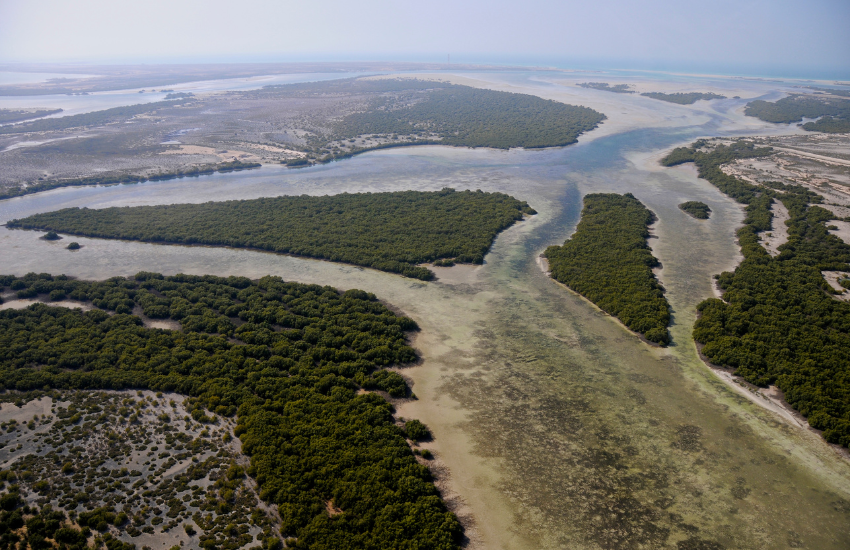
Header photo: Mangroves in Abu Dhabi. © deveritt via Getty Images Signature
The 2025 IUCN World Conservation Congress will be held in Abu Dhabi, United Arab Emirates. This year’s theme is ‘Powering transformative conservation’. The Congress takes place every four years and is the largest marketplace for conservation and sustainable development science, practice and policy. Scientists, policy experts, business leaders and professionals from around the globe share their experience, innovation and latest research.
As the Dutch National Committee of the International Union for the Conservation of Nature (IUCN), we offer a platform for over 40 organisations in the Netherlands. At the World Conservation Congress, we will represent our members and their work.
IUCN NL is organising several events during the Congress. These events provide a platform for the exchange of knowledge and best practices and contribute to promoting international cooperation on nature conservation. The events will discuss themes such as environmental defenders in shrinking civic space, trust-based funding, energy transition mineral governance, and gender-inclusive approaches to environmental crime. Below is an overview of the confirmed events.
Next to these events, IUCN NL will also have a booth at the IUCN Congress Exhibition (9 to 13 October). Dutch IUCN members and our local partners from around the world will gather to showcase their work, connecting the Dutch conservation movement with international actors and policy.
Nature’s last defenders: frontline conservation in declining civic spaces
When: 9 October 2025; 14:00 – 15:30 (GMT +4).
Partners: Africa Institute for Energy Governance (AFIEGO), Non-Timber Forest Products – Exchange Programme Asia (NTFP-EP), Fundación Ambiente y Recursos Naturales (FARN)
Location: Hall 4C: Forum – Session Room 3. Hybrid (onsite with livestreaming)
Across the world, environmental defenders are facing an alarming crackdown—threatened, criminalised, and even killed for protecting their lands, forests, and rivers. Women environmental human rights defenders face multiple risks, navigating gendered violence alongside repression. As civic space shrinks, the urgency to unite, strategise, and resist has never been greater. This session will provide a safe and empowering space for environmental defenders to exchange experiences, strengthen networks, and co-create strategies to counter restrictions. By fostering solidarity and sharing tactics for resilience, we will amplify the voices of those on the frontlines of environmental justice. Together, we will explore how to safeguard civic freedoms, challenge repressive tactics, and ensure that the people protecting our planet are safe and protected.
Empowering Grassroots Conservation through Trust-Based Funding, Networking, and Capacity Support
When: 10 October 2025; 11:00 – 12:30 (GMT +4).
Partners: Non-Timber Forest Products – Exchange Programme Asia (NTFP-EP), A Rocha Ghana, The Environmental Conservation Trust of Uganda (ECOTRUST), Asociación Armonía, Fundación Natura Bolivia, Maliasili, Strong Roots
Location: CR B: Forum – Session Room 11. Hybrid (onsite with livestreaming)
This session on ‘Grassroot Conservation through Trust-Based Funding, Networking, and Capacity Support’ will emphasise the vital significance and efficacy of trust-based funding in empowering grassroots conservation actors such as NGOs, CBOs, women and youth groups, IP&LCs, researchers, and media. It will highlight their crucial role in key biodiversity areas despite often lacking support and recognition. Case studies from successful initiatives will be included to illustrate these points. The session will showcase successful network and capacity strengthening strategies, discuss the empowering disruptive innovation and leadership of grassroots conservation, and develop an actionable framework focused on trust-based funding models.
Women in a Degraded Amazon: the Need for Gender-inclusive and Intersectional Approaches to Environmental Crime
When: 11 October 2025; 14:00 – 15:30 (GMT +4).
Partners: Comité Regional de Miembros de la UICN de Sudamérica, Sociedad Peruana de Derecho Ambiental (SPDA), Federación Nativa del Río Madre De Dios y Afluentes, Fundación para la Conservación y el Desarrollo Sostenible (FCDS), Fundación Ambiente y Recursos Naturales (FARN), Asociación Interétnica de Desarrollo de la Selva Peruana (AIDESEP)
Location: Hall 4B: Forum – Session Room 2 Hybrid (onsite with livestreaming)
Women in the Amazon are disproportionately impacted by (illegal) deforestation, environmental degradation and crimes against the environment, such as illegal deforestation and illegal mining. They are exposed to these issues on top of the gender-based violence they already experience, because of which they face different and more intense struggles. Women environmental defenders, and Indigenous women in particular, are on the frontlines of protecting biodiversity and human and territorial rights. Yet, a gender lens is often lacking in policies and programme interventions that aim to tackle crimes affecting the environment. In this participatory session, women from the Amazon share their experiences highlighting the importance of integrating a gender-inclusive and intersectional approach. Alongside experts from Latin American NGOs, they will start the discussion on effective gender-inclusive approaches at the local, national and international level, including the implementation of the Escazú agreement.
Prosper with nature: safeguarding biodiversity and human rights in energy transition mineral governance
When: 13 October 2025; 12:00 – 13:00 (GMT +4).
Partners: A Rocha Ghana, World Commission on Protected Areas (WCPA)
Location: Exhibition – IUCN Programme Pavilion, R3, Stage 3
To achieve a responsible low-carbon future, the mining of Energy Transition Minerals (such as nickel, bauxite, lithium and copper) must protect forests, wetlands, rivers, oceans, wildlife, and human rights while respecting Indigenous Peoples and Local Communities. Socially and ecologically sound mineral governance is essential to align with the Kunming-Montreal Global Biodiversity Framework (GBF) and the Paris Agreement.
The event addresses the rising demand for these minerals in biodiversity-rich regions, with case studies from West Africa, Southeast Asia and South America. Experts propose actions, robust safeguards, and best practices to safeguard nature and planetary security, and human rights during the transition. The interactive discussion with the audience emphasises the need for no-go zones for mining in ecologically and culturally significant areas, and for aligning the energy transition with the GBF targets and global climate goals and implementing the 2024 UN Principles to Guide Critical Energy Transition Minerals Towards Equity and Justice.
Synergies Between Species and Climate Solutions
When: 9 October 2025; 14:00 – 15:30 (GMT +4)
Organised by: Reverse the Red
Partners: International Fund for Animal Welfare (IFAW), World Wide Fund for Nature – International
Location: Exhibition – Reverse the Red Pavilion
Species are often overlooked in climate solutions. This discussion centers the conversation around how biodiversity and climate action are inherently linked.
Managing our Mangroves: lessons in conservation and restoration from the UAE and beyond
When: 10 October 2025; 8:30 – 10:30 (GMT +4)
Organised by: Environment Agency Abu Dhabi
Partners: Zoological Society of London, Wetlands International, Emirates Nature-WWF, Global Mangrove Alliance
Location: Conference Hall B – Forum, Session Room 11
Mangrove restoration that is efficient, collaborative and science-based is a key priority for the UAE and for many countries around the world, yet many initiatives face setbacks due to insufficient knowledge or improper methods. This hands on participatory session will provide case studies from the UAE and beyond offering practical, evidence-based solutions to overcome these barriers and accelerate the recovery of mangrove ecosystems globally. By leveraging scientific knowledge, local expertise, traditional ecological knowledge and global best practices, we can enhance our collective capacity to successfully restore these vital coastal habitats. The session is a collaboration between Global Mangrove Alliance members the Environment Agency Abu Dhabi and its Abu Dhabi Mangrove Initiative, the Zoological Society of London, Wetlands International, and Emirates Nature-WWF. It aims to inspire action towards improving restoration outcomes, emphasizing the need to integrate communities and sound scientific planning into restoration programs.
Big cat conservation: Developing synergies by integration across and within IUCN
When: 10 October 2025; 14:00 – 15:30 (GMT +4)
Organised by: Zoological Society of London
Partners: PANTHERA FRANCE, World Commission on Protected Areas (WCPA), Leo Foundation, Centre for Wildlife Studies, Wildlife Conservation Society, African People & Wildlife, Tiger and Leopard Conservation Fund in Korea, The Corbett Foundation
Location: Conference Hall A – Forum, Session Room 7
This session will provide an overview of big cat conservation, including status, threats, and their ecological and cultural importance. It will go on to demonstrate the need for large-scale, coordinated and integrated conservation approaches for the survival of viable and ecologically functional big cat populations. Working groups will then be established around different work streams to discuss ways in which big cat conservation can be better coordinated across IUCN, and how big cats can be leveraged to contribute to IUCN objectives and Congress themes including ecological connectivity, coexistence, habitat loss and climate change. Groups will then identify priorities for integrating big cat conservation across and within IUCN. The session will thus identify ways in which conservation can be scaled up to address the needs of big cats, and how synergies between big cat conservation and different components of IUCN can be leveraged to deliver greater impacts.
Mobilising the role of wild animals in ecosystems as a climate solution
When: 11 October 2025; 9:30 – 10:10 (GMT +4)
Organised by: International Fund for Animal Welfare (IFAW)
Partners: Climate Crisis Commission, Global Rewilding Alliance, IUCN
Location: Conference Hall B – Forum, Session Room 11
From bison to fruit bats, sharks to shorebirds, animal populations increase carbon storage in ecosystems through interactions in their environments – a mechanism called Animating the Carbon Cycle. Conserving and restoring key wildlife species enhances the capacity of ecosystems to remove atmospheric CO2 and retain it in biomass, soils and sediments. The aggregate effect globally is potentially billions of tonnes annually. Policy frameworks and interventions to date have focused primarily on the impacts of climate change on wildlife rather than the functional role of wild animals in ecosystem-based mitigation. Now, more than ever, the world needs new and additional solutions. This session, hosted by IFAW and the Global Rewilding Alliance, will show how applying carbon capture models for target species at key places in terrestrial, freshwater and marine ecosystems, can enable governments to incorporate this new knowledge into their action plans for reaching global targets on climate and biodiversity.
Conservation and protection of Coral Reefs from transboundary plastic pollution using advanced monitoring technologies
When: 11 October 2025; 11:00 – 12:30 (GMT +4)
Organised by: The Ocean Cleanup
Partners: Ministerio de Ambiente y Recursos Naturales de Guatemala, Coral Triangle Initiative on Coral Reefs, Fisheries and Food Security, IUCN North America Regional Office, IUCN NL, Mangrove Jakarta ID, Semillas del Oceano
Location: Hall A: Forum – Session Room 6
The session intends to showcase how the combination of artificial intelligence and remote sensing monitoring technologies contributes to marine biodiversity monitoring, coral reefs conservation and protection from transboundary plastic pollution in the Gulf of Honduras and Coral Triangle regions. The Mesoamerican Reef, spanning about 1 thousand kilometers along Mexico, Belize, Guatemala, and Honduras, is the Western Hemisphere’s largest barrier reef while the Coral Triangle region covers approximately 5.7 million square kilometers along Indonesia, Malaysia, Papua New Guinea, the Philippines, the Solomon Islands, Thailand, and Timor-Leste. Both regions are renowned for their incredible biodiversity and diverse habitats, including coral reefs, seagrass beds, mangroves, and deep-sea environments but increasingly under significant threat from plastic pollution. The session will highlight the critical role of data-driven advanced monitoring techniques, innovation and strategy to tackle transboundary plastic pollution.
The Freshwater Challenge: Accelerating freshwater ecosystem conservation and restoration
When: 11 October 2025; 16:00 – 17:30 (GMT +4)
Organised by: Freshwater Challenge
Partners: Wetlands International, Conservation International, The Nature Conservancy, World Wide Fund for Nature – International, Zimbabwe Government, Nepal Government, Australia Government, CONAGUA, UAE Ministry of Climate Change and Environment, Ministères aménagement du territoire transition écologique (France), Ministère des Eaux et Forêts et de la Mer (France)
Location: Hall 4C – Forum, Session Room 3
The Freshwater Challenge is a bold global initiative to restore 300,000 km of degraded rivers and 350 million hectares of wetlands by 2030 while conserving vital freshwater ecosystems. This session will examine the urgent need for freshwater conservation and restoration, progress since its 2023 UN Water Conference launch, and growing momentum among member countries and stakeholders. Participants will explore pathways to its core objectives—integrating freshwater protection into global frameworks, setting measurable national targets, and accelerating action through increased investment. Experts and policymakers will discuss strategies to overcome challenges, mobilize resources, and drive impactful change. The session will highlight collaboration between the private sector, governments, and civil society to scale up conservation and restoration. With 52 countries and the EU supporting the Challenge, nations are encouraged to incorporate freshwater goals into commitments. This initiative exemplifies how IUCN members can build momentum and drive meaningful action through strategic collaboration.
The BBNJ Agreement: reciprocal opportunities for its implementation in the MENA region
When: 12 October 2025; 11:00 – 12:00 (GMT +4)
Organised by: IUCN West Asia Region
Partners: International Fund for Animal Welfare (IFAW)
Location: Exhibition – West Asia Region Pavillion
Adopted in 2023, the BBNJ Agreement marks a landmark achievement in international marine conservation law, creating the first comprehensive framework to protect biodiversity in areas beyond national jurisdiction covering nearly two-thirds of the world’s oceans. This session will explore the reciprocal opportunities the Agreement brings for the MENA region, including enhanced scientific collaboration, technology transfer, and capacity-building partnerships. With existing regional frameworks like the Barcelona Convention and growing marine research infrastructure, MENA countries are well-positioned to play a leading role in implementing BBNJ provisions. Participants will discuss how coordinated governance and marine protected area establishment can address regional challenges such as overfishing, marine pollution, and climate impacts. The session emphasizes how BBNJ can strengthen regional leadership, foster sustainable development, and contribute meaningfully to the global 30×30 target protecting 30% of the ocean by 2030.
The Impact of Zoos and Aquariums on Conservation: Spotlight on Ex Situ Contributions
When: 12 October 2025; 19:00 – 20:00 (GMT +4)
Partners: World Association of Zoos and Aquariums, Species360, European Association of Zoos and Aquaria
Location: Exhibition – Reverse the Red Pavillion
Zoos and aquariums do more than connect people to nature, they are powerful conservation partners. This session will highlight their role in ex situ conservation, from managing species and safeguarding genetic diversity to advancing research and education. It will explore how ex situ data can unlock new insights for conservation science and how zoos and aquariums can align their work with national biodiversity strategies and the Kunming-Montreal Global Biodiversity Framework. By showcasing success stories and untapped opportunities, the session positions zoos and aquariums as essential allies in achieving global biodiversity targets. Attendees will leave with a clearer understanding of how to leverage the strengths of the global zoo and aquarium community for greater conservation impact.
Fostering regional collaboration to disrupt illegal wildlife trade in the MENA region
When: 13 October 2025; 12:00 – 13:00 (GMT +4)
Organised by: IUCN West Asia Region
Partners: World Association of Zoos and Aquariums, Species360, European Association of Zoos and Aquaria
Location: Exhibition – West Asia Region Pavillion
Illegal wildlife trade (IWT) is one of the most complex and organized forms of environmental crime, threatening biodiversity, economies, and security in the MENA region. This session, led by IFAW and partners, explores collaborative strategies to disrupt IWT by combining the efforts of governments, enforcement agencies, private sector actors, and civil society. Participants will engage with real-life examples of innovative approaches, including AI-enabled monitoring, online surveillance, and behavior-change interventions. The session will highlight how cross-sectoral knowledge, coordination, and technology can empower authorities and communities to detect, prevent, and respond effectively to wildlife crime. By fostering regional cooperation, this dialogue aims to build stronger accountability mechanisms, improve species protection, and contribute to global conservation targets. It offers a platform for sharing experiences, scaling best practices, and positioning the MENA region as a leader in combating IWT and safeguarding its natural heritage.


12 October, 2026
From 19 to 30 October 2026, the UN Biodiversity Conference (CBD COP17) takes place in Yerevan, Armenia, under the theme…
08 October, 2026
We are pleased to announce that the third BESTLIFE2030 call for proposals is now open, providing new funding for locally…
