IUCN NL at COP17 in Yerevan: locally led…
12 October, 2026
IUCN NL at COP17 in Yerevan: locally led…
12 October, 2026
BESTLIFE2030 launches its third call for proposals
08 October, 2026
Tuesday 30 september 2025
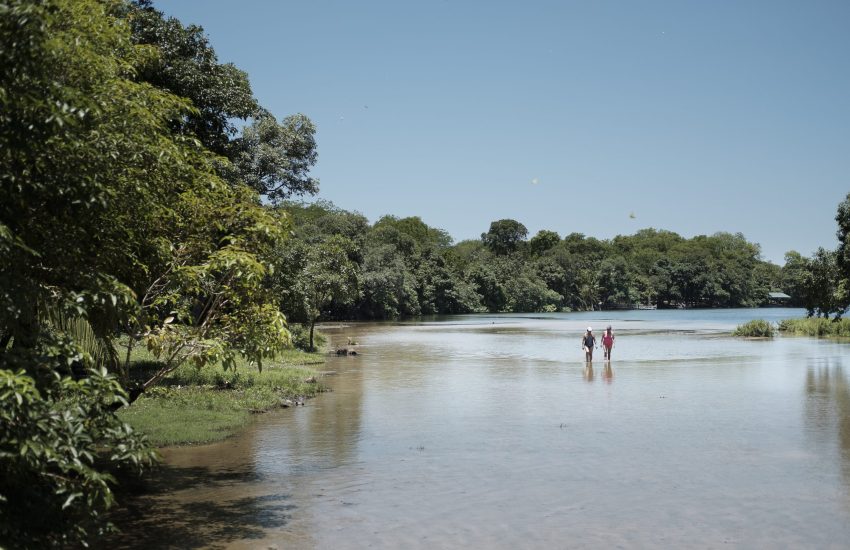
Header photo: river near Laguna Cáceres, in Bolivia. © Manuel Seoane / IUCN NL
Bolivia is dealing with serious issues regarding the rights of Indigenous people, the environment, and environmental defenders, as the UPR report indicates; Bolivia received 18 recommendations on the environment and the rights of Indigenous peoples, and 25 recommendations on the reduction of civic space and the lack of protection for Human Rights Defenders, including environmental defenders and journalists[2]https://www.cedib.org/biblioteca/declaracion-adhma-resultados-del-epu-bolivia-2025/.
For example, mercury pollution has risen dramatically as a result of the exponential rise in illegal gold mining Bolivia has seen in recent years; in samples taken from the Beni, Madre de Dios and Mamoré rivers, the concentrations of mercury in human hair and fish greatly exceeded reference values. This contamination affects the health, food security, and territories of IP&LCs, with women and children being particularly vulnerable. Meanwhile, the government is lacking sufficient action in complying with the Minamata Convention to reduce the use of mercury in mining.
In addition, deforestation and fires negatively impact Indigenous lands, biodiversity and rural livelihoods. Indigenous peoples and peasant communities suffer the consequences of these extractive activities operating in protected areas and Indigenous territories, often violating their Free, Prior and Informed Consent (FPIC). In the first four months of 2025, CEDIB recorded forty-three incidents involving violations of the right to a healthy, safe and sustainable environment and their rights, the majority related to mining activities (23 cases) and agribusiness, monoculture farming and the commodification of land (18 cases)[3]https://www.cedib.org/biblioteca/cedib-informa-reporte-de-ddhh-en-bolivia-enero-a-abril-2025/.
Both fire and mercury pollution threaten not only their territories, but also their right to clean water and healthy eating, particularly in Indigenous populations whose territoriality, lifestyle and basic food source depend on the Amazon rivers where the greatest impact of gold mining occurs. The cyclical disasters caused by fires have a major impact on Indigenous territories and traditional peasant communities, which see their crops, agroforestry production areas, water sources and even their homes and animals devastated. Likewise, the impact of fires is strong in protected areas. After the fires, deforested lands remain on which the risk of being converted to the land market and extractive activities increases.
Bolivia is among the top three countries with the highest rates of primary forest loss, driven by policies promoting agricultural expansion, cattle ranching, and extractive industries. Legislative measures have contributed to this crisis. Moreover, the continued enforcement of restrictive laws, such as Law 351 and Supreme Decree 1597, keeps civil society organisations in a vulnerable position, limiting their freedom of association and expression. As CEDIB emphasises, ‘These regulations are used to keep civil society organisations in a permanent state of anxiety, due to a latent threat of illegalisation for those who focus their work on defending human rights within a framework of critical independence from political power.'[4]https://www.cedib.org/wp-content/uploads/2024/12/Diagramacion-Folleto-epu-Ginebra.pdf Despite having signed the agreement in 2022, Bolivia has thus far failed to implement protection of defenders as laid out in the Escazú Agreement.
In spite of prior recommendations, Bolivia has failed to advance judicial reforms. The executive branch maintains significant control over the judiciary, undermining the rule of law. Organisations have reported attacks, threats, and systemic discrimination against human rights and environmental defenders, with women facing gender-specific violence and harassment. Civil society remains crucial in exposing these issues and advocating for the protection of rights and territories.
IUCN NL has been supporting CEDIB for almost a decade through the Green Livelihoods Alliance and has also followed UPR processes in other countries such as Ghana, Urugay and Uganda. CEDIB has been central in documenting the impacts of mercury pollution and deforestation on IP&LCs, highlighting alarmingly high mercury levels and environmental degradation. CEDIB was also involved in the previous UPR cycle, where they attended pre-sessions for Bolivia along with three Indigenous and community leaders. IUCN NL has supported the advocacy process by connecting CEDIB to key EU civil society organisations that follow the UPR process, as well as sharing the report with embassies so they can comment during UPR sessions.
IUCN NL has also worked closely with CEDIB on the project Forests for a Just Future. In the Forests for a Just Future programme of the Green Livelihoods Alliance, IUCN NL contributes to more sustainable and inclusive governance of tropical forests, in a way that promotes climate mitigation, water provisioning, biodiversity and human rights and that safeguards the livelihoods of Indigenous peoples and local communities (IP&LCs).
CEDIB and partners urge the Bolivian government to take tangible steps, including annual reporting on progress in reducing mercury contamination and protecting civic space; repealing restrictive laws and ensuring legal safeguards for defenders; implementing environmental and health protections in line with international treaties; and strengthening judicial independence and upholding democratic norms. It is essential that civil society is strengthened as it plays an important role in monitoring human rights abuses. Additionally, ongoing scrutiny by the Human Rights Council and other international bodies will be key to ensuring compliance and protection of human rights in Bolivia.
IUCN NL stands with CEDIB and other organisations in Bolivia that document these environmental and human rights abuses. International solidarity and civil society resilience are and will continue to be crucial in defending environmental and human rights in Bolivia.

| ↑1 | The Universal Periodic Review (UPR) is a process which involves a review of the human rights records of all UN member countries. This process is done every five years and allows civil society’s voice to be heard by the member countries, who can give recommendations to the country which is being evaluated. |
|---|---|
| ↑2 | https://www.cedib.org/biblioteca/declaracion-adhma-resultados-del-epu-bolivia-2025/ |
| ↑3 | https://www.cedib.org/biblioteca/cedib-informa-reporte-de-ddhh-en-bolivia-enero-a-abril-2025/ |
| ↑4 | https://www.cedib.org/wp-content/uploads/2024/12/Diagramacion-Folleto-epu-Ginebra.pdf |
12 October, 2026
From 19 to 30 October 2026, the UN Biodiversity Conference (CBD COP17) takes place in Yerevan, Armenia, under the theme…
08 October, 2026
We are pleased to announce that the third BESTLIFE2030 call for proposals is now open, providing new funding for locally…
