Growing corals is only half the work
23 September, 2026
Growing corals is only half the work
23 September, 2026
From restoration to resilience: how NATIR is rebuilding…
07 September, 2026
Thursday 23 july 2026
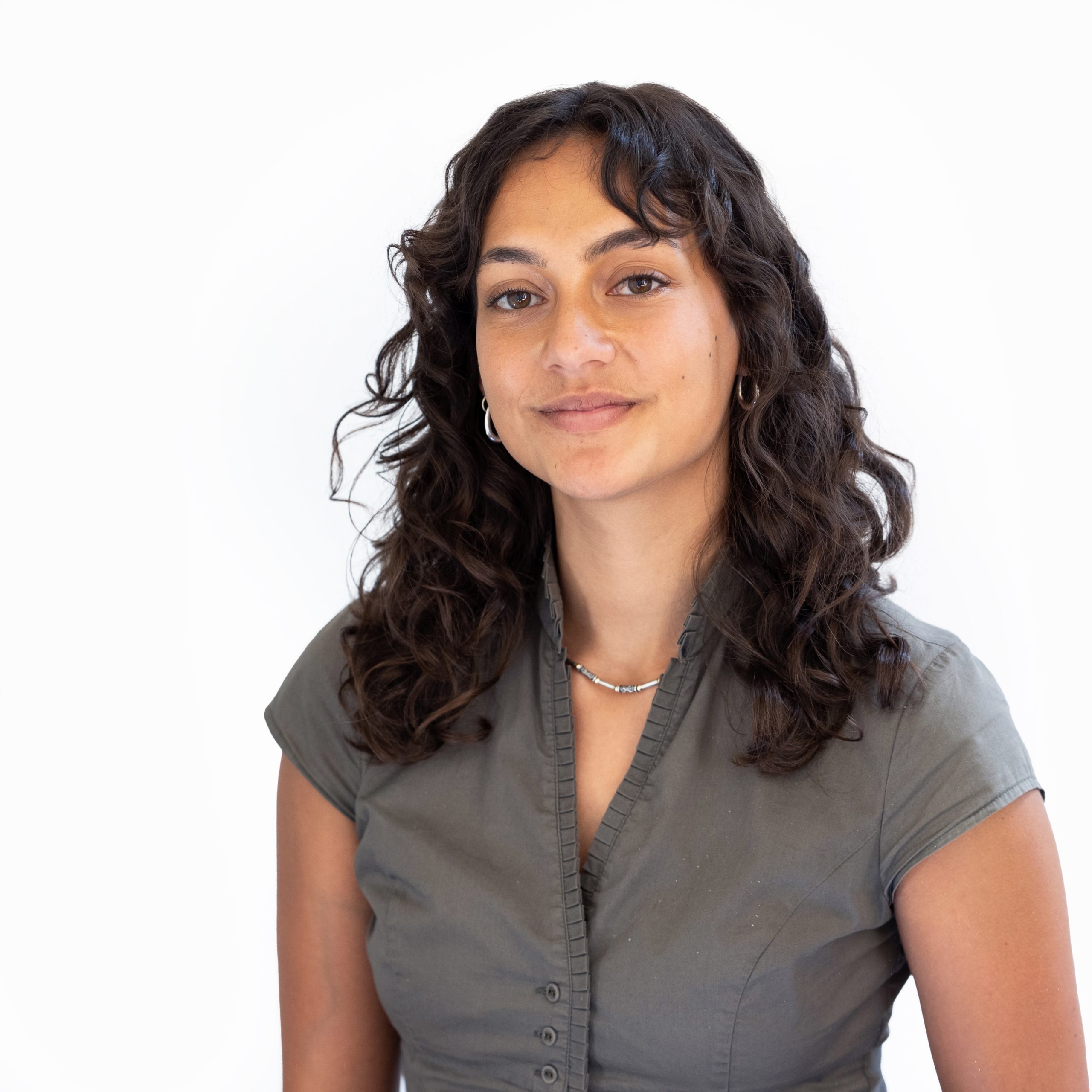
Growing up surrounded by animals, Anne-Isabelle Bonifassi always dreamed of a career in conservation. Today, as Executive Director of Haiti National Trust, one of the 2025 Land Acquisition Fund grantees, she is helping to protect Haiti’s unique biodiversity while bringing international attention to a country whose natural richness is often overlooked. Her recent recognition by National Geographic marks an important step forward. ‘We have seen a lot of doors close, just because it is Haiti. That is why I am so glad that we are now getting the support and recognition to put Haiti in the spotlight.’
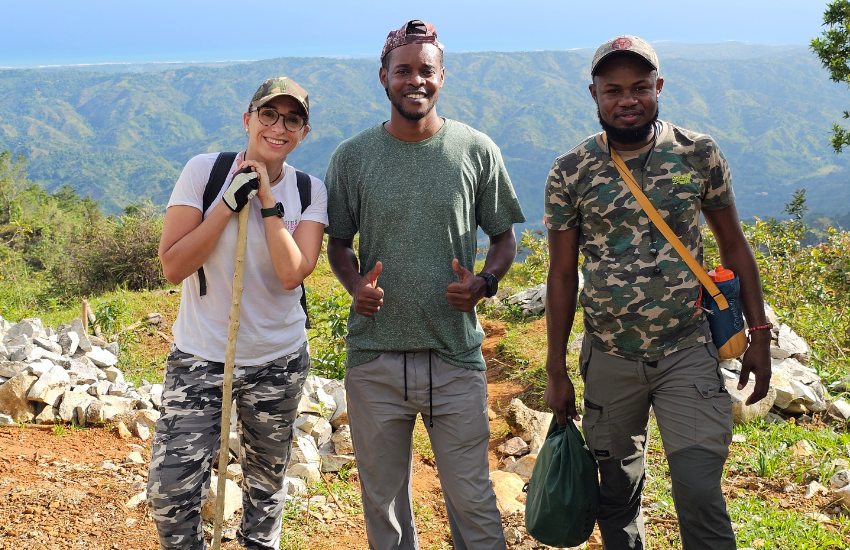
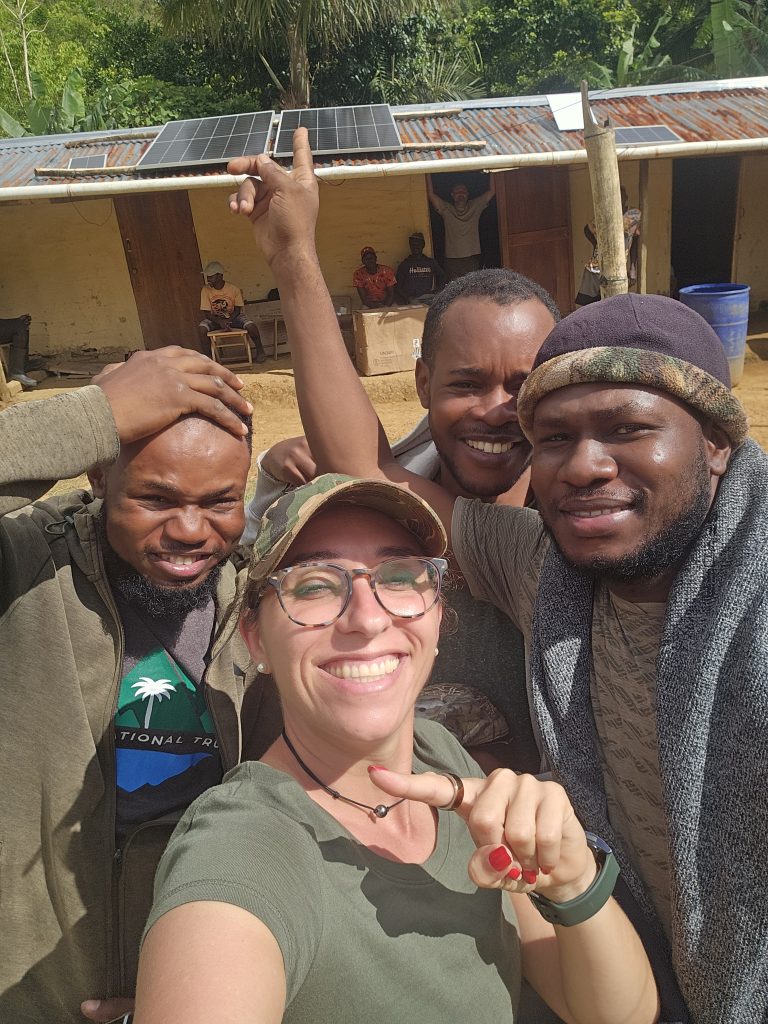
Header photo: Anne-Isabelle Bonifassi in the field with Alex Domerçant (middle) and Kenson Jean (right) © Haiti National Trust
As the Executive Director of Haiti National Trust, Anne-Isabelle faces the challenge to put conservation in Haiti on the map. Nature and biodiversity in Haiti are often overlooked, because of the country’s social, economic and political challenges. ‘I always talk about the extraordinary biodiversity that we have here in Haiti,’ she explains. ‘Just because there is a political crisis does not mean we should overlook the country’s natural treasures. The species in our reserve do not care about elections, borders or any of this. If we wait for all these crisis’s to be solved, it will be too late for our biodiversity and our environment.’
Attracting funding has been a real challenge for the organization. ‘We have seen a lot of doors close, just because it is Haiti,’ Anne-Isabelle says. ‘That is why I am so glad that we are now getting support from the Land Acquisition Fund and recognition to put Haiti in the spotlight.’
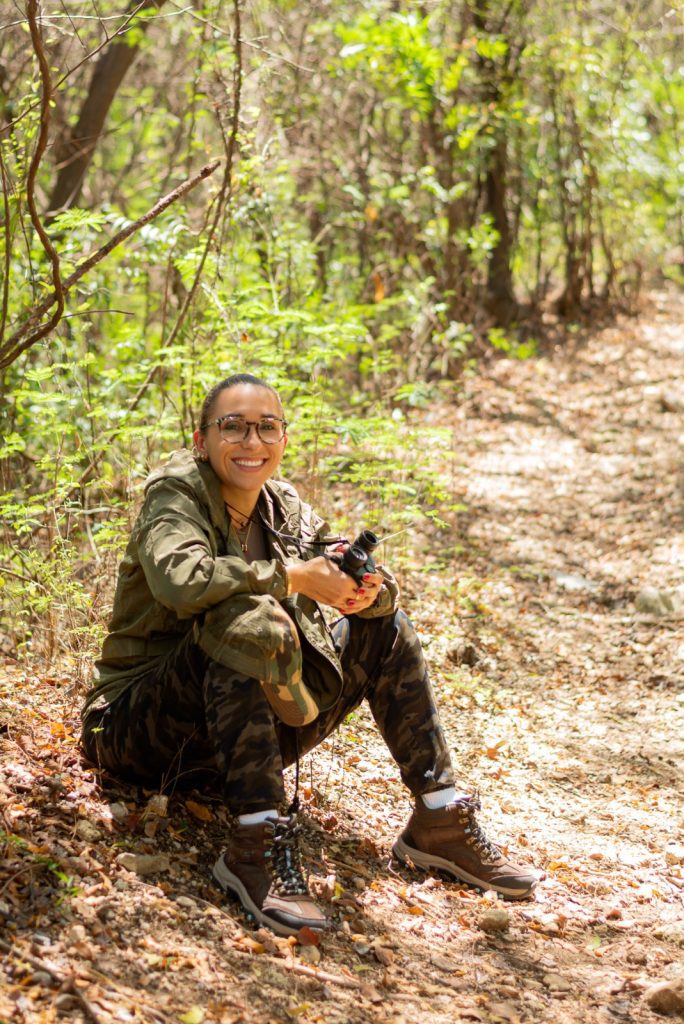
Anne-Isabelle Bonifassi grew up in Haiti, but also spent part of her childhood in Africa and Vietnam, where she was exposed to different ecosystems, languages and cultures. Her parents took in animals rescued from poaching, sparking an early interest in conservation. ‘I was always surrounded by species,’ Anne-Isabelle recalls.
After studying Agronomy and later earning a master’s degree in Forest Resources and Conservation abroad, she returned to Haiti hoping to work in the environmental sector. However, job opportunities in her field were limited, leading her into the business world instead, where she also completed an MBA. Her first conservation role came later in her career, at an organisation focused on cleaning the oceans. ‘But my heart lies with terrestrial biodiversity,’ she explains. ‘That is where I want to make a difference.’ Since late 2020, she works as Executive Director of Haiti National Trust, where she has been able to turn that passion into action.
Working in conservation has only strengthened her connection to nature. Over the years, Anne-Isabelle’s experience in the field has reinforced what she already knew: biodiversity can disappear with alarming speed if it is not protected. ‘The environment is very vulnerable, and I realised that it does not take much for a species to become extinct.’
For Anne-Isabelle, conservation is about more than protecting species, it’s about empowering people to become part of the solution. Haiti National Trust works closely with the communities living in and around the national park to find solutions that benefit both people and nature. ‘We need to come up with ways for people to make a living while also protecting biodiversity,’ she explains. ‘I try, as much as I can, to put myself into their shoes to better understand where they come from.’
What continues to inspire Anne-Isabelle most is the resilience of the Haitian people. Despite the many challenges they face, the communities are often eager to explore new opportunities when they see how these can improve their livelihoods.
The ultimate goal is for communities to take ownership of new ideas and teach others ‘It is not just us coming there and saying how things should be done,’ she explains. ‘The real change happens when people tell their own story and inspire others in their community.’ Building that trust and ownership takes time, however. Anne-Isabelle stresses that conservation is never a one-off intervention: ‘it is a constant process of talking to people and understanding them as they change, and as their environment changes.’ While this can sometimes be challenging, it is also what keeps her motivated. ‘If it were easy, we would not be here today.’
Anne-Isabelle recently received the National Geographic 2026 Wayfinder Award presented by Kia, which annually honours 15 visionaries whose outstanding achievements in science, conservation, education, and storytelling further the Society’s mission to illuminate and protect the wonder of our world. While the award generated a lot of interest in the work of Haiti National Trust, Anne-Isabelle realises that this is just the beginning: ‘We are doing a lot, but we still need to do so much more’.
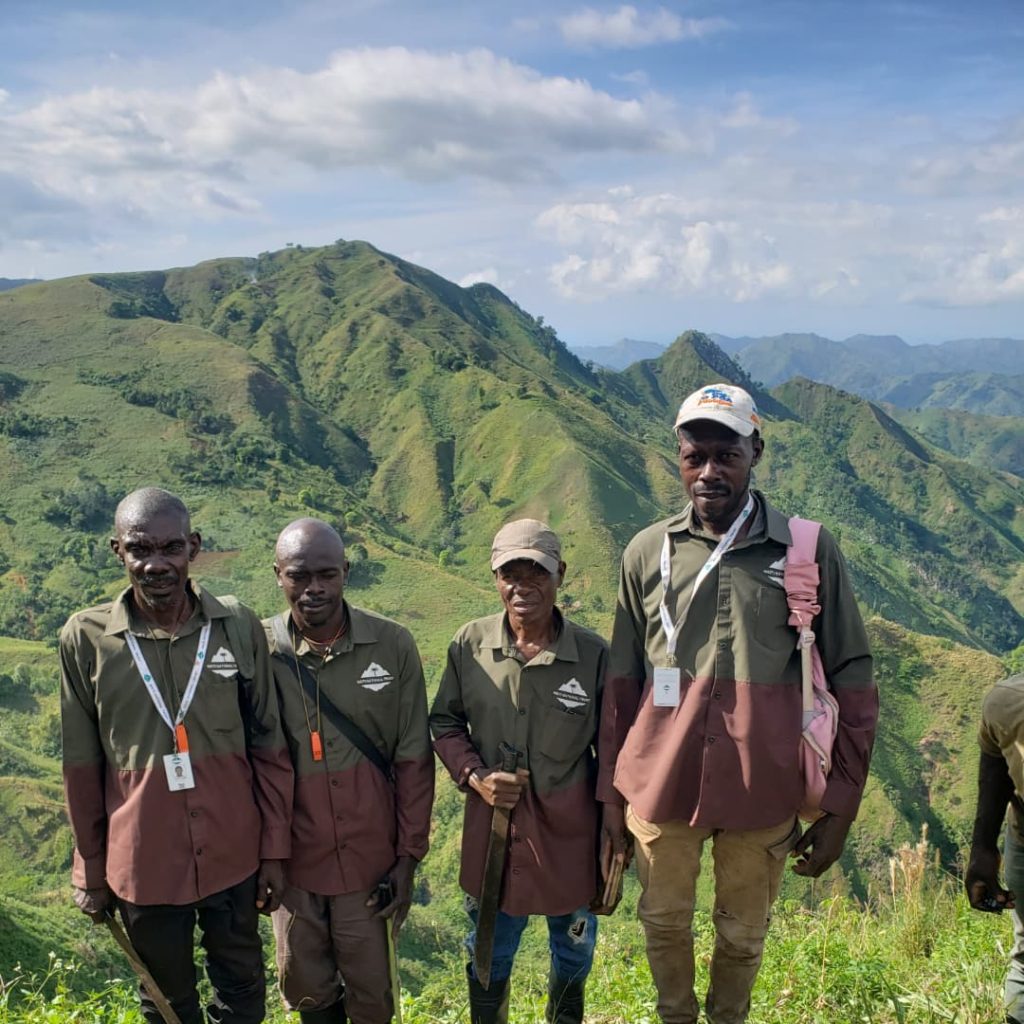
With this award, Haiti is receiving the recognition that it deserves. Yet Anne-Isabelle emphasizes that the achievement is not hers alone, but the result of a team effort. ‘This award is for the entire team and everyone who has worked with us and supported us along the way. Without all their dedication, we would never have had this visibility,’ says Anne-Isabelle. ‘I am extremely lucky to have such a committed team, who often operate under the most extreme conditions. There are days where I go home wondering how we are going to move forward. And then I realise I have my team, and that we are going to figure it out together.’
Haiti National Trust received support from the Land Acquisition Fund to purchase 32 private parcels (215 hectare in total) within Grand Bios National Park, securing one of Haiti’s last remaining primary forests. Acquiring this land will strengthen habitat connectivity, protect core habitats for endangered species and unify fragmented parcels into a well-managed conservation area.
Anne-Isabelle stresses how the support that Haiti National Trust receives from the Land Acquisition Fund is about much more than financial resources. ‘Receiving a Land Acquisition Fund grant shows that major institutions believe in our work and our ability to make a difference. It is not just a grant that gives money, but really strengthens our network and opens doors to new partnerships.’
Support comes at a crucial moment. Research of the organisation has shown that most deforestation and threats in the reserve takes place on land that is not owned by Haiti National Trust. ‘One of the biggest challenges to conservation in Haiti is land tenure. If we want to protect these forests in the long term, we need to secure the land where conservation is taking place, says Anne-Isabelle. ‘Being able to purchase the land significantly increases the likelihood that the endemic and threatened species will be conserved’.
In countries like Haiti, socio-political challenges can easily overshadow the immense value of nature and the work being done to protect it. Despite these challenges Haiti faces, Anne-Isabelle remains hopeful for the future. She hopes that the growing international recognition for Haiti’s biodiversity can help tell a different story about the country. ‘I hope that this recognition encourages people to see Haiti differently. Despite everything that is going on, there is a lot of conservation work that is being done, and we’re proving that progress is possible. But we’re only scratching the surface. There is still so much more to do, and we need support to continue this.’
For 25 years, the IUCN NL Land Acquisition Fund has been enabling the protection of the habitat of endangered and vulnerable species. Through the work of the local NGOs, safeguarding important ecosystems creates a win-win for biodiversity, the climate and human well-being.
23 September, 2026
With new support from BESTLIFE2030, marine biologist Kelly Latijnhouwers and her foundation REACT are realizing an idea on Curaçao: the…
07 September, 2026
Madagascar and the Indian ocean islands are a biodiversity hotspot - a group of islands with incredible species diversity and…

