Statement: Invest in local leadership for tropical forest…
20 March, 2026
Statement: Invest in local leadership for tropical forest…
20 March, 2026
Meet the conservationist: Dr. Amelaid follows in the…
12 March, 2026
Wednesday 15 october 2025
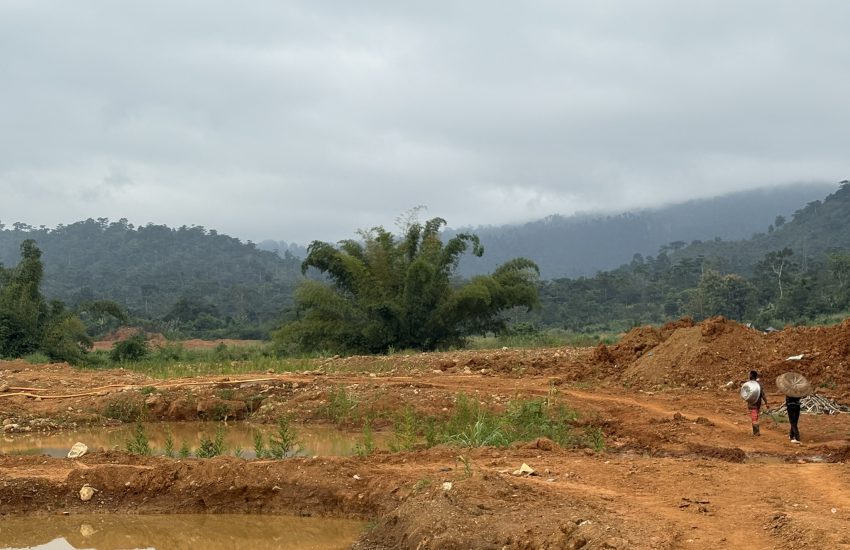
Header photo: Mining near Atewa forest, Ghana © Sander van Andel / IUCN NL
Illegal gold mining in Ghana is a major environmental problem, where nature and local communities suffer from its impacts as a result. Nature has to make way in the search for gold, trees are cut down, and deep pits are dug everywhere. The entire area is basically turned upside down. ‘Farmers cannot grow anything in this wasteland afterwards. In addition, special nature has been lost, and wild animals have been driven out of their habitats,’ explains William Appiah, a member of FLOWER (short for Facilitating Learning Of Women in Emerging Regions).
The organisation advocates for women and youth in three communities in the Atewa landscape in Ghana: Akanten, Kobreso and Wamase. These communities all see high rates of illegal gold mining, as many young people struggle to make a living and therefore turn to mining to earn an income. However, not only does this destroy their natural environment and negatively affect their communities, but it also destroys their future: once the gold is gone, there is nothing left for them.
The illegal gold mining also causes health problems in the region due to the use of mercury in the extraction of gold. ‘This is nice and cheap,’ says Appiah, ‘but the use of this metal has a dark side. A variety of chemicals contaminate drinking water, and machines cause air pollution. This has a major impact on the communities around a mine.’ Long-term exposure to mercury can lead to health problems. ‘We see in the region that pregnant women who have come into contact with mercury are more likely to have children with defects, and more babies are stillborn.’
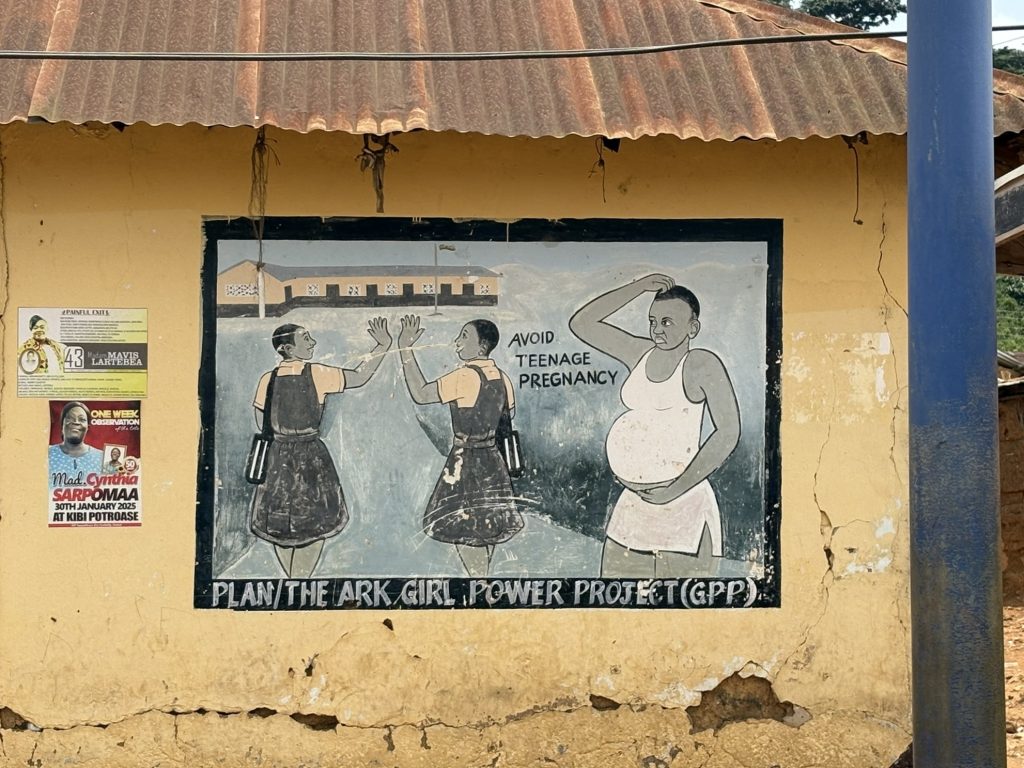
A poster highlights the issue of teen pregnancies © Sander van Andel / IUCN NL
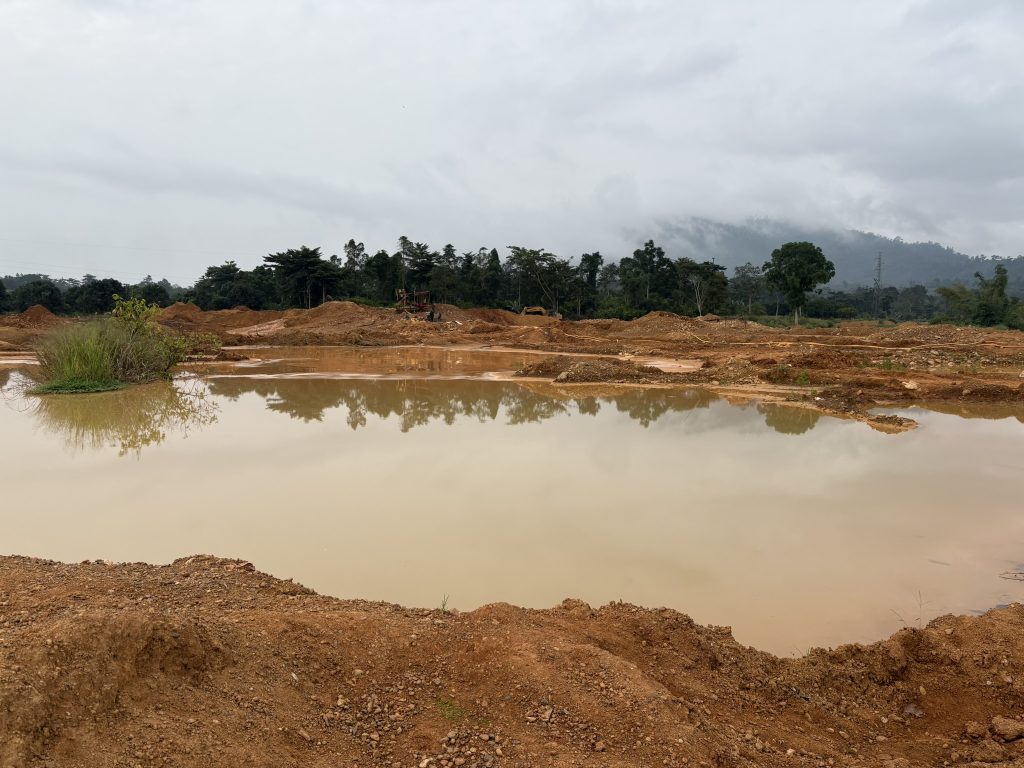
Pond for mine tailings near Atewa, with the forest in the background © Sander van Andel / IUCN NL
FLOWER helps young people in these communities by providing education and alternative livelihood options, protecting the environment and promoting good health. Appiah explains: ‘We provide health information to communities and schools on the negative impacts of illegal gold mining. For instance, we show them what the effect is on their body if they expose themselves to mercury through mining. We also work with the communities to safeguard their natural environment. Because a healthy environment means healthy people.’
Another major issue in these communities is the spread of sexually transmitted infections (STIs) and the increase of teen pregnancies. Appiah: ‘What happens is that the young men who engage in illegal gold mining pay girls for sex. As a result, STIs spread fast through the communities, and many girls end up getting pregnant and dropping out of school. FLOWER tries to get these girls back to school when they drop out. We don’t want their pregnancy to be the end of their education. We also help them acquire technical skills to increase their job opportunities. And of course, we aim to address the root of the problem by eliminating illegal gold mining.’
In five years, FLOWER hopes to have completely eliminated illegal gold mining activities in the three communities, which in turn will positively impact other problems in the community. ‘With mining eliminated, the health of the community will be improved, water bodies can be restored, and teenage pregnancy and STIs will be drastically reduced.’
FLOWER works together with IUCN NL, Wilde Ganzen and A Rocha Ghana on Strengthen the Roots, a project supported by the Dutch Postcode Lottery. Appiah: ‘The project has provided us with a lot of technical support, with trainings on for instance local fundraising or mobilising support. Collaborating with organisations such as A Rocha Ghana has really strengthened us and will hopefully help us to continue to grow in the future.’
Sander van Andel, senior expert nature conservation at IUCN NL and part of the Strengthen the Roots project team, explains: ‘Strengthen the Roots supports community-based organisations in Ghana, Bolivia and Indonesia that stand up for nature in and around their communities, enabling them to mobilise local support for their work. This way, Strengthen the Roots works on nature conservation that is not performed top-down, but is driven by the collective strength of community organisations.’
20 March, 2026
The undersigned organisations call on the Dutch government to supplement its policies and legislation with investments in inclusive, locally led…
12 March, 2026
Amelaïd Houmadi grew up on an island in the Comoros. At his parental house, nestled at the foot of a…
