Nature’s Heartbeat expands support for locally led conservation…
23 October, 2026
Nature’s Heartbeat expands support for locally led conservation…
23 October, 2026
Monitte Lantas wins 2026 Irene Dankelman Young Ecofeminist…
22 October, 2026
Wednesday 03 june 2026
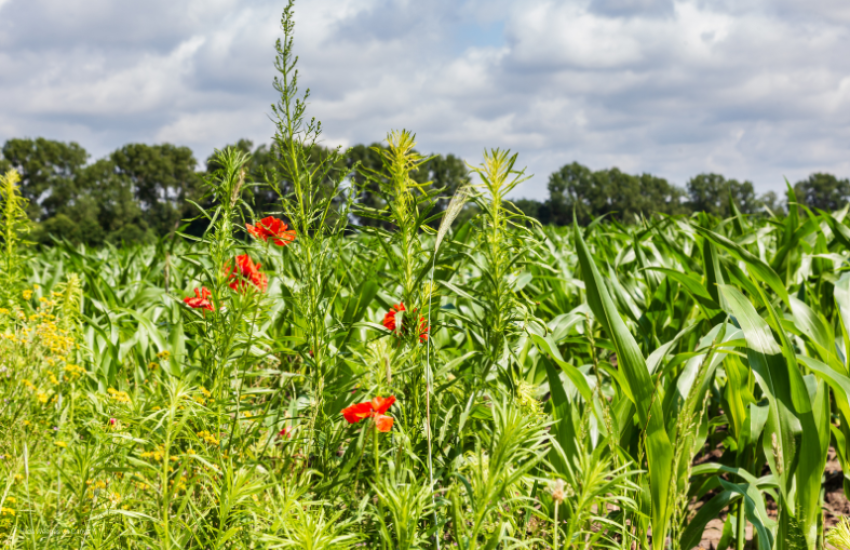
Header photo: Wildflowers along cornfield in the Netherlands © Hilda Weeges via Canva
BALANCE comes at a crucial moment for biodiversity, food systems and nature restoration in Europe. Across the continent, countries are working to restore biodiversity while ensuring viable farming systems and food security. BALANCE aims to contribute to this transition by exploring how these goals can be achieved together.
The project starts from the premise that effective nature restoration requires changes in how Europe’s farms are managed, including a shift towards more nature-positive farming systems. BALANCE will identify and assess farming approaches that contribute to biodiversity recovery and improved ecosystem services.
A central question is whether restoring biodiversity in agricultural landscapes can also strengthen food security and support resilient farm economies in the long term. The project therefore focuses not only on the challenges of this transition, but also on the opportunities for farmers, landscapes and rural communities.
BALANCE will work closely with a wide range of stakeholders, including farmers, policymakers, advisors and civil society organisations. Six case study regions will serve as testing grounds for new approaches to policy, incentives, indicators and monitoring. These regions are located in the Netherlands, Flanders, Portugal, Romania, Slovakia and Denmark.
They represent a diversity of farming systems, ranging from intensive to extensive agriculture, and include organic, nature-inclusive and high-nature-value farming practices.
IUCN NL is a partner in the BALANCE consortium, bringing expertise at the intersection of biodiversity, agriculture and nature-positive farming systems. Through the project, we contribute to advancing the implementation of the EU Nature Restoration Regulation in agricultural landscapes.
Our work focuses on understanding the drivers of biodiversity loss in farming systems and translating nature restoration targets into practical pathways for landscapes and farming practices. We also contribute to the development of policy instruments and incentives, helping shape effective policy mixes that can enable and scale nature-positive farming.
In addition, IUCN NL supports stakeholder engagement and collaborative learning across the different case study regions, helping to test and refine innovative approaches in practice. By connecting research insights with policy and implementation, we help turn project results into actionable solutions.
Through this work, IUCN NL helps develop concrete pathways for scaling up nature-positive farming systems across Europe.
The BALANCE consortium brings together 11 research partners, alongside communication and societal partners, combining expertise in ecology, agriculture, economics and societal change. Building on Wageningen University & Research’s experience in connecting science, policy and practice, the project emphasises collaboration, knowledge exchange and joint learning.
Together, we aim to develop practical insights and actionable pathways that support both nature restoration and a transition towards sustainable, nature-positive farming systems in Europe.
23 October, 2026
Nature’s Heartbeat protects Key Biodiversity Areas through trust-based, locally led nature conservation. Building on a successful first year with numerous…
22 October, 2026
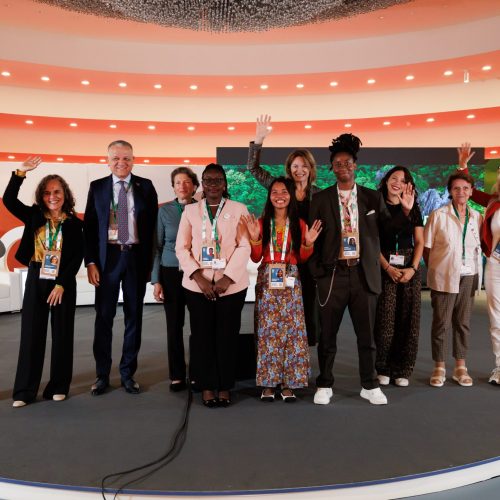
October 21st, COP17 Yerevan - Monitte Lantas, is presented the winner of the 2026 Irene Dankelman Young Ecofeminist Award, recognising…