Header photo: cocoa trees © Franco Colomba from Pexels
Deforestation-free value chains
Many agricultural commodities imported by the European Union originate in South America. For example, in 2022 the region supplied 85% of the EU’s soybean meal imports.[1]Wieslaw, D. et al. (2025). The Impact of the EU-MERCOSUR Agreement on Soybean Meal and Corn Feed Markets in the EU and Poland Within the EU, the Netherlands was the largest importer of commodities and products from the MERCOSUR[2]MERCOSUR is a South American trade initiative and customs union. Read more countries in 2024.[3]CBS. (2025). Netherlands is EU’s largest importer of goods from Mercosur countries Agricultural expansion is a leading cause of deforestation and nature degradation[4]FAO. (2021). COP26: Agricultural expansion drives almost 90 percent of global deforestation and is connected to the violation of the rights of Indigenous peoples and local communities.
Adopted in June 2023, the EUDR is a major step in tackling deforestation and forest degradation linked to agricultural commodities. It requires traders and operators to ensure full traceability, compliance with producer-country laws, and deforestation-free value chains.
Strengthening EUDR compliance and conservation
For South American agricultural and cattle companies, it is both an opportunity and a challenge to meet the EUDR requirements. The programme ‘EU Regulatory Compliance with Landscape Impact: Achieving climate resilient and nature conservation through EU-compliant, sustainable agricultural supply chains, and landscape measures in South America’ therefore will strengthen and operationalise tools supporting this systematic transition. Moreover, by aligning value-chain transparency with nature-positive production, the project will demonstrate how EUDR compliance can accelerate climate-resilience and biodiversity conservation. The programme also incorporates human and biodiversity perspectives that are not included in the current EU regulations.
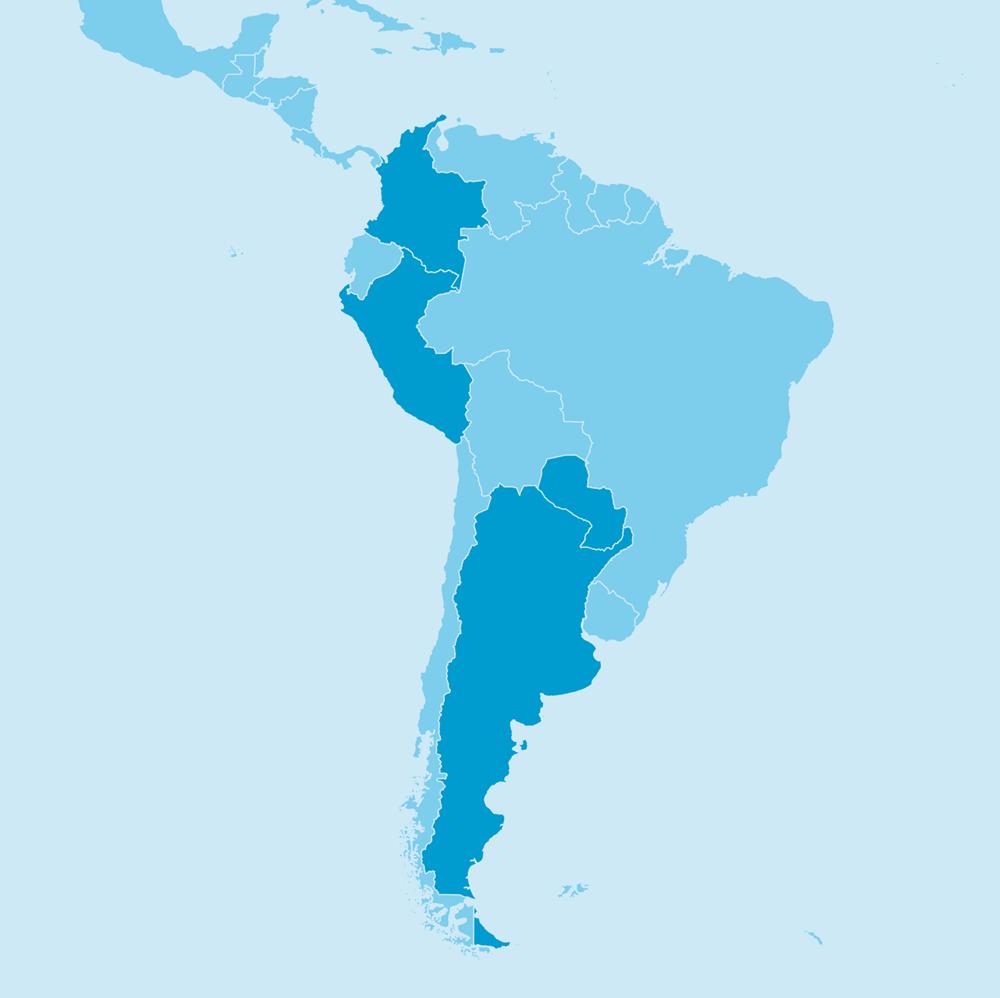
The programme is implemented in four countries: Argentina, Colombia, Paraguay, and Peru and focusses on two transnational landscapes: the Amazon Rainforest and the Greater Chaco. By combining a landscape-based with multi-stakeholder approach in each country, local communities and other stakeholders are at the centre of the project activities and human rights are safeguards, including women’s rights by promoting gender equality as an integral element of climate-resilient and inclusive value chains.
‘We have no other choice than to use EUDR as an opportunity for more traceability, legal compliance, recognition of deforestation and conversion-free, sustainable production, and as a vehicle for strengthening land use governance in general to serve climate resilience, biodiversity and social justice.’
- Heleen van den Hombergh, Senior Expert Agro-Commodities at IUCN NL
Market information and monitoring
At a regional and international level, communication with companies, NGOs, governments, and other relevant actors will facilitate the establishment of the necessary market information sharing and strengthen monitoring tools. Working together with the project partners, IUCN NL is leading, among other things, the following activities of the programme:
- Provide information to consortium members about the potential and preferred deforestation or land use monitoring tools discussed in Europe and update the expert knowledge on robustness of (traceability and) verification systems.
- Support the promotion of MapBiomas and other regionally and locally accepted quality tools to assess deforestation to companies, NGOs, EU member states, and competent authorities.
- Promote robust tools for all five commodities to companies, NGOs, and EU member states with country experts.
- Connect country partners with downstream supply chain actors for market linkages.
- Sharing insights with EU stakeholders at international conferences and other events.
- Informing partners and peers on gender and biodiversity aspects of EUDR implementation.
Expert sessie
Sluit op donderdag 12 november van 15:00 tot 16:00 uur aan bij ons webinar van een uur, speciaal voor bedrijven die in de EU gevestigd zijn of handel drijven met de EU. Ontdek welke instrumenten uw due-diligence-systeem kunnen versterken, hoe u gebruikmaakt van de nieuwe database van de Europese Commissie met wetgeving uit producerende landen en welke publieke en private systemen kunnen bijdragen aan een gedegen controle op de rechtmatigheid.
EUDR video explainers
Below you can watch our videos on the EUDR: the basics for beginners and many relevant details for those more familiar.
EUDR Basics Module 1:
Basics
EUDR Basics Module 2:
Latest Developments and Insights
EUDR Basics Module 3:
Supply chain examples
EUDR Basics Module 4:
Tools for EUDR Implementation
Related resources:
- CSI sheds light on EUDR and other regulations related to soy
- Promoting deforestation-free supply chains in Colombia: Lessons from a strategic cross-sectoral collaboration | IUCN NL
- Updated soy standard benchmark report: EUDR compliant plus | IUCN NL
- Visual guide to boosting biodiversity in palm oil landscapes | IUCN NL
- A guide for international value chain management in the protein transition | IUCN NL
- Insights in the supply chain: potential risks for palm oil from Colombia to the EU | IUCN NL
Consortium partners
The consortium of ‘EU Regulatory Compliance with Landscape Impact: Achieving climate resilient and nature conservation through EU-compliant, sustainable agricultural supply chains, and landscape measures in South America’ consists of six partner organisations. The role of IUCN NL is focused on engaging with EU companies, authorities, and other stakeholders, while contributing to information exchange, promoting important and robust (monitoring) tools, and connecting information from the EU with the reality in the landscapes in South America. The other programme partners are:
- IUCN SUR: consortium coordinator
- FSVA: implementation Argentina
- FCDS Colombia: implementation Colombia
- Guyra Paraguay: implementation Paraguay
- CIFOR-ICRAF: implementation Peru
This project is supported by the International Climate Initiative (IKI) of the Federal Government of Germany. Within the Federal Government, the IKI is anchored in the Federal Ministry for the Environment, Climate Action, Nature Conservation and Nuclear Safety (BMUKN). Selected individual projects are also the responsibility of the Federal Foreign Office (AA).
Project summery
Download our two-pager to get a clear and concise understanding of this project.
More information? Contact:







Index
| ↑1 | Wieslaw, D. et al. (2025). The Impact of the EU-MERCOSUR Agreement on Soybean Meal and Corn Feed Markets in the EU and Poland |
|---|---|
| ↑2 | MERCOSUR is a South American trade initiative and customs union. Read more |
| ↑3 | CBS. (2025). Netherlands is EU’s largest importer of goods from Mercosur countries |
| ↑4 | FAO. (2021). COP26: Agricultural expansion drives almost 90 percent of global deforestation |