IUCN NL at COP17 in Yerevan: locally led…
12 October, 2026
IUCN NL at COP17 in Yerevan: locally led…
12 October, 2026
BESTLIFE2030 launches its third call for proposals
08 October, 2026
Friday 03 july 2026
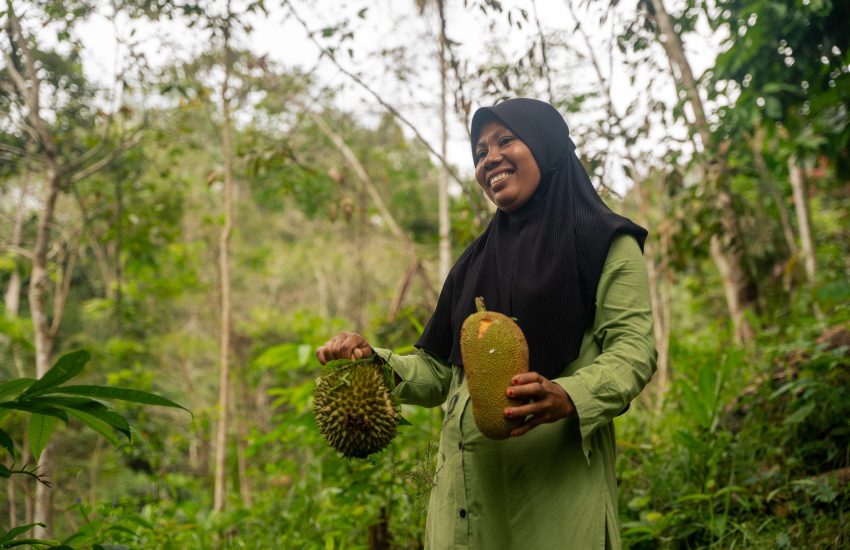
Header photo: Dona with durian and jackfruit in her agroforestry garden in Sipuah Ateh, Indonesia (c) Stephanie Broekarts/IUCN NL
That’s precisely what IUCN NL and its partners sought to do. We worked with Indigenous peoples and local communities (IP&LCs) through the Green Livelihoods Alliance (GLA) programme Forests for a Just Future (2021-2025) to strengthen locally-led forest governance. The evidence [1]WRI: Indigenous and Community Forests: … Continue reading is clear: when Indigenous peoples and local communities have real decision-making power, forest protection is more effective, equitable and sustainable.
The programme shows that five years on, locally-led approaches deliver real impact. This article presents key results, lessons learnt, and what is needed to build on this momentum.
With the Forests for a Just Future programme, we set out to strengthen the role of Indigenous peoples and local communities in the effective and equitable governance of forests, with the aim to mitigate and adapt to climate change, fulfil human rights and safeguard local livelihoods.
The Alliance worked with CSO partners in eleven countries in Africa, Asia and South America through three interlinked lines of action: supporting IP&LC-led forest governance; addressing key drivers of deforestation, and strengthening civic space and security of environmental defenders. Throughout the programme, inclusion, gender equality and the meaningful participation of women and youth were central.
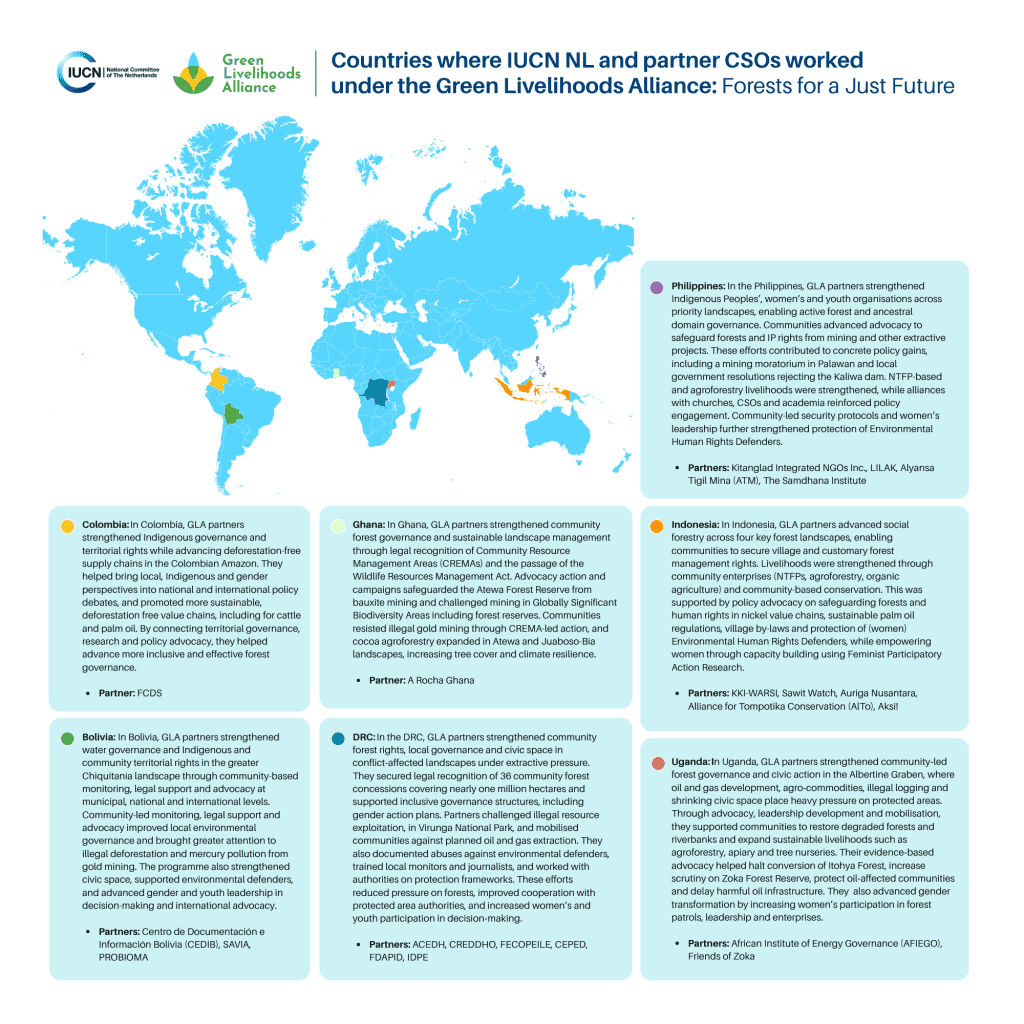
Over the five years of the programme, we achieved a number of impactful successes together with partners in forest landscapes.
Under the programme, Indigenous peoples and local communities secured or strengthened governance for over 14.1 million hectares of forest across 11 countries. With these results, GLA also contributed directly to the IP&LC Forest Tenure Pledge, showing how international commitments on community forest tenure can be advanced through locally-led governance and sustained civil society action.
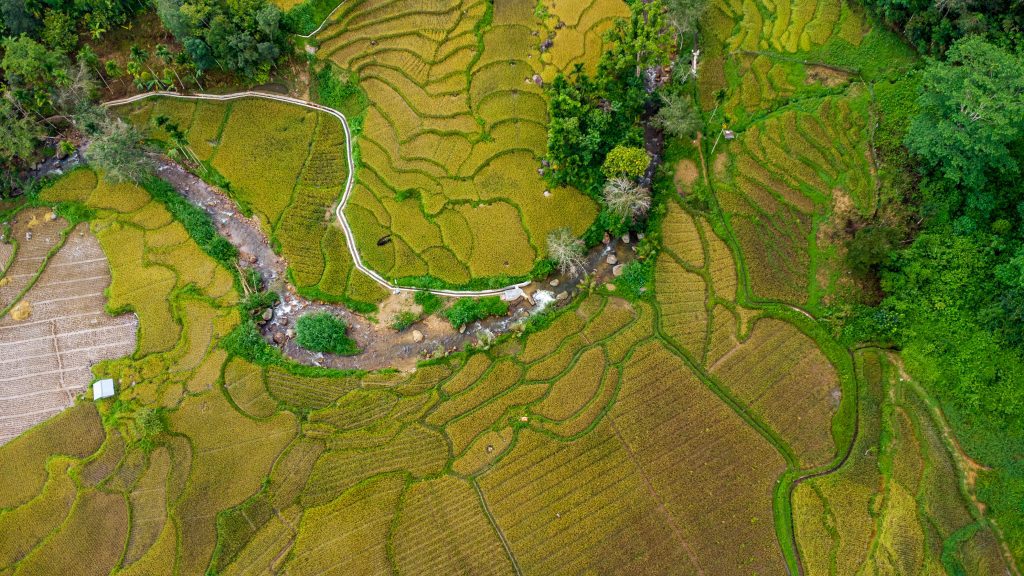
In Indonesia, for example, community-led forest management and social forestry permits strengthened locally-led forest governance, decision-making and community rights. In Sumatra alone, IUCN NL’s partnership with WARSI resulted in 37 villages having secured village forest (‘hutan desa’) rights over 65,000 hectares of high-biodiverse forest. This was done in strategic locations such as the buffer zone of a national park or a corridor between two protected areas. These approaches resulted in increased forest conservation and more resilient and sustainable livelihoods.
In the Democratic Republic of the Congo (DRC), women farmers who live and work on the outskirts of Virunga National Park adopted drought-resilient techniques such as agroforestry, mulching and organic fertiliser use. This helped protect livelihoods while reducing pressure on the park’s forests.
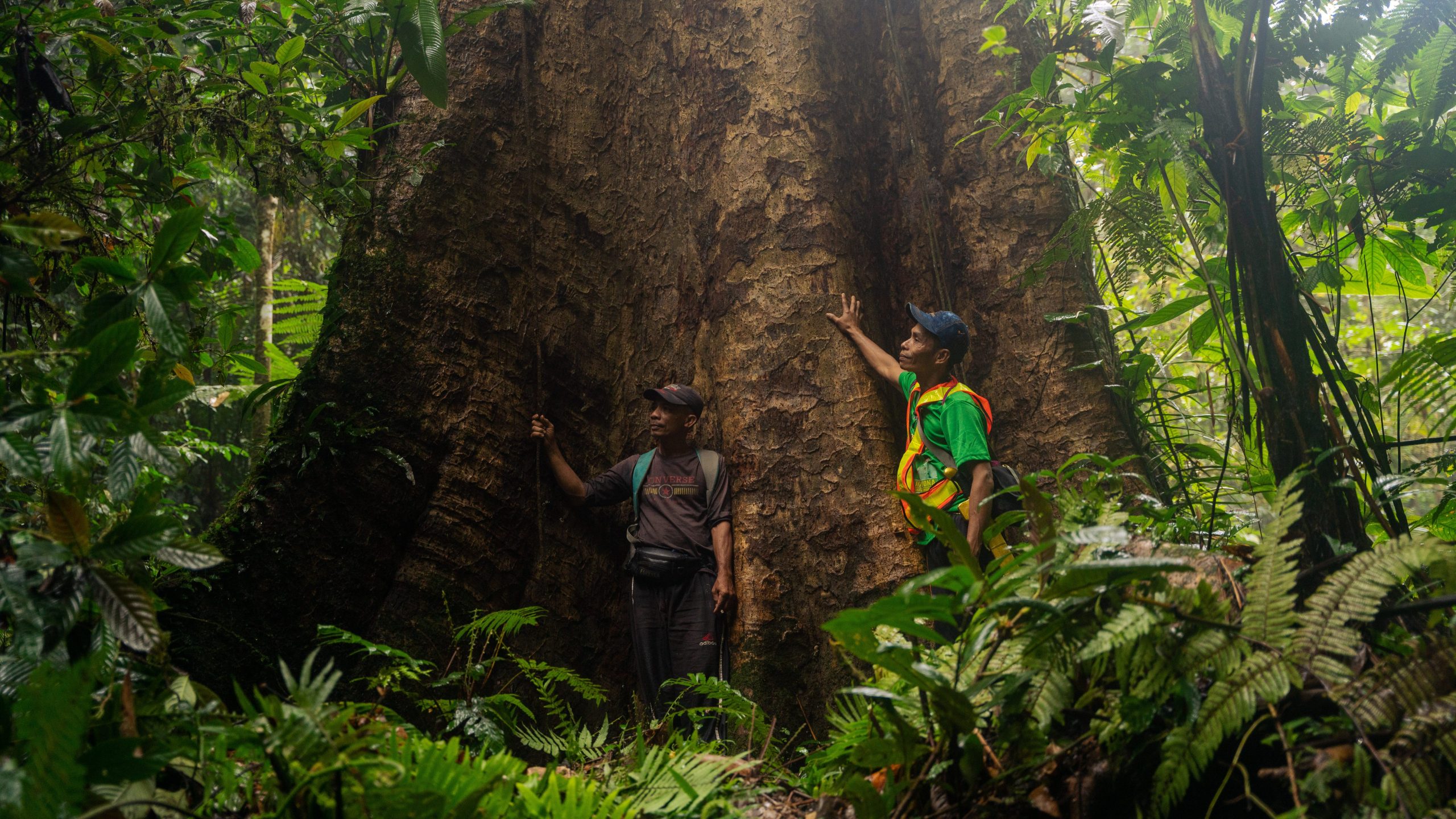
Community-based monitoring also proved to be a powerful tool for strengthening community-led forest governance. Across the DRC, Bolivia and Indonesia, Indigenous peoples and local communities combined traditional knowledge with technologies such as GPS, drones, camera traps and digital traceability tools to monitor biodiversity, track deforestation, detect illegal activities and support sustainable livelihoods. By generating their own evidence, communities were better able to protect their forests, defend their rights and hold governments and companies accountable.
A key lesson emerged from a joint learning process involving 39 GLA partners across 11 countries. The resulting report on locally-led sustainable development shows that lasting forest protection depends on local leadership, recognition of local knowledge, stronger community decision-making, and more flexible support for IP&LCs. In other words, communities must be recognised not as beneficiaries, but as key decision-makers whose knowledge and priorities shape more effective solutions.
Water lies at the heart of healthy ecosystems and resilient communities. Yet across many forest landscapes, water sources are increasingly under pressure from unsustainable land use, agricultural and extractive industries, and inequitable governance. In our work with partner organisations across the alliance, we saw these manifold water challenges emerge. But the experiences of civil society partners on the frontlines also gave us important insights into the opportunities for water justice.
In Bolivia’s Chiquitania, for example, IUCN NL supported partner PROBIOMA financially and technically to address the linked challenges of deforestation and water scarcity. Together with communities, partners gathered data, mobilised residents and set up community-based water monitoring systems. IUCN NL helped link local struggles to international mechanisms and connected grassroots actors with research institutions and policy dialogues. This ecosystem of collaboration was essential not only for winning the case, but also for building long-term support in communities’ abilities to defend their rights.
Deforestation is rooted in unequal power, weak enforcement and accountability, and unsustainable value chains. Local, national and international advocacy by GLA partners contributed to significant policy changes and helped address key drivers of deforestation.
A landmark victory was the repeal of a law in Ghana that would have allowed mining in Globally Significant Biodiversity Areas, including forest reserves. IUCN NL partner A Rocha Ghana played a key role in the process leading up to the repeal.
At the global level, GLA engagement contributed to shaping more responsible value chains, including through engagement with the EU Deforestation Regulation (EUDR). We helped strengthen the EUDR on human rights, land tenure and smallholder inclusion, directly translating local governance realities into more accountable and inclusive global supply chain policies.
Supported by IUCN NL, a strategic partnership between civil society and the private sector in Colombia is helping to accelerate deforestation-free supply chains by adapting business practices to emerging regulations such as the EUDR.
Through the programme, IUCN NL and partners addressed the growing forest and human rights risks linked to critical minerals by working across the value chain, from extraction to downstream users. Together with civil society organisations, we strengthened Indigenous peoples’ and community voices in decision-making, engaged companies and investors on more responsible sourcing, and promoted greater transparency and accountability through stronger laws, binding regulations, high-level standards such as the Initiative for Responsible Mining Assurance (IRMA) and the Extractive Industries Transparency Initiative.
At the same time, we advocated for stronger safeguards to prevent deforestation, pollution and social harm linked to mining, including protecting biodiversity-rich and socially important areas and promoting greater accountability across nickel supply chains.
These efforts show that protecting forests requires tackling underlying power dynamics and aligning policies, markets and practices with local realities.
As the global energy transition accelerated, IUCN NL and its partners worked to promote responsible mineral supply chains that support climate ambitions while safeguarding forests, biodiversity and the rights of Indigenous peoples and local communities. Through a local-to-global-to-local approach, we connected experiences from nickel landscapes in Indonesia and the Philippines to international policy, finance and conservation debates. We strengthened the capacities, participation and voice of IP&LCs, enabling them to engage more effectively in decision-making processes related to mining developments that affect their lands, livelihoods and environments.
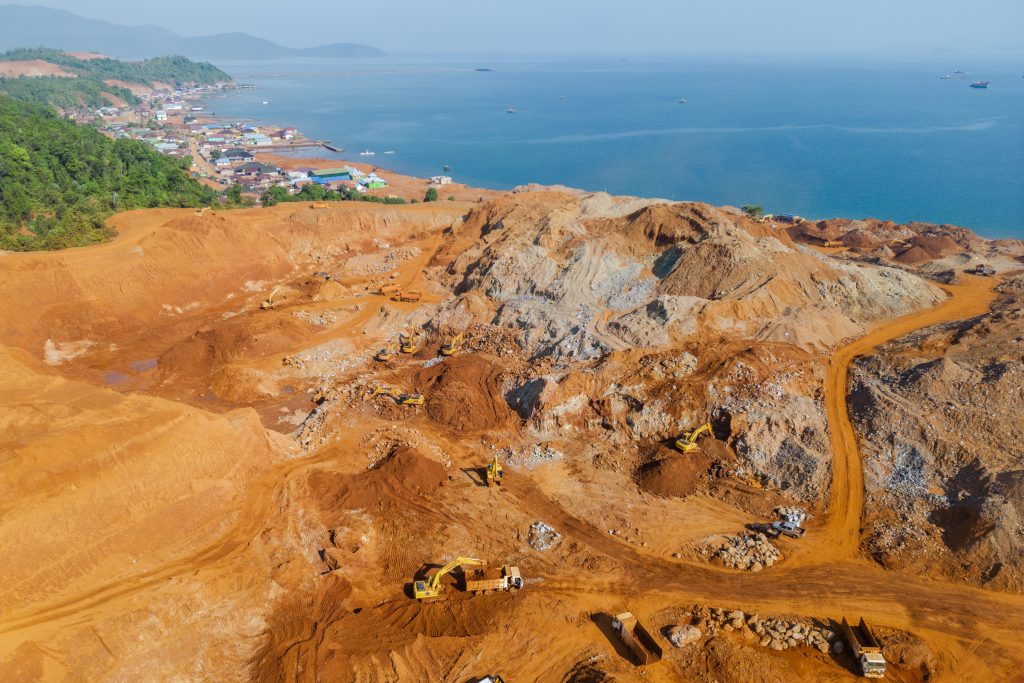
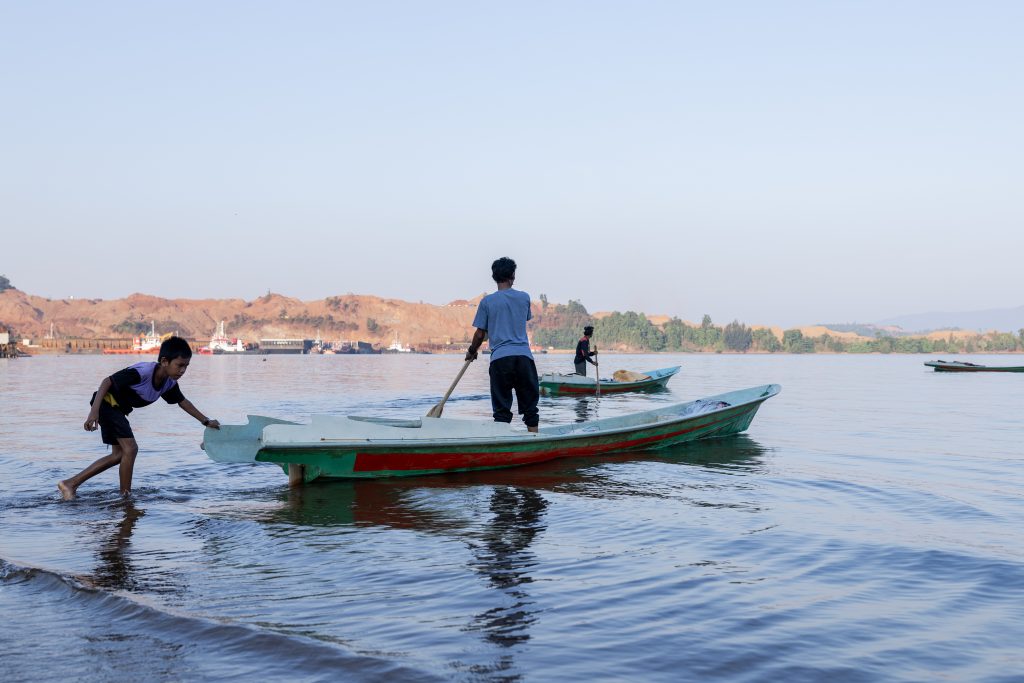
Together with partners, we raised awareness of the impacts of mining-driven deforestation and biodiversity loss, including through research on nickel mining in Sulawesi and advocacy on responsible mineral supply chains. We worked with the IRMA, engaged governments, investors and businesses to strengthen environmental and social safeguards and promote responsible sourcing.
A major achievement was the adoption of an IUCN Resolution on Safeguarding Biodiversity and Human Rights in Energy Transition Mineral Governance at the 2025 IUCN World Conservation Congress.
Where environmental defenders are silenced, forests are at risk. Safeguarding human rights, civic space and environmental defenders is central to achieving global climate and biodiversity commitments.
The programme provided targeted support to strengthen the safety, security and resilience of environmental defenders and civil society organisations in high-risk contexts. IUCN NL helped generate evidence on shrinking civic space through a survey across the programme countries and, together with Protection International, initiated a three-year safety and security programme in Bolivia, Ghana, Uganda, DRC, the Philippines and Indonesia. This included training, emergency support and longer-term capacity building to help partners and communities better understand risks, improve security planning and respond to threats. Over the past four years, emergency funds supported 33 organisations and individuals with legal assistance, safety measures and urgent relief, helping defenders continue their work under pressure.
Throughout the programme, we worked with partners to make forest governance and climate action more inclusive, with a stronger focus on the leadership and participation of women and youth. We applied a gender-responsive and intersectional approach to ensure that women, young people and other marginalised groups could influence decisions about forests, land and water. This had concrete impact on the ground.
In Uganda, for example, we worked with AFIEGO to support women-led advocacy and reforestation around Bugoma Forest, with women’s groups planting over 17,000 trees since 2021. In the Philippines, we supported LILAK’s work with Indigenous women human rights defenders in forest landscapes under threat from mining, helping to strengthen women’s leadership, protect civic spacegles to wider land and resource policies, built solidarity across landscapes and developed a collective protection plan through learning sessions and national exchanges. These examples demonstrate that greater agency, knowledge and support for women and youth result in improved forest protection and greater community resilience.
At the Climate Change COP30 in Belem, framed as the Forest COP, GLA and the Global Alliance for Green and Gender Action (GAGGA) organised a dedicated side event to spotlight locally-led, gender-just approaches to forest and climate action.
Women and youth linked local struggles to wider land and resource policies, built solidarity across landscapes and developed a collective protection plan through learning sessions and national exchanges. These examples demonstrate that greater agency, knowledge and support for women and youth result in improved forest protection and greater community resilience.
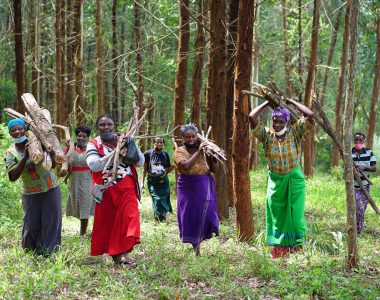
Working from the landscape level, IUCN NL supports CSO partners – from grassroots to national level – in tropical forest countries with knowledge, networks and access to funding to increase our collective impact on the ground. We use bottom-up, locally-led approaches in the design of all our actions. The knowledge and experience generated at landscape level is fed back into national and global policy arenas, and in turn, inform action at the local level.
Five years of implementation have confirmed that locally-led approaches are more just, more effective and more durable. When Indigenous peoples and local communities set priorities and have real decision-making power, forest governance better reflects local realities, including livelihoods, safety, care responsibilities and cultural ties to the land. Technical solutions, such as monitoring tools or sustainable livelihood initiatives, only create lasting change when they are rooted in community leadership and supported by sustained advocacy, coalition building and political engagement.
The programme also demonstrated the strength of working as an alliance. Long-term, trust-based partnerships between civil society organisations, communities and alliance members made it possible to combine local knowledge, strategic advocacy and mutual learning across countries and landscapes. This collective approach helped partners sustain progress in increasingly challenging contexts and achieve results that no single organisation could have delivered alone.
Although the GLA programme has come to a close, much of the work continues. Across some GLA landscapes, we have secured follow-up funding, allowing partnerships with CSOs and Indigenous peoples, local communities to continue building on the foundations laid over the past decade. The need for this work remains as urgent as ever: forests continue to face mounting pressures while civic space for those defending them remains under strain.
GLA has reinforced the importance of rights-based and locally-led forest governance as an effective way to protect biodiversity, support climate objectives and strengthen local livelihoods. Continued long-term and flexible investment in people, partnerships and locally rooted institutions will be essential to sustain these efforts and build on the momentum created through the programme.
The Green Livelihoods Alliance (GLA) consisted of IUCN NL, Gaia Amazonas, NTFP-EP Asia, Milieudefensie, SDI and Tropenbos International, supported by technical partners Fern and WECF. Together with more than 70 civil society organisations, Indigenous Peoples and local communities (IP&LCs) and social movements, the Alliance worked across 11 countries in Africa, Asia and Latin America.
Funded by the Dutch Ministry of Foreign Affairs under the Power of Voices Partnerships framework, the Forests for a Just Future programme (2021-2025) aimed to strengthen IP&LC-led governance of forests, reduce deforestation driven by business and government actors, and protect the rights and civic space of forest-dependent communities. It built on the earlier Forested Landscapes for Equity programme (2016–2020), also supported by the Dutch government.


| ↑1 | WRI: Indigenous and Community Forests: https://gfr.wri.org/social-governance-issues-indicators/indigenous-community-forests#what-role-do-indigenous-peoples-and-local-communities-play-in-protecting-forests |
|---|
12 October, 2026
From 19 to 30 October 2026, the UN Biodiversity Conference (CBD COP17) takes place in Yerevan, Armenia, under the theme…
08 October, 2026
We are pleased to announce that the third BESTLIFE2030 call for proposals is now open, providing new funding for locally…
