IUCN NL at COP17 in Yerevan: locally led…
12 October, 2026
IUCN NL at COP17 in Yerevan: locally led…
12 October, 2026
BESTLIFE2030 launches its third call for proposals
08 October, 2026
Wednesday 23 september 2026
With new support from BESTLIFE2030, marine biologist Kelly Latijnhouwers and her foundation REACT are realizing an idea on Curaçao: the idea that corals returned to the reef stand a far better chance when people keep tending the reef around them, and that the island’s coral organisations, dive schools and young people are willing to work on this together.
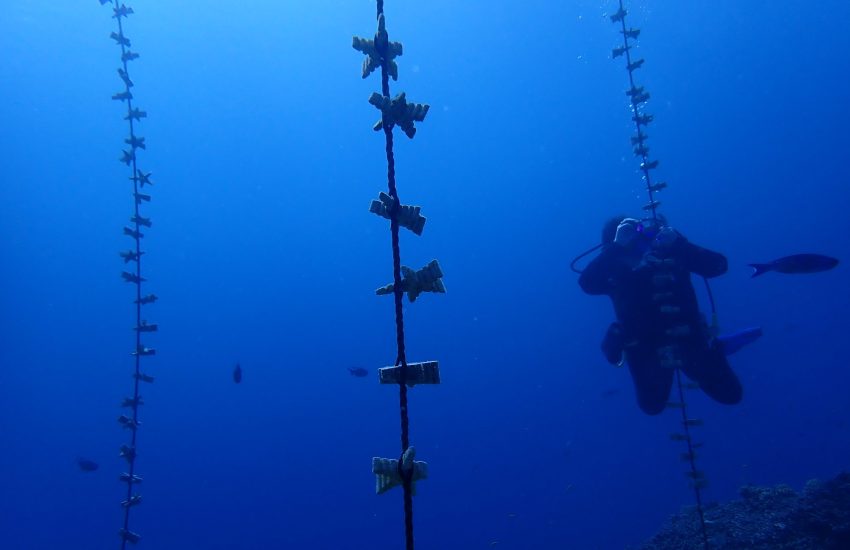
Header photo: rope nurseries © REACT (2026)
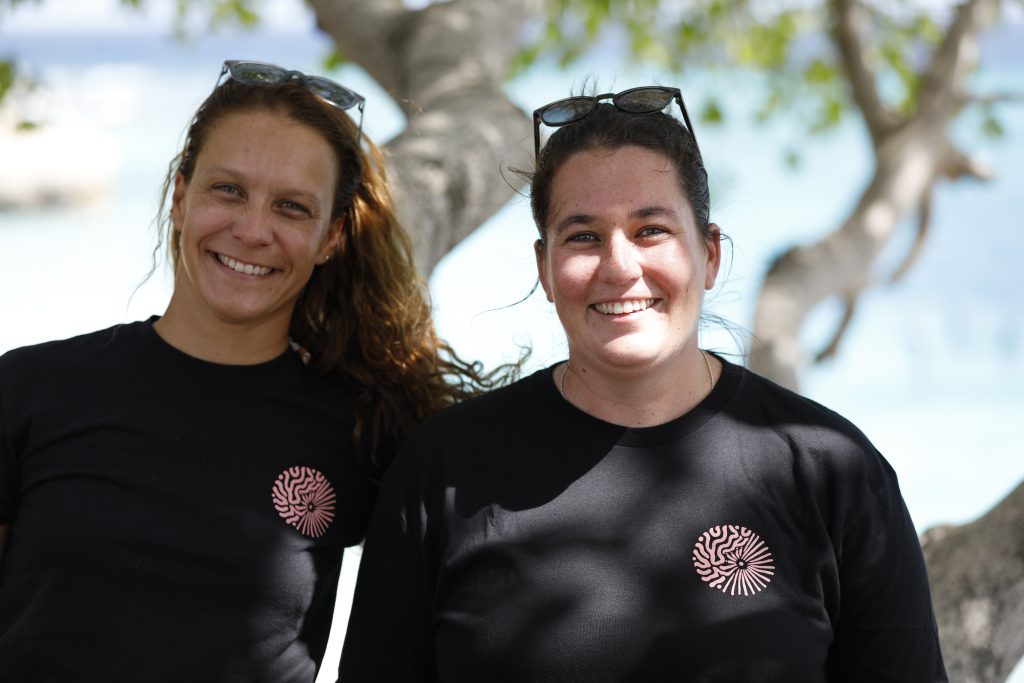
Kelly Latijnhouwers (left) & Nina Le Trocquer (right) © REACT (2026)
Kelly Latijnhouwers founded Reef Enhancement And Community Training (REACT) a little over a year ago. For most of that time, she worked alone. That changed this year with a grant from BESTLIFE2030, the EU-funded biodiversity programme coordinated by IUCN Europe, with IUCN NL acting as the regional hub for the Dutch Caribbean.
The grant supports Community-Driven Reef Enhancement in Curaçao, a project REACT runs together with Reef Renewal Curaçao as a co-applicant, and in partnership with SECORE International and CARMABI, at a single site inside the island’s marine park.
‘We officially started implementing the project with BESTLIFE funding in May this year,’ Kelly says. ‘So we’ve only really been active, above and below water, for a few months.’ The grant paid for her first colleague. Three volunteers have joined for a longer stretch to carry the team through the summer, with a wider circle of people and local organizations who help out when they can.
Her route here ran through more than a decade at the CARMABI research station on Curaçao, working for SECORE International on coral reproduction. By the time she started, CARMABI had over thirty years of data on when corals spawn. Using that knowledge for restoration, though, was still a laboratory affair carried out in small dishes. ‘Everyone said it was a nice idea, but that it would never work at any real scale,’ she recalls. Her job, for years, was to prove otherwise. Including helping to develop floating nurseries that raise young corals in the sea itself, removing the need for a temperature-controlled lab and making the method usable anywhere corals live. She then spent years travelling the Caribbean, teaching those methods to others and watching successful restoration programmes take root across the region. Meanwhile, 2023 and 2024 turned into disaster years at home: stony coral tissue loss disease arrived, two severe bleaching events followed, and Curaçao lost a great deal of coral. ‘I loved providing training to everyone else,’ she says. ‘But we needed help here more than ever.’
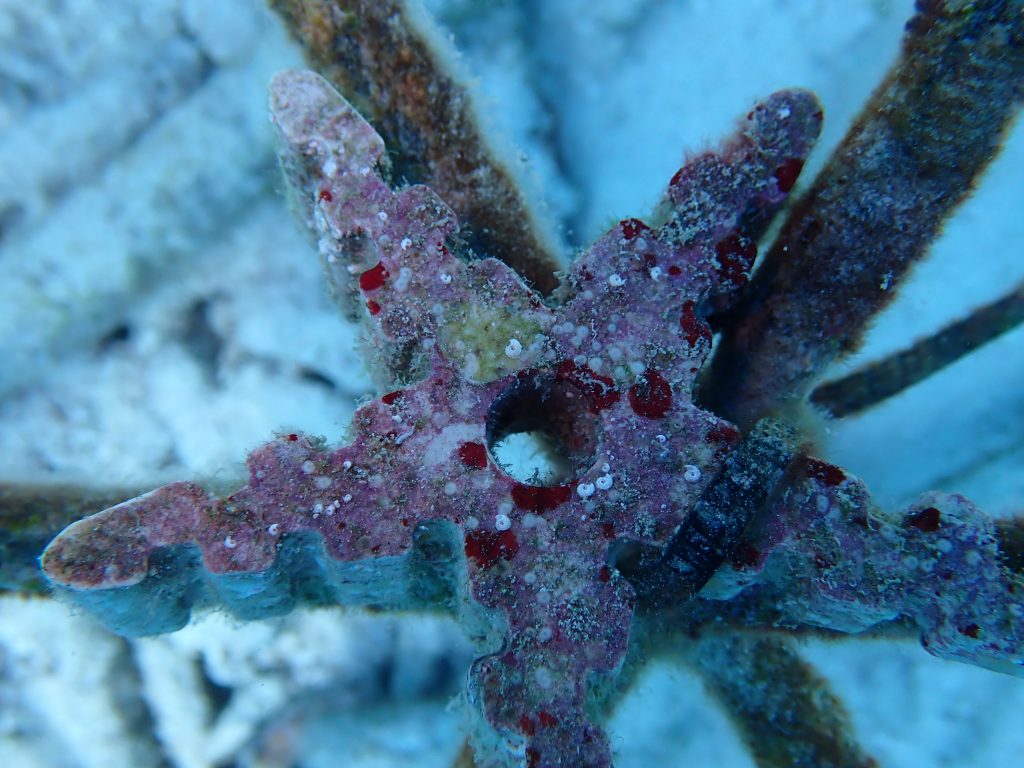
Coral settlers on a settlement substrate (1 week old settlers) @ REACT (2026)
Kelly learned to dive on the island in 1998, at the age of seven. ‘You could put your head in the water anywhere and there was coral and fish everywhere. Those days are gone.’ Curaçao’s reefs are still full of life, but many have lost a substantial part of the corals that once defined them. At some sites, living coral cover has fallen below 5%, while certain locations have lost more than 80% of their coral in just a decade.
That loss reaches far beyond the corals themselves. Reefs are where an enormous number of fish are born and live, and many people depend on those fish for food and income. Reefs draw divers and the businesses built around them. They are a research site and a source of medical discovery, through study of the coral microbiome. And they are the island’s first line of defense against the sea.
‘The energy of a wave has to be broken by something,’ Kelly explains. ‘With a reef in front of the coast, the wave breaks on the reef and laps at the shore. Without one, it breaks on the shore itself.’ The result is erosion and, increasingly, flooding — at a moment when the sea is rising, storms are intensifying and Curaçao is leaning harder into large-scale coastal tourism. The response along parts of the coast has been to place boulders and breakwaters where the reef used to do that work.
There is a reason that shortcut is tempting, and Kelly names it herself: ‘Throwing boulders in the water for a breakwater takes a day. Growing a coral reef back, takes years.’
Yet the island also shows what is still possible. Oostpunt, the uninhabited eastern tenth of Curaçao, sits upstream of the current, with no coastal construction and no sewage entering the water. Corals died there in the bleaching years too, but the reef held. Kelly points to it as evidence that warming water alone is not what empties a reef. It’s bleaching combined with overfishing, combined with untreated sewage, combined with coastal development. Each new stressor lands on corals that are already under strain.
Untreated sewage feeds algae, which then grow far faster than corals, take up oxygen and release chemicals that corals struggle against. Overfishing removes the grazers that would otherwise keep those algae in check. Corals can hold out for a while. Add a marine heatwave, and the contest becomes very uneven.
Curaçao already had organisations growing corals. What Kelly kept running into was what happened next. ‘The moment you put corals onto a reef that isn’t doing well, those corals still die.’
REACT was built around that gap. Alongside coral out planting, the team works on the conditions the young corals arrive into, such as clearing algae from the substrate, adding structure, supporting the return of grazing species, and removing the coral-eating snails that have multiplied on the reef now that the fish which normally eat them are largely gone. Kelly is clear about what this is. ‘We’re actively treating symptoms. That has to go hand in hand with policy change on the island.’
The project also brings two ways of growing coral together at one site. Reef Renewal Curaçao works with fragmentation: cuttings are grown out in nurseries and returned to the reef, which can rebuild real structure underwater within two or three years. The limitation is that it only works well for branching species, and the Caribbean has just two of those. SECORE’s approach uses sexual reproduction, which opens up every other species and builds genuine diversity, but starts with corals measured in millimeters that grow centimeters a year. ‘Then we’re talking about twenty or thirty years,’ Kelly says. Used side by side, the two methods give the site both quick habitat and long-term variety.
The project site is divided into plots, and the plots are being handed to the people who are in the water every day anyway. After training, individual volunteers will be able to check an online portal to see which plot needs attention that day and head out on their own. Dive schools can take on plots of their own and maintain them weekly with their customers. Their own underwater gardens, tended for free. For the two years of the project, none of it may be turned into a commercial product.
The intended result is a blueprint: a written guideline plus training that dive schools can use to help care for their own house reefs. The longer-term aim is to turn the project’s findings into a proven set of best practices. One that can be shared more widely, allowing trained dive professionals to contribute to reef enhancement in a consistent, responsible and science-based way.
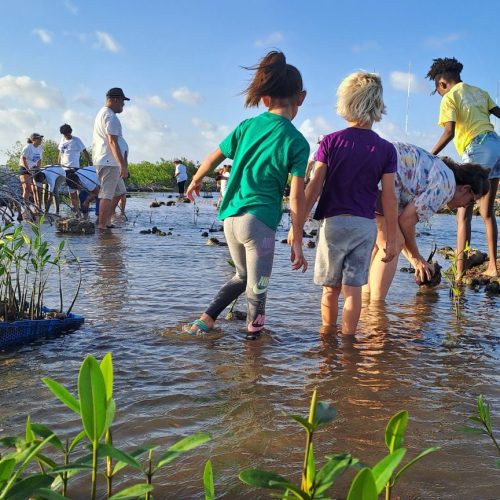
The second half of REACT’s name is community training, and it takes the shape of a programme for young people from Curaçao between 13 and 18. The first week is spent earning a diving certificate. Over the following weeks, participants learn how reefs work, build up their diving skills, carry out underwater research, help clear algae and snails, and build small reef structures. They spend a day with Reef Renewal Curaçao learning propagation, the process of creating new plants from an existing parent plant. Each round includes replanting mangroves, so the connections across the whole ecosystem are visible rather than theoretical. By the end, participants are trained well enough to volunteer with REACT or with any other sea-related organisation on the island.
The programme ran for the first time in the summer of 2025 with four participants, again over the Christmas holidays with five, and is now in its third round with eight, supported by BESTLIFE funding. Group size is currently capped by something wholly practical: the number of car seats available to get everyone to the water.
The reasoning behind starting young is straightforward. Trained volunteers often move on or have limited time. Young people from the island tend to be around longer and, Kelly hopes, come back. ‘I hope to plant seeds,’ she says. ‘Not necessarily marine biology seeds. Maybe they’ll study politics and come back and make a difference in a way that counts just as much, maybe even more.’ The programme advertises itself: participants are so enthusiastic they tell their friends and family to sign up for the next round of training.
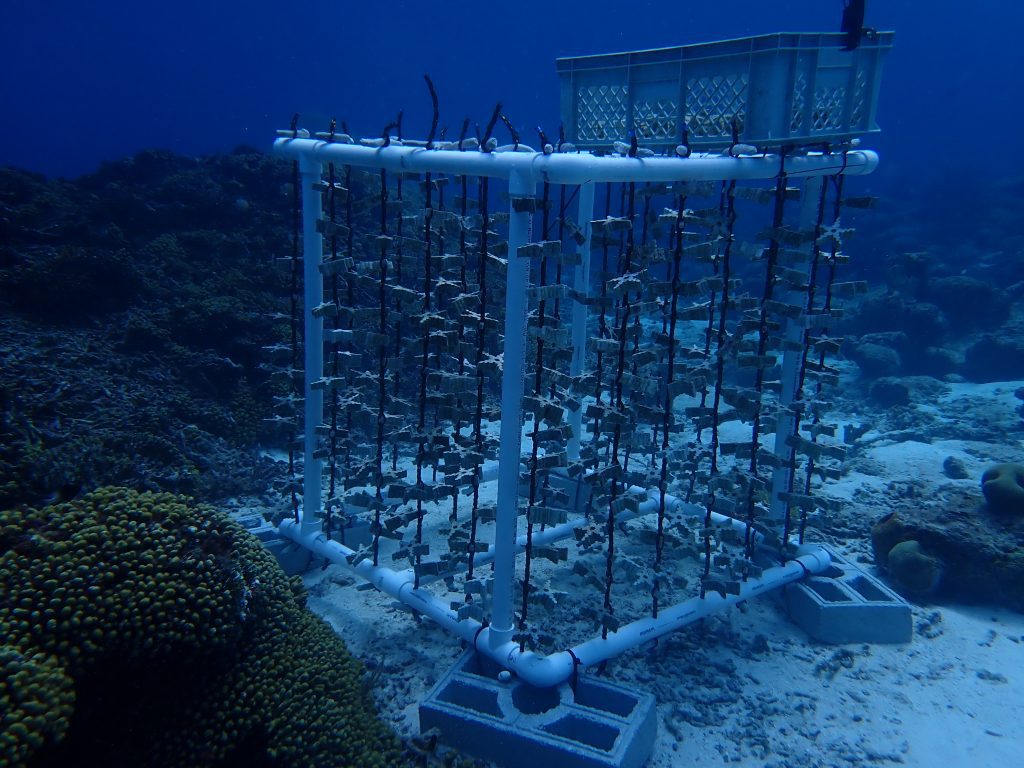
Box nursery (mini ropes) for settlement substrates @ REACT (2026)
One of the largest obstacles is one REACT cannot fix from the water. Improving wastewater treatment on a densely populated island requires major investment and action far beyond the scope of a reef enhancement project. And while reducing land-based pressures is essential to the long-term health of Curaçao’s reefs, Kelly argues that direct action underwater cannot wait for those larger challenges to be resolved. ‘We’re out of time. We need to address the causes of reef decline, but at the same time we must do what we can to protect and enhance the reefs we still have.
There is progress to point at: Curaçao established a marine park a few years ago, and a law protecting parrotfish from being caught is moving closer. Both still need active enforcement behind them to do their work. ‘I’m cautiously hopeful,’ Kelly says. ‘If you don’t hold on to a bit of hope, you can’t do this work.’
Closer to home, there are the ordinary constraints of a very small team: transport, time, and the fact that volunteers come and go. And there is structural risk in any small island sector, where organisations and businesses can end up competing for the same limited funding. Kelly was braced for it. Luckily, this time for her it was different.
In the first two months, REACT successfully bred grooved brain corals, with the resulting larvae settling on 800 specialized substrates that were subsequently transferred to in-water nurseries at the project site. During the same period, project partner Reef Renewal Foundation Curaçao added more than 200 staghorn coral fragments to the nursery structures.The milestone Kelly names first, though, is a different one. Young people trained in her summer programme are now turning up as volunteers at other organisations on the island, helping clean coral nursery trees. ‘That’s exactly what it was meant to do,’ she says.
Then there are the dive schools. Kelly spent months visiting them to talk the project through, braced for reluctance. At least five are now willing to help. ‘Everyone said: finally! Please, let us help, we want to do more.’ What surprised her was not their willingness to work with REACT, but how open and positive they were when it came to working with each other, on an island where small dive operators have traditionally tended to work independently.
And there is the shape of and cooperation within the project itself. Four of the island’s largest coral organisations are working at one site, on one plan, with dive centres and volunteers joining in. ‘Everyone used to do their own thing,’ Kelly says. ‘Somehow we’re now able to bring all those people together, which didn’t always work before.’
Kelly is candid that her own definition of success has shifted. ‘I always thought it would be the coral growing,’ she says. ‘More and more, it’s the community building.’
Both still matter, and both are in the foundation’s name. She wants a reef built, corals that are doing well, and proof that a measurable positive difference can be made to a reef in this era. Increasingly, though, she measures the work by how many people have been trained and are actively involved, because in the end that is what determines whether any of it holds.
After the two-year project, she wants a trusted community around the work and a method ready to travel to other sites along the coast of Curaçao. A reef that people from the island know, dive, tend and defend is a reef with a considerably better future than one that only scientists ever visit.
REACT’s project Community-Driven Reef Enhancement in Curaçao: Integrating Propagation, Enhancement & Stewardship is supported by BESTLIFE2030, an EU LIFE-funded programme coordinated by IUCN Europe. IUCN NL serves as the regional hub for the Caribbean Netherlands.
The IUCN BESTLIFE2030 programme is co-funded by the European Union. Views and opinions expressed are however those of the author(s) only and do not necessarily reflect those of the European Union or CINEA. Neither the European Union nor the granting authority can be held responsible for them.
Further information about the programme and the projects can be found on the BESTLIFE2030 page.


12 October, 2026
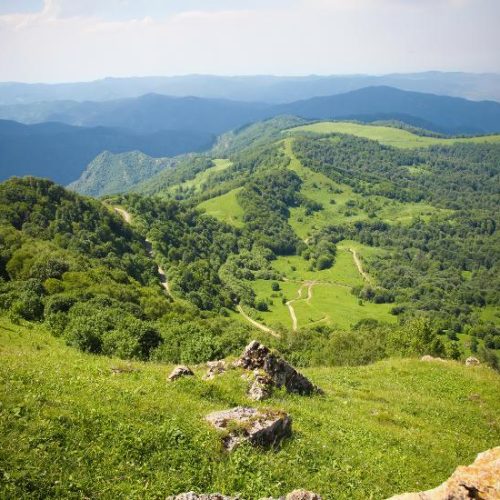
From 19 to 30 October 2026, the UN Biodiversity Conference (CBD COP17) takes place in Yerevan, Armenia, under the theme…
08 October, 2026
We are pleased to announce that the third BESTLIFE2030 call for proposals is now open, providing new funding for locally…