
Making way for elephants in India

Critical minerals and the western chimpanzee: how bauxite…
24 March, 2026
Tuesday 27 october 2020
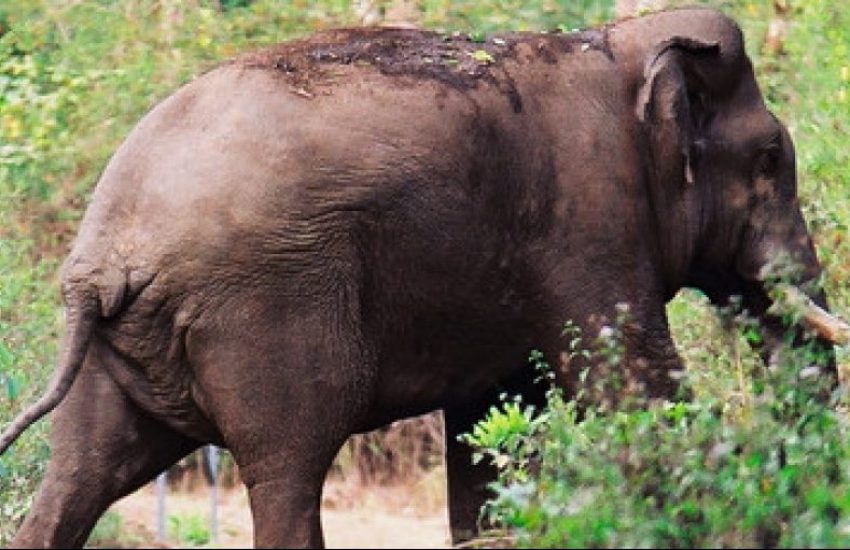
For generations, elephants in India have been using the same routes as they migrate. Yet more and more people are making settlements or creating farmland within these traditional migration paths. This is causing increased conflict between people and elephants. IUCN NL is working with the Wildlife Trust of India so that the elephants can once again move freely between the protected areas.
Header photo: elephant passing a corridor © IUCN NL
Problem
The huge rise in India’s population is causing more and more people to move to areas that were formerly the exclusive domain of the elephant, leopard and tiger. This is causing increased conflict between people and animals. Because the traditional migration paths of the elephant are no longer accessible, the animals are forced to move through residential areas, trampling crops and causing havoc and panic. Each year, people and elephants die as a result.

Approach
The Wildlife Trust of India (WTI) has identified 88 elephant corridors across the country where human settlements block the passage between the protected elephant habitats. With support from WTI, the villagers are voluntarily relocated to an area with better amenities, better housing and better farmland where they can live without fear, away from elephants. The areas that become available are reforested with indigenous strains of trees which are grown, planted and maintained by the local people. IUCN NL and the British World Land Trust have donated funds to secure a new corridor in the province of Kerala.
Result
As early as two weeks after the Kerala villagers were relocated the elephants returned to the area. Other wild animals such as the tiger, leopard and monkey also make use of the corridor to migrate from one forest area to another. The corridor has also improved the livelihoods of rural communities: the relocated villagers now live under better circumstances, without fear, and no longer have to worry about nuisance caused by the elephants. In addition, since their crops are no longer damaged by elephants and other wildlife, the income of the local farmers has increased by 600 per cent.
Learn more?




27 March, 2026
Engaging Stakeholders to Advance Ecosystem-based Adaptation in Mauritius
Madagascar and the Indian ocean islands are a biodiversity hotspot - a group of islands with incredible species diversity and…
24 March, 2026
Critical minerals and the western chimpanzee: how bauxite mining threatens one of West Africa’s last strongholds
In West Africa, the global scramble for critical minerals’ is putting immense pressure on unique ecosystems. As the demand for…