Emperor penguin and Antarctic fur seal now Endangered…
08 April, 2026
Tuesday 13 january 2026
Environmental Human Rights Defenders are globally under severe threat. To help address this, IUCN NL initiated a three-year programme in five countries to strengthen the security and resilience of its partners and the Indigenous and local communities they work with in forest landscapes. We teamed up with Protection International who trained and supported them to better understand the risks they face and to develop strategies that enhance their safety and wellbeing.
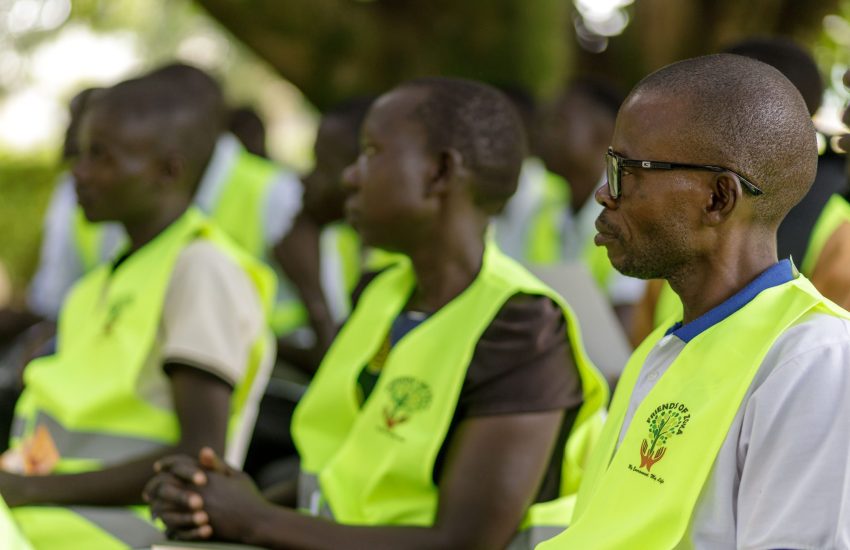
Header photo: The Climate Action Champions © Andrew Kartende
(Women) Environmental Human Rights Defenders ((W)EHRDs) face serious threats to their safety, as highlighted in the reports Standing with the people fighting for our planet, and Roots of Resilience, both published by Global Witness in September 2025. These reports reveal that since 2012 a total of 2.253 EHRDs have been killed or disappeared, and 146 of them were killed in 2024. However, as these reports are based on cases with verifiable evidence the actual number of deaths and disappearances is probably much higher. Many incidents go unreported due to fear, lack of documentation, or restricted media coverage, suggesting that the threat to (W)EHRDs is even greater and more severe than the numbers indicate.
This situation highlights the crucial importance of protecting (W)EHRDs to ensure they can continue their valuable work in protecting their territories, environmental human rights (the right to a clean, healthy and sustainable environment) and biodiversity. This protection comes in the form of preventative measures such as safety & security trainings, but also in financial support in case of emergencies.
Through the Green Livelihoods Alliance (GLA) Forests for a Just Future programme, IUCN NL and its partners worked to improve the civic space for (W)EHRDs and CSOs so that they can continue their vital work. For clarification’s sake, a CSO can in its turn also consist of (W)EHRDs but that does not necessarily need to be the case. To improve civic space, it is important that IUCN NL’s partners feel safe and secure in performing their activities. That is why we initiated and facilitated a three-year long safety & security strengthening programme together with Protection International in five countries: Bolivia, Ghana, Uganda Philippines and Indonesia. By strengthening IUCN NL’s partners in these countries and the communities they work with- through training and security planning – they become better prepared and empowered to respond to risks and challenges.
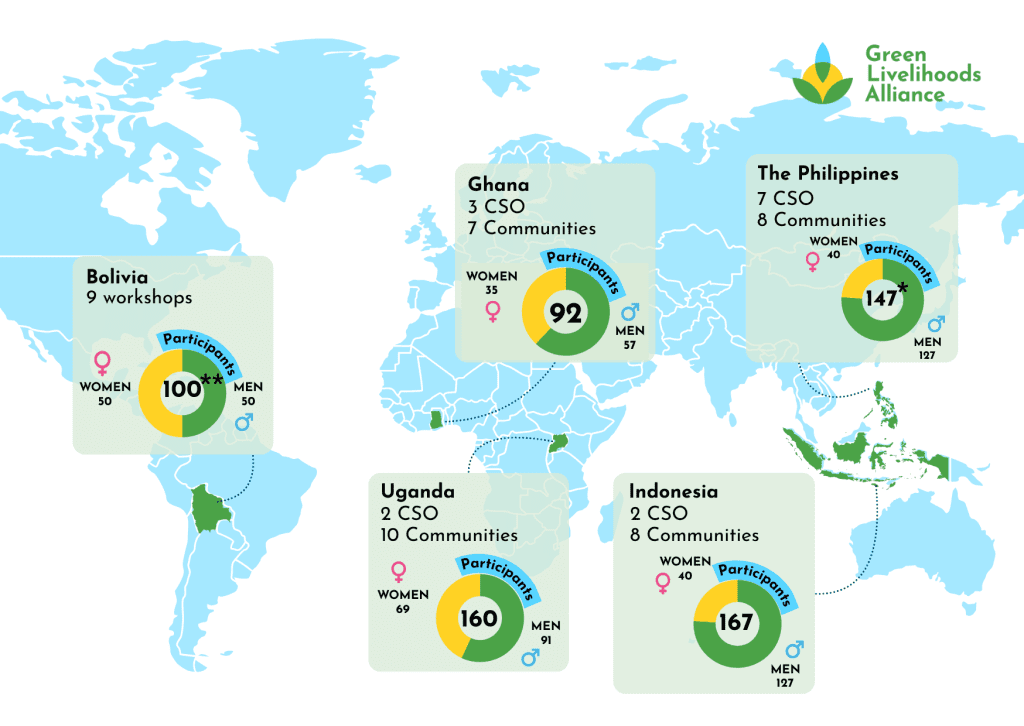
The safety & security programme has provided tailored guidance, resources, and training to (W)EHRDs and local communities. Together with our partners in Bolivia, Ghana, Uganda, Indonesia, and the Philippines, we carried out a range of activities, including risk and needs assessments, workshop sessions, as well as implementation of CSO and community safety & security protocols and follow-up mentoring. Special attention was paid to WEHRDs that are particularly at risk, as gender-based violence and socio-cultural norms can limit their ability to advocate. The three-year long training and support helped make safety awareness part of how organisations think and work every day. In total 692 people were trained (245 women and 447 men). Safety and security trainings were also organised in the DRC in the summer of 2024 when the situation in Goma was very unstable and unsafe due to the actions of M23 , a violent rebel group active at the border with Rwanda. At these trainings 9 CSOs were trained consisting of 59 men and 13 women.
It was great to learn that most participants reported their sense of safety to be low or average at the start of the training, but very high or high after finalising the training. By feeling safer and more empowered, and knowing about preventative measures they can take to reduce the risks they run as (W)EHRDs, IUCN NL’s partners and the communities they work with can continue the important work that they do more safely.
- Antoinette Sprenger, senior expert environmental justice at IUCN NL
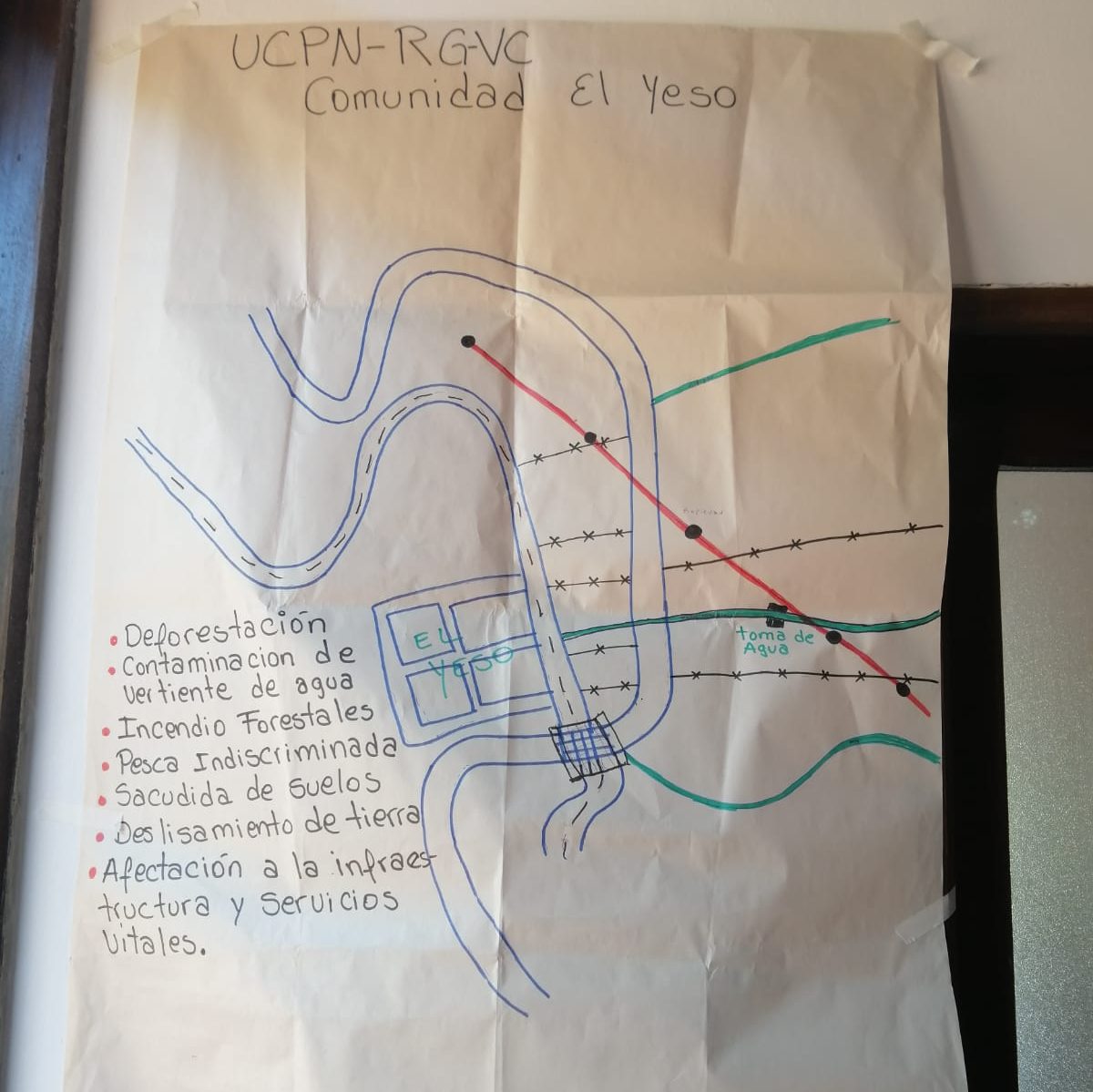
In addition to the trainings, handouts were created that organisations can use to prepare themselves for different situations (Find them in the list of sources at the bottom of this article). [1]Hand-out Borders (EN) [2]Hand-out Borders (ES) [3]Hand-out Borders (FR) [4]Hand-out Cash Transfers (EN) [5]Hand-out Cash Transfers (ES) [6]Hand-out Cash Transfers (FR) [7]Hand-out Detention (EN) [8]Hand-out Detention (ES) [9]Hand-out Detention (FR) [10]Hand-out Interrogation (EN) [11]Hand-out Interrogation (ES) [12]Hand-out Interrogation (FR) [13]Hand-out Safe Meetings (EN) [14]Hand-out Safe Meetings (ES) [15]Hand-out Safe Meetings (FR) [16]Hand-out Surveillance (EN) [17]Hand-out Surveillance (ES) [18]Hand-out Surveillance (FR)
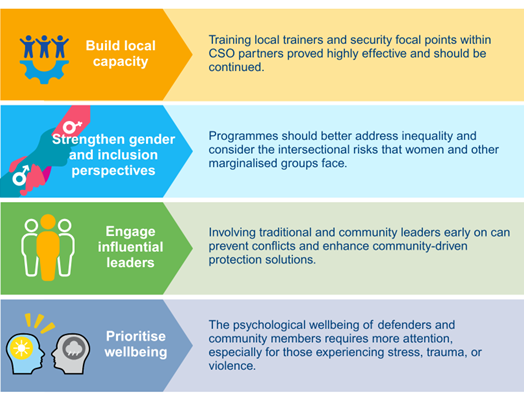
Throughout the safety & security strengthening programme, several lessons learned emerged that offer valuable insights for future initiatives. Each country is dealing with a different context and challenges: from the limited familiarity of local communities in Indonesia with human rights concepts to the influence of South Sudanese refugees in Uganda and the impact of Chinese mining activities in Ghana. However, some lessons learned are relevant across all contexts as is shown in the graphic below.
In addition to the safety & security programme, IUCN NL as part of the Green Livelihoods Alliance (GLA) also provided emergency funding, a flexible financing model for which organisations and individuals can apply. This funding mechanism was created to provide immediate, much-needed support to Indigenous Peoples and local communities (IP&LCs), GLA partner civil society organisations (CSOs), and (W)EHRDs in their network.
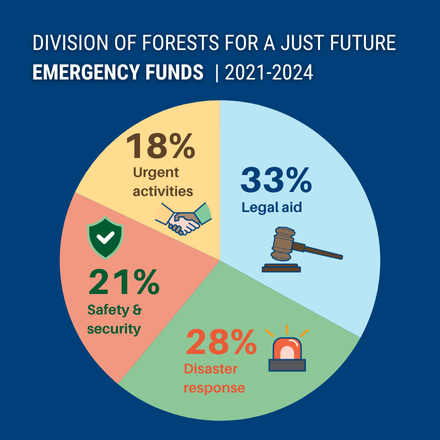
Over the past four years, we have provided emergency funds to 33 organisations and individuals, of which most was used for legal assistence, disaster response, safety & security and urgent activities.
With the Forests for a Just Future programme of the Green Livelihoods Alliance, IUCN NL contributes to more sustainable and inclusive governance of tropical forests, in a way that promotes climate mitigation, water provisioning, biodiversity and human rights and that safeguards the rights and livelihoods of IP&LCs.



08 April, 2026
Header photo: Flock of Emperor Pinguins, South Sandwich Islands, credits Paul Carroll Gland, Switzerland, 9 April 2026 (IUCN) – The…

27 March, 2026
Madagascar and the Indian ocean islands are a biodiversity hotspot - a group of islands with incredible species diversity and…