Growing corals is only half the work
23 September, 2026
Growing corals is only half the work
23 September, 2026
From restoration to resilience: how NATIR is rebuilding…
07 September, 2026
Thursday 24 september 2026
Header photo: visit to Ille aux Aigrettes © Durrell Conservation
The Southwest Indian Ocean is home to some of the world’s most unique biodiversity, but conserving these ecosystems requires more than technical solutions. It requires skilled conservation practitioners, strong institutions and opportunities for learning and collaboration. Through the project “Developing an Upskilled Community of Conservation Practitioners in the MADIO Region”, Durrell Conservation Training team in Mauritius is helping build the knowledge, confidence and connections. All three are needed to address biodiversity loss, ecosystem degradation and climate change across Madagascar, the Comoros, Mauritius, and the Seychelles.
An important milestone in 2026 was the completion of a regional Training Needs Assessment, providing valuable insights into the skills, knowledge gaps and priorities of conservation practitioners and organisations across the islands. The assessment, which involved surveys tailored to both individuals and institutions, created a robust evidence base to guide future training investments and ensure that capacity-building efforts respond directly to regional conservation needs. Beyond its findings, the process also strengthened Durrell’s own expertise in conducting regional assessments and engaging stakeholders across multiple countries.
Developing future conservation leaders is at the heart of the project. Through the Mauritius Island Restoration Internship (MIRI), three young conservationists from Mauritius and Madagascar were selected to take part in an intensive programme combining technical training with practical field experience. Participants have been introduced to key conservation competencies including communication and team dynamics, statistical analysis, biological sampling, invasive species management and island restoration techniques. Field placements at internationally recognised restoration sites provide opportunities to apply these skills in real-world conservation settings, helping interns gain the experience needed to advance their careers and contribute effectively to conservation efforts across the region.
Another significant milestone was the successful delivery of Professional Development Training Programmes on Forest Restoration and Ecosystem-based Adaptation in both Mauritius and the Comoros. These trainings brought together over 20 practitioners from different island nations, creating a platform for knowledge exchange, peer learning and collaboration. Participants shared experiences from their own conservation contexts, explored practical restoration approaches and expanded their professional networks across the region. By fostering dialogue and cooperation between organisations, the trainings helped strengthen a regional community of practice that will continue to support conservation efforts long after the courses have ended.
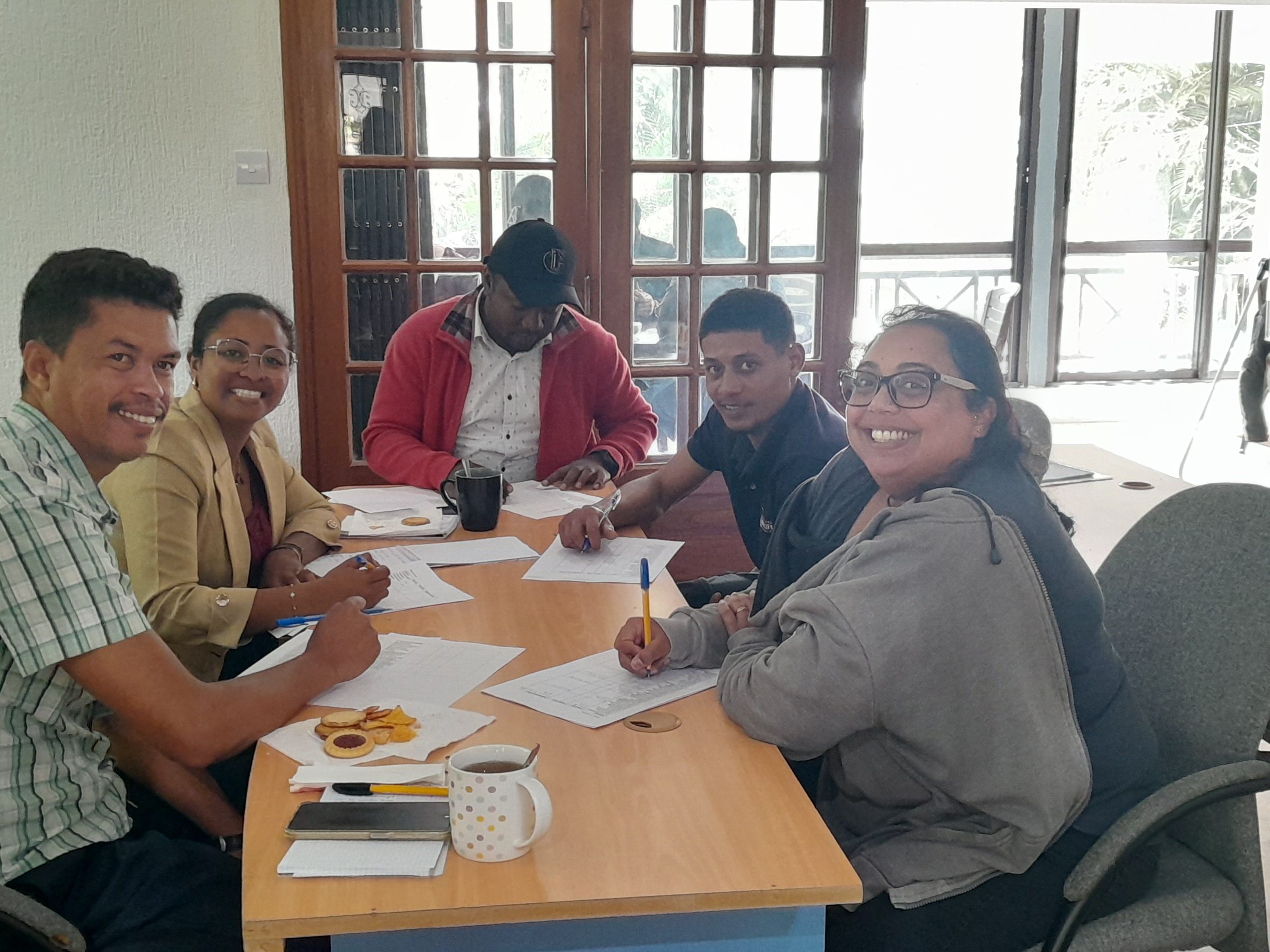
Group work at Floreal office © Durrell Conservation
The project’s achievements are particularly notable given the obstacles encountered during implementation. Delays in obtaining permits for the Malagasy interns threatened to postpone key components of the internship programme, while the sharp increase in international travel costs placed additional pressure on already limited resources. Rather than allowing these constraints to derail activities, the project team adapted quickly and creatively: remote participation enabled interns to begin learning while awaiting travel authorisations, and budget adjustments helped absorb rising logistical costs. These solutions ensured that participants continued to benefit from training opportunities and that project objectives remained on track.
Collaboration has been fundamental to the project’s success. Durrell Conservation Training has worked closely with partners including the Mauritian Wildlife Foundation, the National Parks and Conservation Services and other regional conservation organisations. These partners supported in the process to get the internship permits for people from other countries, when Durell alone could not. They have also helped create stronger links between practitioners, organisations and institutions working toward shared conservation goals across the Southwest Indian Ocean.
By investing in people, the project is creating impacts that extend beyond individual training events. Conservation practitioners are gaining practical skills, professional confidence and regional connections that will support their work for the coming years. At the same time, organisations are benefiting from stronger human capacity and increased opportunities for collaboration.
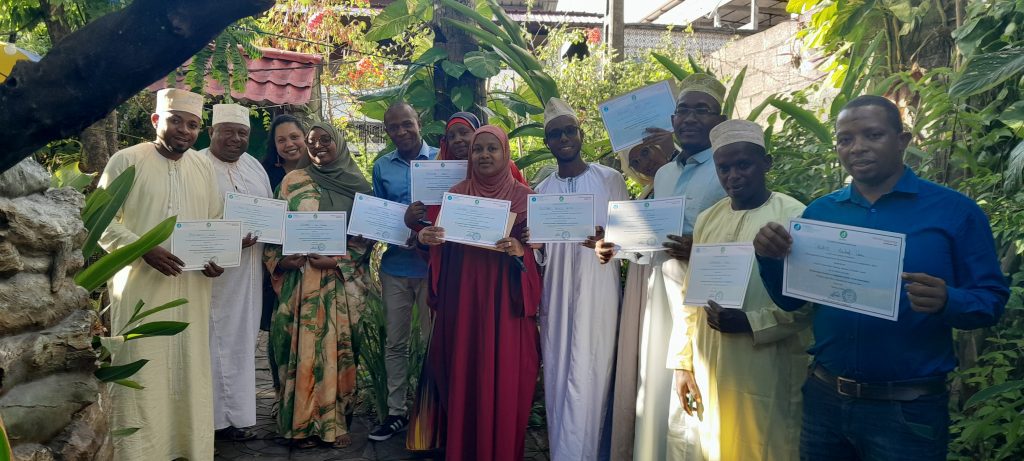
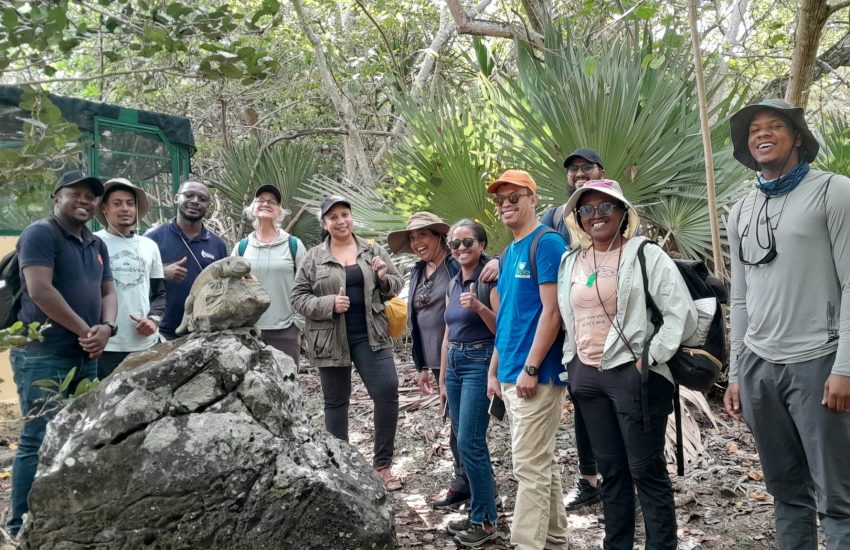
Certificate ceremony with Comoros participants © Durrell Conservation

23 September, 2026
With new support from BESTLIFE2030, marine biologist Kelly Latijnhouwers and her foundation REACT are realizing an idea on Curaçao: the…
07 September, 2026
Madagascar and the Indian ocean islands are a biodiversity hotspot - a group of islands with incredible species diversity and…